

At a Glance
| Key Point | Detail |
| Global market size (2024) | USD 20.75 billion, growing at 6.5% CAGR through 2030 |
| US market size (2024) | USD 12 billion in coating resins; acrylic holds 27.9% of that |
| Leading application | Paints and coatings, accounting for 61.5% of acrylic resin use |
| Top industries using it | Construction, automotive, electronics, packaging, industrial machinery |
| Key performance advantages | UV resistance, weatherability, chemical resistance, strong adhesion |
| Main types | Waterborne, solvent-based, powder, UV-curable |
| Regulatory direction | Waterborne and low-VOC formulations gaining share as EPA rules tighten |
Walk through any major construction site, automotive plant, or electronics factory in the US and you will find acrylic resin coating doing quiet, unglamorous work. Protecting metal from corrosion. Keeping exterior walls looking fresh five years after installation. Holding gloss on a car bonnet through summers and winters without fading. It is not the most talked-about material in manufacturing, but it is one of the most depended on.
The global acrylic resins market was valued at approximately USD 20.75 billion in 2024 and is projected to grow at a CAGR of 6.5% through 2030, driven by construction growth, automotive demand, and the shift toward low-VOC waterborne systems. The US coating resins market alone was valued at USD 12 billion in 2024. Acrylic holds the largest resin type share at 27.9%, ahead of epoxy, polyurethane, and alkyd. That kind of market position does not happen by accident.
What Is Resin Coating and How Does Acrylic Fit In
Resin coatings are polymer-based protective or decorative layers applied to a surface to improve durability, appearance, or resistance to environmental factors. The resin acts as the binder, holding pigments, additives, and other components together while bonding to the substrate.
Understanding what is resin coating means understanding the range: epoxy, polyurethane, alkyd, and acrylic are all resin coating types, each with different chemistry and best-fit applications. Acrylic resins are synthesized from acrylate or methacrylate monomers and stand out for their optical clarity, UV stability, and ability to be formulated across a huge range of end-use needs.
What makes acrylic different from other resin coatings:
- Better UV and weathering resistance than alkyd or epoxy in outdoor exposure
- Excellent color and gloss retention over time, even in direct sun
- Available in waterborne, solvent-based, powder, and UV-curable formats
- Can be tailored from extremely hard thermosetting grades to flexible thermoplastic ones
- Lower toxicity profile compared to solvent-heavy epoxy systems
Types of Acrylic Resin Coating
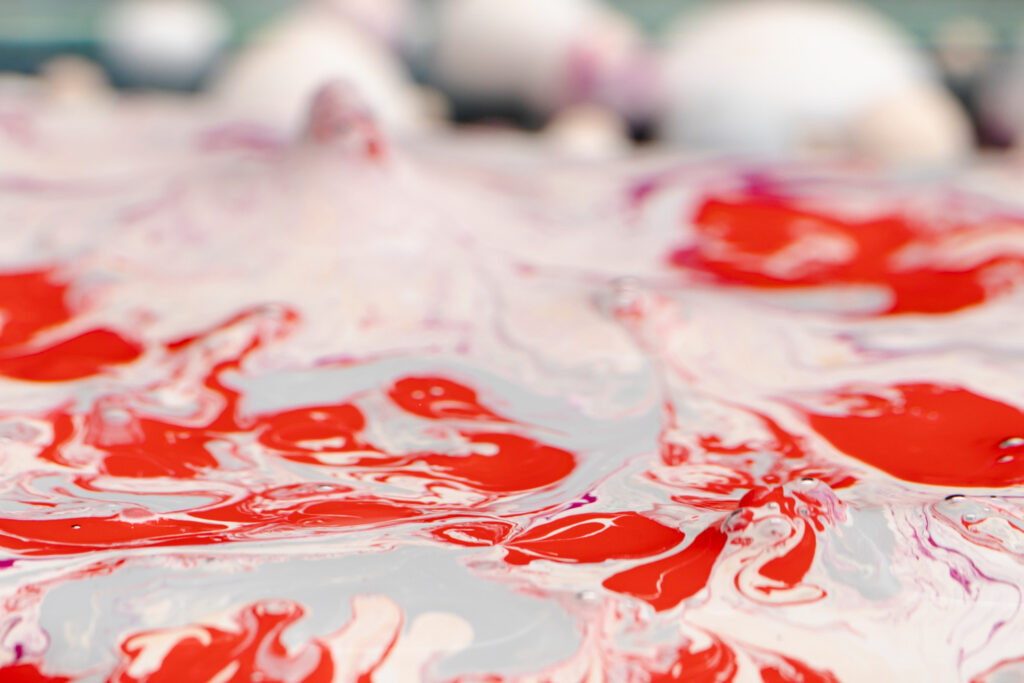
Not all acrylic coatings are the same. The base resin chemistry is similar but the delivery format, curing mechanism, and performance profile change significantly depending on what the application needs.
| Type | VOC Level | Best For | Key Advantage |
| Waterborne | Low | Architectural, wood, metal | Low emissions, EPA compliant |
| Solvent-based | High | High-performance industrial | Excellent film quality, fast dry |
| Powder | Near zero | Metal parts, appliances | No solvent at all, durable |
| UV-curable | Zero | Wood, electronics, packaging | Instant cure, high throughput |
Waterborne Acrylic Coatings
Waterborne acrylic resin uses water as its primary carrier instead of organic solvents. The global waterborne acrylic resin market was valued at USD 5,995.90 million in 2025 and is growing at 5% CAGR through 2032, and it is not hard to see why. EPA VOC limits have made solvent-based systems costly to comply with, and waterborne formulations offer a practical path to compliance without major performance trade-offs.
These coatings are widely used in architectural paints, industrial primers, wood finishes, and direct-to-metal applications. Acrylic emulsions offer very good chemical and block resistance, superior hardness, outstanding durability and weatherability, and improved adhesion to non-porous surfaces with fast dry times that improve production throughput.
Solvent-Based Acrylic Coatings
Solvent-based acrylic resins dissolve the polymer in an organic solvent, producing a homogeneous film with excellent workability and fast drying. They are still preferred in certain high-performance industrial applications where maximum film quality and corrosion resistance are the priority and waterborne systems have not yet closed the performance gap.
Common uses include automotive refinish, metal coatings for industrial equipment, and specialty applications in aerospace and marine. The downside is VOC emissions, which are under increasing regulatory pressure in the US.
Powder Acrylic Coatings
Powder acrylic coatings contain no solvent at all. Applied as a dry powder and cured in an oven, they produce near-zero VOC emissions and excellent durability. They are particularly strong in corrosion resistance and scratch resistance, which is why they are widely used for alloy wheels, industrial machinery parts, and appliances.
UV-Curable Acrylic Coatings
UV-curable systems cure almost instantly under ultraviolet light, producing coatings with outstanding chemical and scratch resistance, excellent block resistance, and very low VOCs. They are widely used in wood flooring, furniture finishing, electronics, and packaging where throughput speed and clean chemistry are both important.
Key Benefits of Acrylic Resin Coating
The reason acrylic resin coating dominates its segment comes down to a combination of performance properties that few other resins can match across this many applications.
| Benefit | What It Means in Practice |
| UV and weather resistance | Holds color and gloss outdoors for 10+ years without chalking or fading |
| Strong adhesion | Bonds to wood, metal, concrete, plastic without primers in many cases |
| Chemical resistance | Withstands dilute acids, alkalis, detergents, and moisture exposure |
| Fast dry times | Acrylic emulsions allow handling within minutes, improving throughput |
| Color retention | Minimal yellowing or fading over time, even in harsh outdoor conditions |
| Formulation flexibility | Can be made thermoplastic or thermosetting, hard or flexible, as needed |
One property worth highlighting separately is formulation flexibility. Acrylic resins can be designed from extremely hard to very flexible depending on which monomers are used and how they are polymerized. This means one resin chemistry can serve a floor coating that needs hardness, an automotive clearcoat that needs flexibility and UV resistance, and an architectural latex that needs ease of application and washability.
Industrial Applications Driving US Demand
Construction and Architecture
Building and construction is the largest end-use segment for acrylic resin globally, holding approximately 42.7% of end-user consumption. In the US, the connection between construction activity and acrylic demand is direct.
Key construction applications:
- Exterior wall coatings on stucco, concrete, and masonry where UV stability matters most
- Acrylic roof coatings for flat and low-slope roofs, used for waterproofing and heat reflection
- Interior latex paints where low odor, fast dry, and washability are priorities
- Adhesives and sealants for window frames, joints, and structural gaps
- Decorative panels, signage, and safety glazing using PMMA acrylic sheets
Automotive
The automotive segment uses acrylic resin coating extensively across both OEM manufacturing and refinish. High-solid acrylic coatings are well suited for automotive exteriors because of their high gloss, fullness, good water resistance, and weather stability. Methacrylate resins are widely used in tail light covers, headlight lenses, ambient lighting strips, and door entry trims.
The growth of electric vehicles is also adding new demand. EV battery components, light-weighting applications, and new surface treatments for composite body panels are creating formulation opportunities that traditional solvent-based acrylic coatings cannot fully meet, pushing R&D toward waterborne and UV-curable systems.
Electronics and Packaging
Acrylic resins are used in electronics for protective coatings on circuit boards, encapsulation of components, and optical applications in displays and fiber optics. Clarity and chemical stability are the key properties here.
In packaging, the transparency, strength, and barrier properties of acrylic make it a natural fit for food-safe coatings, labels, and flexible packaging applications. The global green packaging trend is also pushing brands toward waterborne acrylic coatings that can meet sustainability commitments without sacrificing performance.
Industrial Machinery and Metal Protection
Acrylic anticorrosive coatings are widely used in steel structures, ships, metal plates, bridges, and industrial equipment. The coating protects against rust, oxidation, and chemical exposure, extending the service life of metal assets significantly.
For steel structures and infrastructure, acrylic coatings applied in multiple coats offer years of protection with relatively low maintenance requirements compared to alternatives like alkyd or epoxy systems that can become brittle or yellow outdoors.
US Market Demand: What the Numbers Say
The US is one of the most active markets for acrylic resin coating globally. The US acrylic resin market is projected to reach USD 5.54 billion by 2032, driven by strong demand in paints and coatings and a continued push from infrastructure investment.
The North America paints and coatings market is projected to grow from USD 35.95 billion in 2025 to USD 41.70 billion by 2030. Acrylic resin is the largest segment by resin type in that market, preferred for its superior weathering, color stability, and compatibility with low-VOC waterborne formulations that meet EPA requirements.
Key demand drivers in the US specifically:
- Residential and commercial construction activity sustaining demand for architectural coatings
- Growing EV adoption driving new coating formulation needs in automotive
- Infrastructure investment in bridges, roads, and industrial facilities requiring protective coatings
- Clean label and low-VOC demand pushing formulation toward waterborne acrylic systems
- Electronics manufacturing growth in the US creating demand for specialty coating grades
In September 2024, Engineered Polymer Solutions launched a new all-acrylic resin polymer for flat through semi-gloss interior and exterior architectural coatings. The same period saw PPG, Sherwin-Williams, and BASF all expand their waterborne and low-VOC acrylic coating lines. Investment is clearly following where demand is heading.
Conclusion
Acrylic resin coating has earned its position at the top of the US coatings market through consistent performance across the widest range of industrial, commercial, and architectural applications. UV resistance, adhesion, formulation flexibility, and a clear regulatory pathway through waterborne technology make it the resin type most manufacturers keep coming back to. The shift toward waterborne and powder acrylic systems is accelerating, not slowing, and the brands investing in that transition now are better positioned for the compliance environment ahead.
For manufacturers sourcing acrylic resins, acrylate monomers, waterborne acrylic dispersions, or specialty coating-grade raw materials, Elchemy connects US buyers with verified global suppliers offering complete technical documentation, certificates of analysis, and supply chain reliability built for the demands of the American industrial market.