

At a Glance
- FDA classifies sorbitol as Generally Recognized as Safe (GRAS) for food use
- Products containing 50+ grams daily require laxative warning labels
- Sugar-free candy can contain up to 99% sorbitol, other foods limited to 12%
- Cosmetic Ingredient Review Panel finds sorbitol safe in personal care at current concentrations
- WHO/FAO has not set an Acceptable Daily Intake limit for sorbitol
- Main risk is digestive discomfort above 10-20 gram threshold per day
You’re reformulating a sugar-free candy line. The sweetener blend needs tweaking. Your food scientist suggests increasing sorbitol content to 45%. Sounds fine. Then someone mentions FDA labeling requirements. Turns out you need a laxative warning at 50 grams daily. Now you’re calculating serving sizes and daily consumption patterns to stay compliant.
Sorbitol safety isn’t just about whether it’s toxic. It’s about dosing limits, labeling requirements, and understanding real-world risks. Food manufacturers, pharmaceutical formulators, and cosmetic developers need clear guidelines. Understanding sorbitol safety helps navigate FDA regulations while formulating products that work without causing problems.
Sorbitol Safety: FDA Classification and Status

FDA includes sorbitol on the GRAS list. That stands for Generally Recognized as Safe. This classification came after reviewing extensive safety data and decades of use without widespread problems. GRAS status means manufacturers can use it in food products following good manufacturing practices.
The chemical name is 1,2,3,4,5,6-hexanehexol (C₆H₁₄O₆). It’s a hexa hydric alcohol. Sorbitol occurs naturally in mountain ash berries and other Rosaceae family plants. Commercial production uses hydrogenation of glucose. This synthetic process produces consistent quality at industrial scale.
FDA regulatory framework:
| Application | Max Usage Level | Requirements |
| Sugar-free candy | Up to 99% | Warning label if 50g+ daily intake |
| All other foods | Up to 12% | Good manufacturing practices |
| Dietary supplements | Varies (12-99% range) | Laxative warning if 50g+ daily |
| Pharmaceuticals | As needed | Must meet USP standards |
| Cosmetics | No specific limit | Good manufacturing practices |
The 50-gram threshold matters. Any product where reasonable consumption might reach this level needs the warning: “Excess consumption may have a laxative effect.” That’s mandatory under CFR 184.1835. Calculate total daily intake based on normal usage patterns, not just single serving amounts.
Understanding Sorbitol Risks
Sorbitol is safe for most people at normal intake levels. But risks exist, especially at higher doses or for certain populations. Understanding sorbitol risks helps set formulation limits and warn appropriate consumers.
Digestive effects:
The main sorbitol risk is gastrointestinal discomfort. The compound isn’t fully absorbed in the small intestine. What doesn’t get absorbed moves to the colon. There, it pulls water into the intestinal lumen through osmotic action. This causes:
- Bloating and gas
- Abdominal cramping
- Diarrhea
- General GI discomfort
Most people start experiencing effects around 10-20 grams per day. At 50 grams, laxative effects become common. Individual tolerance varies significantly. Some folks handle 30 grams fine. Others react to 10 grams. That’s why the FDA set labeling requirements at 50 grams, catching most sensitive individuals.
Who faces higher risks:
- People with irritable bowel syndrome (IBS)
- Those with fructose malabsorption
- Individuals with inflammatory bowel disease
- Anyone with digestive sensitivities
- Children (lower body weight means lower tolerance)
Metabolic considerations:
Sorbitol provides about 2.6 calories per gram, versus 4 for regular sugar. The body metabolizes absorbed sorbitol into fructose. For people with hereditary fructose intolerance, this matters. They can’t properly metabolize fructose. Sorbitol essentially becomes fructose in their bodies, causing problems.
Diabetics generally tolerate sorbitol well. It doesn’t spike blood sugar like regular sugar. But the partial calorie content means it’s not zero-impact. Diabetic formulations should account for the caloric contribution.
Sorbitol SDS: Safety Data Sheet Essentials
Every facility handling sorbitol needs proper safety documentation. The sorbitol SDS (Safety Data Sheet) outlines handling, storage, and emergency procedures. Understanding SDS requirements ensures workplace safety and regulatory compliance.
Key SDS sections:
Identification:
- Product name: Sorbitol (various forms like sorbitol solution, powder, crystals)
- CAS Number: 50-70-4
- Molecular formula: C₆H₁₄O₆
- Synonyms: D-glucitol, D-sorbitol, hexahydric alcohol
Hazard classification:
- Generally not hazardous under OSHA criteria
- Eye irritant (dust or concentrated solutions)
- Possible skin irritant with prolonged contact
- Not flammable, combustible, or explosive
- No significant inhalation hazards
Safe handling practices:
- Wear safety glasses when handling powder to prevent eye irritation
- Use gloves for concentrated solutions (above 50%)
- Avoid creating dust clouds in manufacturing areas
- Store in cool, dry place away from moisture
- Keep containers closed when not in use
- No special ventilation needed for normal operations
First aid measures:
- Eye contact: Flush with water for 15 minutes, seek medical attention if irritation persists
- Skin contact: Wash with soap and water
- Ingestion: Generally not hazardous; if large amounts consumed, provide water and monitor for GI distress
- Inhalation: Move to fresh air (dust exposure)
The sorbitol SDS classifies it as non-toxic. Main concerns are physical irritation from dust or concentrated solutions, not chemical toxicity. This makes handling easier compared to many industrial ingredients. Still need proper documentation and worker training for compliance.
Usage Limits Across Applications
Different applications have different sorbitol limits. Knowing these helps formulate products that stay compliant.
Food applications:
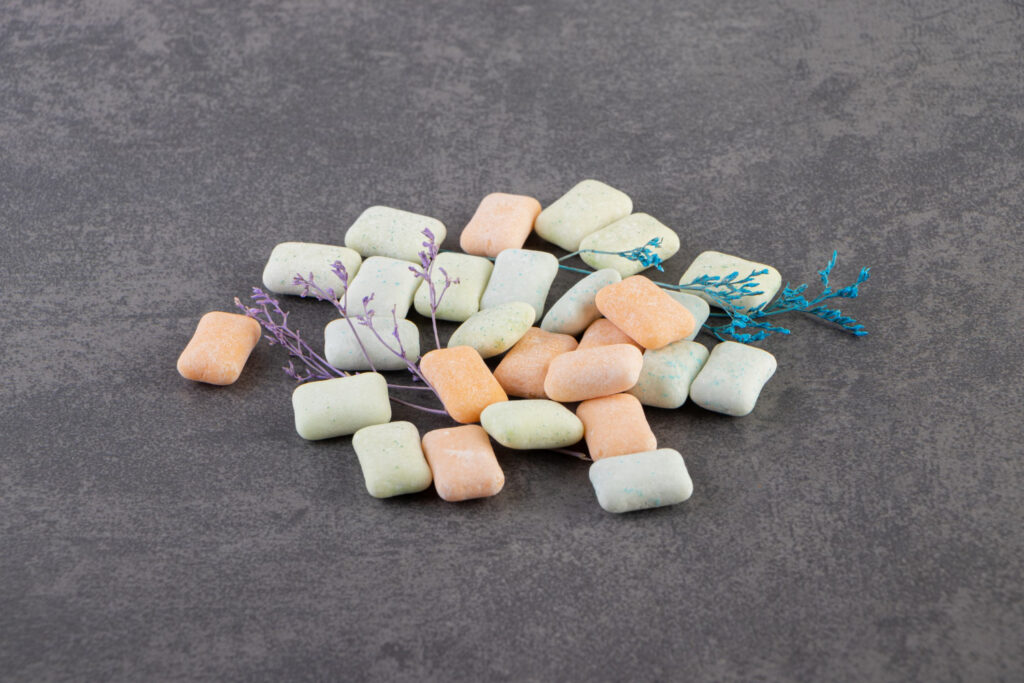
Sugar-free candy enjoys the most flexibility. Can contain up to 99% sorbitol. Hard candies, chewing gum, and breath mints commonly use this high level. The sweetness (about 60% of sugar) and cooling sensation work well in these formats.
All other foods max out at 12% under strict FDA interpretation. This covers baked goods, beverages, dairy products, sauces, and everything else. The limit ensures reasonable consumption won’t approach 50 grams daily from single food sources.
Dietary supplement guidance:
Council for Responsible Nutrition clarifies that supplements technically fall under the “all other foods” category. That suggests 12% limit. But from a risk perspective, the 99% limit makes sense. Supplement chews get used 1-2 times daily. That’s lower exposure than candy used multiple times daily.
The 50-gram daily threshold still applies. Calculate intake based on intended use. If two supplement chews totaling 50 grams or more get consumed daily, include the laxative warning.
Pharmaceutical uses:
No specific limit for pharmaceutical applications. Use what’s needed for formulation. Oral solutions commonly use 70% sorbitol or higher. The compound functions as sweetener, viscosity agent, and humectant. Must meet USP (United States Pharmacopeia) standards for pharmaceutical-grade sorbitol. That’s higher purity than food-grade.
Cosmetic applications:
No specific concentration limit exists for cosmetics. The Cosmetic Ingredient Review Panel evaluated sorbitol in 2019. They concluded it’s safe at current use levels. Common in leave-on products (lotions, creams) at 2-10%. Rinse-off products (shampoos, body wash) may go higher. The humectant properties help products retain moisture.
Compliance Requirements by Industry
Each industry has specific compliance needs when using sorbitol.
Food manufacturers:
- Maintain certificates of analysis (CoA) for all sorbitol batches
- Document compliance with 21 CFR 184.1835
- Calculate worst-case daily intake scenarios
- Add laxative warning if 50g threshold possible
- List sorbitol on ingredient labels by descending weight order
- Keep records for FDA inspection
- Test for contaminants like diethylene glycol (DEG) per 2023 guidance
Pharmaceutical companies:
- Source USP-grade sorbitol only
- Test for DEG and ethylene glycol (EG) contamination per FDA 2023 guidance
- Document compliance with Current Good Manufacturing Practices (CGMP)
- Maintain lot traceability
- Follow ICH Q3D guidelines for elemental impurities
- Validate analytical methods for sorbitol content
- Conduct stability testing showing sorbitol remains within specification
Cosmetic manufacturers:
- Verify sorbitol meets cosmetic-grade specifications
- Follow good manufacturing practices
- Test for microbial contamination
- Document sourcing and quality control
- No specific FDA pre-market approval needed (cosmetics exempted)
- Comply with labeling requirements (INCI name: Sorbitol)
International Harmonization and Standards
Sorbitol regulations extend beyond the U.S. Understanding international standards helps with global product launches.
WHO/FAO Joint Committee:
The Joint FAO/WHO Expert Committee on Food Additives (JECFA) reviewed sorbitol. They concluded an Acceptable Daily Intake (ADI) specification wasn’t necessary. Translation: no evidence suggests limiting dietary intake is needed. This reflects sorbitol’s strong safety profile across populations.
European Union:
EU permits sorbitol in cosmetics under general Cosmetics Regulation provisions. For food use, it’s authorized as additive E420. Similar laxative warning requirements apply at 50 grams daily. Maximum use levels vary slightly from U.S. regulations but follow similar principles.
Health Canada:
Recognizes sorbitol as Generally Recognized as Safe. Permits use in foods following good manufacturing practices. Similar digestive effect warnings required on products where excess consumption likely.
Conclusion
The sorbitol safety profile demonstrates a well-established ingredient with decades of safe use when applied within FDA guidelines. Understanding sorbitol risks including digestive discomfort above 10-20 gram thresholds and mandatory laxative warnings at 50 gram daily intake helps manufacturers formulate compliant products. The sorbitol SDS classifies it as non-toxic with minimal handling hazards beyond dust irritation, while usage limits span from 12% in general foods to 99% in sugar-free candy based on 21 CFR 184.1835. Compliance requires maintaining CoAs, testing for contaminants per 2023 FDA guidance on sorbitol solutions, and proper labeling meeting GRAS requirements across food, pharmaceutical, and cosmetic applications.
For manufacturers requiring certified sorbitol across pharmaceutical-grade, food-grade, and cosmetic-grade specifications, Elchemy connects procurement teams with verified suppliers providing complete documentation and quality assurance meeting FDA, USP, and international regulatory standards.