

At a Glance
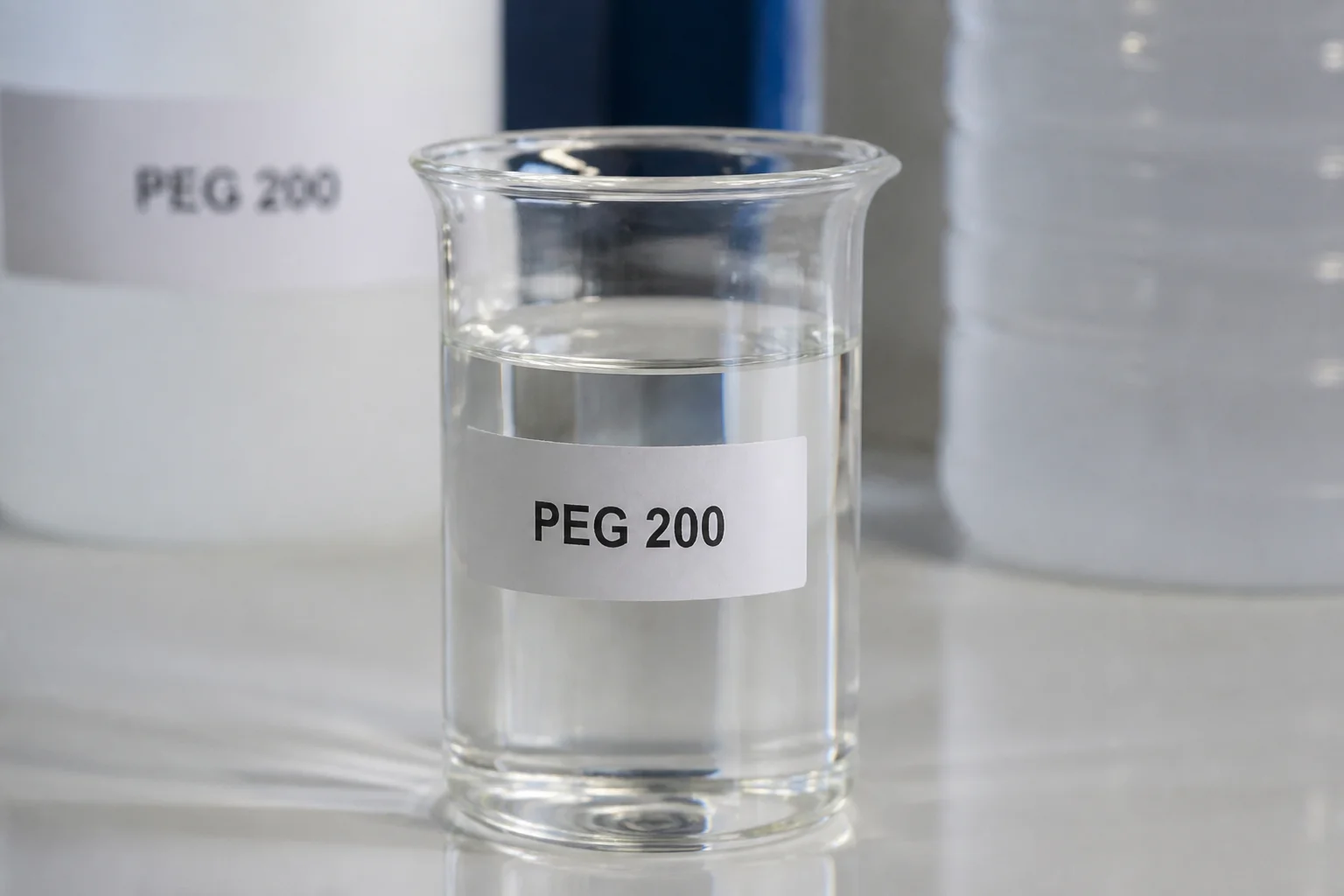
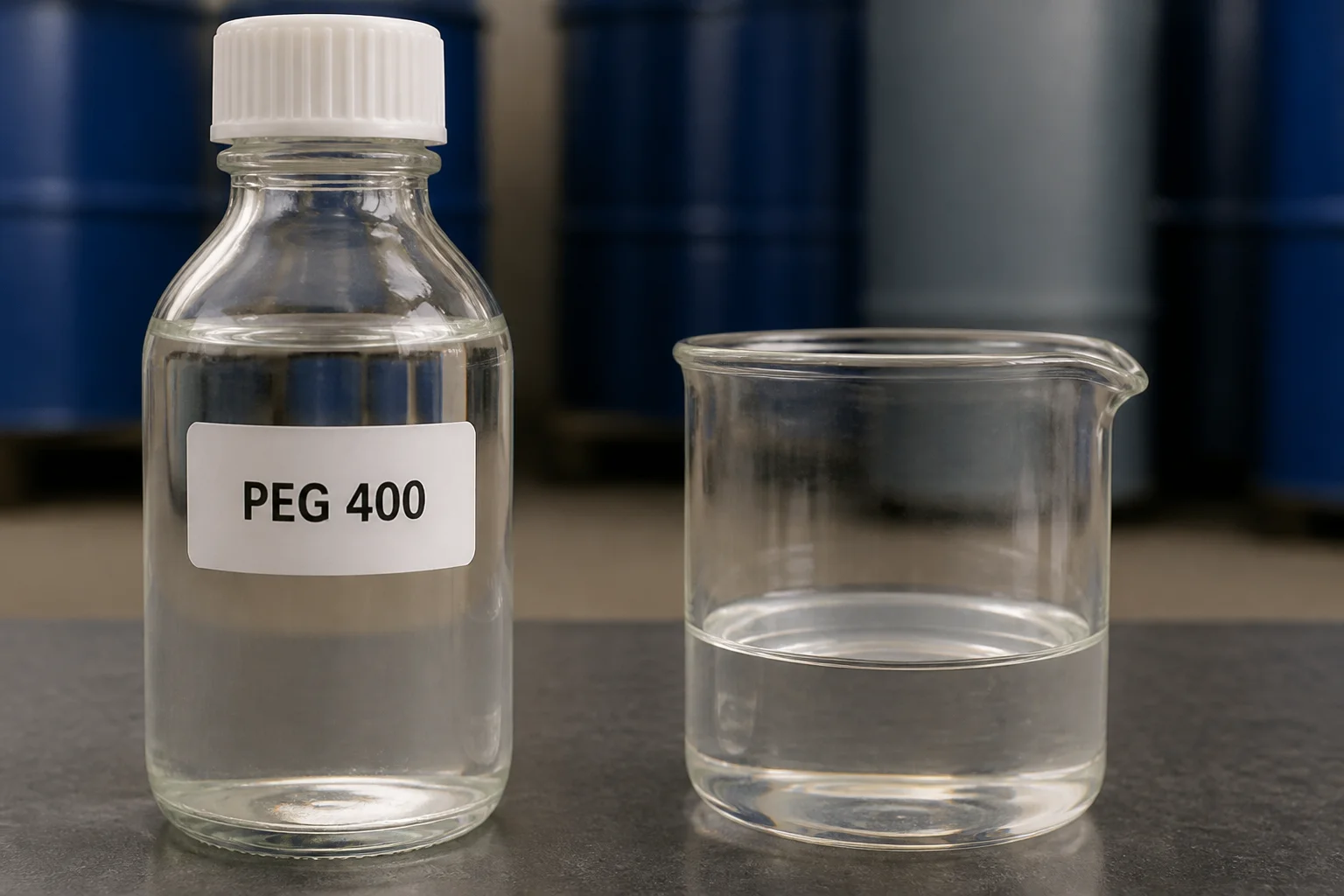
- PEG 200 (molecular weight ~200) is a thin, mobile liquid while PEG 400 (~400 MW) is noticeably more viscous
- The difference between PEG 200 and PEG 400 shows PEG 200 absorbing faster into skin with lighter feel, PEG 400 providing better moisture retention
- Pharmaceutical applications favor PEG 400 for sustained drug delivery, PEG 200 for rapid absorption formulations
- Cosmetic use splits by product type: PEG 200 in serums and light lotions, PEG 400 in body creams and heavy moisturizers
- Industrial applications prefer PEG 200 as carrier fluid and lubricant, PEG 400 for thickening and viscosity control
- Safety profiles are similar but PEG 200 shows slightly higher skin penetration and sensitization potential at equivalent concentrations
- Cost differential runs approximately 10-15% with PEG 400 commanding premium pricing due to longer production time
A pharmaceutical formulator in New Jersey was developing a new topical pain relief gel when she hit a problem. The active ingredient wouldn’t dissolve properly in the base formula. She tried PEG 400 first since that’s what most reference books recommended as a solvent. The gel worked, but it felt too heavy and left a sticky residue on skin that patients complained about during trials. After switching to PEG 200, the texture improved dramatically while maintaining the same drug solubility. That molecular weight difference of just 200 daltons completely changed the product’s feel and user acceptance.
This scenario shows why understanding PEG 200 vs PEG 400 matters beyond just checking off “polyethylene glycol” on an ingredient list. Both are polyethylene glycols, both dissolve in water, both are considered safe and non-toxic. But their different molecular weights create distinct physical properties that determine which applications they suit best.
Understanding Molecular Weight Differences
The numbers in PEG names directly indicate average molecular weight in daltons. PEG 200 contains polymer chains averaging around 200 daltons, while PEG 400 averages approximately 400 daltons. This doubling of molecular weight fundamentally changes how the material behaves.
Both are produced through polymerization of ethylene oxide with water or ethylene glycol. The process continues until the desired chain length is reached, then stops. PEG 200 has about 4-5 ethylene oxide units per molecule. PEG 400 contains roughly 8-9 units. Those extra units make all the difference.
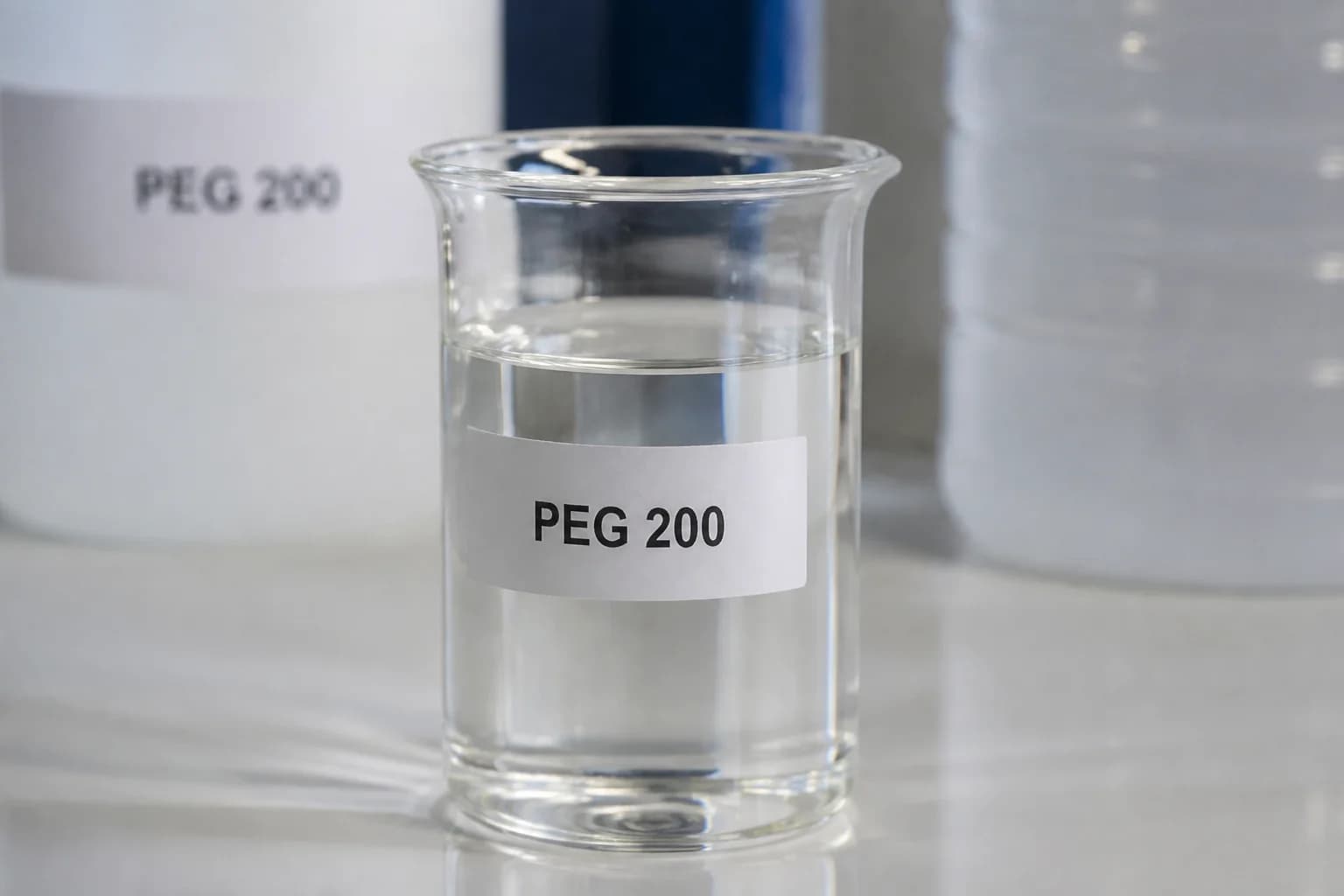
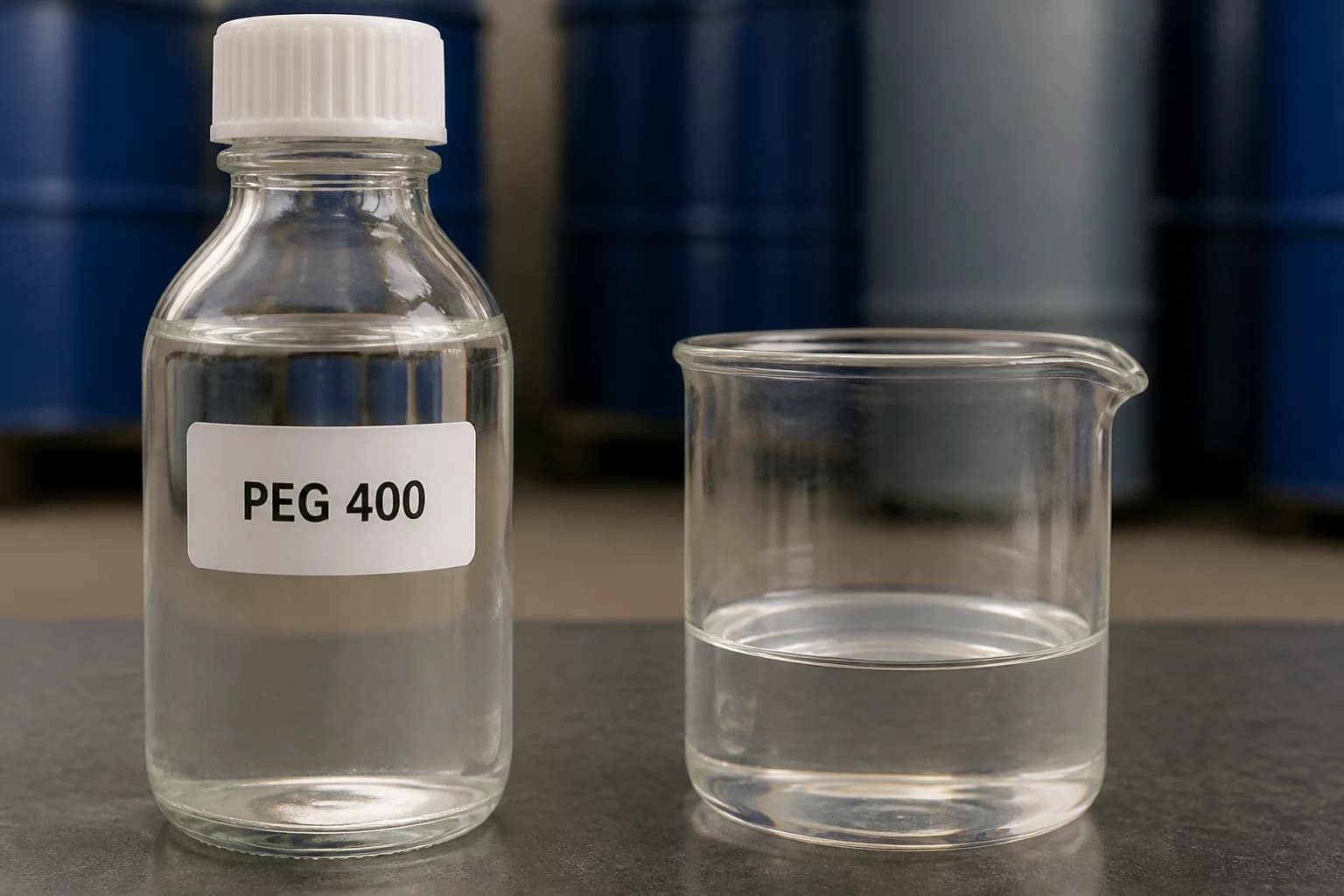
At room temperature, PEG 200 appears as a clear, colorless liquid with relatively low viscosity—think somewhere between water and olive oil in thickness. PEG 400 is also liquid but noticeably thicker, more like glycerin or honey in consistency. This viscosity difference affects everything from how products spread on skin to how they flow through manufacturing equipment.
The molecular weight also determines water solubility behavior. Both dissolve completely in water, but PEG 200 mixes faster and more easily. PEG 400 requires more agitation to fully incorporate into aqueous solutions due to its higher viscosity creating slower diffusion.
Physical Properties Comparison
| Property | PEG 200 | PEG 400 |
| Molecular Weight | ~200 Da | ~400 Da |
| Physical State | Liquid (thin) | Liquid (viscous) |
| Viscosity (20°C) | 40-50 mPa·s | 90-115 mPa·s |
| Freezing Point | -10 to -8°C | 4-8°C |
| Flash Point | 199°C | 246°C |
| Hygroscopicity | High | Moderate |
| Skin Penetration | Higher | Lower |
Pharmaceutical Applications: Choosing Based on Function
The pharmaceutical industry uses both PEG 200 and PEG 400 extensively but for different purposes based on their distinct properties.
PEG 400 in Drug Formulations
PEG 400 serves as one of the most common pharmaceutical excipients, particularly for drugs requiring sustained release or improved bioavailability. Its higher viscosity creates thicker formulations that release active ingredients more slowly over time. Oral medications use PEG 400 to improve dissolution of poorly water-soluble drugs—the PEG helps the drug molecules disperse throughout the digestive system more effectively.
Topical formulations with PEG 400 provide better occlusive properties, meaning they create a protective layer on skin that prevents moisture loss while delivering medication. This works well for treatments requiring extended skin contact time. Eye drops contain PEG 400 as a lubricant that provides lasting relief from dryness without the runny consistency that would drain from eyes immediately.
The absorption characteristics also matter. PEG 400 penetrates skin more slowly than PEG 200, which benefits applications where you want drug delivery to be gradual rather than a quick spike followed by rapid decline.
PEG 200 Applications
PEG 200 excels when faster absorption is beneficial. Transdermal patches often incorporate PEG 200 to help carry drugs through the skin barrier efficiently. The lower viscosity allows better spreading during manufacturing, ensuring even drug distribution throughout the patch.
Injectable formulations sometimes use PEG 200 as a co-solvent to improve the solubility of active ingredients that won’t dissolve in pure water or saline. The lower molecular weight creates less viscosity in the final injection solution, making it easier to draw into syringes and administer.
Some dermatological treatments deliberately choose PEG 200 for its lighter feel on skin. Medications that patients need to apply multiple times daily work better when the base doesn’t feel heavy or greasy, improving compliance.
Cosmetic Industry: Texture and Skin Feel Drive Selection
Cosmetic formulators obsess over texture because it directly affects consumer perception and repeat purchases. The PEG 200 vs PEG 400 decision significantly impacts how finished products feel on skin.
PEG 200 in Lightweight Formulations
Serums, essences, and light lotions frequently contain PEG 200 for its ability to dissolve active ingredients while maintaining fluid consistency. The low viscosity allows products to spread easily across large skin areas without feeling heavy or sticky.
PEG 200 acts as a humectant, attracting moisture from the environment to skin. But it doesn’t create the occlusive barrier that heavier moisturizers need. This makes it perfect for oily or combination skin types that want hydration without greasiness.
Hair serums and leave-in treatments use PEG 200 as a solvent for beneficial oils and silicones. It helps these ingredients distribute evenly through hair without weighing it down or creating buildup.
PEG 400 for Rich Moisturization
Body lotions and heavy night creams incorporate PEG 400 for its thickening effect and superior moisture retention. The higher molecular weight provides more substantial emollient properties that benefit very dry skin.
Winter formulations particularly benefit from PEG 400’s occlusive characteristics. It helps create protective barriers against cold, dry air that strips moisture from skin. The thicker consistency also feels more luxurious and premium, meeting consumer expectations for rich moisturizers.
Some makeup removers use PEG 400 because its viscosity helps lift stubborn cosmetics while the solvent properties break down makeup formulations effectively.
Industrial Uses: Performance vs. Processing Considerations

Beyond personal care, both PEGs serve important industrial functions where their differing properties create distinct use cases.
PEG 200 Industrial Applications
Metal processing operations use PEG 200 as a lubricant and coolant during cutting, drilling, and grinding operations. Its low viscosity allows easy mixing into cutting fluids while providing good lubrication at metal-tool interfaces.
Textile processing incorporates PEG 200 as a softening agent and antistatic treatment. It applies evenly to fabric surfaces during finishing processes without creating stiffness or heavy feel that higher molecular weight PEGs might produce.
The printing industry uses PEG 200 in some ink formulations as a humectant that prevents inks from drying too quickly during printing while maintaining proper flow characteristics.
PEG 400 Industrial Functions
Chemical synthesis often employs PEG 400 as a reaction medium or solvent. Its ability to dissolve both polar and nonpolar substances makes it useful for reactions requiring mixed solvent systems.
Heat transfer applications sometimes use PEG 400 in custom fluid formulations where its higher boiling point and thermal stability provide advantages over lighter PEGs.
Plasticizer formulations for certain polymers incorporate PEG 400 to improve flexibility and workability during processing without significantly compromising final product properties.
Food Industry Applications
Both PEG 200 and PEG 400 have FDA approval for food contact applications, though their uses differ somewhat.
PEG 200 appears in fruit coatings that extend shelf life by reducing moisture loss. The thin liquid spreads easily across fruit surfaces, creating protective barriers without noticeably affecting appearance or texture.
PEG 400 serves as a carrier for flavors and colors in some processed foods. Its higher viscosity helps distribute these ingredients more evenly while the solvent properties ensure they dissolve properly.
Neither PEG is used extensively in food compared to pharmaceutical and cosmetic applications, but these niche uses demonstrate their versatility and safety profiles.
The Difference Between PEG 200 and PEG 400 for Skin
Understanding how these PEGs interact with skin helps formulators choose appropriately for dermatological applications.
PEG 200 penetrates skin more readily due to its smaller molecular size. This increased penetration can be beneficial for transdermal drug delivery but also means higher potential for sensitization in people with PEG allergies. Studies show that lower molecular weight PEGs (under 400) cause allergic reactions more frequently than higher molecular weight versions, though overall sensitization rates remain low.
The skin feel differs noticeably. PEG 200 absorbs within minutes, leaving minimal surface residue. PEG 400 creates more substantial surface presence that takes longer to fully absorb. For nighttime treatments where residue doesn’t matter, PEG 400’s prolonged contact with skin can be advantageous. For daytime use under makeup, PEG 200’s faster absorption works better.
Moisture retention studies show PEG 400 reducing transepidermal water loss more effectively than PEG 200 at equivalent concentrations. The larger molecules create better occlusive barriers, though both function as humectants that attract environmental moisture to skin.
Safety and Regulatory Status
Both PEG 200 and PEG 400 carry generally recognized as safe (GRAS) status from the FDA for appropriate uses. The Cosmetic Ingredient Review Expert Panel evaluated various PEGs and concluded they’re safe for use in cosmetics at current practice levels.
The main safety consideration involves potential hypersensitivity reactions. Research indicates PEG 200 shows slightly higher sensitization potential than PEG 400, likely due to better skin penetration. However, both cause reactions in less than 2% of exposed populations—low enough to be considered safe for general use while requiring warning labels for products containing them.
Kidney toxicity has been observed in animal studies at very high doses of low molecular weight PEGs including PEG 200. But these doses far exceed typical human exposures through cosmetic or pharmaceutical use. Normal application doesn’t raise kidney concerns in healthy individuals.
Environmental safety profiles are similar. Both PEGs biodegrade relatively slowly but don’t bioaccumulate in organisms or environments. Wastewater treatment systems handle them without significant issues.
Manufacturing and Formulation Considerations
From a production standpoint, these PEGs present different handling characteristics that affect manufacturing decisions.
PEG 200’s lower viscosity pumps and mixes more easily, potentially reducing processing time and energy costs. Its better flow properties suit automated filling systems where viscosity variation can cause dosing problems.
PEG 400 requires more vigorous mixing when incorporating into formulations. The higher viscosity creates more resistance in pumps and transfer lines. Temperature control becomes more important since PEG 400’s viscosity increases notably as temperature drops, potentially causing handling issues in cold manufacturing environments.
Hygroscopicity differs between them. PEG 200 absorbs moisture from air more aggressively than PEG 400. This requires tighter control of manufacturing humidity and better container sealing to prevent water absorption during storage.
Cost Factors
PEG 400 typically costs 10-15% more than PEG 200 per kilogram. The price difference reflects longer production time needed to build longer polymer chains. For large-scale operations using tons of material monthly, this cost differential becomes significant.
However, total formulation cost depends on how much PEG the recipe requires. Sometimes PEG 400’s thickening effect means you can use less total material to achieve desired viscosity, potentially offsetting its higher per-unit cost.
Making the Selection Decision
Choosing between PEG 200 vs PEG 400 should be driven by the specific requirements of your application rather than just picking whichever is cheaper or more readily available.
Use PEG 200 when you need:
- Light, fast-absorbing formulations
- Low viscosity for easy spreading or pumping
- Rapid drug delivery through skin
- Lightweight cosmetics for oily skin
- Industrial fluids requiring good flow
Use PEG 400 when you need:
- Rich, moisturizing formulations
- Higher viscosity for texture or stability
- Sustained drug release profiles
- Heavy creams for very dry skin
- Better occlusive properties
Sometimes the best solution involves blending both. A formulation might use 70% PEG 200 and 30% PEG 400 to achieve viscosity between the two pure forms while balancing absorption and moisture retention properties.
Understanding the difference between PEG 200 and PEG 400 allows formulators to make informed choices that optimize product performance for specific applications. These seemingly similar materials offer distinct advantages depending on whether you prioritize lightweight feel versus rich moisturization, rapid absorption versus sustained release, or easy processing versus viscosity control.
For businesses requiring quality polyethylene glycols and formulation support, Elchemy connects you with reliable suppliers offering both PEG 200 and PEG 400 in pharmaceutical and cosmetic grades, along with technical guidance for selecting the optimal molecular weight for your specific application requirements across pharmaceutical, cosmetic, and industrial formulations.