

At a Glance
- Polyethylene glycol (PEG) is a water-soluble polymer available in molecular weights from 200 to over 8,000,000 Da
- FDA classifies PEG as GRAS (Generally Recognized As Safe) for food use and approves it for multiple pharmaceutical applications
- PEG 3350 dominates the laxative market with over $500 million in annual US sales for constipation treatment
- Molecular weight determines application — low MW PEGs (200-600) work as solvents, high MW (1000-8000) serve as tablet binders
- Drug bioavailability increases 40-60% when poorly soluble APIs are PEGylated or formulated with PEG carriers
- Food applications include coating fresh fruits and vegetables to extend shelf life by 3-7 days
- PEG absorbs moisture from the air, making it an effective humectant in baked goods and confections
- Pharmaceutical excipient market for PEG in US exceeds $180 million annually with 8-10% growth projected
A formulation scientist at a generic drug maker in New Jersey was really hitting a wall with a new product. The key ingredient just wouldn’t dissolve in water properly – basically , not enough of it was getting into the body for it to do any good.
Bioavailability tests kept coming in at 25-30% – nowhere near as good as its reference drug counterpart, which was absorbing at 65%. After trying all sorts of different approaches, she was getting desperate – that is, until she decided to reformulate using PEG 400 as a solubilizing agent. The next batch of product tested at 62% bioavailability. The same API, but suddenly it just worked – courtesy of PEG making all the difference.
Getting to know the benefits of polyethylene glycol can be a real game-changer for formulators working in the food and pharma industry. This handy polymer is everywhere , from prescription tablets to the stuff they use to coat fruit, and in each case its different properties are being used to solve a particular problem – whether it’s making something water-soluble, non-toxic, able to hold onto moisture, or just make other ingredients work better. The US market uses thousands of tons of it every year because it delivers solid results time and time again – no matter what you’re using it for.
Benefits of Polyethylene Glycol in Pharmaceutical Formulations
Improving Drug Solubility and Bioavailability
Poor water solubility is a major hurdle in the drug development process .The trouble starts when an API doesn’t dissolve properly in the digestive system : the body struggles to absorb it. That’s where PEG comes in to try and help.
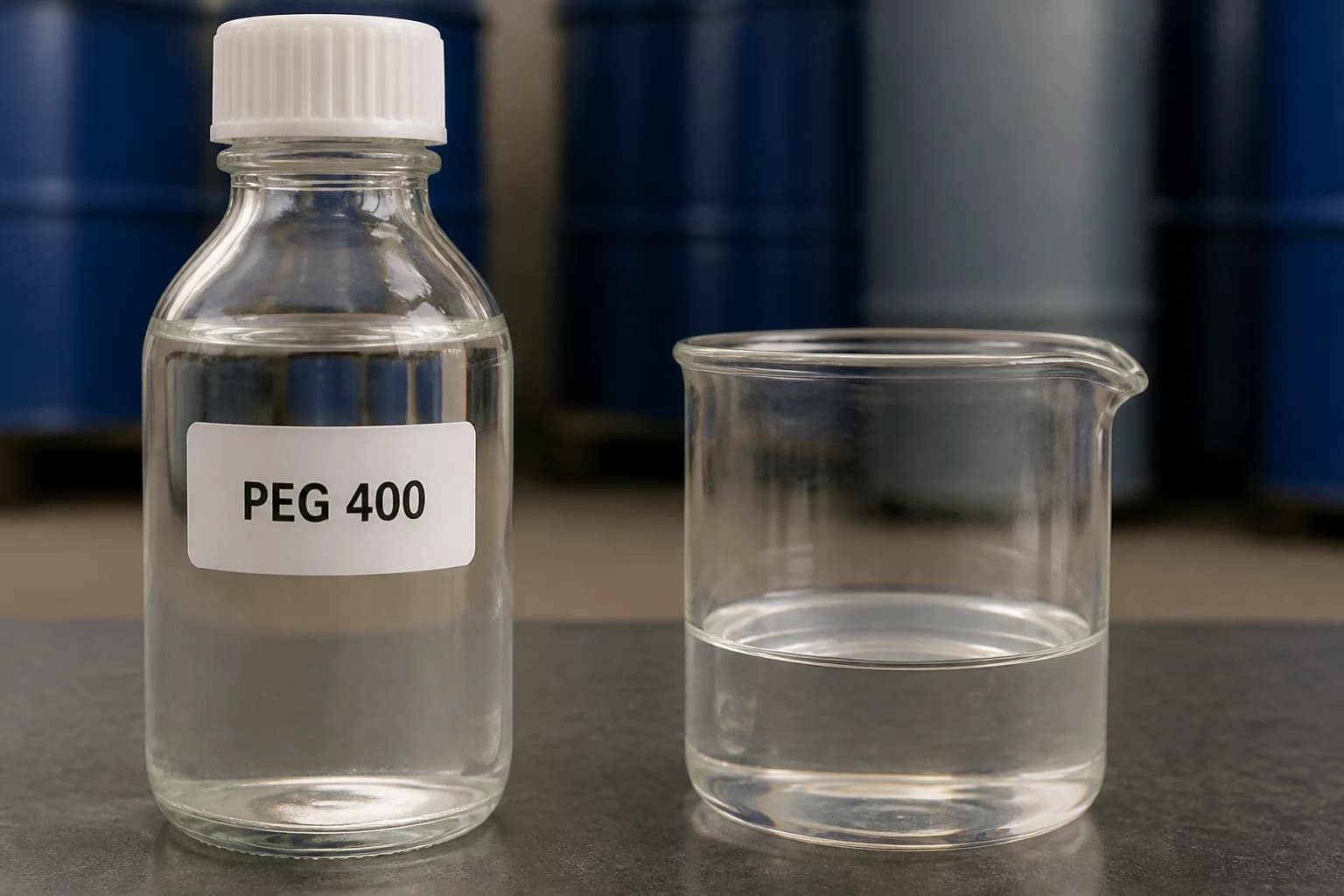
PEG does a great job as a solubilizing agent. Mixing poorly soluble drugs with liquid PEG (which has molecular weights ranging from 200-600) or dissolving them in melted solid PEG (molecular weights of 1000 to 6000) can create something called a solid dispersion .
What happens here is the drug molecules get trapped within the PEG matrix . Then, when this formulation hits stomach acids, the PEG dissolves easily, releasing the drug in a much finer dispersed form that the body can very much absorb more easily.
Key pharmaceutical benefits:
- Increases bioavailability by 40-60% for poorly soluble drugs through solid dispersion technology
- Reduces food effect variability — absorption becomes more consistent regardless of meal timing
- Enables lower API doses while maintaining therapeutic effect
- Improves patient compliance through better, more predictable therapeutic outcomes
- Allows reformulation of existing drugs with improved performance profiles
Cyclosporine is a good example. This immunosuppressant drug is highly lipophilic and absorbs poorly. Formulating it with PEG 400 and other excipients created Neoral, which shows 30-50% better bioavailability than the original formulation. Patients get consistent blood levels with lower doses.
PEG-Improved Drug Formulations
| Drug | Original Bioavailability | PEG-Based Bioavailability | PEG Type Used | Clinical Benefit |
| Cyclosporine | 30-45% | 60-80% | PEG 400 | Lower doses, less variability |
| Itraconazole | 55% | 90%+ | PEG 400 | More reliable antifungal effect |
| Ritonavir | 40% | 65% | PEG 400 + 3350 | Effective HIV viral suppression |
| Tacrolimus | 25% | 50% | PEG 6000 | Better immunosuppression control |
The mechanism is straightforward. PEG increases the drug’s apparent solubility in aqueous media. It also increases the wetting of hydrophobic drug particles, helping them disperse in gastrointestinal fluids. Some researchers think PEG might also inhibit drug crystallization, keeping it in a more soluble amorphous form.
Controlled Release Systems
PEG shows up in extended-release tablets and capsules. High molecular weight PEGs (4000-8000) work as hydrophilic matrix formers. When you compress them with an API and other excipients, the tablet swells in contact with water, forming a gel layer. The drug diffuses through this gel slowly over hours.
This gives you zero-order or near-zero-order release kinetics — a steady drug release rate rather than a big dump upfront. For medications that need stable blood levels throughout the day, this matters a lot.
Common controlled-release applications:
- Extended-release pain medications maintaining steady analgesia for 12-24 hours
- Once-daily cardiovascular drugs providing consistent blood pressure control
- Sustained-release diabetes medications preventing blood sugar spikes
- Modified-release psychiatric medications reducing peak-related side effects
PEG also appears in hot-melt extrusion formulations. The process melts PEG along with the drug and other polymers, then extrudes the mixture through a die. You get uniform drug distribution at a molecular level.
Tablet and Capsule Manufacturing
PEG serves multiple functions in solid dosage forms. As a binder, it holds tablet ingredients together during compression. PEG 4000 and 6000 are common choices.
Manufacturing benefits:
- Improves powder flow through hoppers and feed frames by 30-50%
- Reduces tableting defects like capping, lamination, and sticking to punches
- Enables direct compression formulations, eliminating wet granulation steps
- Provides lubrication without creating hydrophobic films that slow dissolution
- Creates tablets with 15-20% faster disintegration times compared to traditional binders
PEG Molecular Weight Selection Guide
| Application | Recommended MW | Physical Form | Key Property | Typical Use Level |
| Solubilizer | 200-600 | Liquid | True solvent for APIs | 10-40% of formulation |
| Solid dispersion | 1000-6000 | Waxy solid | Traps drug in matrix | 30-70% of formulation |
| Tablet binder | 4000-8000 | Hard solid | Provides compaction | 5-15% of formulation |
| Controlled release | 4000-8000 | Hard solid | Forms gel layer | 20-50% of formulation |
| Coating | 400-1000 | Liquid/soft solid | Film formation | 2-10% of coating |
| Suppository base | 1000-6000 | Waxy solid | Melts at body temp | 70-95% of formulation |
For capsule filling, PEG helps create free-flowing granules with the right bulk density. It improves content uniformity, which is critical for regulatory approval.
PEGylation of Therapeutic Proteins
This is a specialized application but economically huge. PEGylation means chemically attaching PEG chains to therapeutic proteins or peptides. This changes the protein’s properties dramatically.
Benefits of protein PEGylation:
- Extends half-life from hours to days, reducing injection frequency
- Reduces immunogenicity by shielding protein from immune recognition
- Protects from enzymatic degradation in bloodstream
- Improves solubility and stability of the protein therapeutic
- Enables subcutaneous administration instead of IV infusion
The US market for PEGylated drugs exceeds $15 billion annually. Peginterferon alfa for hepatitis C, pegaspargase for leukemia, certolizumab pegol for autoimmune diseases — these are billion-dollar products that only work well because of PEG modification.
How Does Polyethylene Glycol Work: Mechanisms of Action
Molecular Structure and Properties
PEG is a simple polymer. It’s made by polymerizing ethylene oxide (a two-carbon ring with an oxygen atom). String together anywhere from a few to thousands of ethylene oxide units and you get PEG. The general formula is H-(O-CH₂-CH₂)n-OH.
The properties change with molecular weight:
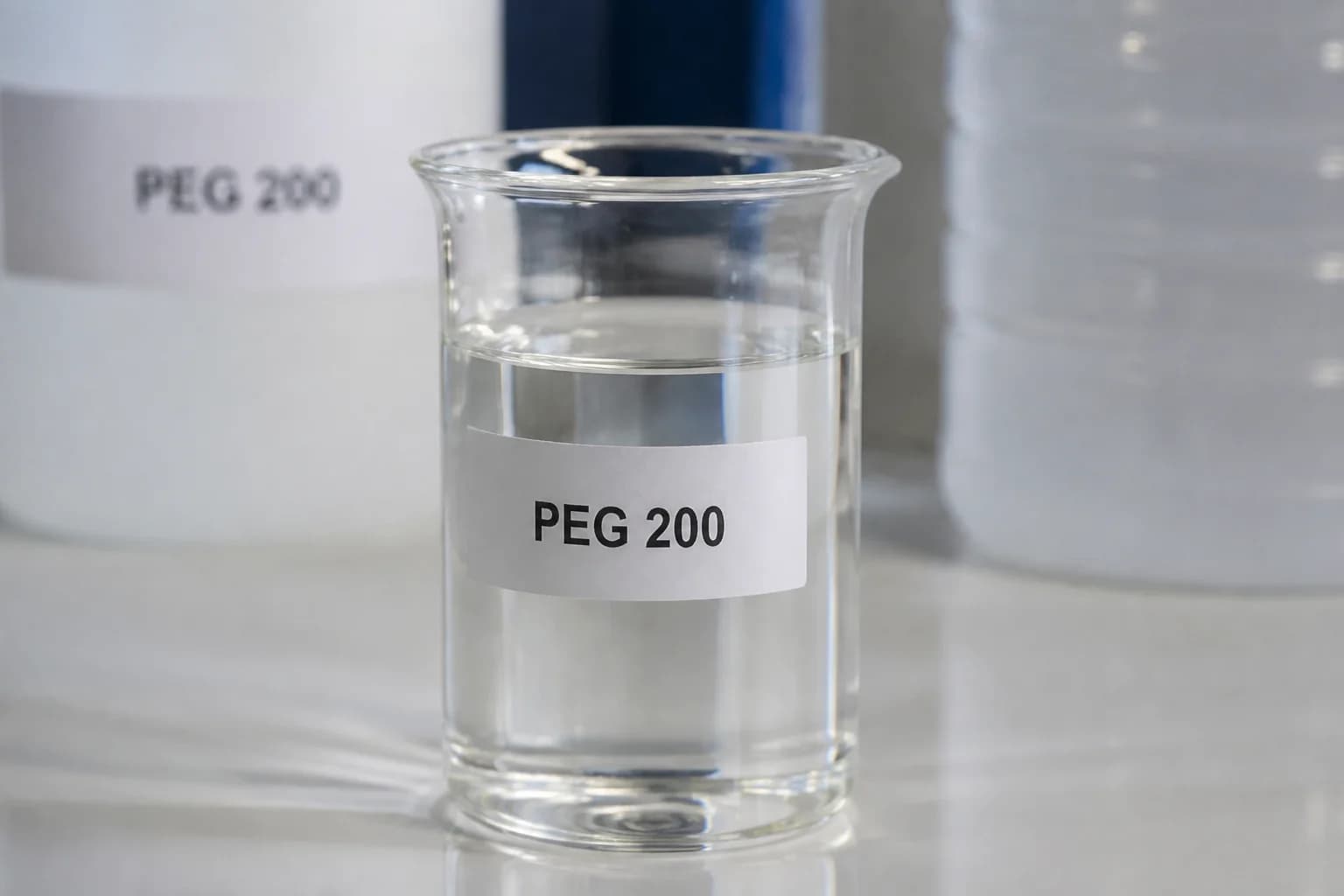
- PEG 200-600: Clear, colorless liquids with slight oily feel — used as solvents
- PEG 1000-2000: Waxy solids melting just above room temperature — used in solid dispersions
- PEG 4000-8000: Hard, white solids with melting points 60-65°C — used as binders and matrix formers
- PEG 20,000+: Very high MW powders used in specialty applications
But they all share key characteristics. They’re water-soluble. They’re non-toxic at typical use levels. They don’t have a strong taste or smell. They’re chemically stable under normal storage conditions.
How PEG Improves Solubility
When you ask how does polyethylene glycol work as a solubilizer, the answer involves several mechanisms working together.
Three-part mechanism:
- Crystal disruption: PEG molecules insert between drug molecules, weakening crystal lattice forces
- Favorable solvation: Creates a PEG-rich microenvironment where hydrophobic drugs dissolve better
- Recrystallization inhibition: Interferes with drug precipitation, maintaining supersaturation longer
Table 3: Mechanism Comparison by PEG Type
| PEG Form | Mechanism | Drug State | Release Pattern | Best For |
| Liquid PEG solution | True dissolution | Molecularly dispersed | Immediate | Liquid fills, soft gels |
| Solid dispersion | Amorphous stabilization | Drug trapped in matrix | Rapid on contact with water | Fast-dissolving tablets |
| Hot-melt extrusion | Molecular mixing | Drug-PEG co-mixture | Controlled, matrix-dependent | Extended release |
| PEGylation | Covalent bonding | Chemically modified drug | N/A (different molecule) | Protein therapeutics |
The exact mechanism depends on the specific drug and PEG molecular weight. But these three factors explain most of what we see clinically.
Moisture Management in Food Systems
In food applications, understanding how does polyethylene glycol work as a humectant matters. PEG attracts and holds water molecules. The ether oxygen atoms in the PEG chain form hydrogen bonds with water.
Moisture control mechanisms:
- Absorbs water from air, preventing product dehydration
- Retains water in product matrix, maintaining soft texture
- Slows water migration between product layers
- Interferes with starch retrogradation in baked goods
- Prevents sugar crystallization by maintaining hydration shells around sugar molecules
In baked goods, this prevents staleness. Bread goes stale when water migrates from the soft interior to the crust, or when starch molecules recrystallize. PEG slows both processes.
Food Industry Applications and Benefits
Coating and Preservation of Fresh Produce
Fresh produce starts deteriorating the moment it’s harvested. Water evaporates through the skin. Oxygen triggers enzymatic browning. Microorganisms grow on the surface. PEG-based coatings address all three problems.
Produce coating benefits:
- Reduces weight loss from 8-12% to 2-4% over 30 days storage
- Maintains firmness and crunch texture 5-7 days longer
- Preserves visual appeal — brighter color, less shriveling
- Slows respiration rate by 20-35%, extending shelf life
- Reduces microbial growth on surface by creating barrier
- Decreases need for refrigeration intensity during retail display
Table 4: Shelf Life Extension by Produce Type
| Produce | Uncoated Shelf Life | PEG-Coated Shelf Life | Extension | Quality Improvement |
| Apples | 30-45 days | 60-90 days | 100% | Better firmness, less shriveling |
| Citrus fruits | 14-21 days | 28-35 days | 67% | Reduced weight loss, glossy appearance |
| Bell peppers | 7-10 days | 14-17 days | 70% | Less wrinkling, maintained color |
| Tomatoes | 5-7 days | 10-14 days | 100% | Slower softening, reduced spoilage |
| Cucumbers | 7-10 days | 14-18 days | 80% | Less moisture loss, firmness retained |
The benefits of polyethylene glycol in this application include its low cost, easy application, food-safe status, and effectiveness at low concentrations. Typical coating solutions use just 0.5-2% PEG.
Bakery and Confectionery Products
PEG shows up in commercial baking as a dough conditioner and softener. It interacts with gluten proteins, making dough more extensible and easier to handle.
Bakery applications:
- Dough conditioning: improves extensibility and machinability in high-speed bakeries
- Crumb softening: keeps texture moist for 7-10 days versus 3-5 days without PEG
- Anti-staling: slows starch retrogradation and moisture migration
- Release agent: prevents sticking to pans and equipment
- Emulsifier support: helps distribute fats uniformly through dough
In confections, PEG prevents sugar crystallization in fondants, fudge, and soft candies. It also reduces the sticky, tacky texture that develops in humid conditions.
Beverage and Flavor Applications
PEG works as a carrier and solubilizer for flavoring compounds in beverages. Many natural and artificial flavors are hydrophobic oils that don’t mix with water.
Beverage formulation uses:
- Flavor solubilization: disperses essential oils uniformly in aqueous systems
- Emulsion stabilization: keeps oil droplets suspended in cloudy beverages
- Vitamin delivery: solubilizes fat-soluble vitamins in clear drinks
- Color carrier: helps disperse carotenoids and other lipophilic colorants
- Foam control: modifies surface tension for better carbonation stability
For dietary supplements and functional beverages, PEG solubilizes poorly water-soluble nutrients like vitamin E, CoQ10, and curcumin.
Conclusion
The benefits of polyethylene glycol span multiple industries, solving practical problems from improving drug absorption to keeping bakery products fresh. In pharmaceuticals, PEG increases bioavailability of poorly soluble drugs by 40-60%, enables controlled-release formulations delivering steady drug levels for 12-24 hours, and supports manufacturing of consistent, high-quality tablets and capsules with 15-20% faster disintegration. The PEGylation of therapeutic proteins has created blockbuster drugs with dramatically improved dosing schedules, reducing injections from daily to weekly or monthly. In food applications,
PEG extends produce shelf life by 67-100%, improves baked goods texture retention for 7-10 days, and helps incorporate challenging ingredients into consumer products. Its FDA-approved status, low toxicity profile with LD50 exceeding 50 g/kg, versatility across molecular weights from 200 to 8000 Da, and compatibility with other ingredients make it a go-to material for formulators facing solubility, stability, or processing challenges.
For businesses in US food and pharmaceutical sectors looking for reliable PEG supplies across molecular weight ranges, Elchemy connects you with verified suppliers offering USP-grade, EP-grade, and food-grade polyethylene glycol with complete documentation supporting regulatory compliance, quality assurance, and technical specifications for your specific formulation needs.