

At a Glance
- Phenoxyethanol and caprylyl glycol combine to create broad-spectrum antimicrobial protection
- Used at 0.75-1.5% total concentration in lotions, creams, and water-based formulations
- Phenoxyethanol targets bacteria while caprylyl glycol boosts yeast and mold resistance
- Works effectively across pH 4-8, making it versatile for most cosmetic formulas
- Caprylyl glycol is NOT the same as propylene glycol despite similar names
- System is paraben-free and formaldehyde-free, appealing to clean beauty consumers
- Add during cool-down phase below 60°C to maintain preservative effectiveness
Walk into any cosmetics store and pick up a lotion or cream. Chances are you’ll see “phenoxyethanol” and “caprylyl glycol” listed together on the ingredient label. This preservative duo has become one of the most popular combinations in modern cosmetic formulations, protecting products from bacteria, yeast, and mold while avoiding controversial ingredients like parabens.
The beauty of this preservative system lies in how these two compounds work together synergistically. Alone, each has limitations. Combined, they create broad-spectrum protection that keeps water-based products safe for months or even years. Understanding how this partnership functions helps explain why formulators rely on it so heavily across diverse product categories.
Understanding Phenoxyethanol and Caprylyl Glycol
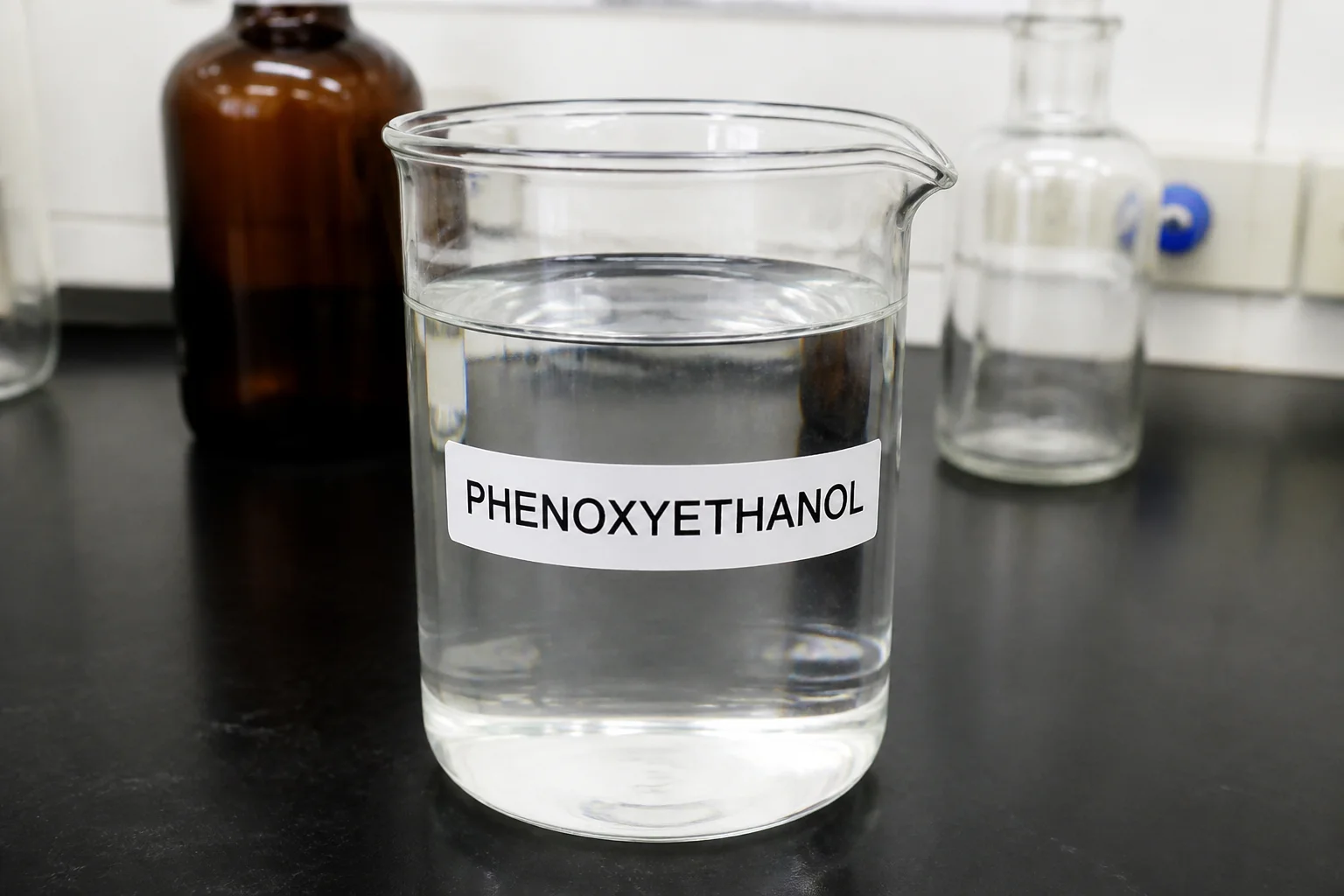
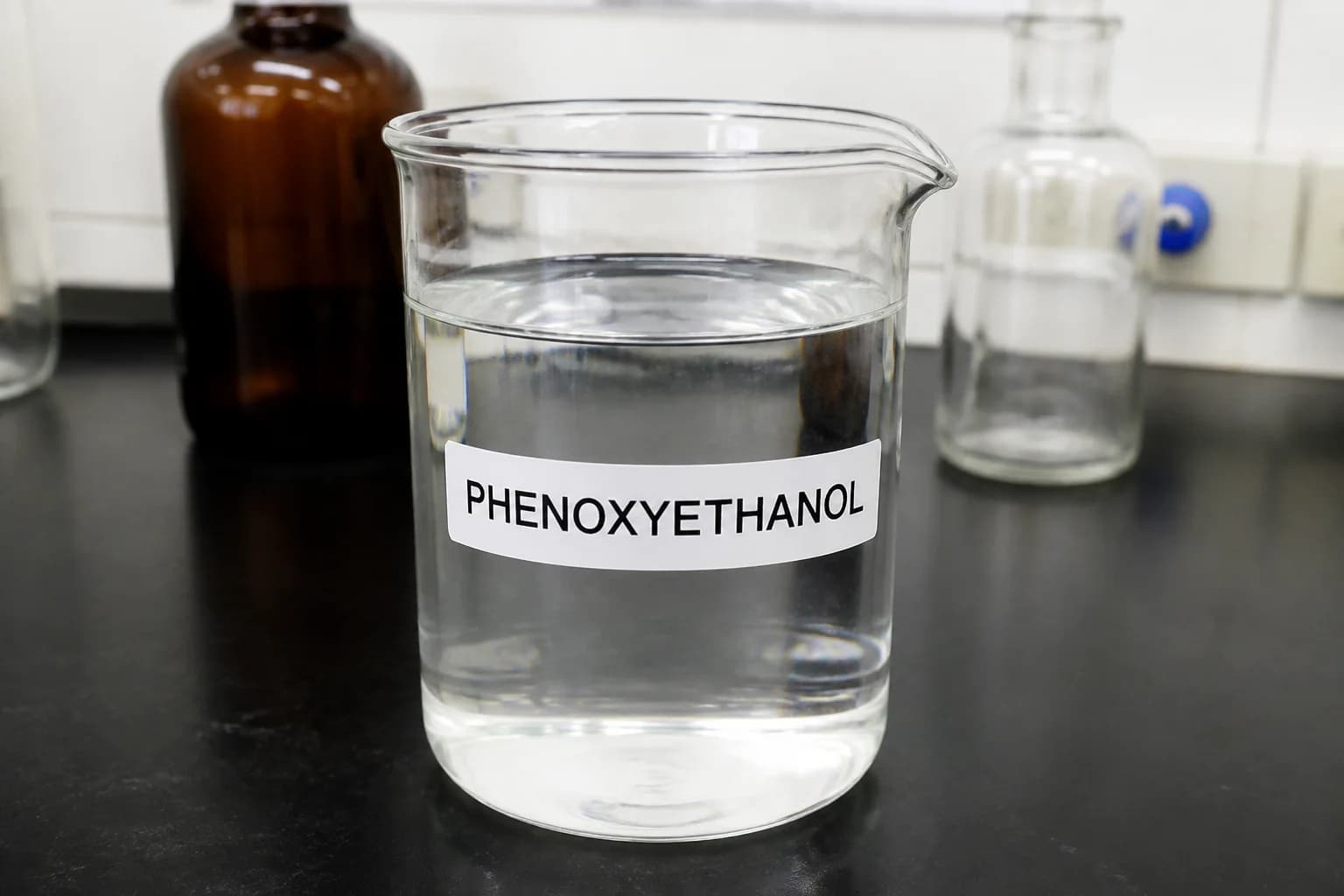
Phenoxyethanol (chemical name: 2-phenoxyethanol) is an aromatic ether alcohol produced by reacting phenol with ethylene oxide. It appears as a clear, slightly viscous liquid with a faint pleasant odor. This compound has been used in cosmetics since the 1950s, providing reliable antibacterial protection with an established safety profile spanning decades.
The compound works primarily against bacteria—both gram-positive and gram-negative types—making it effective against common contaminants like Pseudomonas, Staphylococcus, and E. coli. However, phenoxyethanol shows weaker activity against yeast and mold when used alone. This limitation drives the need for boosting ingredients to create complete broad-spectrum coverage.
Caprylyl glycol (1,2-octanediol) is a short-chain diol derived from caprylic acid, a saturated fatty acid found naturally in coconut and palm oil. Unlike its name suggests, it’s not just a preservative—it’s a multifunctional ingredient offering skin conditioning, moisturizing, and antimicrobial properties all in one molecule.
What makes caprylyl glycol special is how it enhances other preservatives. The compound disrupts microbial cell membranes, making bacteria, yeast, and mold more vulnerable to phenoxyethanol’s antibacterial action. This synergy means lower concentrations of each ingredient achieve better protection than higher amounts of either alone.
How the Synergy Works
The preservative power of phenoxyethanol and caprylyl glycol together exceeds what you’d expect from simply adding their individual effects. This synergistic relationship creates what chemists call “preservation boosting”—where 1+1 equals 3 in terms of antimicrobial effectiveness.
Key mechanisms of synergy:
- Caprylyl glycol damages cell membranes, letting phenoxyethanol penetrate more easily
- Phenoxyethanol disrupts metabolic processes while caprylyl prevents membrane repair
- Combined system works across broader pH range than either ingredient alone
- Dual mechanism reduces chance of microbial resistance developing over time
- Caprylyl’s humectant properties improve skin feel while preserving
Phenoxyethanol’s Antibacterial Action
Phenoxyethanol penetrates bacterial cell walls and interferes with cellular metabolism, particularly disrupting cell membrane function and protein synthesis. Bacteria exposed to phenoxyethanol lose their ability to maintain proper ion gradients across membranes, leading to cell death. The compound works quickly—challenge testing shows significant bacterial reduction within 24-48 hours of contamination.
Concentration matters significantly. Below 0.5%, phenoxyethanol provides minimal protection. At 0.75-1%, it delivers good antibacterial coverage but needs help with fungi. European regulations permit up to 1% in cosmetics, while Japan and some other markets restrict it further based on product type.
Caprylyl Glycol’s Boosting Effect
Caprylyl glycol doesn’t work like traditional preservatives. Instead of directly killing microorganisms, it weakens them by disrupting their protective barriers. The 1,2-diol structure interacts with lipid membranes, creating instability that makes microbes more susceptible to other antimicrobial agents.
This boosting effect proves especially valuable against yeast and mold—organisms that phenoxyethanol handles poorly alone. Studies show formulations with both ingredients pass European Pharmacopoeia challenge tests that single-ingredient systems fail. The typical use level of 0.2-0.4% caprylyl glycol significantly improves overall preservation when combined with phenoxyethanol.
Beyond preservation, caprylyl glycol contributes skin conditioning benefits. Its humectant properties help formulations feel less drying, offsetting any harshness from phenoxyethanol. This dual functionality aligns with modern formulation philosophy favoring multifunctional ingredients.
Is Caprylyl Glycol the Same as Propylene Glycol
No, caprylyl glycol is completely different from propylene glycol despite both being “glycols.” This confusion stems from their similar-sounding names, but their chemical structures, properties, and functions differ significantly.
| Property | Caprylyl Glycol | Propylene Glycol |
| Chemical Structure | 1,2-octanediol (C8) | 1,2-propanediol (C3) |
| Carbon Chain Length | 8 carbons | 3 carbons |
| Primary Function | Preservative booster, humectant | Solvent, penetration enhancer |
| Typical Use Level | 0.2-0.5% | 1-10% |
| Derived From | Caprylic acid (coconut/palm) | Petroleum or bio-synthesis |
| Antimicrobial Activity | Yes, membrane disruption | Minimal |
| Skin Feel | Soft, non-greasy | Can feel sticky at high levels |
Propylene glycol (PG) is a much smaller molecule used primarily as a solvent and penetration enhancer in cosmetics. It helps dissolve ingredients that won’t mix otherwise and can increase how deeply other compounds penetrate skin. PG appears in products at much higher concentrations (often 5-10%) than caprylyl glycol’s typical 0.2-0.5%.
The safety profiles differ too. Propylene glycol can cause irritation in some people, particularly at higher concentrations or on sensitive skin. Caprylyl glycol demonstrates better tolerability with fewer reports of sensitivity. The Cosmetic Ingredient Review panel concluded caprylyl glycol is safe for cosmetic use based on extensive toxicology data.
Many “glycol-free” product claims specifically target propylene glycol due to consumer concerns, while caprylyl glycol typically remains acceptable even in formulations marketed as avoiding controversial glycols. Understanding this distinction prevents confusion when evaluating product labels.
Usage Guidelines and Best Practices
Getting the best results from phenoxyethanol and caprylyl glycol requires following specific formulation guidelines. Proper usage ensures adequate preservation while maintaining product safety and stability.
The standard concentration range for this preservative system is 0.75-1.5% total, with typical blends containing approximately 50-55% phenoxyethanol and 40-44% caprylyl glycol. Products sold as ready-made preservative blends (often called Optiphen or similar names) use these ratios, simplifying formulation calculations.
pH compatibility spans 4-8, covering most cosmetic products. Outside this range, efficacy decreases significantly. Highly alkaline formulations (pH >9) require alternative preservation strategies, as phenoxyethanol breaks down under strongly basic conditions. Acidic products below pH 3 work but may need higher concentrations for adequate protection.
Application best practices:
- Add during cool-down phase when product temperature drops below 60°C (140°F)
- Never heat phenoxyethanol above 80°C as it degrades with prolonged high heat exposure
- Disperse thoroughly to ensure even distribution preventing hot spots vulnerable to contamination
- Test final product pH after adding preservative as it can shift formulation pH slightly
- Validate preservation through microbial challenge testing for commercial products
Product format influences effectiveness. Pump bottles and airless packaging work excellently with this system by minimizing contamination during use. Wide-mouth jars present higher risk because repeated finger contact introduces bacteria. Jar packaging may require higher preservative concentrations or additional antimicrobial ingredients.
Some formulation components interfere with preservative activity. Heavy botanical loads, proteins, and high levels of certain surfactants can reduce effectiveness. Formulators working with challenging ingredients should conduct challenge testing to verify adequate protection rather than assuming standard concentrations suffice.
Conclusion
Phenoxyethanol and caprylyl glycol represent a thoroughly tested, widely accepted preservative combination addressing modern formulation needs. The synergy between phenoxyethanol’s antibacterial strength and caprylyl glycol’s boosting effect creates reliable broad-spectrum protection while avoiding parabens and formaldehyde-releasing preservatives that concern many consumers.
Understanding how this system works—and knowing that caprylyl glycol differs completely from propylene glycol—helps both formulators and consumers make informed decisions. The combination offers an effective balance between preservation, safety, and skin compatibility that explains its popularity across countless cosmetic products from drugstore brands to luxury formulations.
For manufacturers requiring phenoxyethanol, caprylyl glycol, or other cosmetic preservation systems with complete quality documentation, Elchemy’s technology-driven platform connects buyers with verified suppliers across global markets. Founded by IIT Bombay engineer Hardik Seth and IIT Delhi engineer Shobhit Jain, Elchemy provides transparent access to cosmetic-grade materials, technical specifications, and reliable supply chains supporting formulation development from concept through commercial production.