

At a Glance
- Oleoresins are liquid, semisolid, or solid residues composed of volatile oils, fixed oils, pigments, pungent constituents, and natural antioxidants extracted from spices and herbs
- Oleoresins are 5 to 20 times stronger in flavor than their corresponding whole spices, meaning smaller amounts deliver the same result
- In the US, 21 CFR parts 173 and 182.20 give essential oils and oleoresins GRAS status, with defined solvent residue limits
- The global oleoresin market was valued at USD 1.8 billion in 2023 and is projected to reach USD 2.83 billion by 2030 at 6.9% CAGR
- The main oleoresins used in food are from black pepper, cinnamon, ginger, paprika, and turmeric
- The food application segment dominates oleoresin use with a 28% market share in 2023
- Paprika oleoresin has GRAS status from both the FDA and the EFSA, with scientific studies showing no toxicity or genotoxicity within regulatory limits
Check the label on a bag of potato chips, a packet of deli meat, or a bottle of hot sauce and there is a good chance you will find the words “natural flavors” or “spice extractives” somewhere in the ingredients. That is often oleoresin at work. It is not a single ingredient but a category of concentrated plant extracts, each one carrying the full flavor, aroma, color, and in some cases the heat of a specific spice or herb.
Oleoresin in food is more common than most people realize, and it is used precisely because it does more with less. A few grams of black pepper oleoresin can replace far larger quantities of ground pepper in a processed food application while delivering more consistent flavor and better microbial safety. For US food manufacturers navigating clean-label requirements and natural ingredient mandates, oleoresins sit in a useful middle ground: they are derived entirely from plants, they are FDA-recognized as safe, and they behave more predictably than raw spices in large-scale production.
What Oleoresins Actually Are
Oleoresins are the concentrated extract obtained from different parts of plants, spices, and herbs. Different from essential oils, oleoresins comprise, in addition to volatile compounds, non-volatile compounds such as pigments and pungency, making them more complex extracts.
Think of it this way. An essential oil captures the aromatic volatile fraction of a spice. An oleoresin captures almost everything else too: the fixed oils, the pigments, the heat compounds, the antioxidants, and the heavier flavor notes that steam distillation misses. That completeness is the point.
Because oleoresins contain all of the volatile and nonvolatile flavor components of the spice, they provide a more rounded flavor profile than essential oils. The extraction solvent removes almost all of the flavor constituents of the herb, and by distilling out the solvent, the solution reduces into an oily residue.
How they are made, broadly:
- The dried plant material is ground and loaded into an extraction vessel
- A food-grade solvent (hexane, ethanol, acetone, or supercritical CO2) percolates through the material
- The solvent is removed under vacuum, leaving behind the concentrated oleoresin
- The finished product is standardized to specific color, flavor, or pungency values before sale
Supercritical CO2 extraction technology improves product quality across segments by delivering higher purity levels and better preservation of bioactive compounds compared to conventional solvent methods. It is the growing preferred method for premium food ingredient applications.
The Main Types Used in the Food Industry
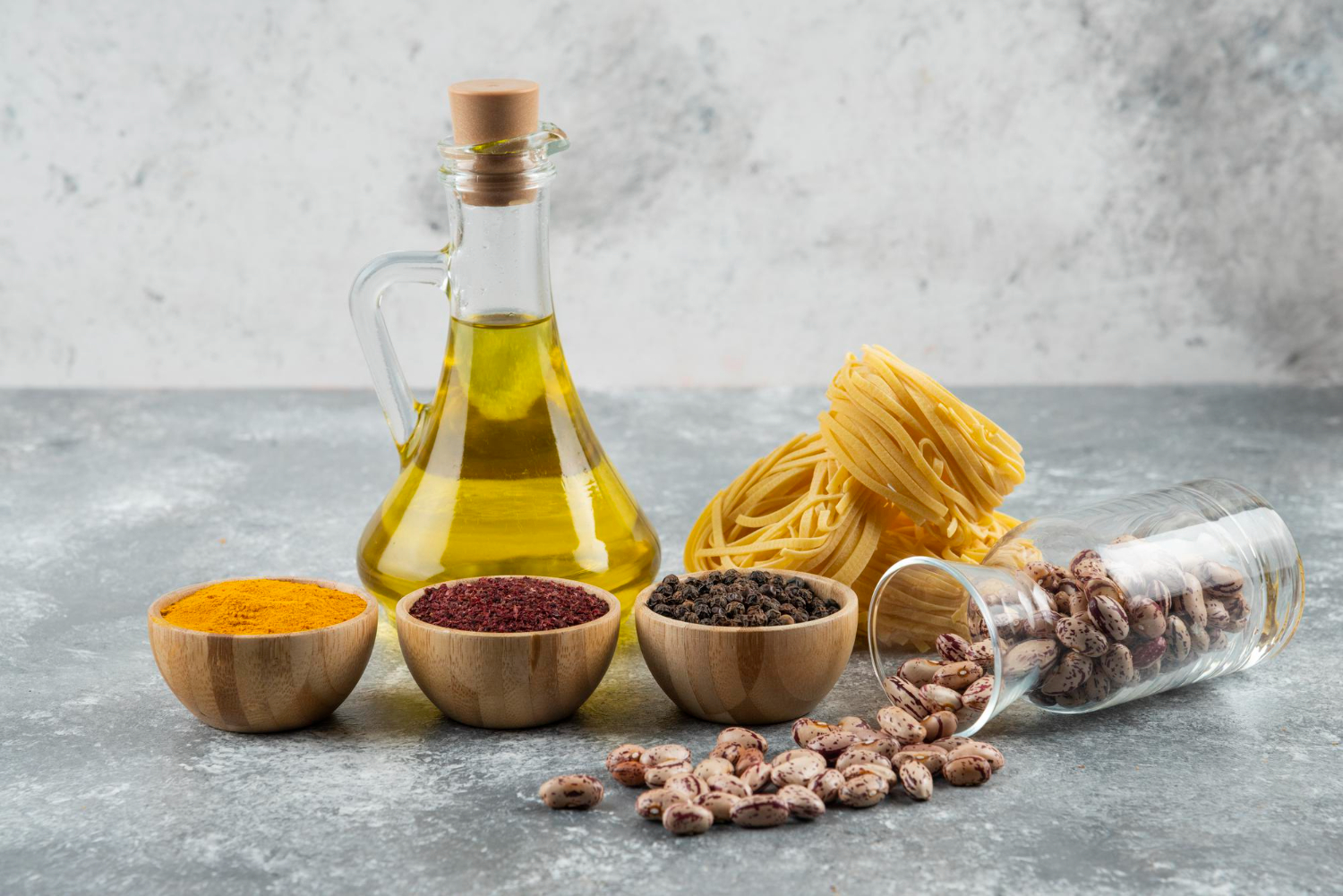
The primary function of oleoresins in the food industry is to provide flavor, aroma, and color to foodstuffs. Cinnamon oleoresin gives a sweet taste, hot sensory characteristics are given by chili pepper extracts, pungent effects from ginger and black pepper oleoresins, and coloring function mainly from paprika and turmeric.
| Oleoresin Type | Primary Function | Key Active Compounds | Typical Food Applications |
| Paprika | Color, mild flavor | Capsanthin, capsorubin, carotenoids | Sausages, snacks, cheese, soups, sauces, ketchup |
| Black pepper | Pungency, flavor | Piperine, terpenes | Meat products, seasonings, ready meals |
| Turmeric | Color, health benefits | Curcumin | Curries, mustard, beverages, supplements |
| Capsicum / chili | Heat, flavor | Capsaicin, capsaicinoids | Hot sauces, snacks, spice blends |
| Ginger | Pungency, warmth | Gingerols, shogaols | Beverages, confectionery, baked goods |
| Cinnamon | Sweet spice, flavor | Cinnamaldehyde, eugenol | Baked goods, beverages, confectionery |
Each one can be supplied in oil-soluble liquid, water-dispersible, or dry powder form depending on what the food application requires.
Is Oleoresin Safe to Eat
Regulatory bodies such as the FDA in the United States and the European Food Safety Authority in Europe play a pivotal role in assessing the safety of food additives. Paprika oleoresin has been granted regulatory approval by these authorities, highlighting its GRAS status. The FDA and EFSA conduct comprehensive evaluations considering available scientific data, toxicological studies, and consumption patterns.
The short answer is yes, when produced and used within regulatory specifications. Here is the fuller picture.
FDA Regulation in the US
In the USA, Title 21 of the Code of Federal Regulations, parts 173 and 182.20, gives essential oils and oleoresin GRAS status and defines the maximum solvent residue for hexane, acetone, isopropyl alcohol, and ethylene dichloride allowed in the spice extract. Those limits are:
| Solvent | Maximum Residue in Finished Oleoresin |
| Hexane | 25 ppm |
| Acetone | 30 ppm |
| Isopropyl alcohol | 50 ppm |
| Ethylene dichloride | 30 ppm |
These residue limits are extremely low. At these concentrations, solvent exposure from oleoresin-containing foods is negligible. The regulation exists to ensure manufacturers verify removal of solvents, not because residue at these levels poses meaningful health risk.
The label of a food containing oleoresins or essential oils need only state “natural flavors” on the ingredient list. This is why oleoresins are largely invisible to consumers even though they are present in thousands of US food products.
Who Should Be More Cautious
Adverse reactions to oleoresins are rare. However, individuals sensitive to capsaicinoids or nightshade plants should check labels when it comes to capsicum and paprika oleoresins specifically.
A few other considerations:
- People with known spice allergies should treat oleoresin from that spice the same as the whole spice
- Some oleoresins, particularly capsicum, can irritate mucous membranes in concentrated form during handling in food manufacturing, requiring appropriate occupational safety precautions
- Turmeric oleoresin can stain surfaces and skin at concentrated levels but poses no health risk at food-use concentrations
- Cinnamon oleoresin contains cinnamaldehyde which can cause oral sensitivity in a small number of people at high concentrations
Why Food Manufacturers Prefer Oleoresins Over Whole Spices
This is where the industrial logic becomes clear. Raw ground spices work well in home cooking. They create problems at scale.
Contaminants like mold and fungus are absent in oleoresin and hence can be directly added to any food material after adjusting the flavor concentration. The extractives are usually made available in both oil-soluble and water-dispersible forms and also in dry forms. Oleoresins represent complete spice flavor whereas essential oils represent only the aroma.
Practical advantages for food manufacturers:
- Consistency – Every batch of oleoresin is standardized to specific color units, pungency values, or flavor intensity. Raw spice quality varies by harvest, origin, and storage
- Microbial safety – The extraction process eliminates the microbial contamination risk that comes with raw plant material, including Salmonella, which has caused multiple recalls in the US from contaminated spice products
- Concentration – Using 5 to 20 times less material means lower storage volume, simpler inventory, and easier formulation in products where particle size matters
- Stability – Oleoresins are more resistant to oxidation and flavor degradation during processing and shelf life than ground spices in most applications
- Label compliance – Listing “natural flavors” rather than a specific spice ingredient gives formulators flexibility in sourcing
Oleoresins provide more stability and stronger pungency than other spices, and because of the lower input volume required, less costs are involved.
Where Oleoresin in Food Actually Shows Up
The range is wider than most people expect. Paprika oleoresin alone appears in:
Foods colored with paprika oleoresin include cheese, orange juice, spice mixtures, sauces, sweets, ketchup, soups, fish fingers, chips, pastries, fries, dressings, seasonings, jellies, bacon, ham, ribs, and cod fillets.
Black pepper oleoresin is mainly used in the meat industry, while paprika is used in processed foods because of its color and taste, and turmeric is used mainly in foods due to its health benefits.
Beyond coloring and flavoring, oleoresins increasingly appear in functional food and supplement formulations because of their bioactive profiles. Turmeric oleoresin delivers curcumin for anti-inflammatory applications. Ginger oleoresin is used in digestive health products and functional beverages. Black pepper oleoresin provides piperine, which is widely used as a bioavailability enhancer for curcumin and other nutraceuticals.
Research and development initiatives are being undertaken to explore more potential applications from oleoresins. Black pepper oleoresin can be used as a pain reliever for people suffering from arthritis. Capsicum oleoresins have also been used in creams and plasters.
Market Trends: What Is Driving US Demand in 2026
The trend lines for oleoresin in food are moving in one direction. North America demonstrates a mature market with strong regulatory frameworks supporting natural ingredients and clean-label demands. Food manufacturers’ shift away from artificial ingredients creates opportunities for natural oleoresin alternatives. The region prioritizes supply chain resilience following pandemic disruptions, focusing on domestic sourcing and strategic inventory management.
Three specific forces driving US demand right now:
Clean-label reformulation. American food brands are actively replacing synthetic dyes like Red 40 and Yellow 5 with natural colorants. Paprika and turmeric oleoresins are direct replacements. Unlike synthetic dyes, oleoresins come from natural plant sources, are biodegradable, non-toxic, and align with clean-label trends. Artificial reds like Red 40 may face regulatory or health scrutiny.
Functional food growth. Turmeric oleoresin’s curcumin content positions it in the fast-growing anti-inflammatory functional food and supplement categories. Turmeric oleoresin is widely used in healthcare and pharmaceutical industries due to its applications including pain relief and reduction in stress and depression, exhibiting robust growth in demand.
Spicy food trend. US consumer appetite for heat has grown significantly, pushing capsicum and black pepper oleoresin consumption higher across the snack, sauce, and ready meal categories.
Conclusion
Oleoresin in food is one of the most widely used and least talked about ingredient categories in the US food industry. It is in your chips, your deli meat, your hot sauce, your cheese, and possibly your morning beverage. It is FDA-recognized as safe, tightly regulated for solvent residues, and derived entirely from plants. For food manufacturers, it solves real problems around microbial safety, batch consistency, and label compliance that raw spices simply cannot match at industrial scale.
For food and beverage manufacturers sourcing paprika oleoresin, turmeric oleoresin, black pepper oleoresin, capsicum oleoresin, or other spice extracts at commercial scale, Elchemy connects US buyers with verified global suppliers from India and other major spice-producing regions, offering complete technical documentation, certificates of analysis, standardized specifications, and supply chains built for the compliance demands of the American food industry.