

At a Glance
- glycerol is a naturally occurring compound that acts as an osmolyte, pulling and retaining water inside cells and blood plasma
- liquid glycerol supplement is the most practical form for athletes, easier to dose and mix than powders
- standard hyperhydration protocol: 1 to 1.2g per kg bodyweight with 22 to 26ml per kg of water, taken 60 to 120 minutes before exercise
- research shows glycerol hyperhydration can retain 1L or more of additional fluid, reducing heart rate, lowering rectal temperature, and improving endurance
- was banned by WADA from 2010 to 2017 as a masking agent, removed from the prohibited list in 2018 and remains legal for competitive athletes
- most effective for endurance events over 60 to 90 minutes, especially in hot or humid conditions
- side effects at normal doses are mild: bloating, nausea, headache in some people
Most people who know glycerol in a gym context know it as that ingredient in some pre-workouts that makes your muscles look ridiculously full. That’s real, but it’s also selling it short. The research on liquid glycerol supplement goes deeper than aesthetics. Endurance athletes, triathletes, cyclists, and race walkers have been using glycerol hyperhydration protocols for decades because the performance data, especially in heat, is genuinely solid.
It got forgotten partly because WADA banned it between 2010 and 2017. Once it was removed from the prohibited list in 2018, it quietly came back. And now with the liquid form making it significantly easier to use compared to old-school glycerol powders, more athletes are adding it to their toolkit again.
What Glycerol Actually Is?
Glycerol, also called glycerin, is a simple three-carbon alcohol compound. Colorless, odorless, slightly sweet tasting. It’s naturally produced in the body during fat metabolism when triglycerides are broken down, and it’s also found in small amounts in many foods.
As a supplement specifically, what makes glycerol interesting is its osmotic properties. It’s an osmolyte, meaning it affects the balance of water between different compartments in the body. When you consume glycerol with a significant amount of water, the glycerol creates an osmotic gradient in the bloodstream that essentially tells your kidneys to hold onto fluid rather than excrete it. More fluid stays in your blood plasma and muscle cells rather than passing out as urine.
This is the hyperhydration effect. You end up holding more total body water than you would from drinking water alone, and that expanded fluid volume has downstream effects on performance.
In the liquid supplement form, glycerol is typically sold as an 85% glycerol solution in water, which makes it far more practical than glycerol powder, which clumps badly and is notoriously annoying to mix.
Glycerol Supplement Benefits: What the Research Shows

Hyperhydration and Fluid Retention
Multiple studies confirm that glycerol supplementation with water can increase total body water by 1 litre or more compared to water alone. A widely cited guideline in the Journal of Sports Sciences recommends endurance athletes ingest 1.2g per kg bodyweight of glycerol in 26ml per kg of water over 60 minutes, 30 minutes before exercise to achieve meaningful hyperhydration.
Why does an extra litre of fluid matter? Because losing more than 2% of bodyweight in water during exercise starts meaningfully impairing thermoregulation and cardiovascular function. Starting from a hyperhydrated state gives you a larger buffer before you hit that threshold. For a 70kg athlete, 2% is just 1.4kg of water. In hot conditions where sweat rates average over 1 litre per hour, that buffer disappears fast.
Thermoregulation and Heart Rate in Heat
This is where the clearest evidence sits. Glycerol hyperhydration consistently shows:
- Reduced rectal and gastrointestinal temperature during exercise in the heat
- Lower heart rate at the same exercise intensity
- Decreased urine volume (confirming fluid retention is working)
- Improved perception of effort at matched workloads
A 2024 study in race walkers published in the Journal of the International Society of Sports Nutrition found that 1g per kg bodyweight of glycerol with 20ml per kg of water decreased urine output by 25% over 120 minutes, reduced heart rate, and lowered rectal temperature by 0.4°C compared to placebo in conditions of 35°C and 30% relative humidity.
A 2025 randomized crossover trial in Frontiers in Nutrition with 30 trained runners (15 men, 15 women) using 1.2g per kg glycerol before a submaximal running test confirmed improved running economy under glycerol-induced hyperhydration versus euhydration control.
Endurance Performance
The performance results are more mixed across the literature, which is worth being honest about. Several studies show meaningful improvements. Others show no significant difference from water hyperhydration alone. The variability likely comes from differences in:
- Environmental conditions (glycerol effects are most pronounced in heat, weaker in cool conditions)
- Exercise duration (longer events benefit more)
- Individual response variation
- Glycerol dose and fluid volume used
Where the evidence is most consistent: events lasting more than 60 to 90 minutes in warm or hot conditions. Cycling time trials in heat, distance running, triathlons, football matches in summer. One meta-level observation found that glycerol supplementation can increase time to exhaustion by approximately 24% in endurance exercise where dehydration would otherwise be a significant factor. That’s an eye-catching number from a small study and shouldn’t be read as universal, but the directional effect is consistent with the overall literature.
Muscle Pumps (the Bodybuilding Angle)
This is the reason glycerol started showing up heavily in pre-workout formulas. By drawing water into muscle cells, it increases cell volume and creates that full, tight pump sensation during training. It’s not just aesthetic. Cellular hydration is correlated with protein synthesis rates and anabolic signaling in muscle tissue, so there’s a real physiology argument beyond looking good in the mirror.
This is also why liquid glycerol is increasingly marketed as a stimulant-free pre-workout option. If your goal is a training session with maximum muscle fullness and you don’t want to load up on caffeine, glycerol with water achieves the volumizing effect without any stimulant load.
Liquid vs Powder: Why the Form Matters
Glycerol powder exists but it comes with a significant practical problem. It’s extremely hygroscopic, meaning it aggressively absorbs water from the air. Open a bag and it starts clumping almost immediately. Mixing it consistently is genuinely difficult and the doses end up inconsistent.
Liquid glycerol solves this completely. An 85% solution measures accurately, mixes into water without the clumping issue, and delivers a consistent dose every time. For athletes who need to hit precise protocol doses before competition, this reliability matters.
The slightly sweet taste of liquid glycerol also means most people find it easy to take with water, often mixed with a flavored drink or electrolyte solution.
The WADA History Worth Knowing
WADA added glycerol to its prohibited list in 2010 as a masking agent, under the concern that plasma expansion could dilute other substances in blood and make doping tests harder to detect.
In 2018, WADA removed glycerol from the prohibited list entirely. The reasoning was that the masking effect was actually minimal, the dilution of blood parameters from glycerol hyperhydration wasn’t sufficient to meaningfully conceal other substances, and glycerol is ubiquitous enough in food and body metabolism that setting a prohibition line was impractical.
As of the current 2025/2026 WADA prohibited list, glycerol is not prohibited. Competitive athletes in WADA-governed sports can use it freely. If you’re a competitive athlete who was avoiding glycerol thinking it was still banned, it’s been legal since 2018.
Dosing and Protocol
The research-based protocol for hyperhydration before endurance events:
| Goal | Dose | Fluid Volume | Timing |
| Hyperhydration (pre-event) | 1.0 to 1.2g per kg bodyweight | 22 to 26ml per kg bodyweight of water | 60 to 120 min before exercise |
| During exercise (maintenance) | 0.125g per kg bodyweight | 5ml per kg per interval | Every 30 to 60 min |
| Post-exercise rehydration | 1.0g per kg bodyweight | Added to every 1.5L consumed | After event |
| Gym pump use | 20 to 25g flat | 500ml to 1L water | 30 to 60 min pre-workout |
For a 75kg athlete going with the standard pre-event protocol, that’s about 90g of glycerol (roughly 105ml of an 85% solution) in 1.65 to 1.95L of water consumed over 60 minutes. It’s a significant amount of fluid which some people find uncomfortable. This is partly why splitting the intake over the full 60 to 120 minute window rather than drinking it all at once improves tolerance.
The gym-focused dose of 20 to 25g flat is much lower and aimed primarily at the pump and moderate hydration benefit rather than full hyperhydration. Most liquid glycerol products marketed to lifters use this range.
Side Effects and Who Should Be Careful
At normal doses in healthy people, glycerol is generally well-tolerated. The main ones to be aware of:
- Bloating and nausea, particularly if you drink the volume too fast. Spreading intake over the full window helps considerably
- Headache in some people, possibly related to fluid shifts
- Temporary increase in bodyweight from retained water (relevant if you’re weight class restricted in a sport)
- The sweet taste can be off-putting to some people, though most find it mild
People who should check with a doctor before using:
- Anyone with kidney disease, since glycerol increases fluid retention and alters renal handling of water
- People with heart failure or conditions where excess fluid volume is a clinical concern
- Anyone taking diuretics or blood pressure medications where fluid balance is medically managed
For healthy athletes, the safety record in research is clean. Studies have used doses up to 1.2g per kg over weeks without clinically significant adverse events.
Who Should Actually Use It
High benefit:
- Endurance athletes competing in events over 60 to 90 minutes, especially in heat or humidity: marathoners, triathletes, cyclists, distance runners, team sport athletes in summer conditions
- Anyone where pre-loading hydration before an event with limited mid-event fluid access is a competitive strategy
- Athletes who sweat heavily and struggle to maintain hydration through standard water intake alone
Moderate benefit:
- Gym athletes who want maximum muscle pumps in a stimulant-free format
- Anyone who wants to stack glycerol with creatine for enhanced cellular hydration and volumization
Minimal benefit:
- Short gym sessions under 45 minutes in climate-controlled environments
- Athletes who already have excellent hydration status and aren’t competing in heat
Sourcing and Ingredient Quality
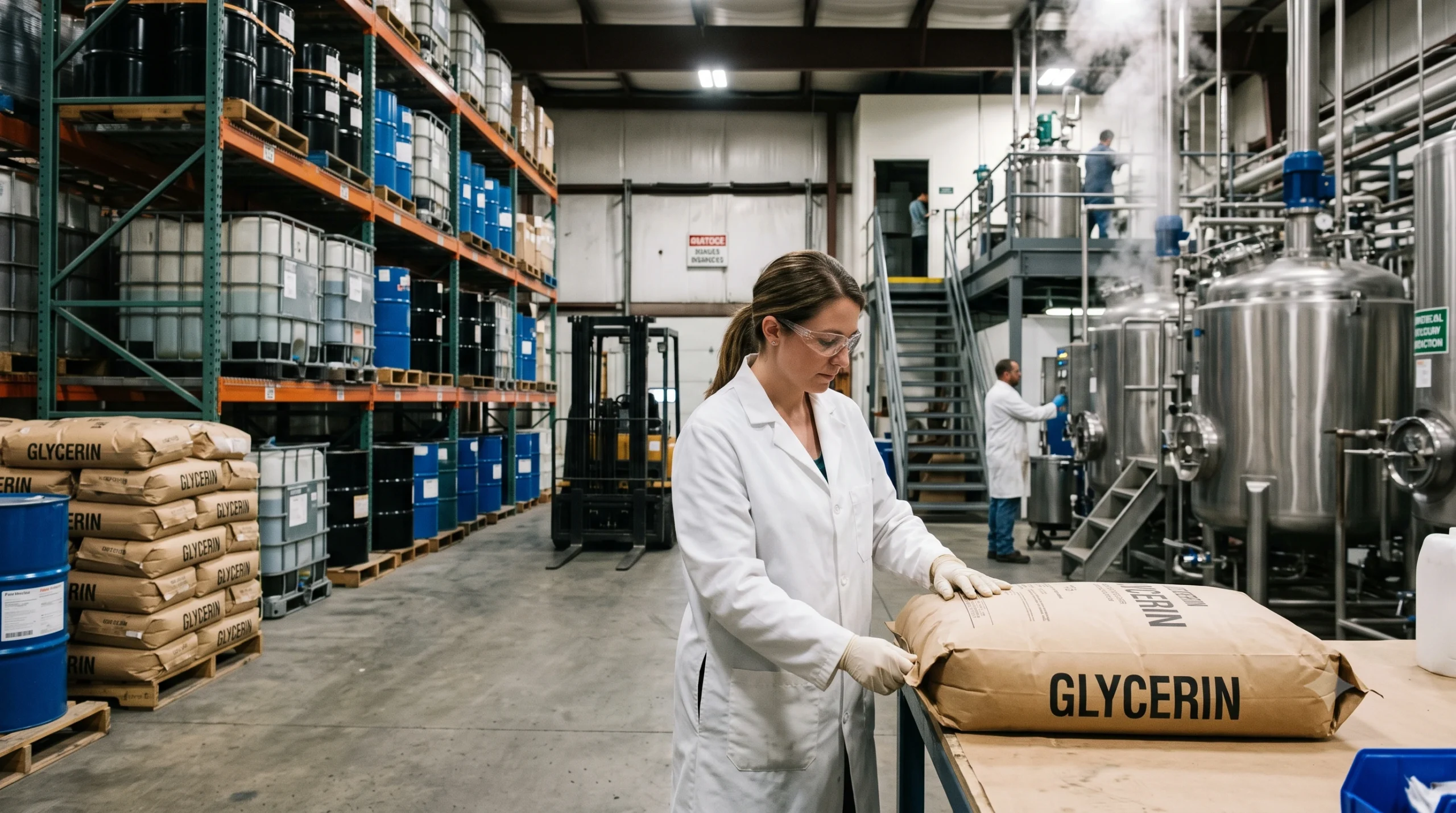
For manufacturers, supplement brands, and ingredient buyers looking at glycerol as a formulation ingredient, purity and concentration documentation matter. Food-grade and pharmaceutical-grade glycerol are both available, with the distinction primarily in how stringently impurities are controlled. Products used orally as supplements should be food-grade minimum with certified purity and no contamination from glycerol processing byproducts.
Platforms like Elchemy connect buyers with verified glycerol suppliers across different concentrations and grades, with full specification sheets and compliance documentation for use in nutraceutical and sports nutrition applications.
Bottom Line
Glycerol isn’t a new discovery, it’s a re-emerging one. The research on liquid glycerol supplement for hyperhydration, thermoregulation in heat, and endurance performance has been building since the 1990s. Its detour through the WADA banned list slowed its mainstream adoption, but that’s been resolved since 2018.
The glycerol supplement benefits are most real for endurance athletes performing in warm conditions where fluid management is a genuine performance factor. For gym lifters, it delivers on the pump side. It’s not a magic compound and results in cool conditions during short sessions are minimal, but for the right athlete in the right context, it’s one of the more underrated tools in sports nutrition.