

The global plant protein market crossed $21 billion in 2023. It’s heading past $40 billion by 2030. And Soy Protein Isolate is still carrying a significant share of that growth.
So why does finding a reliable supplier still feel this hard?
If you’ve spent any time sourcing SPI at scale, you already know the frustration. Manufacturers posting vague spec sheets, certifications that can’t be verified, MOQs that only appear after three emails back and forth. It’s a genuinely fragmented market, and the cost of choosing the wrong supplier, whether that’s a contaminated batch, a failed audit, or a compliance gap in your target market, is high enough to justify doing this properly.
This guide is for procurement managers, R&D buyers, and product formulators who are ready to buy and want a clear framework for evaluating their options. You’ll get the quality specs that actually matter, a practical breakdown of certifications, what soy protein isolate price looks like right now in 2026, and how companies like Elchemy are simplifying cross-border ingredient sourcing for global buyers.
What Is Soy Protein Isolate, and Why Does Your Source Change Everything?
Quick definitions first, because this distinction matters more than most buyers initially realize.
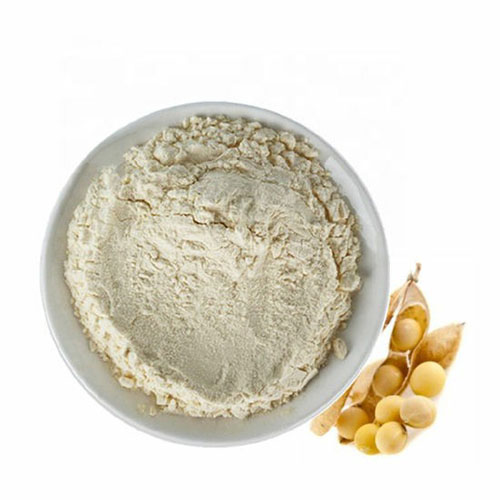
Soy Protein Isolate is the most refined commercial form of soy protein. It’s produced by removing nearly all the fat and carbohydrates from defatted soy flour, typically yielding a product at 90% protein or higher on a dry weight basis. Soy protein concentrate, by comparison, sits at roughly 65-70% protein and retains more fiber and carbohydrates from the original bean.
The difference between soy protein isolate and concentrate isn’t just a number. In formulation, they behave differently. SPI offers superior solubility, cleaner flavor in most applications, and better functional performance in high-protein products.
But here’s what often catches buyers off guard: two products both labeled “soy protein isolate 90% protein” can perform very differently in your formula. The amino acid ratios, particle size, solubility across pH ranges, water-holding capacity, and emulsification index can vary significantly between manufacturers. A supplier producing SPI for sports nutrition powders may not be the right fit if you’re formulating a meat analogue that needs specific gelation behavior.
Your supplier choice isn’t only a procurement decision. It’s a formulation quality decision. And that changes how you evaluate options.
The Quality Specs That Separate Reliable Suppliers From Risky Ones
Most supplier listings will show you protein content and stop there. That’s the baseline. Here’s what a serious buyer actually verifies before committing.
Protein content, batch by batch. A single COA from a sample lot is close to meaningless for ongoing supply. Ask for batch-level documentation across multiple recent production runs. You’re buying consistency, not just the best sample they’ve ever produced.
Amino acid profile. SPI is a complete protein containing all nine essential amino acids. But the ratios matter, especially if your product is making specific nutritional claims. PDCAAS (Protein Digestibility-Corrected Amino Acid Score) data is worth requesting if you’re formulating for sports or infant nutrition.
Moisture and ash content. Standard specs are moisture under 8% and ash under 6%. These affect shelf life and formulation behavior in ways that become expensive to fix downstream.
Heavy metals testing. Lead, cadmium, arsenic, mercury. Any supplier not routinely testing for these is a red flag, especially for buyers selling into the US, EU, or UK markets where regulatory scrutiny on heavy metals in plant proteins has tightened considerably. This isn’t excessive. It’s table stakes.
Functional properties specific to your application. Solubility index, dispersibility, emulsification capacity. A bulk soy protein isolate that performs beautifully in a pH-neutral beverage may behave poorly in a lower-pH sports drink. Ask about performance across the pH range relevant to your use case. If the supplier can’t answer that question in detail, you’re probably dealing with a broker rather than a manufacturer.
Honestly, the depth of a supplier’s technical response to these questions is itself a useful filter. Real manufacturers know their product. Traders who aggregate inventory from three different factories often don’t.
Certifications: What to Demand, and What’s Actually Enforced
Not all certifications carry equal weight. Here’s a realistic read on what matters.
Non-GMO verification. For North American and European buyers, this is increasingly a baseline requirement, not a premium add-on. Non-GMO Project Verified is the standard in the US. For EU markets, compliance with EU non-GMO labeling requirements needs documented supply chain segregation from field to factory. A note on geography: Brazil and Argentina are major soy producers, but GMO soy dominates both markets. China and the US have more reliable non-GMO SPI supply chains for buyers where this matters.
Organic certification. USDA Organic or EU Organic certification adds meaningful traceability. An organic soy protein isolate supplier option will typically price 30-50% above conventional, but that premium is recoverable in markets where clean-label positioning supports higher retail prices. The critical verification here: confirm the certification covers the entire processing chain, not just the raw beans.
Food safety certifications. FSSC 22000 is the most rigorous food safety management standard in commercial use and is generally preferred over ISO 22000 alone. HACCP compliance should be present at any manufacturer you’re seriously considering.
Halal and Kosher. If you’re selling into the Middle East, Southeast Asia, or observant communities in Western markets, these aren’t optional extras. Verify the certification covers the specific manufacturing facility and that the certificate is current. A Halal cert issued three years ago on a different production line doesn’t protect you.
One thing buyers consistently underestimate: certifications can be forged or expired. Don’t rely solely on what the supplier emails you. Contact the certifying body directly using the certificate number. This sounds paranoid until the first time you buy a “certified” product that fails a customer audit.
Organic vs. Non-GMO vs. Conventional SPI: A Real Comparison
| Specification | Organic SPI | Non-GMO SPI | Conventional SPI |
| Protein Content (dry basis) | 90%+ | 90%+ | 90%+ |
| GMO Status | Non-GMO | Non-GMO | May contain GMO |
| Typical FOB Price per kg (5MT+) | $4.50 – $7.00 | $3.00 – $5.00 | $2.00 – $3.80 |
| Price Premium vs. Conventional | 30 – 50% | 10 – 20% | Baseline |
| Traceability | Full farm-to-factory | Partial to full | Limited |
| EU Market Compliance | Straightforward | Requires documentation | May need added testing |
| Best Fit For | Premium CPG, infant formula | Sports nutrition, meat alternatives | Industrial food processing |
The non-GMO soy protein isolate supplier category has grown noticeably over the past three years. Supply has scaled, and the price gap to conventional has narrowed. For most brands that aren’t in the premium-certified space, non-GMO SPI is the practical sweet spot: cleaner positioning, manageable cost, and increasingly available at commercial volumes.
How Elchemy Helps With Soy Protein Isolate Sourcing
Finding a quality-verified soy protein isolate supplier globally used to mean cold-emailing factories from a trade directory, waiting weeks for samples, and hoping regulatory documentation showed up complete. Most procurement teams have at least one story about this going wrong.
Elchemy works differently. It’s a technology-enabled B2B ingredient sourcing company connecting international buyers with verified manufacturers, primarily from India and Southeast Asia. That geographic focus matters: both regions have scaled food-grade soy protein isolate production significantly, and they often offer competitive pricing relative to US or European domestic sourcing, with quality that holds up to serious verification.
Here’s what the company actually delivers for buyers sourcing bulk soy protein isolate:
- Pre-vetted supplier network – Elchemy partners with 200+ verified manufacturers. Basic legitimacy screening is completed before you make first contact, which eliminates a frustrating and time-consuming step from your procurement workflow.
- Regulatory documentation management – COAs, certificates of origin, third-party lab reports, FSSC 22000 documentation. The company coordinates this so your team isn’t chasing paper across time zones.
- Cross-border logistics – Food ingredient import involves a non-trivial amount of customs paperwork. Elchemy manages freight, customs clearance, and last-mile logistics across 40+ countries.
- Custom ingredient manufacturing – If your spec requires a modified functional profile, specific particle size distribution, or a blended ingredient, custom chemical manufacturing services can accommodate tailored production requirements.
- Real-time shipment tracking – Their technology platform gives you live visibility into your order status, which matters when you’re managing production schedules with tight lead times.
- Consistent support for USA, UK, UAE, and global buyers – The company is specifically built for cross-border procurement complexity. Whether you’re in Houston, London, or Dubai, the documentation and logistics infrastructure is already in place.
This isn’t a supplier listing aggregator. The operational infrastructure Elchemy wraps around the transaction is what makes it different for serious buyers.
→ Book a demo with Elchemy to see how their verified sourcing network works for your specific ingredient requirements.
Red Flags to Watch For When Evaluating Soy Protein Isolate Manufacturers
This part matters. Procurement mistakes in specialty ingredients are expensive, and the warning signs are usually visible if you know what to look for.
No third-party audit history. A manufacturer that’s never been audited by an independent party and can’t produce a report from the last two years shouldn’t be in your supply chain. This isn’t an unreasonable ask. Credible manufacturers get audited routinely.
Identical pricing across different grades. Organic costs more to produce. Non-GMO requires identity-preserved supply chains. If a supplier quotes you the same per-kilogram price for organic and conventional SPI, something doesn’t add up.
Vague MOQs and lead times. Real manufacturers know their production cycles. If “what’s your MOQ for an isolated soy protein supplier arrangement at commercial scale?” gets you “it depends” without a follow-up number, you’re probably speaking to a trader who doesn’t control the inventory.
Resistance to providing samples. Any serious manufacturer will supply samples before a commercial order. Pushback on this is often a sign that production samples and commercial stock won’t match. That’s a problem you don’t want to discover after 10 MT is sitting in a warehouse.
Certificate dates that don’t match your order timeline. A Kosher certificate issued four years ago on a different production configuration is not useful documentation. Verify dates, every time.
One more thing worth saying directly: be skeptical of extremely low pricing. Soy protein isolate manufacturers operating with proper food safety infrastructure, third-party certifications, and consistent quality control have real costs. Pricing that’s dramatically below market usually reflects something: older inventory, lower-quality raw beans, corners cut somewhere in the process. That’s not worth the savings.
Soy Protein Isolate Price in 2026: What Buyers Should Realistically Expect
Pricing has shifted over the past 18 months. Here’s the honest picture.
Conventional SPI from major producing regions (China, India, USA) is currently running approximately $2.00-$3.80/kg on FOB terms for volumes above 5 metric tons. Below one metric ton, expect $5-6/kg depending on the supplier and origin.
Non-GMO SPI adds roughly 10-20% to that baseline. An organic soy protein isolate supplier will typically quote $4.50-$7.00/kg, depending on certification vintage and harvest year availability.
What’s moving prices right now? Argentina had a below-average 2024 soy harvest, which tightened South American supply. Energy costs at Chinese processing facilities have risen. And the meat alternatives sector, which uses large volumes of SPI, is growing fast enough to add meaningful demand pressure.
The practical advice on pricing: if you’re buying at any meaningful volume, negotiate annual supply agreements rather than purchasing spot. Buyers who locked in 12-month contracts in early 2026 are sitting on favorable pricing compared to current spot rates. The same logic applies heading into 2027.
Where Soy Protein Isolate Performs Best: Applications Worth Knowing
What is soy protein isolate used for? More than most buyers realize when they first start sourcing it.
Meat alternatives. This is the application driving the most growth in SPI demand right now. Water-holding capacity, emulsification, and binding behavior matter as much as protein content here. SPI remains the best soy protein isolate option for meat alternatives, outperforming pea protein isolate on binding behavior in most high-moisture extrusion applications.
Sports nutrition. Protein powders, RTD shakes, protein bars. SPI’s amino acid completeness makes it a viable standalone protein for vegan formulations, and it blends efficiently with whey in hybrid products. Flavor neutrality has improved noticeably as processing technology has advanced.
Infant formula. The most regulated application by a wide margin. Suppliers need to demonstrate complete batch-to-batch consistency and full traceability. If you’re sourcing for infant formula, every certification I mentioned earlier is required, not optional.
Bakery and dairy alternatives. SPI has been used in these categories for decades. It improves protein content in bread and baked goods and contributes emulsification properties in plant-based dairy. These aren’t glamorous applications, but they represent steady, predictable demand for manufacturers.
Frequently Asked Questions
What is soy protein isolate used for in food manufacturing?
Soy protein isolate is used across sports nutrition, meat alternatives, infant formula, dairy alternatives, and functional bakery. Its 90%+ protein content combined with emulsification, binding, and water-holding properties make it functional across a broader range of applications than most plant proteins. It’s been a commercially reliable food ingredient for over 40 years.
What’s the practical difference between soy protein isolate and soy protein concentrate?
Concentrate runs at 65-70% protein and retains more fiber and carbohydrates from the original bean. Isolate is more refined, at 90%+ protein with fat and carbohydrates largely removed. In formulation, isolate offers cleaner flavor, better solubility, and superior functional performance in most high-protein applications. Concentrate is cheaper and works in applications where the additional fiber content isn’t a problem.
Is soy protein isolate available in organic or non-GMO grades?
Yes, both are commercially available globally. USDA Organic and EU Organic certified grades exist, as do Non-GMO Project Verified products. An organic soy protein isolate supplier will typically charge 30-50% above conventional. The key is verifying that the certification covers the full processing chain, not just the raw soybean origin.
How do I verify that a supplier’s certifications are legitimate?
Contact the certifying body directly using the certificate number. FSSC 22000, Non-GMO Project, USDA Organic, Halal, and Kosher certifications all have verification portals or direct contact points where you can confirm both validity and expiry. Don’t rely solely on the supplier’s emailed PDFs, particularly for first-time orders.
What documentation should I request before a first purchase order?
At minimum: a batch-specific COA showing protein content, moisture, ash, and heavy metals results; copies of all active certifications with expiry dates; an independent audit report from the last 24 months; sample availability for your own lab verification; and clear terms on MOQ, lead time, and payment. A supplier who resists providing any of these is giving you useful information.
What’s a realistic price for bulk soy protein isolate in 2026?
For conventional SPI in volumes above 5MT, current FOB pricing runs roughly $2.00-$3.80/kg. Non-GMO SPI is approximately $3.00-$5.00/kg. Organic-certified SPI starts around $4.50/kg and can reach $7.00/kg depending on certification batch availability. Annual supply contracts consistently offer better price stability than spot purchases, which have been volatile.
Conclusion
Choosing the right soy protein isolate supplier isn’t inherently complicated. You need consistent quality, verifiable certifications, transparent pricing, and a manufacturer who can deliver at commercial scale without cutting corners on documentation. What makes it difficult in practice is that the global market is fragmented, verification requires real effort, and the consequences of getting it wrong are significant enough to make that effort worthwhile.
Verify all certifications directly with the issuing body, not just from supplier-provided documents
Non-GMO SPI offers the best cost-to-compliance balance for most applications; organic is worth the premium only when your end market supports it
Functional specs like solubility, emulsification, and water-holding capacity matter as much as protein content for most modern food formulations
Lock in annual contracts where volume permits; spot pricing has been volatile and annual agreements have consistently outperformedIf you’re ready to move past fragmented directories and paper-chasing, Elchemy gives you direct access to a verified network of SPI manufacturers across India, Southeast Asia, and beyond. The company handles documentation, cross-border logistics, and compliance coordination so your procurement team can focus on decisions, not admin. Book a demo today and see how global ingredient sourcing should actually work.