At a Glance
- The glucose component is the same: monohydrate contains one molecule of water of crystallisation, while anhydrous does not.
- Anhydrous supplies more dry glucose per delivered kilogram: compare formula dose and quote price on an equivalent dry-solids basis.
- Monohydrate can be the correct choice: use it where the approved formula, food standard, or customer specification calls for the hydrated form.
- FDA food standards distinguish the two forms: 21 CFR 168.110 covers dextrose anhydrous, while 21 CFR 168.111 covers dextrose monohydrate.
- Choose conditionally: select the form that fits moisture tolerance, formulation basis, documentation needs, and process validation.
What you’ll learn
How water of crystallisation, dry solids, food standards, storage, formulation requirements, and supplier documentation affect the dextrose form you should buy.
Introduction
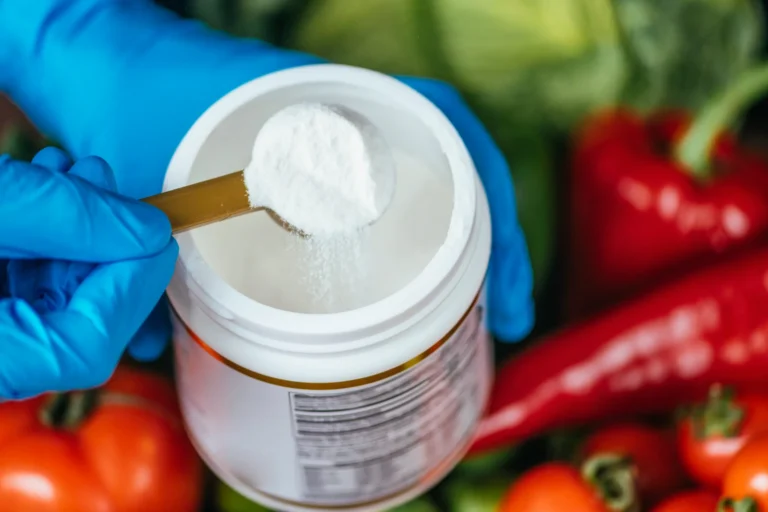
Dextrose monohydrate and dextrose anhydrous are often quoted as though they are interchangeable powders. Both contain D-glucose, but they deliver different dry-solids content and may affect the water balance of a qualified formula. That matters when a buyer is sourcing for dry blends, beverages, fermentation, nutraceutical powders, pharmaceutical excipients, or another controlled process.
The right question is not simply which powder costs less per bag. It is whether the material matches the recipe basis, moisture allowance, specification, and documentation route. Review dextrose monohydrate technical data, then define the form, target grade, required records, and application before comparing supplier offers.
Choose on dry solids and formulation fit
Dextrose anhydrous is usually the first form to assess when a buyer needs maximum dry glucose per delivered kilogram or wants to minimise water introduced through the ingredient. Dextrose monohydrate is usually the first form to assess when the existing formula, customer specification, or qualified process is written for the hydrated crystal form.
Neither form is automatically better. The purchase decision should be based on four connected criteria: formula basis, moisture tolerance, applicable standard, and evidence for the supplied lot.
| If the buyer needs | Form to assess first | What still needs confirmation |
| Maximum dry solids per kilogram | Anhydrous | Formula and process compatibility |
| Existing monohydrate formula basis | Monohydrate | Current product specification |
| Moisture-sensitive dry blend | Anhydrous | Stability and handling trial |
| Food-standard identity | Required named form | Applicable FDA requirement |
| Pharmacopeial or customer grade | Required named form | Current evidence and COA |
What changes between monohydrate and anhydrous dextrose
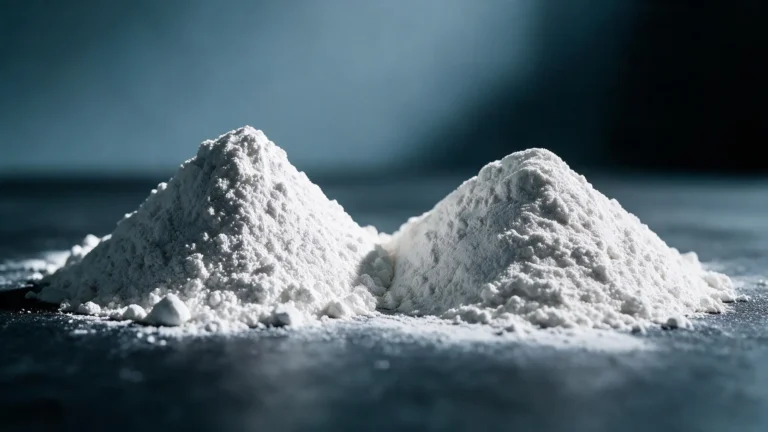
The difference between the two forms is water of crystallisation, rather than a different glucose ingredient. Dextrose monohydrate contains one associated water molecule per molecule of D-glucose, while dextrose anhydrous contains no water of crystallisation.
Elchemy’s Monohydrate listing identifies CAS 5996-10-1 and molecular formula C6H12O6·H2O. Its Anhydrous listing identifies CAS 50-99-7 and molecular formula C6H12O6. These identifiers help purchasing teams prevent an avoidable error: accepting a material with the right generic name but the wrong crystal form.
Water of crystallisation affects the delivered composition. It can also affect how a formulation is calculated, especially when dry solids, moisture balance, concentration, or dosage is tightly controlled. Review dextrose anhydrous technical data alongside the approved formula before treating one form as a substitute for the other.
Compare dry solids before comparing price
Buyers should convert competing offers to an equivalent dry-solids basis before comparing price, dosage, or output yield. A bag-price comparison alone can make the lower-cost offer appear more attractive even when it delivers less glucose solids into the formula.
The calculation should follow the buyer’s approved molecular-weight basis and the supplier’s current COA. It should also account for the formula’s stated use level, any allowed moisture range, and whether the recipe is controlled on an as-supplied or dry-solids basis.
| Input | Monohydrate | Anhydrous |
| Delivered quantity | 100.0 kg | 100.0 kg |
| Molecular-weight basis | 180.16 ÷ 198.17 | 180.16 ÷ 180.16 |
| Theoretical dry glucose | 90.9 kg | 100.0 kg |
| Quantity for 100 kg dry glucose | Approximately 110.0 kg | 100.0 kg |
| Delivered-cost comparison | Delivered price ÷ 0.909 | Delivered price |
This is an illustrative molecular-weight calculation. Use the current COA and approved formula basis for purchase and formulation decisions.
For example, a formulation team may find that the anhydrous form reduces the mass required to achieve a target dry-glucose contribution. That does not establish a direct one-for-one replacement. The mixing sequence, dissolution behaviour, particle profile, sensory result, and finished-product stability still need review.
Food standards and grade claims are separate checks
FDA food standards identify each dextrose form, but food-standard identity does not automatically establish a pharmacopeial, pharmaceutical, non-GMO, allergen, or customer-specific claim. Procurement should keep those requirements separate in the RFQ and supplier-qualification package.
This distinction prevents a common sourcing shortcut. A product can match the requested chemical form yet still lack the documentation or qualification status that the finished product, customer, or regulated market requires.
21 CFR 168.110 defines dextrose anhydrous
21 CFR 168.110 defines dextrose anhydrous as purified and crystallised D-glucose without water of crystallisation. It also requires the material to conform to the specifications in 21 CFR 168.111, except that its total solids content must be at least 98.0% mass by mass.
The regulation is useful when the buyer needs the U.S. food-standard definition for anhydrous dextrose. It does not establish that every commercial anhydrous dextrose product meets a particular customer or pharmacopeial specification. See the current FDA dextrose anhydrous standard.
21 CFR 168.111 defines dextrose monohydrate
21 CFR 168.111 defines dextrose monohydrate as purified and crystallised D-glucose containing one molecule of water of crystallisation for each molecule of D-glucose. It also sets food-standard specifications for total solids, reducing sugar, sulfated ash, and sulfur dioxide.
This is a food-standard reference point, not a substitute for reviewing the offered lot. A buyer should compare its own specification, the current COA, and any required customer documentation with the relevant standard. See the current FDA dextrose monohydrate standard.
For a broader food-ingredient pathway, the food processing product portfolio can help teams locate related raw materials. The final decision should still remain specific to the selected dextrose form.
Formulation and process implications depend on the complete system
The better form depends on the full formulation, not on a general statement that one powder is more concentrated. Dextrose’s role can include sweetness, solids contribution, fermentation feed, carrier functionality, or formulation balance, and each role changes what the buyer needs to validate.
In dry blends, teams may focus on moisture sensitivity, flow, particle behaviour, and the amount of dry glucose delivered. In liquid systems, they may focus on dissolution sequence, concentration, and total-water balance. In fermentation, pharmaceutical, or nutraceutical applications, the form must also fit the approved process and documentation requirements.
| Application condition | Formulation question | Form to assess first | Validation required |
| Dry premix | Does added crystal water affect the formula basis? | Anhydrous | Blend and stability trial |
| Liquid process | Is the formula controlled on dry solids? | Either | Dissolution and concentration review |
| Fermentation feed | What is the required glucose contribution? | Either | Process-specific feed validation |
| Nutraceutical powder | Is moisture control a critical attribute? | Anhydrous | Stability and packaging review |
| Pharmaceutical excipient | What form and grade does the specification require? | Required named form | QA and regulatory approval |
The existing dextrose versus sucrose comparison provides adjacent context on dextrose in food and pharmaceutical manufacturing. It should not be used to assume that monohydrate and anhydrous behave identically in a qualified formula.
Storage, packaging, and documentation shape the commercial decision
Storage conditions and packaging integrity can determine whether the delivered product remains within the buyer’s specification. For both forms, the sourcing brief should define storage environment, packaging configuration, permitted moisture exposure, shelf-life expectation, and the documentation required at receipt.
The supplier package should include a current TDS, SDS, COA format, lot identification, and any relevant statement of conformity. Where the buyer has a pharmacopeial, customer, or food-standard requirement, those documents should identify the exact material offered instead of relying on a broad marketing description.
Use dextrose anhydrous product details as a product-evaluation route. Confirm current grade, packaging, availability, and application fit directly with the supplier before an order is released.
Use a sourcing checklist before approving either form
A purchase order should specify more than “dextrose powder” because crystal form affects formula basis and qualification evidence. A clear checklist reduces the chance that procurement obtains a chemically similar material that does not fit the approved process.
- Define the intended application and formula basis.
- State whether the formula is calculated on an as-supplied or dry-solids basis.
- Name the required form: monohydrate or anhydrous.
- Define any moisture, particle, dissolution, flow, or sensory requirements.
- Identify the required food, USP–NF, pharmacopeial, or customer specification.
- Request current TDS, SDS, COA format, and application-specific evidence.
- Confirm packaging, storage, shelf life, and change-notification requirements.
- Compare quotes on equivalent dry solids and the same delivery basis.
For broader ingredient context, the glucose fructose sucrose comparison can help food formulators position dextrose within a wider carbohydrate system. The form-selection decision still requires its own technical review.
When each form is likely to fit
Monohydrate is likely to fit when the approved formula, applicable food standard, customer specification, or existing process explicitly calls for dextrose monohydrate. Anhydrous is likely to fit when dry-solids efficiency and moisture control are primary constraints, subject to formulation and process validation.
Choose monohydrate if the formula is already qualified on a monohydrate basis or the customer requires that named form. Choose anhydrous if the formula needs to maximise dry glucose per delivered weight and the substitution has been technically reviewed. Pause the purchase if a regulated, validated, or tightly controlled product requires a form switch.
The dextrose food application guide offers related food-function context. It does not replace a formula-specific evaluation of water balance and dry solids.
Frequently Asked Questions
1. What is the difference between dextrose monohydrate and dextrose anhydrous?
Dextrose monohydrate contains one molecule of water of crystallisation per molecule of D-glucose, while dextrose anhydrous contains no water of crystallisation. The distinction affects delivered dry solids, formula calculations, food-standard identity, and potential moisture-management requirements. It does not mean they are different sweeteners.
2. Is dextrose anhydrous more concentrated than dextrose monohydrate?
Yes, dextrose anhydrous provides more dry glucose per delivered kilogram because it does not include water of crystallisation. Buyers should still compare current COA results and calculate against the approved formula basis. A higher dry-solids contribution does not automatically make anhydrous suitable for every process or product.
3. Can dextrose anhydrous replace dextrose monohydrate one for one?
No. A one-for-one substitution can change the dry-glucose contribution and formula water balance. The required replacement level depends on the approved formulation basis, target concentration, processing conditions, and finished-product requirements. Technical, QA, and regulatory review should occur before changing forms in a validated or controlled formula.
4. Which dextrose form is better for dry mixes?
Dextrose anhydrous is often the first form to assess for dry mixes because it does not introduce water of crystallisation. However, the correct choice depends on flow, blending, storage, packaging, stability, and the approved formula. Buyers should qualify the selected material in the complete dry-mix system.
5. What do 21 CFR 168.110 and 21 CFR 168.111 cover?
21 CFR 168.110 defines dextrose anhydrous for food-standard purposes, and 21 CFR 168.111 defines dextrose monohydrate and its food-standard specifications. These provisions help identify the forms and specifications for food use. They do not automatically establish a pharmaceutical or customer-specific grade claim.
6. Does food-grade dextrose automatically meet USP–NF requirements?
No. A food-standard or food-grade claim does not automatically establish USP–NF compliance. A pharmaceutical or pharmacopeial requirement should be confirmed against the current applicable monograph, supplier declaration, current COA, and the buyer’s internal quality process for the exact material being sourced.
7. What should a buyer request in a dextrose COA?
A buyer should request a COA that identifies the exact material, lot, applicable tests, results, units, methods where required, and release status. The COA should be reviewed alongside the TDS, SDS, customer specification, and any food or pharmacopeial requirement relevant to the intended application.
Conclusion
Dextrose monohydrate and dextrose anhydrous should be compared on dry solids, formula fit, and current documentation. The correct form depends on the approved recipe, moisture tolerance, target market, and evidence package, not on the nominal price of a bag.
Define the application and formula basis before quoting, then compare offers using the same dry-solids and delivery assumptions. Review Elchemy’s Dextrose Monohydrate product listing to request application-specific pricing and documentation for your sourcing brief.