

At a Glance
- Creatine monohydrate is the most researched sports supplement in history, with over 30 years of peer-reviewed evidence confirming its safety and effectiveness
- Kre-Alkalyn is a patented, pH-buffered form of creatine monohydrate buffered to a pH of 12 to 14, designed to reduce stomach breakdown and lower the required dose
- A 2012 double-blind clinical study published in the Journal of the International Society of Sports Nutrition found no significant differences in muscle creatine content, strength, body composition, or anaerobic capacity between Kre-Alkalyn and creatine monohydrate
- Kre-Alkalyn costs roughly 10 to 15 times more per dose than creatine monohydrate with no demonstrated performance advantage in independent research
- The main practical argument for Kre-Alkalyn is not superior performance but potentially better digestive tolerance for individuals who experience bloating with standard creatine
Two options. Same core compound. Wildly different price tags and marketing claims. The creatine monohydrate vs Kre-Alkalyn debate has occupied gym conversations and supplement forums for years, and it is one worth settling properly with actual research rather than brand copy.
The answer is not entirely clean-cut. One form has decades of evidence and costs almost nothing per serving. The other has a patented buffering process, bold efficacy claims, a premium price, and a handful of studies that either fail to confirm its advantages or show modest specific use cases. Here is everything you need to know to make an informed call.
What Each One Actually is?
Creatine Monohydrate
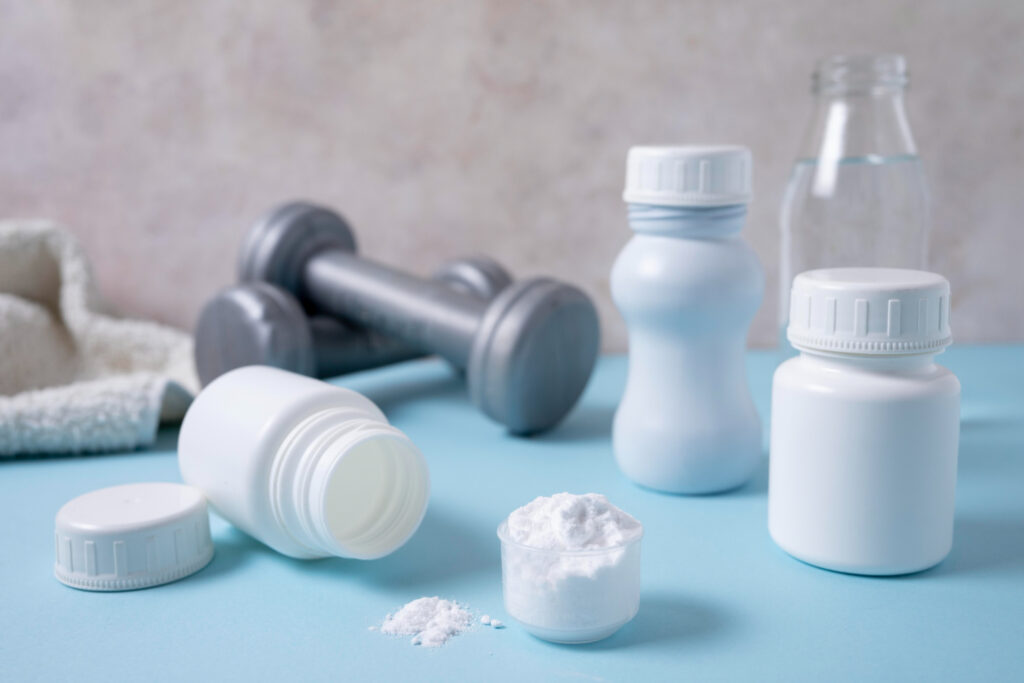
Creatine monohydrate is a molecule of creatine and water. It is made by reacting sarcosine and cyanamide under specific heating and basic conditions, resulting in a powdery crystal that can be dissolved in hot water. Creatine is naturally synthesized from three amino acids (arginine, glycine and methionine) in your body and stored as phosphocreatine in your skeletal muscles.
Supplementing with creatine monohydrate raises your muscles’ phosphocreatine content. During intense exercise, phosphocreatine transfers a phosphate group to resynthesise ATP at a quicker rate than your body can manufacture it. This allows you to maintain higher power output during explosive exercise, such as sprints, low-rep lifts and other explosive movements.
Kre-Alkalyn
Kre-Alkalyn is creatine monohydrate, with a single manufacturing process added: buffering with alkaline agents (usually sodium bicarbonate or other alkaline minerals) to increase its pH to 12 – 14. The original product (patent) is made by All American Pharmaceutical.
The rationale for buffering is simple. Creatine may be converted to creatinine (waste product) in the acidic environment of the gut before it reaches the muscles. By buffering the creatine to make it more alkaline, it will supposedly be less likely to be converted to creatinine in the gut and more creatine will be available to enter the muscles. The manufacturers’ practical claim is that you need less of it to get the same effect and you will experience fewer side effects such as gastric bloating.
Head-to-Head: The Key Differences
Mechanism of Action
The compounds are used in the same way Inside the muscle, creatine (no matter whether it was monohydrate or buffered Kre-Alkalyn) works in the same way. It gets taken up into the phosphocreatine system and helps to resynthesise adenosine triphosphate (ATP) during intense exercise, which then results in the same downstream benefits to performance, strength, and recovery.
The only difference is the journey through the digestive system. Kre-Alkalyn’s buffering is meant to help it get there. The studies test whether this actually leads to more creatine being absorbed into muscle.
What the Research Shows
The most important independent study of this comparison was published in the Journal of the International Society of Sports Nutrition. A double-blind study used 36 resistance-trained adults who were divided into three groups: creatine monohydrate (loading and maintenance doses), Kre-Alkalyn (1.5g/day, as per the manufacturer’s instructions) and Kre-Alkalyn (equivalent loading dose).
After 28 days of supplementation, muscle biopsy was used to measure muscle creatine content, and also strength, body composition and anaerobic capacity.
In other words, the doses recommended by the manufacturer, or the equivalent creatine monohydrate loading dose, of Kre-Alkalyn produced no greater improvements in muscle creatine, body composition, anaerobic performance or strength than creatine monohydrate. In fact, there was a trend towards a greater increase in muscle creatine content with creatine monohydrate compared to the low dose Kre-Alkalyn.
A 60-day study of 24 Olympic weightlifters did find the Kre-Alkalyn group had an average increase in strength of 10.76% compared to 8.39% with monohydrate. A 16-week study of 24 male soccer players found the Kre-Alkalyn group reported a greater increase in VO2 max, with very few differences in lean mass and strength. These are intriguing data but the study group is small and the data has not been repeated.
The current evidence shows it is a wash: not Kre-Alkalyn.
The Full Comparison: Factor by Factor
Dosing
| Factor | Creatine Monohydrate | Kre-Alkalyn |
| Standard daily dose | 3 to 5g | 1.5 to 3g |
| Loading phase | Optional: 20g/day for 5 to 7 days | Not required per manufacturer |
| Time to saturation (no loading) | 3 to 4 weeks | Claimed faster; not confirmed in research |
| Form availability | Powder, capsule, gummy, chew | Powder and capsule |
Loading with creatine monohydrate is optional. Without loading, muscle creatine stores reach saturation over 3 to 4 weeks. Loading speeds that up to roughly one week. The International Society of Sports Nutrition’s 2017 position stand confirmed that both short and long-term creatine monohydrate supplementation up to 30g per day for up to five years is safe and well-tolerated in healthy individuals.
Kre-Alkalyn’s no-loading claim is partly a marketing advantage and partly a dose artifact. Since the recommended dose is lower, users naturally avoid the higher daily amounts that can cause gastrointestinal discomfort during loading.
Absorption and Bioavailability
Creatine monohydrate has close to 100% bioavailability when taken correctly. The concern about stomach conversion to creatinine is largely overstated for typical supplement use — the transit time through the stomach is short, and the quantity converted at normal doses is not substantial enough to meaningfully reduce efficacy.
Kre-Alkalyn’s manufacturers originally claimed it was up to ten times more powerful than regular creatine, with the equivalent of 10 to 15g of standard creatine in each 1.5g serving. Independent researchers found no peer-reviewed studies in PubMed supporting these claims at the time of the clinical trial. The clinical evidence from the Jagim study found creatine monohydrate trended slightly higher in actual muscle creatine content increases.
Side Effects
This is where the Kre-Alkalyn argument is most nuanced and where honest interpretation matters.
Creatine monohydrate can cause temporary water retention and mild bloating, particularly during a loading phase or when taken in large single doses. Research shows that gastrointestinal issues correlate more strongly with dose size than with creatine form. A 10g single dose causes more GI distress than two separate 5g doses. The clinical study directly comparing Kre-Alkalyn and monohydrate found no meaningful difference in reported side effects between groups.
The practical reality is that many users who switch to Kre-Alkalyn and notice less bloating are benefiting from the lower dose, not the buffering chemistry.
Side effects comparison:
- Creatine monohydrate: temporary water retention (especially with loading), possible mild bloating at high doses, muscle cramping if underhydrated
- Kre-Alkalyn: same potential side effects at equivalent doses, though smaller recommended doses reduce likelihood; very limited long-term safety data compared to monohydrate
Water Retention and Aesthetics
Creatine monohydrate increases intramuscular water content. This can create a fuller, denser muscle appearance during bulking phases. During a cutting or recomp phase, the same water retention can blur definition and add scale weight without adding lean mass.
Kre-Alkalyn at lower doses tends to produce less subcutaneous water retention, which is why it has found a specific following among physique athletes, competitive bodybuilders, and anyone in a cutting phase who wants strength support without a waterlogged look.
This is a real and legitimate practical distinction, even if the underlying performance outcomes are similar.
Price
Here’s where it gets interesting. The creatine monohydrate form of creatine is the cheapest supplement you can buy. Good-quality, micronized monohydrate costs less than $0.30 per 5g dose, and often $0.10 to $0.15 per dose in bulk. The cost of Kre-Alkalyn is 10 to 15 times as much per dose. That’s a lot of money to pay for the buffering and the patent for a supplement that doesn’t appear to offer any performance benefits in independent scientific literature.
| Metric | Creatine Monohydrate | Kre-Alkalyn |
| Cost per serving | ~$0.10 to $0.30 | ~$1.00 to $2.00+ |
| Research volume | Hundreds of peer-reviewed studies | Limited; mostly manufacturer-cited |
| Independent study outcome | Gold standard, consistent results | No advantage over monohydrate |
| Best use case | Most athletes, cost-sensitive buyers | GI sensitivity, cutting phases |
| Loading required | Optional | No |
Kre-Alkalyn Powder vs Creatine Monohydrate: Solubility
An obvious advantage of Kre-Alkalyn powder is its mixing quality. Creatine monohydrate powder (non-micronized form) is not soluble in water and will leave a layer of grit at the bottom. Micronized creatine monohydrate mixes much better but is still not as smooth as readily soluble Kre-Alkalyn.
For those taking creatine as part of a pre-workout supplement or an intra-workout drink, kre-alkalyn powder vs creatine monohydrate makes kre-alkalyn more convenient. For those mixing it up in a glass of water before and after their workout, it is less important.
Who Should Choose Which?
Choose Creatine Monohydrate If:
- You want maximum evidence-backed performance support at the lowest cost
- You have no history of GI sensitivity or bloating with creatine
- You are in a bulk or maintenance phase where water retention is not a concern
- You are new to creatine and want the most studied starting point
- You supply or source supplements in volume for a team, facility, or brand
Choose Kre-Alkalyn If:
- You have previously experienced bloating, cramps, or GI discomfort with monohydrate
- You are in a cutting or recomposition phase and want to minimize water retention
- You prefer a no-loading protocol and want simplified dosing
- You compete in a physique-oriented sport where subcutaneous water affects judging
- Budget is a secondary concern relative to digestive comfort
The Sourcing Angle: What Buyers and Formulators Should Know
For supplement brands and contract manufacturers formulating creatine products, both forms are commercially available. Creatine monohydrate, particularly Creapure-grade material from AlzChem AG in Germany, is the benchmark for purity and quality documentation. Creapure is verified free of dihydrotriazine, a synthesis byproduct, and carries a full traceability record.
Kre-Alkalyn is a patented product, which means sourcing is constrained to licensed manufacturers. Formulating with it requires licensing agreements and carries a higher raw material cost that flows directly to retail price.
For private label and contract manufacturing buyers, platforms like Elchemy that connect supplement brands with verified raw material suppliers can help navigate both Creapure-grade monohydrate sourcing and alternatives, with full documentation on purity, certification status, and supply chain traceability.
Final Verdict
Monohydrate creatine is superior in terms of research, price and performance. It has been studied for 30 years by independent researchers, has been the subject of hundreds of published studies and has shown consistent results across different populations, making it the sensible default for almost everyone.
Kre-Alkalyn isn’t a scam. It is a real creatine supplement. It has a niche market: if you really do experience stomach problems with monohydrate and are prepared to pay the extra, then it’s a good choice. If you are a bodybuilder and need to manage “subcutaneous water”, it is easier to dose.
What Kre-Alkalyn is not is ten times stronger than standard creatine (despite the marketing claims). The science has found no difference on the performance measures that matter: muscle creatine content, strength, body composition or anaerobic power. Science says so.
Use the one you can afford, tolerate, and are in the right phase of training. Most likely, that will be creatine monohydrate.