

At a Glance:
- Xanthan gum leads as the most versatile guar gum alternative (1:1.5 ratio for most applications)
- Psyllium husk excels in bread and dough (use 2:1 ratio vs guar gum)
- Price volatility and supply disruptions drive formulation shifts away from guar
- Combinations of alternatives often outperform single replacements
- Gluten-free baking requires binding agents to replace gluten structure
Guar gum dominated food formulations for decades. This natural thickener and stabilizer from guar bean seeds offered reliable performance at reasonable costs. Then the market changed. Prices spiked from $1,500 per ton to over $12,000 in 2012 when hydraulic fracturing operations consumed 75% of global supply. Quality became inconsistent. Supply chains proved vulnerable to weather and geopolitical disruptions in growing regions.
Food manufacturers couldn’t tolerate this volatility. Reformulation projects accelerated across the industry. R&D teams tested every viable guar gum alternative seeking options that matched performance while offering stable pricing and reliable supply. Some succeeded. Others discovered that replacing guar gum requires understanding not just what it does, but how alternatives behave differently in specific applications.
The challenge isn’t finding a replacement for guar gum—multiple options exist. The challenge is matching the right alternative to your specific formulation requirements, processing conditions, and cost constraints. This guide covers the most effective alternatives, their strengths and limitations, optimal substitution ratios, and application-specific recommendations based on actual formulation experience.
Understanding What Makes Guar Gum Work
Before exploring alternatives, understanding guar gum’s functional properties clarifies what replacements must accomplish.
Key Functional Properties:
Guar gum is a galactomannan polysaccharide extracted from guar bean endosperm. Its molecular structure creates specific behaviors:
- Rapid hydration: Dissolves in cold or hot water within minutes
- High viscosity: 1% solution produces 3,000-5,000 cps viscosity
- Synergy with other gums: Combined with xanthan or locust bean gum, creates viscosities greater than either alone
- Pseudoplastic flow: Shear-thinning behavior—thick at rest, flows when stirred/poured
- Minimal taste impact: Neutral flavor at typical use levels (0.1-1%)
- Moisture retention: Binds water preventing syneresis (weeping)
- Freeze-thaw stability: Resists ice crystal formation
Common Food Applications:
| Application Category | Function | Typical Usage Level |
| Gluten-free baking | Provides elasticity, improves texture | 0.5-1.5% of flour weight |
| Ice cream | Prevents ice crystals, improves mouthfeel | 0.1-0.3% |
| Salad dressings | Stabilizes emulsion, prevents separation | 0.2-0.5% |
| Sauces and gravies | Thickens, improves cling | 0.3-0.8% |
| Meat products | Retains moisture, improves yield | 0.5-1.0% |
| Dairy products | Prevents whey separation | 0.1-0.3% |
| Baked goods (yeast breads) | Extends shelf life, improves softness | 0.3-0.5% |
Effective alternatives must replicate these functions in target applications or compensate through other mechanisms.
Xanthan Gum: The Primary Guar Gum Alternative
Xanthan gum emerged as the leading guar gum alternative during supply crises. This bacterial fermentation product from Xanthomonas campestris offers similar functionality with important differences.
Advantages Over Guar Gum:
- Extreme stability: Withstands high temperatures, wide pH range (3-12), and freeze-thaw cycles better than guar
- Works in acidic conditions: Performs in salad dressings and acidic sauces where guar sometimes fails
- Lower usage rates: Typically need 50-70% as much xanthan to achieve equivalent viscosity
- More predictable supply: Production doesn’t depend on single-crop agriculture
- Superior suspension: Keeps particles suspended longer (important for spice-heavy products)
Limitations:
- Cost: Generally 2-3x more expensive than guar gum per kilogram
- Texture differences: Can create slightly slimy or stringy mouthfeel at high concentrations
- Different hydration: Requires high-shear mixing to prevent clumping
- Moisture retention: Not quite as effective as guar in preventing staling in baked goods
Substitution Guidelines:
Replace guar gum with xanthan gum at these ratios:
- General applications: 1 tsp guar gum = 1/2 tsp xanthan gum (1:0.5 ratio)
- Gluten-free baking: 1 tsp guar gum = 2/3 tsp xanthan gum (1:0.67 ratio)
- Sauces and dressings: 1 tsp guar gum = 1/2 tsp xanthan gum (1:0.5 ratio)
- Ice cream and frozen desserts: 1 tsp guar gum = 3/4 tsp xanthan gum (1:0.75 ratio)
Xanthan gum can replace guar gum in “a wide variety of fresh and frozen baked products and beverages, dips, dressings, soup mixes and condiments,” according to industry formulation guides. The key is starting with less xanthan than the original guar amount and adjusting upward if needed.
Psyllium Husk: The Bread Baker’s Choice
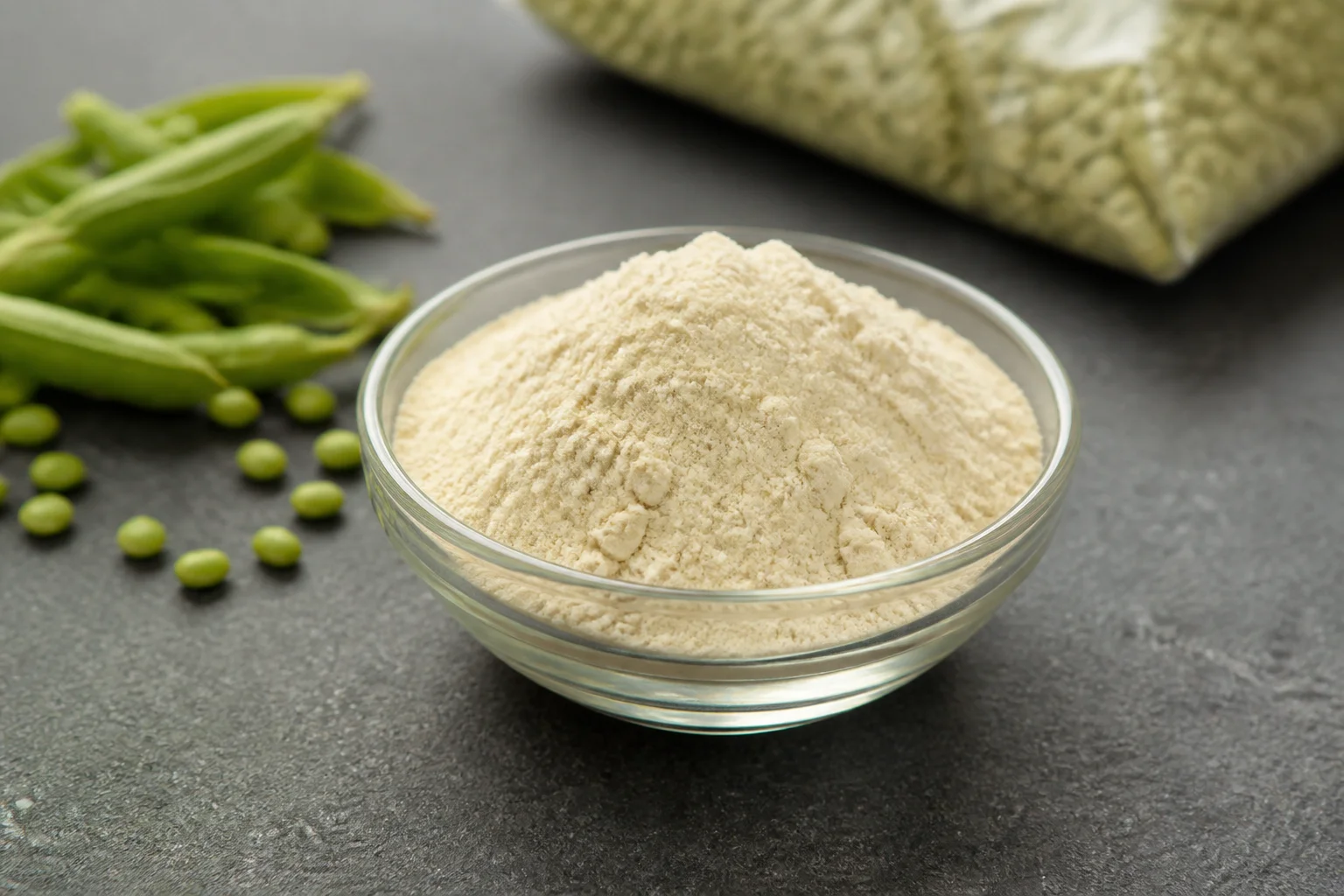
Psyllium husk powder, derived from Plantago ovata seeds, excels specifically in yeast breads and dough applications where guar gum often underperforms.
Why Psyllium Works for Bread:
Gluten-free bread presents unique challenges. Without gluten’s protein network, doughs lack structure and elasticity. Guar gum helps but doesn’t fully replicate gluten’s properties. Psyllium husk creates a gel network that mimics gluten behavior more closely.
A 2014 study in Kuwait demonstrated that psyllium husk powder “has been shown to be a great binding agent which improves the baking quality of bread,” making it an effective guar gum alternative for this specific application.
Functional Benefits:
- Creates elasticity: Dough becomes stretchable, easier to handle and shape
- Moisture retention: Prevents rapid staling common in gluten-free breads
- Improved rise: Helps dough hold gas bubbles from yeast, resulting in better volume
- Enhanced texture: Creates softer, less crumbly crumb structure
Application Limitations:
Psyllium husk doesn’t work as well as guar gum or xanthan gum for:
- Quick breads and muffins (tends to make them gummy)
- Sauces and dressings (doesn’t thicken as effectively)
- Ice cream (doesn’t prevent ice crystals as well)
Substitution Ratio:
For bread and dough applications: 1 tsp guar gum = 2 tsp psyllium husk powder
Use “no more than 2 teaspoons of psyllium husk powder in place of guar gum in a recipe. For recipes with 2 cups of flour/starch or less, use 1 teaspoon,” according to gluten-free baking experts.
Important Considerations:
- Use “blonde” or light-colored psyllium husk; darker varieties can turn baked goods purple/blue
- Mix psyllium with dry ingredients first before adding liquids
- Dough will feel sticky initially but firms up during rest periods
- May require longer baking times or lower temperatures for even cooking
Replacement for Guar Gum: Blended Solutions
Single-ingredient replacements often fall short of guar gum’s multi-functional performance. Blended solutions combining multiple hydrocolloids or gums with starches frequently outperform any single alternative.
Successful Blend Formulations:
1. Oat Fiber + Potato Starch + Psyllium (1:1 replacement for guar)
This combination has been “successfully used as a 1:1 replacement for guar gum in bakery products like bread, buns, cookies, muffins, cakes and bagels,” according to food formulation research.
How it works:
- Oat fiber provides structure and moisture retention
- Potato starch contributes binding and smooth texture
- Psyllium adds elasticity and prevents crumbling
Typical blend ratio: 40% oat fiber, 40% potato starch, 20% psyllium husk powder
2. Xanthan + Locust Bean Gum (Enhanced Performance)
Synergistic interaction between xanthan and locust bean gum creates viscosities and gelling properties exceeding either gum alone—similar to guar gum’s synergy with xanthan.
Blend ratio: 1 part xanthan + 1 part locust bean gum = 1.5 parts guar gum equivalent
Works exceptionally well for:
- Dairy products
- Frozen desserts
- Cream sauces
- Puddings and custards
3. Cellulose Gum (CMC) + Pectin
Carboxymethyl cellulose combined with pectin creates stable emulsions and viscosity across pH ranges.
Applications:
- Acidic beverages
- Fruit fillings
- Low-fat dairy products
- Salad dressings
Replacement ratio varies by application; typically 0.8:1 ratio (slightly less blend than original guar amount)
Natural and Whole-Food Alternatives
Consumers increasingly demand “clean label” products with recognizable ingredients. Several whole-food alternatives can replace guar gum in specific applications.
Chia Seeds (Ground or Whole):
When mixed with liquid, chia seeds form mucilaginous gel ideal for binding.
- Substitution: 1 tbsp ground chia + 3 tbsp water = 1 tsp guar gum
- Best for: Muffins, cookies, quick breads, smoothies
- Limitations: Adds visible seeds (if whole), nutty flavor, darker color
Flax Seeds (Ground):
Similar gel-forming properties to chia with stronger nutritional profile (omega-3s).
- Substitution: 1 tbsp ground flax + 3 tbsp hot water = 1 tsp guar gum
- Best for: Whole grain breads, brownies, pancakes
- Limitations: Nutty flavor, slightly gritty texture, shorter shelf life
Gelatin (Animal-Based):
Provides excellent binding and moisture retention but not suitable for vegetarians/vegans.
- Substitution: 1 tbsp gelatin (mixed with water) = 1 tsp guar gum
- Best for: Puddings, mousses, cheesecakes, certain baked goods
- Limitations: Not vegetarian, requires specific hydration, doesn’t work in highly acidic foods
Agar-Agar (Seaweed-Based):
Vegan gelatin alternative with strong gelling properties.
- Substitution: Generally 1:1 with gelatin, approximately 1 tbsp agar = 1 tsp guar gum (varies by application)
- Best for: Custards, jellies, puddings, dairy-free desserts
- Limitations: Must be heated to activate, sets firmly (not creamy), different texture than guar
Konjac Powder (Glucomannan):
Derived from konjac root, extremely high viscosity per unit weight.
- Substitution: 1 tsp konjac powder = 1.5-2 tsp guar gum (konjac is more powerful)
- Best for: Noodles, jellies, certain baked goods
- Limitations: Can prevent full cooking if overused, requires careful measurement, expensive
Application-Specific Recommendations
Choosing the optimal guar gum alternative depends on your specific product category.
Gluten-Free Bread and Yeast Doughs:
Best alternatives:
- Psyllium husk powder (2:1 ratio)
- Konjac powder + psyllium blend (1:1 + extra moisture)
- Xanthan + psyllium combination (50/50 mix at 1.5:1 total ratio)
Avoid: Guar alternatives that don’t provide elasticity; bread will be crumbly and dense
Cookies, Muffins, Quick Breads:
Best alternatives:
- Xanthan gum (1:0.67 ratio)
- Ground flax or chia (1 tbsp seeds + 3 tbsp water per tsp guar)
- Oat fiber + starch blends (1:1 ratio)
Avoid: Too much psyllium (creates gummy texture in quick breads)
Salad Dressings and Sauces:
Best alternatives:
- Xanthan gum (1:0.5 ratio) — industry standard
- Cellulose gum/CMC (1:0.8 ratio)
- Modified food starches (depends on specific starch, typically 3-5x amount needed)
Avoid: Flax or chia seeds (visible particles, texture issues)
Ice Cream and Frozen Desserts:
Best alternatives:
- Xanthan + locust bean gum blend (synergistic effect prevents ice crystals)
- Carrageenan (specific types for dairy applications)
- Cellulose gum (smooth texture, prevents syneresis)
Avoid: Psyllium husk (doesn’t prevent ice crystal formation effectively)
Meat Products:
Best alternatives:
- Carrageenan (excellent water binding in processed meats)
- Modified starches (moisture retention, yield improvement)
- Konjac flour (high water-holding capacity)
Avoid: Sweet-flavored alternatives like chia that might impact meat flavor
Cost and Supply Considerations
Price and availability drive formulation decisions as much as functionality.
Comparative Costs (Approximate):
| Material | Cost per kg | Relative to Guar | Supply Stability |
| Guar gum | $3-12 (volatile) | Baseline | Poor (weather, geopolitical) |
| Xanthan gum | $8-15 | 2-3x | Good (fermentation-based) |
| Psyllium husk | $10-20 | 3-5x | Moderate (agricultural) |
| Locust bean gum | $12-18 | 3-4x | Moderate (limited sources) |
| Cellulose gum (CMC) | $4-8 | 1.5-2x | Excellent (industrial production) |
| Konjac powder | $15-30 | 5-8x | Moderate (Asian sourcing) |
| Chia seeds (ground) | $8-15 | 2-3x | Good (multiple origins) |
| Flax seeds (ground) | $5-10 | 1.5-2.5x | Good (widespread cultivation) |
Strategic Sourcing:
Smart manufacturers maintain approved alternative formulations so they can switch based on market conditions. When guar prices spike, shifting to xanthan or blended solutions protects margins. When guar stabilizes, reformulating back captures cost savings.
This flexibility requires:
- Pre-approved formulations for each alternative
- Shelf-life and stability data for alternatives
- Consumer acceptance testing
- Regulatory review and approval
- Supply chain relationships for multiple hydrocolloids
Conclusion
Finding the right guar gum alternative requires matching functional requirements to specific applications rather than seeking universal replacements. Xanthan gum offers the most versatile performance across food formulations, though at higher costs. Psyllium husk excels in gluten-free bread where elasticity matters most. Blended solutions combining multiple hydrocolloids or starches with fibers often outperform single-ingredient replacements.
The shift away from guar gum dependency reflects broader trends toward supply chain resilience and formulation flexibility. Manufacturers succeeding in this transition invest in understanding each alternative’s strengths, maintain multiple approved formulations, and build relationships with diverse hydrocolloid suppliers capable of providing technical support during reformulation projects.
Elchemy manufactures and sources high-quality hydrocolloids including xanthan gum, psyllium husk powder, cellulose derivatives, and specialty blends tailored for food formulations. As both a chemical manufacturer and distributor with integrated supply chain capabilities, Elchemy provides reliable alternatives to guar gum backed by formulation support, regulatory compliance documentation, and flexible supply options that help food manufacturers optimize performance while managing cost and supply risk in their product development and production operations.