Guar Gum
ELVISCTM – GG G1
Get Pricing For This Product
Skip the quote. Sign up now and see pricing instantly
Speed Up Your Sample Testing Process
Express Delivery in 24–48 Hours
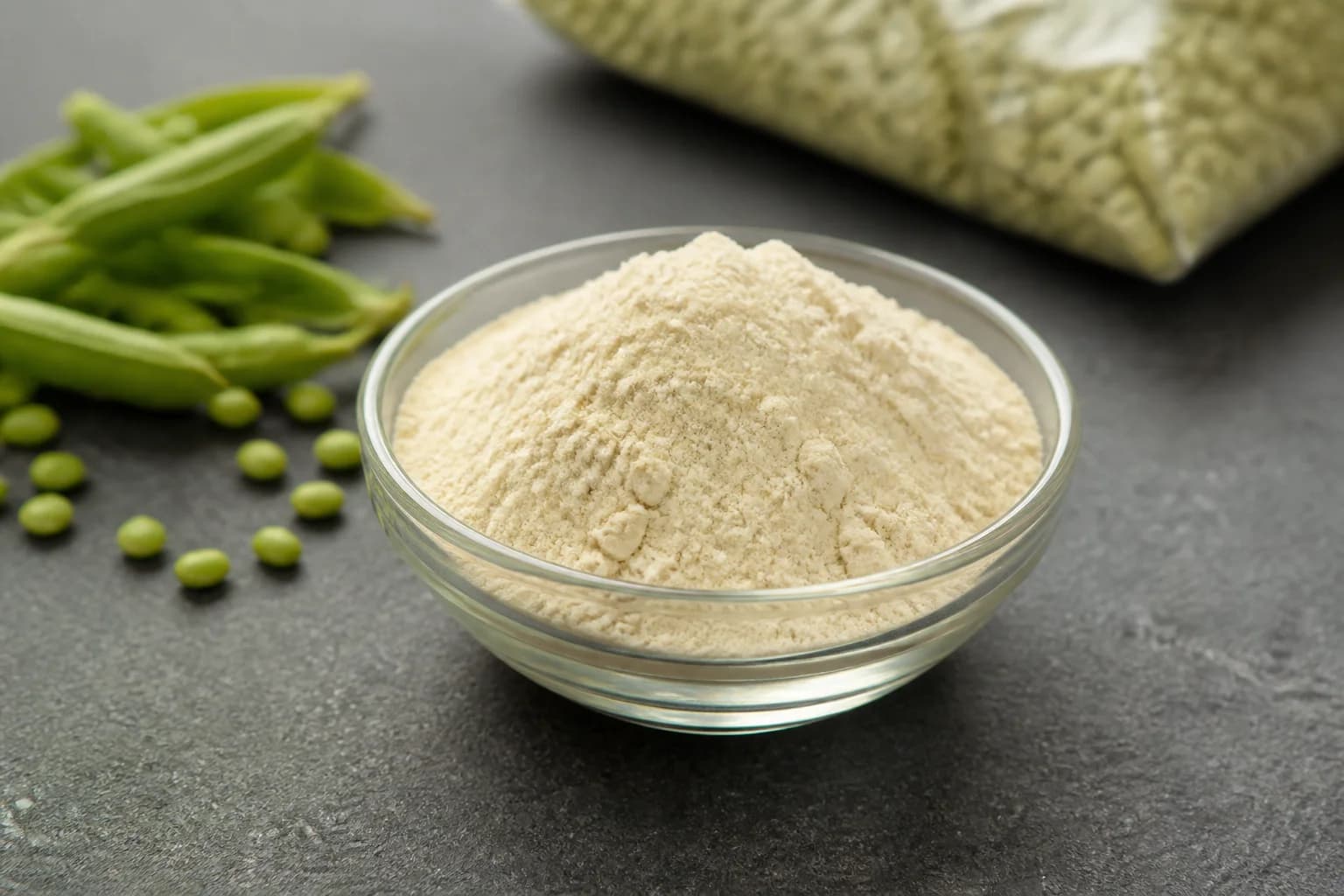
Guar gum is a natural food thickener and stabilizer that is derived from guar beans. The guar plant (Cyamopsis tetragonoloba) produces guar seeds, and the endosperm of these seeds is where guar gum is…
CAS Number
9000-30-0
HS Code
13023230.0
INCI Name
Guar Gum
Molecular Formula
C10H14N5Na2O12P3
Guar Gum
ELVISCTM – GG G1
Guar gum is a natural food thickener and stabilizer that is derived from guar beans. The guar plant (Cyamopsis tetragonoloba) produces guar seeds, and the endosperm of these seeds is where guar gum is extracted. Due to its thickening and stabilizing properties, it is useful in…
CAS Number
9000-30-0
INCI Name
Guar Gum
HS Code
13023230.0
Molecular Formula
C10H14N5Na2O12P3
Get Pricing For This Product
Skip the quote. Sign up now and see pricing instantly
Speed Up Your Sample Testing Process
We deliver domestic samples within 24 - 48 hours, helping you evaluate product without delays.
Product Specification
Physical Properties
| Property | Specification |
|---|---|
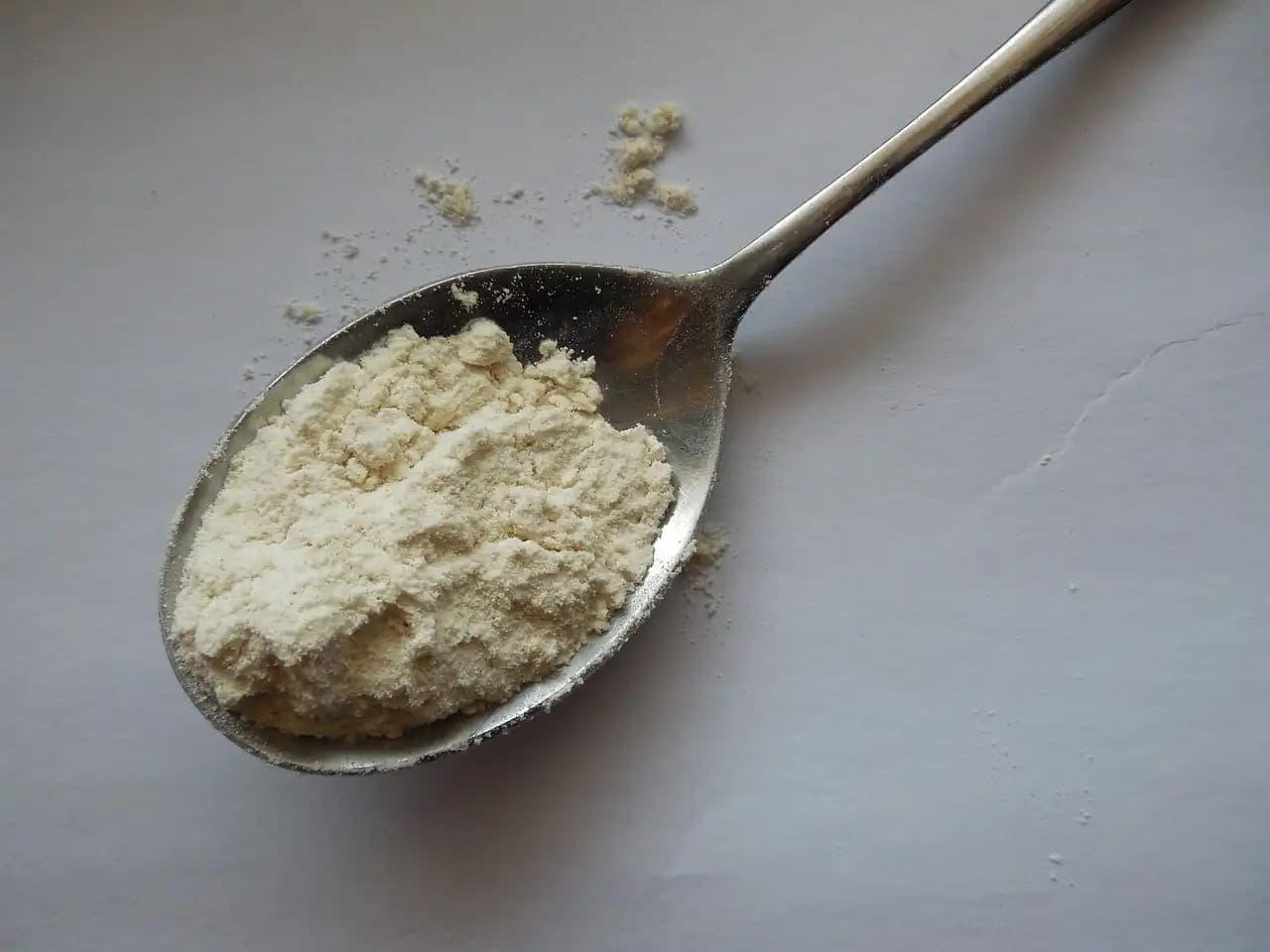
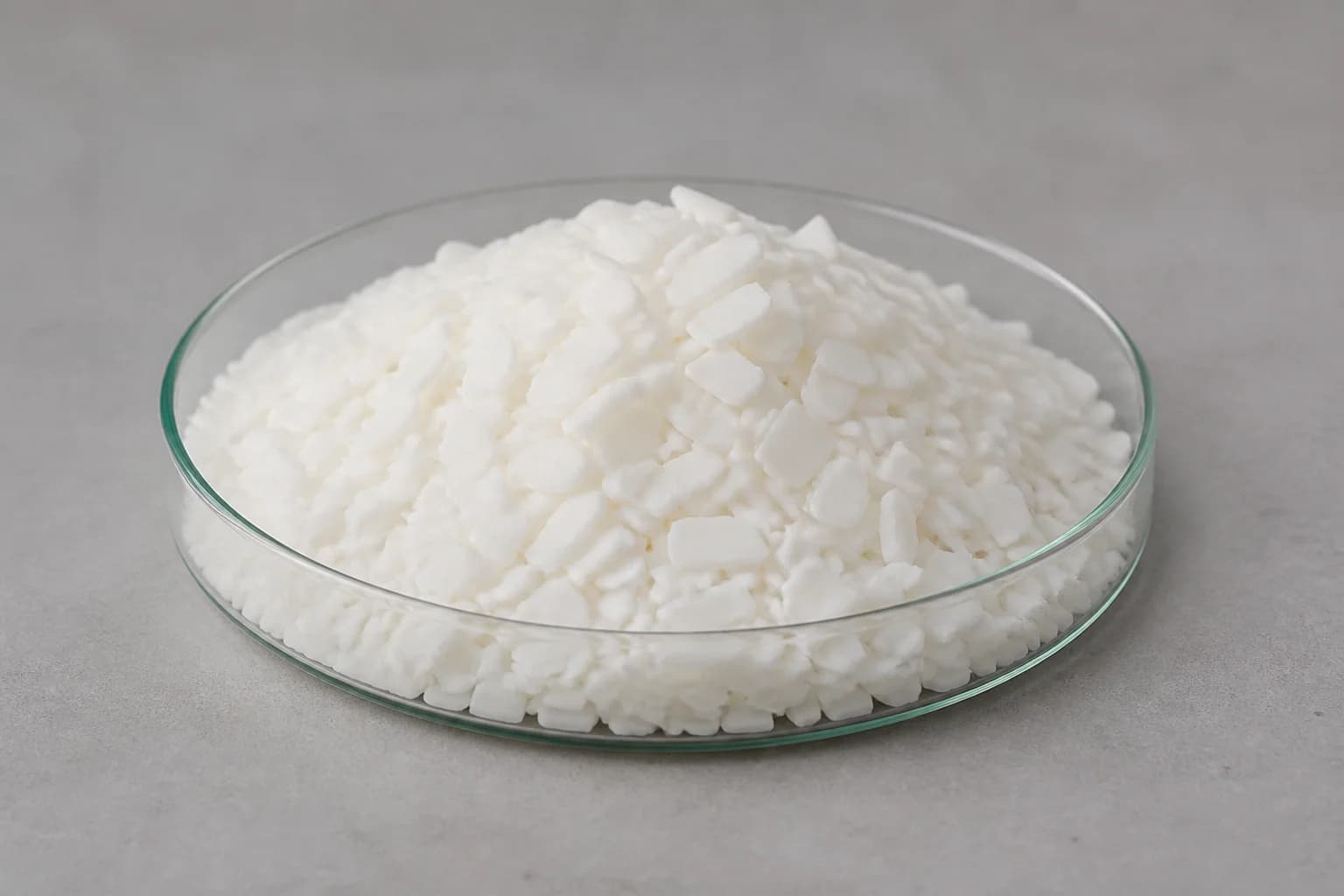
| Appearance | Off-white to creamy white powder |
| Odor | Odorless |
| Molecular Weight | 200,000 to 300,000 Daltons |
| Density / Specific Gravity | 0.8-1.0 g/mL at 25 °C |
| Viscosity | A 1% solution can range from 2,000–7,000 mPa·s (cps) depending on the specific grade and measurement conditions. |
| Ph (1% Aqueous Solution) | 5.5 - 7.5 |
| Assay / Purity | Galactomannan: 80% Min. |
Chemical Properties
| Property | Specification |
|---|---|
| Pka | 5-7 |
| Ionic Nature | Non-ionic |
| Incompatibilities | Strong acids and alkalis in high concentrations can cause hydrolysis and loss of viscosity. Divalent and trivalent ions (e.g., Ca²⁺, Al³⁺) can cause viscosity changes or gel formation. |
| Hazardous Reactions / Decomposition Products | Decomposes upon prolonged heating. |
Thermal Properties
| Property | Specification |
|---|---|
| Melting Point | Does not have a specific melting point as it is a polysaccharide and decomposes upon heating. |
| Decomposition Temperature | Typically begins to decompose around 200°C to 250°C. |
| Thermal Stability | Stable up to 80°C (176°F) for five minutes. Degrades at extreme pH and temperature (e.g., pH 3 at 50°C). |
Processing Methods & Reference Formulations
A. Vegan Mayonnaise
A creamy, plant-based alternative to traditional mayonnaise. Guar gum provides thickening and stabilization.
| Key Ingredients | Indicative Dosage (% w/w) |
|---|---|
| Avocado Oil | 1/2 glass |
| Apple Vinegar | 1/4 glass |
| Guar Gum | 1 tablespoon |
| Himalayan Pink Salt | A pinch (optional) |
| Thyme | 1 teaspoon (optional) |
| Sugar-free Almond Drink | 1/2 glass |
Dosing Guidelines
A. Dosing by Application
| Application | Recommended / Max Dosage |
|---|---|
| General Food Products | 0.1% to 1.0% |
| Beverages | 2 g to 10 g per L |
| Baked Goods | 0.1% to 1.0% |
| Sauces and Dressings | 0.1% to 1.0% |
| Ice Cream / Dairy Products | 0.1% to 1.0% |
| Instant Noodles | 0.3% to 0.5% |
| Cheese Products | Up to 3% of total weight |
About Guar Gum
Guar gum is a natural, plant-derived galactomannan and one of the highest-viscosity, most cost-effective thickeners available. Milled from the endosperm of the guar bean, it hydrates in cold water to build very high viscosity at low dosage, and functions as a thickener, stabiliser, binder, water-retention agent and friction reducer across food, oil & gas, textiles, paper, mining and personal care.
Guar gum is sourced globally - predominantly from India and Pakistan, which grow most of the world's guar - and dependable supply is as much about viscosity grade, mesh and documentation as chemistry. Guar gum (CAS 9000-30-0) is affirmed GRAS by the US FDA under 21 CFR 184.1339 and carries FCC, USP-NF and Ph.Eur. monographs.
Industrial buyers placing bulk orders also keep a close eye on guar gum pricing, since contract rates feed directly into the cost of everything they produce downstream.
Manufacturing Process of Guar Gum
Guar gum is produced by mechanical milling, not chemical synthesis. Cleaned guar seeds are dehusked and split to separate the germ and hull from the endosperm halves ('guar splits'). The splits are then screened, hydrated, flaked and milled to a fine powder, with the particle size and residual protein controlling the hydration rate and clarity. Derivatised grades (e.g. hydroxypropyl guar, carboxymethyl guar, borate-crosslinkable fracturing grades) are made by further reacting the base gum. Viscosity is graded by mesh and by the Brookfield viscosity of a 1% solution.
Every shipment Elchemy supplies is tested for viscosity, moisture, particle size and protein content before dispatch, with a Certificate of Analysis travelling alongside each order.
Guar Gum Price: Bulk Pricing for Industrial Buyers
If you're looking for current guar gum pricing for bulk procurement, Elchemy provides quotes based on your specific requirements. Fill out the quote request form with your volume, grade, destination and packaging preference, and our team will revert with a detailed offer within 24 to 48 hours.
Pricing works on a quote basis rather than a published rate because the cost is driven by the guar bean crop cycle in India and Pakistan (highly weather-sensitive) and oilfield fracturing demand, which historically drives sharp price swings, rather than tracking a fixed list.
Beyond that, several factors layer in to shape the final number: grade, committed volume, origin country, packaging format, freight, Incoterm choice (FOB, CIF or DDP) and applicable import duty (HTS 1302.32 for US-bound shipments).
For an approximate read on where the market sits, procurement teams often reference guar seed commodity prices on Indian exchanges (NCDEX), which give a sense of how rates are trending.
Trade publications also report the guar gum price per kg as a unit-level benchmark, useful for spotting short-term regional shifts even on large industrial orders.
At bulk procurement scale, however, the guar gum price per ton is the most relevant commercial unit, since contracts are typically negotiated and committed at that level.
For an exact rate, none of these references replaces a direct quote. The actual price depends on your contract structure, destination, committed volume and timing of dispatch, which is why a quote from our team will always be the most accurate number for your specific procurement.
Packaging & Logistics
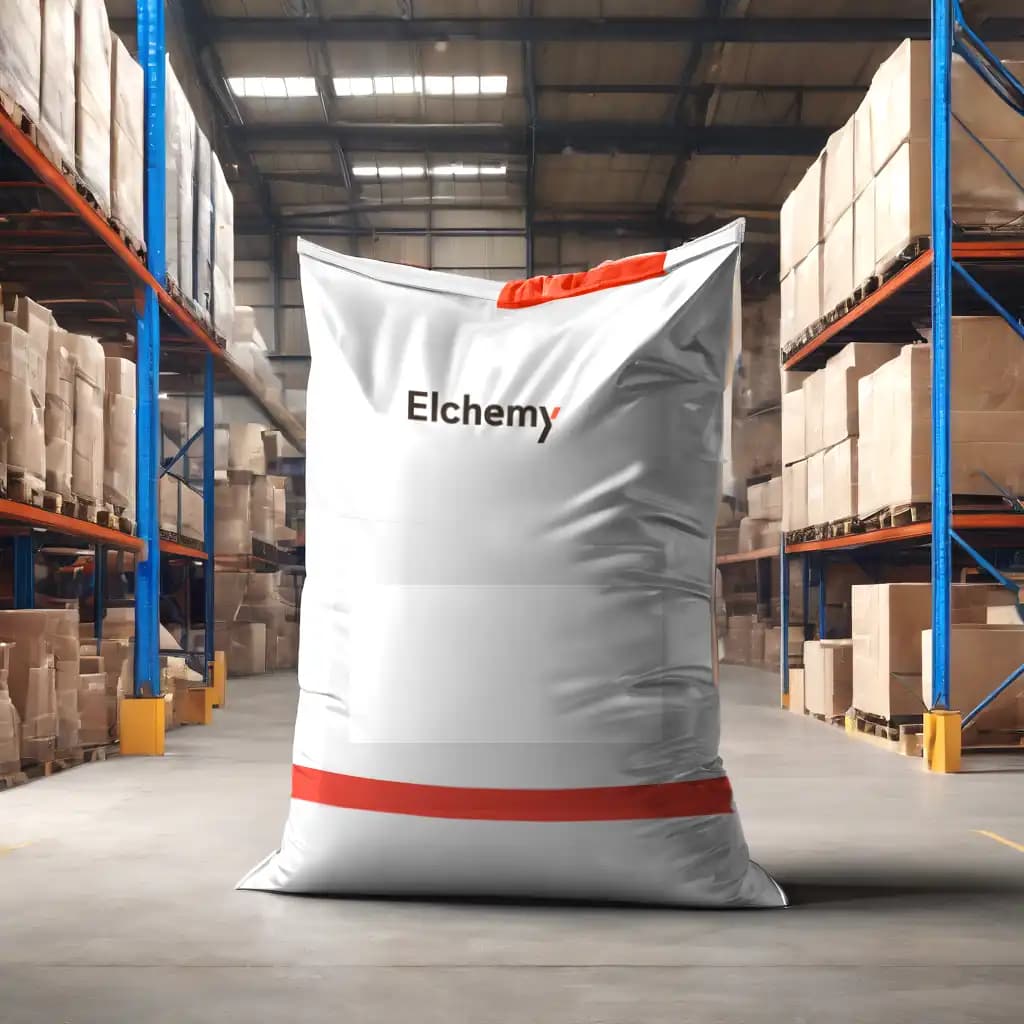
Guar Gum ships in 25 kg (55 lb) bags, 50 lb bags for the US market, or 1 MT (2,205 lb) FIBC jumbo bags (liquids ship in drums, IBCs or ISO tanks as applicable), supplied as per buyer requirements. A typical 20' container holds approximately 18 to 24 MT depending on packaging.
For US-bound orders, domestic stock supports faster fulfilment. Where sourcing is required from origin countries, transit times typically run 24 to 28 days to the US East Coast and 18 to 22 days to the West Coast. Elchemy offers EXW, FOB, CIF and DDP terms, depending on how your procurement team prefers to handle landed cost and customs.
Material should be stored in a cool, dry, well-ventilated area per the storage conditions on the TDS. Standard dispatch follows agreed contract terms, with expedited timelines available where needed. Samples are dispatched within 24 to 48 hours.
Why Choose Elchemy as a Trusted Guar Gum Supplier?
Elchemy makes guar gum procurement straightforward for industrial buyers. That means consistent material across the grades listed above, with a Certificate of Analysis for every batch and full documentation (TDS, SDS) as standard.
Because we source across multiple origins, we quote on the best landed cost for your destination rather than a single manufacturer's list price. Our partner plants operate to recognised quality standards (ISO 9001, plus food/pharma certifications where relevant), with Halal and Kosher certification available on request.
Beyond the US, Elchemy ships into 40+ countries with samples available for qualification before any bulk order, and pricing tailored to volume, destination and contract terms.
Safety & Handling
Not classified as acutely hazardous under GHS for the finished product, but guar dust is a respiratory sensitiser (occupational asthma risk) and a combustible dust. Not DOT hazmat-regulated. Manage dust exposure per the SDS.
Guar gum is a natural, food-grade, non-toxic soluble fibre. Ingested in large quantities it can cause bloating or gas (it is a fermentable fibre), and dry powder must never be swallowed in bulk as it swells rapidly and has historically caused oesophageal obstruction - relevant only to misuse, not normal food levels. Occupationally, guar dust is a recognised respiratory sensitiser: repeated inhalation of guar flour dust can cause occupational asthma and rhinitis. Dust control and respiratory protection are important in bulk handling. It is a combustible dust.
The full 16-section GHS-aligned SDS is available alongside material orders.
- Thickening Agent: Enhances viscosity in sauces, dressings, and baked products.
- Function: Primarily acts as a thickener, stabilizer, emulsifier, and binder in food and other products.
- Stabilizes Emulsions: Improves consistency and texture in emulsified products.
- Features: It is a natural, plant-based hydrocolloid that is highly soluble in cold water, forming highly viscous, pseudoplastic solutions. It has almost eight times the thickening power of cornstarch.
- Gluten-Free Binding: Offers binding properties for gluten-free formulations.
- Benefits: Improves texture and creaminess, prevents ice crystal formation in frozen desserts, enhances shelf life by retaining moisture, and provides structure in gluten-free baked goods. It is also a source of soluble dietary fiber.
- Cost-Effective: Effective at low concentrations, providing economical solutions in manufacturing.
About Guar Gum
Guar gum is a natural, plant-derived galactomannan and one of the highest-viscosity, most cost-effective thickeners available. Milled from the endosperm of the guar bean, it hydrates in cold water to build very high viscosity at low dosage, and functions as a thickener, stabiliser, binder, water-retention agent and friction reducer across food, oil & gas, textiles, paper, mining and personal care.
Guar gum is sourced globally - predominantly from India and Pakistan, which grow most of the world's guar - and dependable supply is as much about viscosity grade, mesh and documentation as chemistry. Guar gum (CAS 9000-30-0) is affirmed GRAS by the US FDA under 21 CFR 184.1339 and carries FCC, USP-NF and Ph.Eur. monographs.
Industrial buyers placing bulk orders also keep a close eye on guar gum pricing, since contract rates feed directly into the cost of everything they produce downstream.
Manufacturing Process of Guar Gum
Guar gum is produced by mechanical milling, not chemical synthesis. Cleaned guar seeds are dehusked and split to separate the germ and hull from the endosperm halves ('guar splits'). The splits are then screened, hydrated, flaked and milled to a fine powder, with the particle size and residual protein controlling the hydration rate and clarity. Derivatised grades (e.g. hydroxypropyl guar, carboxymethyl guar, borate-crosslinkable fracturing grades) are made by further reacting the base gum. Viscosity is graded by mesh and by the Brookfield viscosity of a 1% solution.
Every shipment Elchemy supplies is tested for viscosity, moisture, particle size and protein content before dispatch, with a Certificate of Analysis travelling alongside each order.
Guar Gum Price: Bulk Pricing for Industrial Buyers
If you're looking for current guar gum pricing for bulk procurement, Elchemy provides quotes based on your specific requirements. Fill out the quote request form with your volume, grade, destination and packaging preference, and our team will revert with a detailed offer within 24 to 48 hours.
Pricing works on a quote basis rather than a published rate because the cost is driven by the guar bean crop cycle in India and Pakistan (highly weather-sensitive) and oilfield fracturing demand, which historically drives sharp price swings, rather than tracking a fixed list.
Beyond that, several factors layer in to shape the final number: grade, committed volume, origin country, packaging format, freight, Incoterm choice (FOB, CIF or DDP) and applicable import duty (HTS 1302.32 for US-bound shipments).
For an approximate read on where the market sits, procurement teams often reference guar seed commodity prices on Indian exchanges (NCDEX), which give a sense of how rates are trending.
Trade publications also report the guar gum price per kg as a unit-level benchmark, useful for spotting short-term regional shifts even on large industrial orders.
At bulk procurement scale, however, the guar gum price per ton is the most relevant commercial unit, since contracts are typically negotiated and committed at that level.
For an exact rate, none of these references replaces a direct quote. The actual price depends on your contract structure, destination, committed volume and timing of dispatch, which is why a quote from our team will always be the most accurate number for your specific procurement.
Packaging & Logistics
Guar Gum ships in 25 kg (55 lb) bags, 50 lb bags for the US market, or 1 MT (2,205 lb) FIBC jumbo bags (liquids ship in drums, IBCs or ISO tanks as applicable), supplied as per buyer requirements. A typical 20' container holds approximately 18 to 24 MT depending on packaging.
For US-bound orders, domestic stock supports faster fulfilment. Where sourcing is required from origin countries, transit times typically run 24 to 28 days to the US East Coast and 18 to 22 days to the West Coast. Elchemy offers EXW, FOB, CIF and DDP terms, depending on how your procurement team prefers to handle landed cost and customs.
Material should be stored in a cool, dry, well-ventilated area per the storage conditions on the TDS. Standard dispatch follows agreed contract terms, with expedited timelines available where needed. Samples are dispatched within 24 to 48 hours.
Why Choose Elchemy as a Trusted Guar Gum Supplier?
Elchemy makes guar gum procurement straightforward for industrial buyers. That means consistent material across the grades listed above, with a Certificate of Analysis for every batch and full documentation (TDS, SDS) as standard.
Because we source across multiple origins, we quote on the best landed cost for your destination rather than a single manufacturer's list price. Our partner plants operate to recognised quality standards (ISO 9001, plus food/pharma certifications where relevant), with Halal and Kosher certification available on request.
Beyond the US, Elchemy ships into 40+ countries with samples available for qualification before any bulk order, and pricing tailored to volume, destination and contract terms.
Safety & Handling
Not classified as acutely hazardous under GHS for the finished product, but guar dust is a respiratory sensitiser (occupational asthma risk) and a combustible dust. Not DOT hazmat-regulated. Manage dust exposure per the SDS.
Guar gum is a natural, food-grade, non-toxic soluble fibre. Ingested in large quantities it can cause bloating or gas (it is a fermentable fibre), and dry powder must never be swallowed in bulk as it swells rapidly and has historically caused oesophageal obstruction - relevant only to misuse, not normal food levels. Occupationally, guar dust is a recognised respiratory sensitiser: repeated inhalation of guar flour dust can cause occupational asthma and rhinitis. Dust control and respiratory protection are important in bulk handling. It is a combustible dust.
The full 16-section GHS-aligned SDS is available alongside material orders.
- Thickening Agent: Enhances viscosity in sauces, dressings, and baked products.
- Function: Primarily acts as a thickener, stabilizer, emulsifier, and binder in food and other products.
- Stabilizes Emulsions: Improves consistency and texture in emulsified products.
- Features: It is a natural, plant-based hydrocolloid that is highly soluble in cold water, forming highly viscous, pseudoplastic solutions. It has almost eight times the thickening power of cornstarch.
- Gluten-Free Binding: Offers binding properties for gluten-free formulations.
- Benefits: Improves texture and creaminess, prevents ice crystal formation in frozen desserts, enhances shelf life by retaining moisture, and provides structure in gluten-free baked goods. It is also a source of soluble dietary fiber.
- Cost-Effective: Effective at low concentrations, providing economical solutions in manufacturing.
Regulatory Compliance
| Region | Max Allowed Level | Notes | Certification Body |
|---|---|---|---|
| Australia | - | Permitted as a food additive. | FSANZ approval |
| Canada | - | Permitted for use as a food additive. | Health Canada approval |
| India | - | Approved for use in food products. | FSSAI, GMP |
| United States | 2% | Generally Recognized As Safe (GRAS). | FDA (adherence to 21 CFR 184.1339), GMP |
| European Union | - | Approved food additive (E412). | REACH, EFSA approval |
FAQs - Guar Gum
Related Products


Related Products
Streamline
Your Chemical
Procurement
Get fast responses from real experts