

At a Glance
- Benzyl alcohol (C₇H₈O) and benzene (C₆H₆) are completely different chemicals despite similar names
- Benzene is a known carcinogen causing blood cancer, while benzyl alcohol is FDA-approved for cosmetics
- Benzyl alcohol contains a benzene ring plus a -CH₂OH group, making it an aromatic alcohol
- Benzene is a simple six-carbon ring used as industrial solvent and chemical feedstock
- Benzyl alcohol appears in perfumes, cosmetics, and medications with low toxicity
- Benzene exposure comes from gasoline, cigarette smoke, and industrial emissions
- LD50 for benzyl alcohol is 1,230 mg/kg (rats) versus benzene’s extreme toxicity at much lower doses
- The similar-sounding names cause confusion, but their properties couldn’t be more different
Check the ingredient list on your shampoo bottle and you might see “benzyl alcohol” listed as a preservative. Meanwhile, news reports warn about benzene contamination in sunscreen products causing recalls. Are these the same chemical? Absolutely not—and confusing them could lead to serious misunderstandings about product safety.
This mix-up happens all the time. Students studying chemistry stumble over the names. Consumers worry when they see “benzyl alcohol” on labels, thinking it’s related to the dangerous benzene they’ve heard about. The truth is, these are two totally different compounds with different structures, different safety profiles, and completely different uses in industry and everyday products.
Is Benzyl Alcohol Is Same as Benzene – Clearing the Confusion
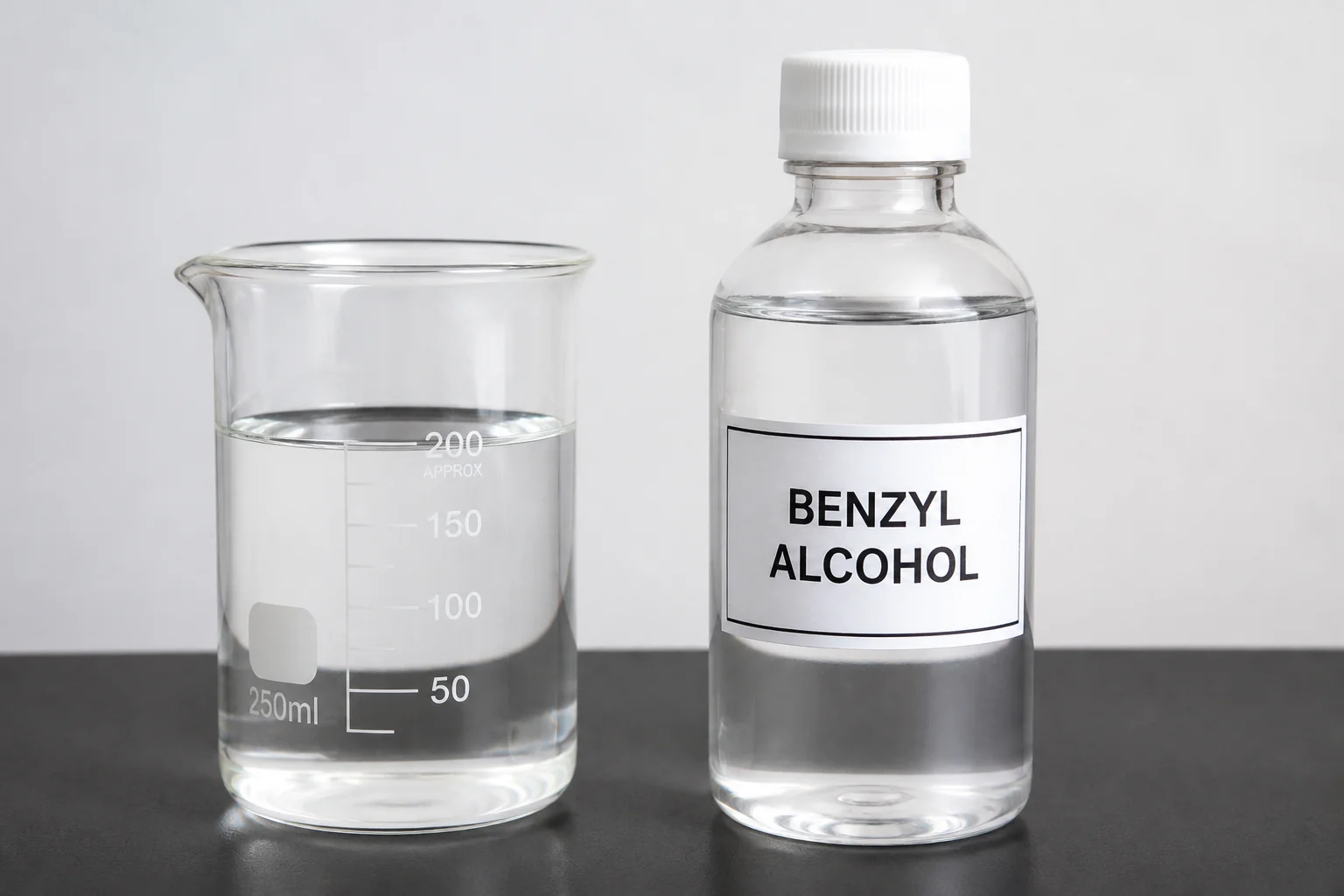
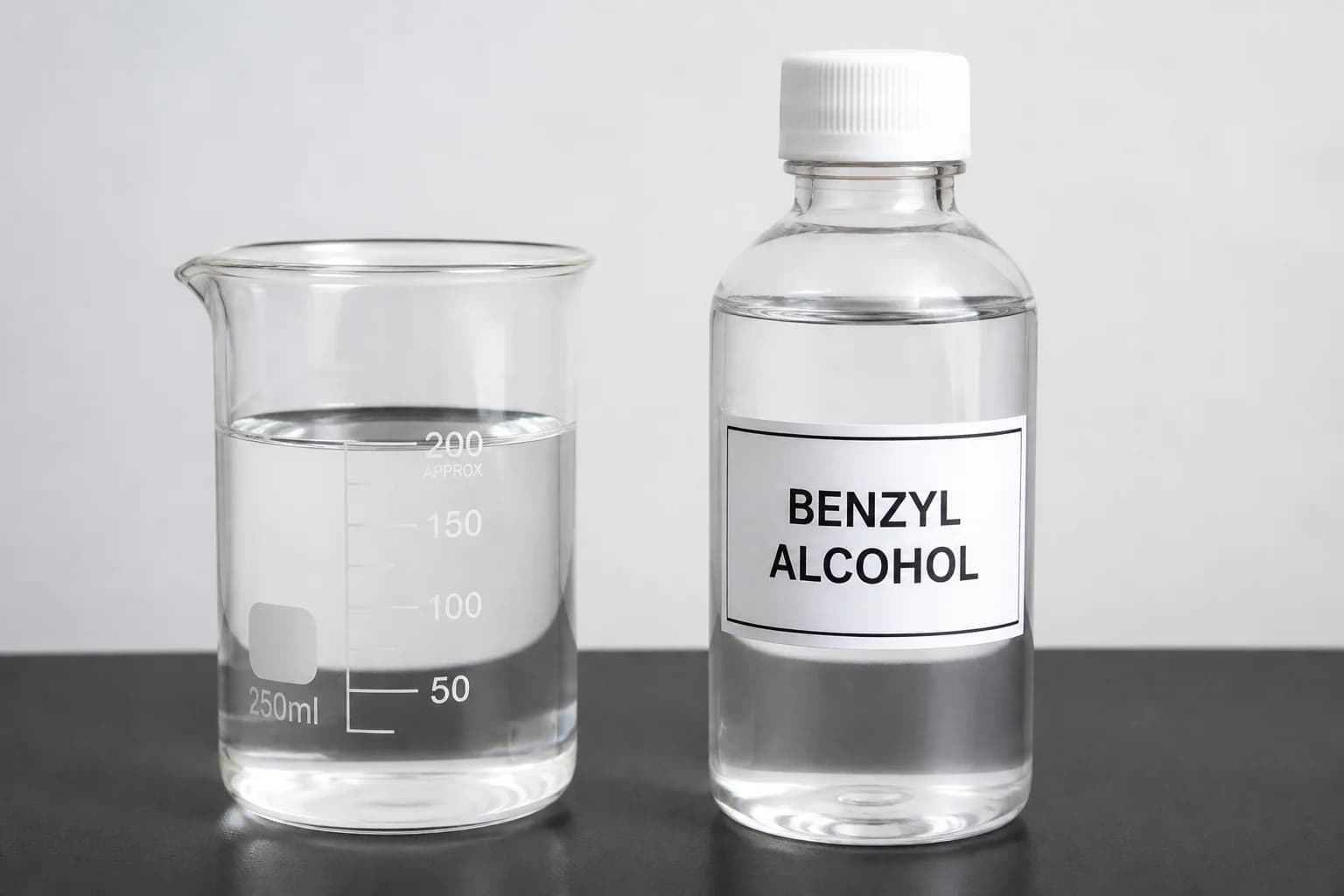
No, benzyl alcohol is not benzene. They’re as different as table salt and bleach—both contain chlorine, but you’d never confuse their uses or safety. Benzyl alcohol (chemical formula C₇H₈O) is an aromatic alcohol used safely in cosmetics, foods, and medicines. Benzene (C₆H₆) is a toxic industrial chemical classified as a known human carcinogen.
The confusion starts with their names. Both contain the word “benz-” which comes from “benzene ring”—a six-carbon ring structure that appears in many aromatic compounds. Think of the benzene ring as a building block. Benzene itself is just this bare ring. Benzyl alcohol is this ring with additional atoms attached—specifically a -CH₂OH group hanging off one side.
Why the names sound alike:
- Both are aromatic compounds containing a benzene ring
- Chemical naming rules use “benzyl” for compounds with a C₆H₅CH₂- structure
- Historical naming conventions created similar-sounding terms
- The “alcohol” part in benzyl alcohol tells you it has an -OH group
- Benzene is a simple hydrocarbon with no additional functional groups
Here’s the key point: just because a chemical’s name includes “benz-” doesn’t make it dangerous like benzene. Benzoic acid (a food preservative), benzaldehyde (almond flavoring), and benzyl alcohol all contain benzene rings, but they behave completely differently from pure benzene because of the other atoms attached.
Benzyl Alcohol vs Benzene – Chemical Structure
Looking at their molecular structures shows why these chemicals act so differently. Structure determines everything in chemistry—how a molecule behaves, whether it’s toxic, what it’s useful for.
| Property | Benzyl Alcohol | Benzene |
| Chemical Formula | C₇H₈O or C₆H₅CH₂OH | C₆H₆ |
| Molecular Weight | 108 g/mol | 78 g/mol |
| Structure Type | Aromatic alcohol | Simple aromatic hydrocarbon |
| Functional Group | Hydroxyl (-OH) on methylene | None (just benzene ring) |
| Physical State | Colorless liquid | Colorless liquid |
| Odor | Mild, pleasant aromatic | Sweet, distinctive |
| Water Solubility | Moderate (4 g/100 mL) | Very poor (0.18 g/100 mL) |
| Boiling Point | 205°C (401°F) | 80°C (176°F) |
What Benzyl Alcohol Really Is
Benzyl alcohol consists of a benzene ring (that famous hexagonal structure with six carbons) connected to a CH₂OH group. This CH₂OH part is called a “hydroxymethyl” or “carbinol” group—basically a carbon with two hydrogen atoms and one hydroxyl group attached.
The structure looks like toluene (methylbenzene) where one hydrogen from the methyl group got replaced by a hydroxyl group. This makes benzyl alcohol behave like other alcohols—it can form hydrogen bonds, dissolves moderately in water, and reacts with acids to form esters.
That hydroxyl group completely changes how the molecule behaves compared to benzene. It makes benzyl alcohol:
- More water-soluble because the -OH group can hydrogen bond with water
- Less volatile (higher boiling point) because molecules stick together better
- Able to act as a preservative due to antimicrobial properties
- Metabolized differently in the body, breaking down to benzoic acid then hippuric acid
- Much less toxic since it doesn’t accumulate in bone marrow like benzene
Natural sources produce benzyl alcohol too. You’ll find it in jasmine flowers, ylang-ylang essential oil, fruits like apricots and cranberries, and even in castoreum from beaver castor sacs. This natural occurrence in plants and foods supports its safety for use in products people consume or apply to skin.
What Benzene Actually Is
Pure benzene is just a six-carbon ring with alternating double bonds—nothing else attached. This simple structure makes it stable but also problematic. The formula C₆H₆ means six carbons and six hydrogens arranged in that characteristic flat hexagon.
Benzene’s structure gives it unique properties that made it valuable industrially but dangerous biologically. The ring’s electron cloud distributes evenly across all six carbons, creating what chemists call “aromatic stability.” This stability means benzene doesn’t react easily like normal double-bond compounds—it prefers substitution reactions over addition reactions.
Why benzene structure matters for toxicity:
- Easily absorbed through lungs and skin because it’s very lipophilic (fat-loving)
- Accumulates in fatty tissues including bone marrow
- Metabolizes into reactive compounds that damage DNA
- Forms benzene oxide intermediate that attacks blood-forming cells
- Not easily excreted, building up with repeated exposure
Industrial production uses benzene as a starting material for making other chemicals—styrene for plastics, phenol for resins, cyclohexane for nylon, and many others. About 80% of produced benzene goes into manufacturing these derivatives. It’s also in gasoline at 1-2% concentration to boost octane rating.
Safety Differences That Matter
The safety profiles of benzyl alcohol versus benzene couldn’t be more different. One is FDA-approved for use in cosmetics and foods. The other is a known carcinogen that industry tries to minimize exposure to as much as possible.
Benzyl alcohol safety summary:
- LD50 in rats: 1,230-3,100 mg/kg (moderately toxic if swallowed in huge amounts)
- Used safely in cosmetics at 0.5-5% concentrations
- FDA-approved as indirect food additive and GRAS (Generally Recognized As Safe) flavoring
- Metabolizes quickly to benzoic acid, then hippuric acid, excreted in urine
- Main concerns are skin irritation in sensitive individuals and “gasping syndrome” in premature infants
- No evidence of carcinogenicity in animal studies
- Acceptable daily intake: 5 mg/kg body weight (WHO)
Benzene safety summary:
- Classified as Group 1 carcinogen (known human carcinogen) by IARC
- Causes leukemia and blood disorders with chronic exposure
- No safe exposure level established—any amount carries risk
- OSHA workplace limit: 1 ppm averaged over 8 hours (being lowered)
- Chronic exposure linked to aplastic anemia, acute myeloid leukemia
- Environmental contamination from gasoline, industrial emissions, cigarette smoke
Benzene’s Cancer Risk
Benzene’s reputation as a dangerous chemical is well-earned. Studies of workers exposed to benzene fumes in shoe factories, chemical plants, and refineries showed dramatically increased rates of leukemia. The connection is so clear that benzene is classified as a definite human carcinogen—no debate about it.
When you breathe benzene vapors or absorb it through skin, it travels to your bone marrow where blood cells form. There it gets metabolized into reactive compounds that damage DNA in developing blood cells. Over time, this damage accumulates, potentially leading to leukemia or other blood cancers.
Even low-level exposure matters. Unlike some toxins where small amounts are harmless, benzene shows effects even at very low concentrations. This is why environmental regulations keep getting stricter—drinking water limits dropped to 5 parts per billion, and air quality standards aim for the lowest possible exposure.
The scary part? Benzene contamination shows up in unexpected places. Sunscreen recalls in 2021-2022 found benzene contamination in some aerosol products. Dry shampoos got recalled for the same reason. These weren’t intentional ingredients—they were contamination from manufacturing processes or degraded ingredients.
Benzyl Alcohol Safety Profile
In complete contrast, benzyl alcohol has decades of safe use data. The Cosmetic Ingredient Review Expert Panel extensively reviewed all available toxicology studies and concluded benzyl alcohol is safe for use in cosmetics at current concentrations.
Your body handles benzyl alcohol easily. When absorbed, enzymes quickly oxidize it to benzoic acid (the same preservative used in soft drinks as sodium benzoate). Your liver then conjugates this with glycine, forming hippuric acid that gets eliminated in urine. Most people clear 75-85% of ingested benzyl alcohol within 6 hours.
The main safety concern involves premature babies. Benzyl alcohol was used as a preservative in intravenous medications, but cases of “gasping syndrome” occurred in neonatal intensive care units—premature infants receiving multiple IV medications preserved with benzyl alcohol developed breathing problems. Their immature livers couldn’t metabolize it fast enough. This led to restrictions: no benzyl alcohol in medications for neonates and infants.
For healthy adults and older children, benzyl alcohol presents minimal risk at typical exposure levels. Skin irritation or allergic reactions can occur in sensitive individuals—about 1-2% of people show sensitivity in patch testing. But serious toxicity requires extremely high doses that wouldn’t occur from normal product use.
Industrial and Commercial Uses
These dramatically different safety profiles determine where each chemical gets used. Benzyl alcohol appears in consumer products people apply directly to skin or consume. Benzene stays confined to industrial processes with worker protection measures.
| Application Area | Benzyl Alcohol | Benzene |
| Cosmetics & Personal Care | Preservative, solvent, fragrance component in shampoos, lotions, makeup | Never used—too toxic |
| Pharmaceuticals | Bacteriostatic agent in injectable medications, topical anesthetics | Never used—too toxic |
| Food Industry | Flavor solvent in beverages, baked goods (E1519) | Never intentionally added |
| Industrial Solvents | Paints, lacquers, epoxy coatings, inks | High-volume solvent for chemical synthesis |
| Chemical Manufacturing | Intermediate for benzyl esters, benzyl benzoate | Feedstock for styrene, phenol, cyclohexane, aniline |
| Specialty Applications | Head lice treatment (5% solution), photographic chemicals | Gasoline additive, laboratory reagent |
Where Benzyl Alcohol Gets Used
Walk down a drugstore cosmetics aisle and benzyl alcohol is everywhere. It functions primarily as a preservative, preventing bacterial and fungal growth in products containing water. At 0.5-1% concentration, it extends shelf life without significantly affecting product smell or texture.
In perfumes and fragrances, benzyl alcohol works both as a component of the scent itself (mild pleasant aroma) and as a solvent that helps blend other fragrance ingredients. Natural jasmine and ylang-ylang essential oils contain it naturally, contributing to their characteristic scents.
The pharmaceutical industry uses benzyl alcohol as a bacteriostatic preservative in multi-dose medication vials. Once you puncture the rubber stopper to withdraw a dose, bacteria could potentially enter. Benzyl alcohol at 0.9-2% prevents bacterial growth between doses. It’s in injectable antibiotics, vaccines, insulin vials—any medication withdrawn multiple times from one container.
An interesting medical use: FDA-approved prescription lice treatment. Five percent benzyl alcohol lotion (brand name Ulesfia) kills head lice by suffocating them. It blocks their breathing holes so they can’t close them, and water or oil clogs them, causing death by asphyxiation. This works on lice resistant to traditional neurotoxic treatments like permethrin.
Where Benzene Gets Used
You’ll never find benzene listed on a consumer product ingredient label—it’s way too toxic. Its uses are strictly industrial, where exposure can be controlled and workers protected with proper safety equipment and ventilation.
Chemical manufacturing consumes about 80% of all benzene production. It’s the starting material for making:
- Styrene (used to make polystyrene plastics and rubber)
- Phenol (for making plastics, resins, nylon)
- Cyclohexane (converted to nylon precursors)
- Aniline (for dyes and urethane foam)
- Alkylbenzenes (for detergents)
Petroleum refineries produce benzene as a by-product of gasoline refining. Some stays in gasoline—regulations limit it to about 1% by volume. The characteristic gasoline smell comes partly from benzene and related aromatics. This is why pumping gas creates exposure risk, especially from vapor inhalation.
Cigarette smoke contains significant benzene—about 200 micrograms per cigarette in mainstream smoke. Smokers face much higher benzene exposure than the general population, contributing to their increased blood cancer risk.
Conclusion
Benzyl alcohol and benzene share benzene rings in their structures and similar-sounding names—that’s where the similarities end. Benzene is a toxic carcinogen restricted to industrial uses where exposure can be controlled. Benzyl alcohol is a safe, FDA-approved ingredient appearing in cosmetics, medications, and even foods.
The key difference lies in that simple -CH₂OH group attached to the benzene ring in benzyl alcohol. This addition completely transforms the molecule’s properties, making it water-soluble, readily metabolized, and compatible with use in consumer products. Meanwhile, pure benzene’s simple ring structure makes it fat-soluble, slowly metabolized, and capable of accumulating in bone marrow where it damages blood-forming cells.
Next time you see “benzyl alcohol” on a product label, you’ll know it’s not the dangerous benzene making headlines in contamination stories. These are distinct chemicals that happen to share naming roots but couldn’t be more different in safety and use. Understanding this difference prevents unnecessary worry about safe ingredients while maintaining appropriate caution about genuinely hazardous substances like benzene.
For manufacturers requiring benzyl alcohol, benzaldehyde, or other aromatic chemical intermediates with complete safety documentation, Elchemy’s technology-driven platform connects buyers with verified suppliers across global markets. Founded by IIT Bombay engineer Hardik Seth and IIT Delhi engineer Shobhit Jain, Elchemy provides transparent access to technical specifications, MSDS sheets, and quality certificates, supporting safe chemical sourcing from pharmaceutical manufacturing through cosmetic formulation and industrial applications.