Titanium Dioxide

Get Pricing for This Product
Need pricing? Request a quote for this product and we'll get back to you shortly.
 Free Samples Available
Speed Up Your Sample Testing Process
We deliver domestic samples within 24 - 48 hours, helping you evaluate product without delays.
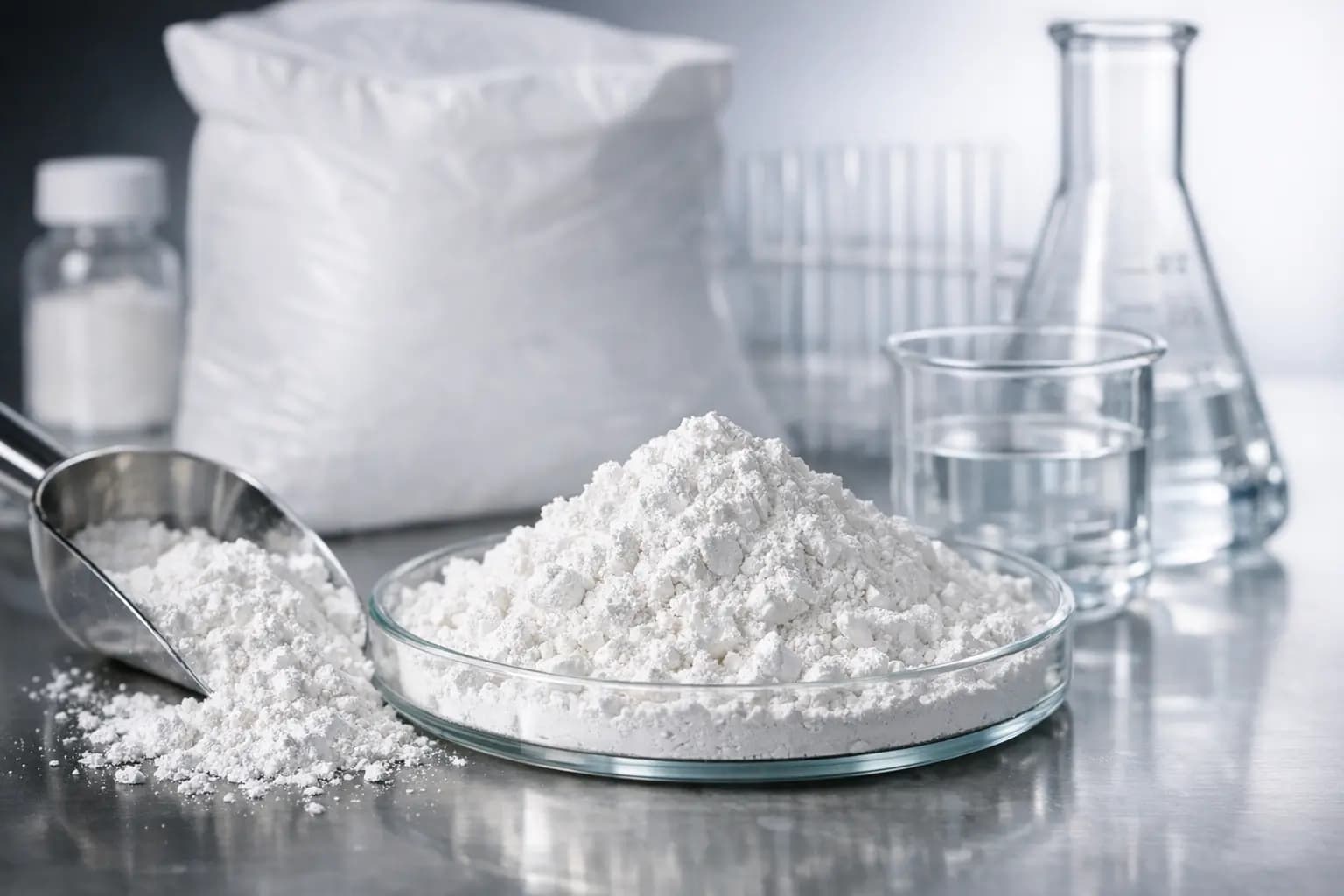
Titanium Dioxide is a versatile white pigment used primarily in paints, coatings, plastics, and cosmetics for its excellent opacity and brightness.
CAS Number
13463-67-7
HS Code
320611
INCI Name
-
Molecular Formula
TiO2
Titanium Dioxide
Titanium Dioxide is a versatile white pigment used primarily in paints, coatings, plastics, and cosmetics for its excellent opacity and brightness.
CAS Number
13463-67-7
INCI Name
-
HS Code
320611
Molecular Formula
TiO2
Get Pricing for This Product
Need pricing? Request a quote for this product and we'll get back to you shortly.
Free Samples AvailableSpeed Up Your Sample Testing Process
We deliver domestic samples within 24 - 48 hours, helping you evaluate product without delays.
 By
By
Specialty chemicals, delivered right
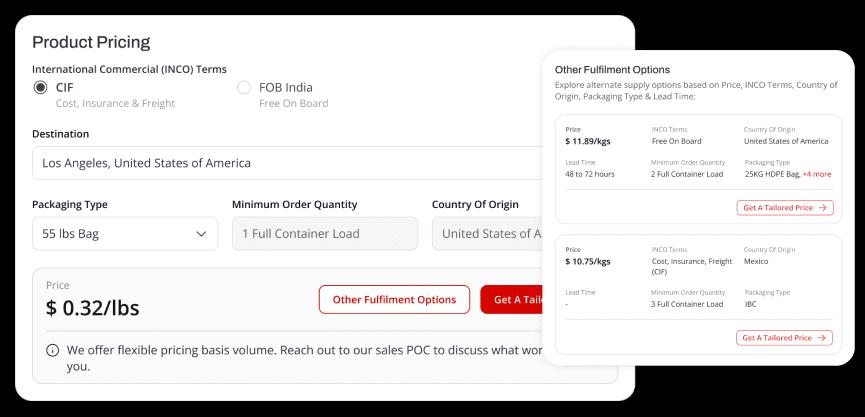
Access live, grade-specific pricing for every chemical, so your teams talks with data, not intuition on Elixir.
Compare fulfilment options across grades, INCO terms, origins, and lead times: all in one platform.

Live, transparent pricing
Real-time quotes across 12,000+ specialty chemicals.
About Titanium Dioxide
Titanium dioxide (TiO2) is the world's most widely used white pigment, prized for its exceptional brightness, opacity (hiding power) and refractive index - the highest of any commercially available white pigment. It is supplied in two crystal forms: rutile (higher opacity, UV-durable, the coatings/plastics standard) and anatase (bluer white, softer, used in some paper, ceramics and cosmetics).
TiO2 is sourced globally at very large scale, and dependable supply is as much about grade (rutile vs anatase), surface treatment and documentation as chemistry. TiO2 (CAS 13463-67-7) is TSCA-listed and permitted as a colour additive under 21 CFR 73.575; note that its use as a food additive (E171) is no longer authorised in the EU.
Industrial buyers placing bulk orders also keep a close eye on titanium dioxide pricing, since contract rates feed directly into the cost of everything they produce downstream.
Manufacturing Process of Titanium Dioxide
Titanium dioxide pigment is produced by two routes. The chloride process reacts titanium ore with chlorine to form titanium tetrachloride, which is purified and oxidised at high temperature to rutile TiO2 - giving the highest purity and durability. The sulphate process digests ilmenite/titanium slag in sulphuric acid, hydrolyses to hydrated TiO2, then calcines to rutile or anatase. The base pigment is then surface-treated with alumina and/or silica coatings to tune dispersibility, durability and application performance, and micronised to final particle size (~0.2–0.3 µm for optimal light scattering).
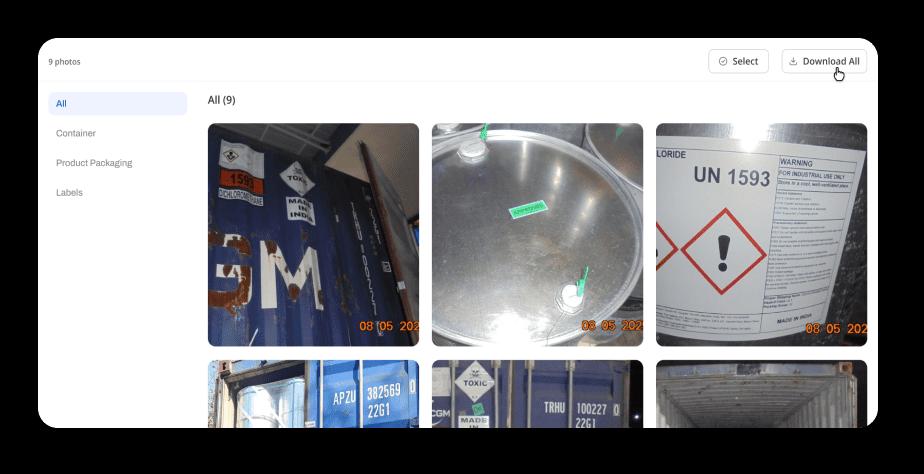
Every shipment Elchemy supplies is tested for TiO2 content, whiteness/tint strength, oil absorption and residue on sieve before dispatch, with a Certificate of Analysis travelling alongside each order.
Titanium Dioxide Price: Bulk Pricing for Industrial Buyers
If you're looking for current titanium dioxide pricing for bulk procurement, Elchemy provides quotes based on your specific requirements. Fill out the quote request form with your volume, grade, destination and packaging preference, and our team will revert with a detailed offer within 24 to 48 hours.
Pricing works on a quote basis rather than a published rate because the cost is driven by the price of titanium ore (ilmenite/rutile) and the energy-intensive chloride or sulphate process, plus the balance of Chinese export supply, rather than tracking a fixed list.
Beyond that, several factors layer in to shape the final number: grade, committed volume, origin country, packaging format, freight, Incoterm choice (FOB, CIF or DDP) and applicable import duty (HTS 3206.11 for US-bound shipments (note: anti-dumping duties apply to TiO2 from certain origins)).
For an approximate read on where the market sits, procurement teams often reference titanium feedstock and TiO2 pigment price indices, which give a sense of how rates are trending.
Trade publications also report the titanium dioxide price per kg as a unit-level benchmark, useful for spotting short-term regional shifts even on large industrial orders.
At bulk procurement scale, however, the titanium dioxide price per ton is the most relevant commercial unit, since contracts are typically negotiated and committed at that level.
For an exact rate, none of these references replaces a direct quote. The actual price depends on your contract structure, destination, committed volume and timing of dispatch, which is why a quote from our team will always be the most accurate number for your specific procurement.
Packaging & Logistics
Titanium Dioxide ships in 25 kg (55 lb) bags, 50 lb bags for the US market, or 1 MT (2,205 lb) FIBC jumbo bags (liquids ship in drums, IBCs or ISO tanks as applicable), supplied as per buyer requirements. A typical 20' container holds approximately 18 to 24 MT depending on packaging.
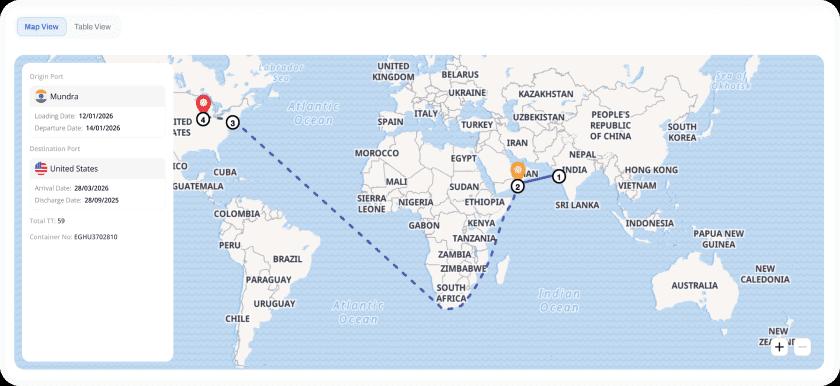
For US-bound orders, domestic stock supports faster fulfilment. Where sourcing is required from origin countries, transit times typically run 24 to 28 days to the US East Coast and 18 to 22 days to the West Coast. Elchemy offers EXW, FOB, CIF and DDP terms, depending on how your procurement team prefers to handle landed cost and customs.
Material should be stored in a cool, dry, well-ventilated area per the storage conditions on the TDS. Standard dispatch follows agreed contract terms, with expedited timelines available where needed. Samples are dispatched within 24 to 48 hours.
Why Choose Elchemy as a Trusted Titanium Dioxide Supplier?
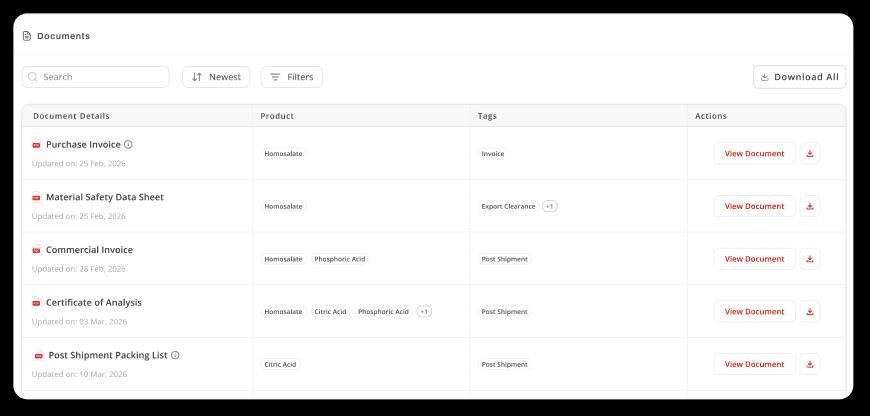
Elchemy makes titanium dioxide procurement straightforward for industrial buyers. That means consistent material across the grades listed above, with a Certificate of Analysis for every batch and full documentation (TDS, SDS) as standard.
Because we source across multiple origins, we quote on the best landed cost for your destination rather than a single manufacturer's list price. Our partner plants operate to recognised quality standards (ISO 9001, plus food/pharma certifications where relevant), with Halal and Kosher certification available on request.
Beyond the US, Elchemy ships into 40+ countries with samples available for qualification before any bulk order, and pricing tailored to volume, destination and contract terms.
Safety & Handling
EU harmonised classification: Carc. 2 (H351) by inhalation for respirable powder forms (≥1% particles ≤1 µm). Not DOT hazmat-regulated for transport. Provide the labelled SDS and manage occupational dust exposure.
Titanium dioxide is chemically inert and non-toxic by ingestion or skin contact in its pigment form. The principal concern is inhalation of fine respirable dust: the EU has a harmonised classification as a suspected carcinogen by inhalation (Category 2) for powder forms containing ≥1% particles ≤1 µm, and IARC classifies TiO2 as possibly carcinogenic to humans (Group 2B) on the same inhalation basis. Handling requires dust control, local exhaust ventilation and respiratory protection where airborne dust is generated. There is no established hazard from TiO2 bound in a finished paint, plastic or coating film.
The full 16-section GHS-aligned SDS is available alongside material orders.
- High Opacity: Provides excellent coverage and brightness in paints and coatings.
- UV Resistance: Enhances durability and longevity of plastics and coatings exposed to sunlight.
- Safe for Cosmetics: Approved for use in sunscreens and makeup, offering sun protection and smooth application.
- Versatile Applications: Suitable for use in a wide range of industries, including plastics, paper, and food.
- Regulatory Compliance: Listed on the TSCA Inventory, ensuring safety and compliance in the United States.
About Titanium Dioxide
Titanium dioxide (TiO2) is the world's most widely used white pigment, prized for its exceptional brightness, opacity (hiding power) and refractive index - the highest of any commercially available white pigment. It is supplied in two crystal forms: rutile (higher opacity, UV-durable, the coatings/plastics standard) and anatase (bluer white, softer, used in some paper, ceramics and cosmetics).
TiO2 is sourced globally at very large scale, and dependable supply is as much about grade (rutile vs anatase), surface treatment and documentation as chemistry. TiO2 (CAS 13463-67-7) is TSCA-listed and permitted as a colour additive under 21 CFR 73.575; note that its use as a food additive (E171) is no longer authorised in the EU.
Industrial buyers placing bulk orders also keep a close eye on titanium dioxide pricing, since contract rates feed directly into the cost of everything they produce downstream.
Manufacturing Process of Titanium Dioxide
Titanium dioxide pigment is produced by two routes. The chloride process reacts titanium ore with chlorine to form titanium tetrachloride, which is purified and oxidised at high temperature to rutile TiO2 - giving the highest purity and durability. The sulphate process digests ilmenite/titanium slag in sulphuric acid, hydrolyses to hydrated TiO2, then calcines to rutile or anatase. The base pigment is then surface-treated with alumina and/or silica coatings to tune dispersibility, durability and application performance, and micronised to final particle size (~0.2–0.3 µm for optimal light scattering).
Every shipment Elchemy supplies is tested for TiO2 content, whiteness/tint strength, oil absorption and residue on sieve before dispatch, with a Certificate of Analysis travelling alongside each order.
Titanium Dioxide Price: Bulk Pricing for Industrial Buyers
If you're looking for current titanium dioxide pricing for bulk procurement, Elchemy provides quotes based on your specific requirements. Fill out the quote request form with your volume, grade, destination and packaging preference, and our team will revert with a detailed offer within 24 to 48 hours.
Pricing works on a quote basis rather than a published rate because the cost is driven by the price of titanium ore (ilmenite/rutile) and the energy-intensive chloride or sulphate process, plus the balance of Chinese export supply, rather than tracking a fixed list.
Beyond that, several factors layer in to shape the final number: grade, committed volume, origin country, packaging format, freight, Incoterm choice (FOB, CIF or DDP) and applicable import duty (HTS 3206.11 for US-bound shipments (note: anti-dumping duties apply to TiO2 from certain origins)).
For an approximate read on where the market sits, procurement teams often reference titanium feedstock and TiO2 pigment price indices, which give a sense of how rates are trending.
Trade publications also report the titanium dioxide price per kg as a unit-level benchmark, useful for spotting short-term regional shifts even on large industrial orders.
At bulk procurement scale, however, the titanium dioxide price per ton is the most relevant commercial unit, since contracts are typically negotiated and committed at that level.
For an exact rate, none of these references replaces a direct quote. The actual price depends on your contract structure, destination, committed volume and timing of dispatch, which is why a quote from our team will always be the most accurate number for your specific procurement.
Packaging & Logistics
Titanium Dioxide ships in 25 kg (55 lb) bags, 50 lb bags for the US market, or 1 MT (2,205 lb) FIBC jumbo bags (liquids ship in drums, IBCs or ISO tanks as applicable), supplied as per buyer requirements. A typical 20' container holds approximately 18 to 24 MT depending on packaging.
For US-bound orders, domestic stock supports faster fulfilment. Where sourcing is required from origin countries, transit times typically run 24 to 28 days to the US East Coast and 18 to 22 days to the West Coast. Elchemy offers EXW, FOB, CIF and DDP terms, depending on how your procurement team prefers to handle landed cost and customs.
Material should be stored in a cool, dry, well-ventilated area per the storage conditions on the TDS. Standard dispatch follows agreed contract terms, with expedited timelines available where needed. Samples are dispatched within 24 to 48 hours.
Why Choose Elchemy as a Trusted Titanium Dioxide Supplier?
Elchemy makes titanium dioxide procurement straightforward for industrial buyers. That means consistent material across the grades listed above, with a Certificate of Analysis for every batch and full documentation (TDS, SDS) as standard.
Because we source across multiple origins, we quote on the best landed cost for your destination rather than a single manufacturer's list price. Our partner plants operate to recognised quality standards (ISO 9001, plus food/pharma certifications where relevant), with Halal and Kosher certification available on request.
Beyond the US, Elchemy ships into 40+ countries with samples available for qualification before any bulk order, and pricing tailored to volume, destination and contract terms.
Safety & Handling
EU harmonised classification: Carc. 2 (H351) by inhalation for respirable powder forms (≥1% particles ≤1 µm). Not DOT hazmat-regulated for transport. Provide the labelled SDS and manage occupational dust exposure.
Titanium dioxide is chemically inert and non-toxic by ingestion or skin contact in its pigment form. The principal concern is inhalation of fine respirable dust: the EU has a harmonised classification as a suspected carcinogen by inhalation (Category 2) for powder forms containing ≥1% particles ≤1 µm, and IARC classifies TiO2 as possibly carcinogenic to humans (Group 2B) on the same inhalation basis. Handling requires dust control, local exhaust ventilation and respiratory protection where airborne dust is generated. There is no established hazard from TiO2 bound in a finished paint, plastic or coating film.
The full 16-section GHS-aligned SDS is available alongside material orders.
- High Opacity: Provides excellent coverage and brightness in paints and coatings.
- UV Resistance: Enhances durability and longevity of plastics and coatings exposed to sunlight.
- Safe for Cosmetics: Approved for use in sunscreens and makeup, offering sun protection and smooth application.
- Versatile Applications: Suitable for use in a wide range of industries, including plastics, paper, and food.
- Regulatory Compliance: Listed on the TSCA Inventory, ensuring safety and compliance in the United States.
FAQs - Titanium Dioxide
Related Products


Related Products

Streamline
Your Chemical
Procurement
Get fast responses from real experts