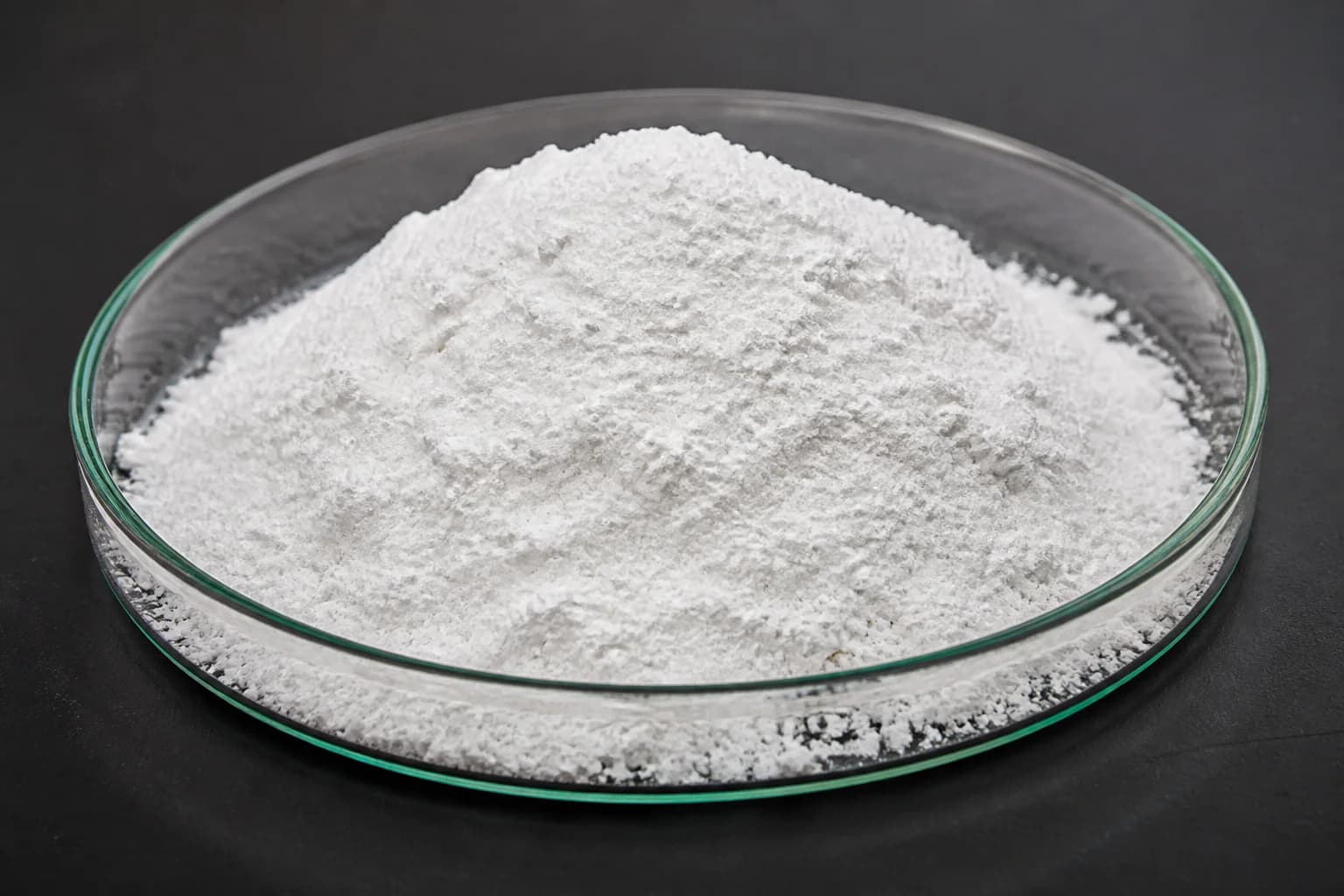
Silicon Dioxide (Silica) (E551)
ELAROMATM – SilDiox
Get Pricing For This Product
Need pricing? Request a quote for this product and we'll get back to you shortly.
Speed Up Your Sample Testing Process
Express Delivery in 24–48 Hours
Silicon Dioxide, commonly known as Silica, is a naturally occurring compound found in quartz and sand. It is widely used in various industries due to its properties as an anti-caking agent, thickener,…
CAS Number
7631-86-9
HS Code
28112200
INCI Name
Silicon Dioxide
Molecular Formula
SiO₂
Silicon Dioxide (Silica) (E551)
ELAROMATM – SilDiox
Silicon Dioxide, commonly known as Silica, is a naturally occurring compound found in quartz and sand. It is widely used in various industries due to its properties as an anti-caking agent, thickener, and stabilizer. In the food industry, it is recognized as E551 and is used to…
CAS Number
7631-86-9
INCI Name
Silicon Dioxide
HS Code
28112200
Molecular Formula
SiO₂
Get Pricing For This Product
Need pricing? Request a quote for this product and we'll get back to you shortly.
Speed Up Your Sample Testing Process
We deliver domestic samples within 24 - 48 hours, helping you evaluate product without delays.
Product Specification
Physical Properties
| Property | Specification |
|---|---|
| Appearance | White, odorless powder |
| Odor | Without odor |
| Molecular Weight | 60.08 g/mol |
| Density / Specific Gravity | Density: 2.65 g/cm³ |
| Ph (Aqueous Solution) | 6.00 – 9.00 |
| Assay / Purity | ≥ 94.00% (as SiO₂) |
Chemical Properties
| Property | Specification |
|---|---|
| Incompatibilities | Hydrofluoric Acid, fluorine, oxygen difluoride, chlorine trifluoride, strong hot alkali solutions. |
| Hazardous Reactions / Decomposition Products | Hazardous polymerization will not occur. When heated to extreme temperatures, decomposition may produce silicon oxides. |
Thermal Properties
| Property | Specification |
|---|---|
| Melting Point | 1713°C |
| Boiling Point | 2950°C |
| Flash Point | Not combustible. |
| Decomposition Temperature | Decomposes at approximately 2750 K (~2477°C) into elemental silicon and oxygen. |
| Thermal Stability | Stable under recommended storage conditions. |
Processing Methods & Reference Formulations
A. Powdered Drink Mix
A typical powdered beverage mix designed for easy dissolution and flowability. Silicon dioxide acts as an anti-caking agent to prevent clumping from moisture and sugar content.
| Key Ingredients | Indicative Dosage (% w/w) |
|---|---|
| Sugar (Sucrose) | 85.0% |
| Citric Acid | 5.0% |
| Natural Flavor Powder | 4.0% |
| Ascorbic Acid (Vitamin C) | 3.0% |
| Food Coloring Powder | 2.0% |
| Silicon Dioxide | 1.0% |
B. Spice & Seasoning Blend
A general-purpose savory seasoning blend where free-flowing properties are critical for consumer use. Silicon dioxide prevents the hygroscopic salt and sugar from caking.
| Key Ingredients | Indicative Dosage (% w/w) |
|---|---|
| Salt (Sodium Chloride) | 40.0% |
| Paprika Powder | 15.0% |
| Garlic Powder | 15.0% |
| Onion Powder | 12.5% |
| Black Pepper, ground | 10.0% |
| Sugar (Dextrose) | 6.0% |
| Silicon Dioxide | 1.5% |
Dosing Guidelines
A. Dosing by Application
| Application | Recommended / Max Dosage |
|---|---|
| General Food Products (as anti-caking agent) | Not to exceed 2% by weight of the food (per FDA 21 CFR 172.480). |
| Powdered Foods (e.g., spices, salt, sugar, drink mixes) | Typically 0.5% – 2.0%. |
| Table Salt | 1.0% - 1.5%. |
| Dried Powdered Foods (EU Regulation) | Maximum 10 g/kg (1.0%) (per Regulation (EC) No 1333/2008). |
| Nutrient Preparations for Infants/Young Children (EU) | Maximum 10,000 mg/kg (1.0%) (per Regulation (EC) No 1333/2008). |
| Complementary Foods for Infants/Young Children (Codex) | 2,000 mg/kg (0.2%). |
| Dried Whey and Whey Products (Codex) | 10,000 mg/kg (1.0%). |
About Silicon Dioxide (Silica) (E551)
Silicon Dioxide, also known as Silica, is a versatile compound with a wide range of applications across various industries. As a naturally occurring mineral, it is abundant and environmentally friendly, making it a preferred choice for manufacturers and suppliers. In the food industry, it is used as an anti-caking agent to prevent clumping in powdered products, ensuring smooth flow and easy handling. Its role as a thickener and stabilizer in personal care products enhances the texture and stability of creams and lotions. Silicon Dioxide is also a key component in glassmaking, providing structural integrity and thermal resistance to glass products. In construction, it is used as a filler in concrete and cement, enhancing strength and durability. With its high thermal stability and low reactivity, Silicon Dioxide is a valuable material in electronics and other high-tech applications. Manufacturers and suppliers of Silicon Dioxide focus on producing high-purity grades to meet the stringent demands of various industries, ensuring consistent quality and performance. The compound's versatility and safety make it an essential ingredient in modern industry, with a growing emphasis on sustainable and eco-friendly production practices.
- Versatile Applications: Used in food, personal care, glassmaking, and construction industries.
- Primary Functions: Anti-Caking Agent, Thickener, Stabilizer, Desiccant, Filler, Free-flowing agent, Carrier agent, Drying aid.
- High Thermal Stability: Withstands high temperatures, making it ideal for glass and electronics.
- Primary Functions: Defoaming agent, Conditioning agent, Chillproofing agent (in beer), Filter aid, Adsorbent.
- Environmentally Friendly: Naturally occurring and non-toxic, with minimal environmental impact.
- Features & Benefits: Prevents clumping and caking in powdered foods, improving shelf life and usability.
- Effective Anti-Caking Agent: Prevents clumping in powdered products, ensuring smooth flow.
- Features & Benefits: Absorbs excess moisture and oils, keeping powders dry and free-flowing.
- Enhances Product Stability: Acts as a thickener and stabilizer in various formulations.
- Features & Benefits: Acts as a carrier for flavors and fragrances.
- Features & Benefits: Improves dispersion in liquid systems and acts as a stabilizer.
- Features & Benefits: Chemically inert and non-toxic in food applications.
About Silicon Dioxide (Silica) (E551)
Silicon Dioxide, also known as Silica, is a versatile compound with a wide range of applications across various industries. As a naturally occurring mineral, it is abundant and environmentally friendly, making it a preferred choice for manufacturers and suppliers. In the food industry, it is used as an anti-caking agent to prevent clumping in powdered products, ensuring smooth flow and easy handling. Its role as a thickener and stabilizer in personal care products enhances the texture and stability of creams and lotions. Silicon Dioxide is also a key component in glassmaking, providing structural integrity and thermal resistance to glass products. In construction, it is used as a filler in concrete and cement, enhancing strength and durability. With its high thermal stability and low reactivity, Silicon Dioxide is a valuable material in electronics and other high-tech applications. Manufacturers and suppliers of Silicon Dioxide focus on producing high-purity grades to meet the stringent demands of various industries, ensuring consistent quality and performance. The compound's versatility and safety make it an essential ingredient in modern industry, with a growing emphasis on sustainable and eco-friendly production practices.
- Versatile Applications: Used in food, personal care, glassmaking, and construction industries.
- Primary Functions: Anti-Caking Agent, Thickener, Stabilizer, Desiccant, Filler, Free-flowing agent, Carrier agent, Drying aid.
- High Thermal Stability: Withstands high temperatures, making it ideal for glass and electronics.
- Primary Functions: Defoaming agent, Conditioning agent, Chillproofing agent (in beer), Filter aid, Adsorbent.
- Environmentally Friendly: Naturally occurring and non-toxic, with minimal environmental impact.
- Features & Benefits: Prevents clumping and caking in powdered foods, improving shelf life and usability.
- Effective Anti-Caking Agent: Prevents clumping in powdered products, ensuring smooth flow.
- Features & Benefits: Absorbs excess moisture and oils, keeping powders dry and free-flowing.
- Enhances Product Stability: Acts as a thickener and stabilizer in various formulations.
- Features & Benefits: Acts as a carrier for flavors and fragrances.
- Features & Benefits: Improves dispersion in liquid systems and acts as a stabilizer.
- Features & Benefits: Chemically inert and non-toxic in food applications.
Regulatory Compliance
| Region | Max Allowed Level | Notes | Certification Body |
|---|---|---|---|
| United States | 2% | Classified as Generally Recognized as Safe (GRAS). Used as a direct food additive (anti-caking agent, stabilizer, adsorbent) under specific conditions. Only synthetic amorphous silica is permitted. | FDA approval under 21 CFR 172.480. Must be manufactured under Good Manufacturing Practices (GMP). Subject to TSCA. |
| European Union | 10% | Approved as food additive E551. EFSA has established an Acceptable Daily Intake (ADI) of "not specified," its safest classification, indicating no hazard at levels needed for the desired technological effect. | Must comply with Regulation (EC) No 1333/2008 and purity criteria in Regulation (EU) No 231/2012. REACH registration may be required. |
| Canada | 1% | Permitted as an anticaking agent and for other purposes in the List of Permitted Food Additives. Recent approvals include use in modified sugar up to 2,000 ppm (0.2%) to increase dissolution rate. | Health Canada approval. |
| India | 2% | Permitted as an anti-caking agent (INS 551) under the Food Safety and Standards (Food Products Standards and Food Additives) Regulations, 2011. | FSSAI approval. |
| Japan | - | Listed as an existing food additive. Its use is generally permitted as long as it complies with the specifications and standards for food additives. | MHLW (Ministry of Health, Labour and Welfare) compliance. |
| Australia | - | Permitted as a food additive (Code Number 551). FSANZ concluded there is no evidence of unacceptable risk at human dietary exposures. | Compliance with the Australia New Zealand Food Standards Code. |
| China | 2% | Approved as an anti-caking agent under the National Food Safety Standard GB 2760. All food additives must be certified and approved by national authorities. | Compliance with GB 2760 and GB 25576 standards. |
| Republic of Korea | - | Approved for use as a food additive. | MFDS (Ministry of Food and Drug Safety) approval. |
| ASEAN | - | Regulations are generally based on Codex Alimentarius standards, where silicon dioxide is listed as a permitted food additive. | Varies by country; typically requires registration with the national food safety authority. |
FAQs - Silicon Dioxide (Silica) (E551)
Related Products
Related Products
Streamline
Your Chemical
Procurement
Get fast responses from real experts