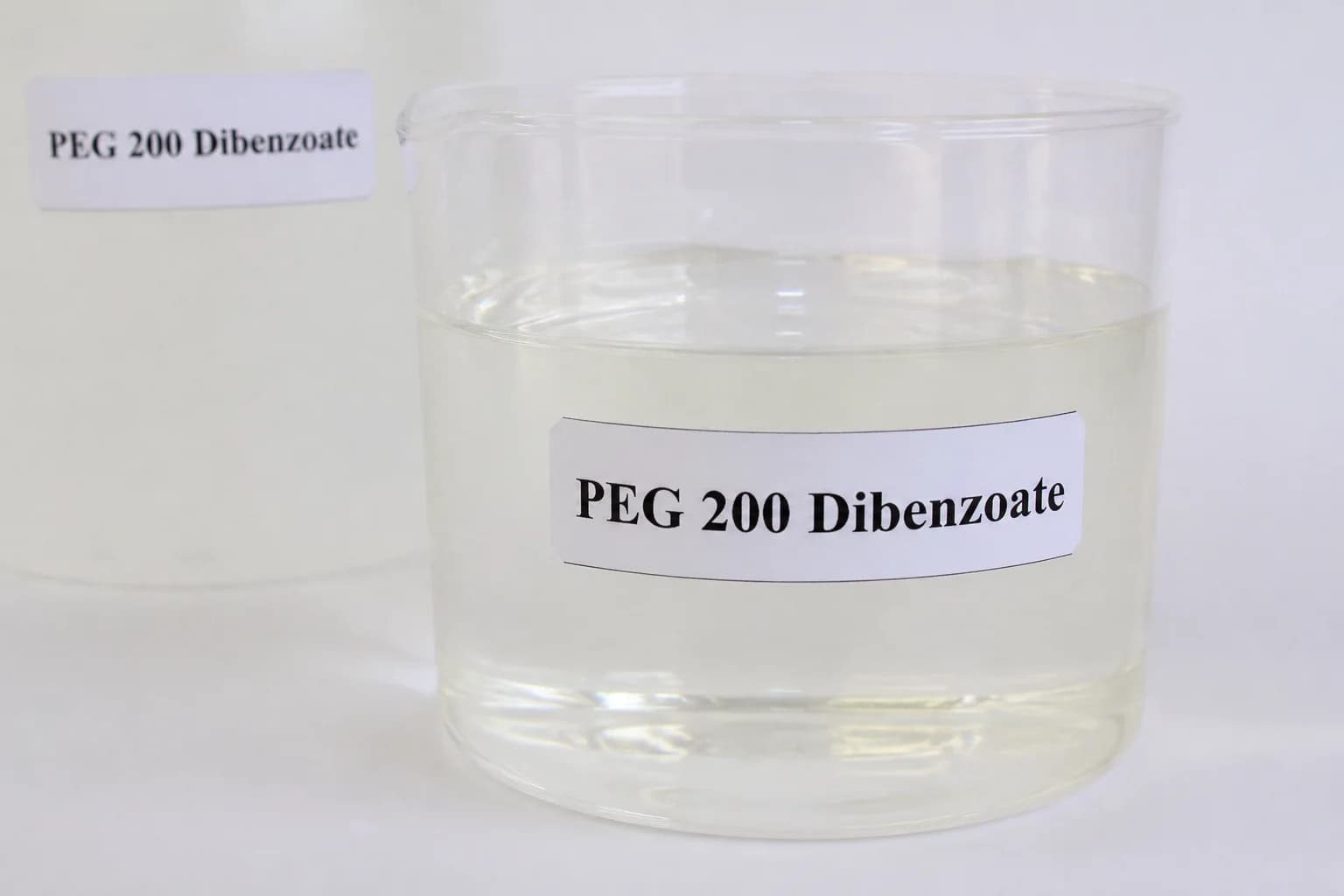
PEG 200 Dibenzoate
ELRASATM – PEG 200 Dibenzoate

Get Pricing for This Product
Need pricing? Request a quote for this product and we'll get back to you shortly.
 Free Samples Available
Speed Up Your Sample Testing Process
We deliver domestic samples within 24 - 48 hours, helping you evaluate product without delays.
PEG 200 Dibenzoate is a versatile plasticizer and solvent used in various industrial applications. It is known for its excellent compatibility with a wide range of polymers and resins, enhancing…
CAS Number
9004-86-8
HS Code
29.16.31.90
INCI Name
PEG 200 Dibenzoate
Molecular Formula
C20H22O5
PEG 200 Dibenzoate
ELRASATM – PEG 200 Dibenzoate
PEG 200 Dibenzoate is a versatile plasticizer and solvent used in various industrial applications. It is known for its excellent compatibility with a wide range of polymers and resins, enhancing flexibility and durability. Commonly used in adhesives, sealants, and coatings, it…
CAS Number
9004-86-8
INCI Name
PEG 200 Dibenzoate
HS Code
29.16.31.90
Molecular Formula
C20H22O5
Get Pricing for This Product
Need pricing? Request a quote for this product and we'll get back to you shortly.
Free Samples AvailableSpeed Up Your Sample Testing Process
We deliver domestic samples within 24 - 48 hours, helping you evaluate product without delays.
 By
By
Specialty chemicals, delivered right
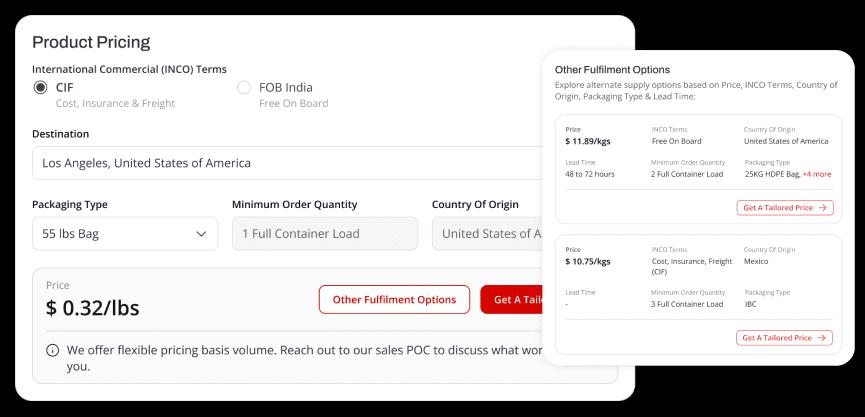
Access live, grade-specific pricing for every chemical, so your teams talks with data, not intuition on Elixir.
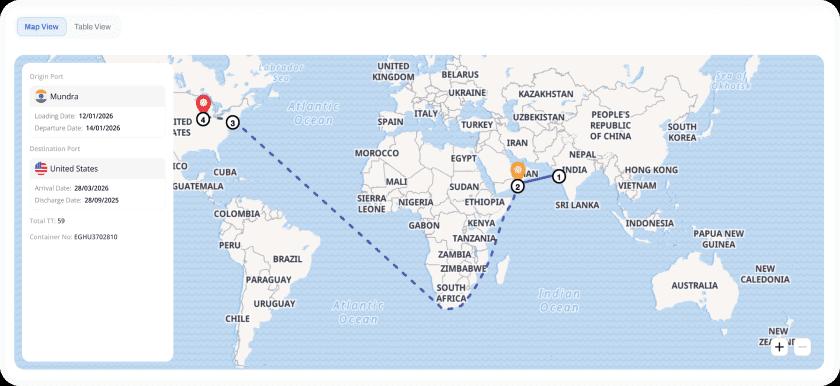
Compare fulfilment options across grades, INCO terms, origins, and lead times: all in one platform.

Live, transparent pricing
Real-time quotes across 12,000+ specialty chemicals.
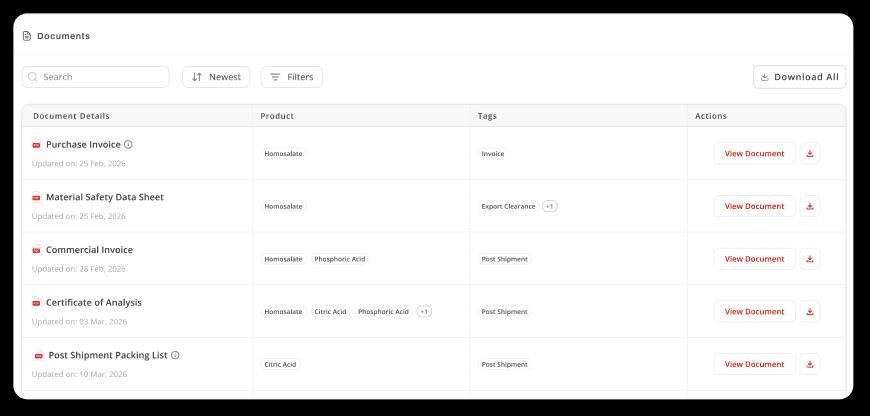
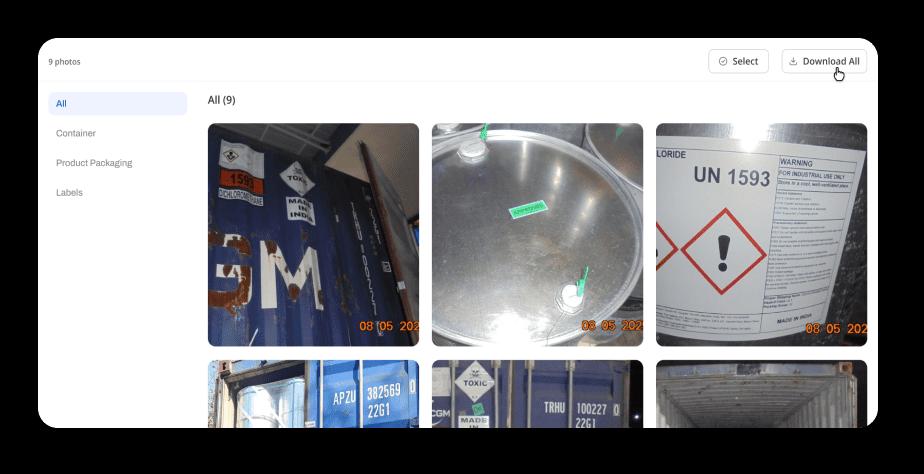
Product Specification
Physical Properties
| Property | Specification |
|---|---|
| Appearance | Clear liquid |
| Color (Gardner) | Max. 1 |
| Odor | Odorless to slight |
| Molecular Weight | 346.38 g/mol |
| Density At 25°C | 1.16 - 1.18 g/cm³ |
| Viscosity At 25°C | 95 - 155 cSt |
| Refractive Index | 1.52 - 1.54 |
| Ph (5% Aqueous Solution) | 5.0 - 7.0 |
Chemical Properties
| Property | Specification |
|---|---|
| Ionic Nature | Non-ionic |
| Incompatibilities | Strong oxidizing agents, acids, combustible materials. |
| Hazardous Reactions | Hazardous polymerization does not occur. |
| Hazardous Decomposition Products | Carbon monoxide (CO), Carbon dioxide (CO2). |
Thermal Properties
| Property | Specification |
|---|---|
| Flash Point | Min. 220 °C |
| Pour Point | Max. -20 °C |
| Thermal Stability | Stable under normal conditions of use and storage. Avoid high temperatures and ignition sources. |
Dosing Guidelines
A. Dosing by Application
| Application | Recommended / Max Dosage |
|---|---|
| Adhesives (e.g., Polyvinyl Acetate based) | 5 - 15% of the wet adhesive. |
| Pressure-Sensitive Adhesives (Acrylic) | 0 - 10% of the wet polymer. |
About PEG 200 Dibenzoate
PEG 200 Dibenzoate is a high-performance plasticizer and solvent, widely used in industrial applications for its superior compatibility and plasticizing properties. As a key ingredient in adhesives, sealants, and coatings, it enhances product flexibility and durability. PEG 200 Dibenzoate manufacturers focus on producing a high-purity compound to meet the stringent demands of industries such as coatings and adhesives. The production process is carefully controlled to ensure consistency and stability, crucial for the compound’s effectiveness in various applications. Sustainability is an increasing focus for PEG 200 Dibenzoate manufacturers, with many adopting greener practices to minimize their environmental impact. These efforts include optimizing energy use during production and reducing waste emissions. The trend toward eco-friendly manufacturing aligns with the growing demand for sustainable raw materials in the chemical industry. Beyond its role in coatings and adhesives, PEG 200 Dibenzoate is also used in the modification of resins and polymer blends, where it acts as a plasticizer to enhance flexibility and processing characteristics. Its widespread use across multiple sectors underscores the importance of PEG 200 Dibenzoate as a fundamental compound in modern industry.
- Excellent Compatibility: Compatible with a wide range of polymers and resins, enhancing flexibility and durability.
- Function: Plasticizer, Solvent, Humectant, Lubricant, Defoaming Agent, Viscosity Modifier.
- Low Volatility: Offers low volatility, making it a safer and more stable choice for industrial applications.
- Features: Excellent compatibility with various polymers, low volatility, high purity, good plasticizing properties.
- High Purity Standards: Ensures performance in adhesives, sealants, and coatings.
- Benefits: Enhances flexibility, durability, and processing characteristics of polymers. It is considered a good alternative to traditional phthalate plasticizers.
- Eco-Friendly Production: Focus on minimizing energy use and waste.
- Versatile Plasticizer: Effective in enhancing the flexibility and processing characteristics of various products.
About PEG 200 Dibenzoate
PEG 200 Dibenzoate is a high-performance plasticizer and solvent, widely used in industrial applications for its superior compatibility and plasticizing properties. As a key ingredient in adhesives, sealants, and coatings, it enhances product flexibility and durability. PEG 200 Dibenzoate manufacturers focus on producing a high-purity compound to meet the stringent demands of industries such as coatings and adhesives. The production process is carefully controlled to ensure consistency and stability, crucial for the compound’s effectiveness in various applications. Sustainability is an increasing focus for PEG 200 Dibenzoate manufacturers, with many adopting greener practices to minimize their environmental impact. These efforts include optimizing energy use during production and reducing waste emissions. The trend toward eco-friendly manufacturing aligns with the growing demand for sustainable raw materials in the chemical industry. Beyond its role in coatings and adhesives, PEG 200 Dibenzoate is also used in the modification of resins and polymer blends, where it acts as a plasticizer to enhance flexibility and processing characteristics. Its widespread use across multiple sectors underscores the importance of PEG 200 Dibenzoate as a fundamental compound in modern industry.
- Excellent Compatibility: Compatible with a wide range of polymers and resins, enhancing flexibility and durability.
- Function: Plasticizer, Solvent, Humectant, Lubricant, Defoaming Agent, Viscosity Modifier.
- Low Volatility: Offers low volatility, making it a safer and more stable choice for industrial applications.
- Features: Excellent compatibility with various polymers, low volatility, high purity, good plasticizing properties.
- High Purity Standards: Ensures performance in adhesives, sealants, and coatings.
- Benefits: Enhances flexibility, durability, and processing characteristics of polymers. It is considered a good alternative to traditional phthalate plasticizers.
- Eco-Friendly Production: Focus on minimizing energy use and waste.
- Versatile Plasticizer: Effective in enhancing the flexibility and processing characteristics of various products.
Regulatory Compliance
| Region | Max Allowed Level | Notes | Certification Body |
|---|---|---|---|
| United States | - | The Cosmetic Ingredient Review (CIR) Expert Panel has assessed the safety of PEGs and their derivatives, concluding they are safe for use in cosmetics. The panel removed a previous caveat that these ingredients should not be used on damaged skin. | TSCA inventory listing is required for industrial use. |
| European Union | - | Not found on the lists of prohibited (Annex II) or restricted (Annex III) substances in the EU Cosmetics Regulation (EC) No 1223/2009. PEGs and their derivatives are generally considered safe for cosmetic use. | REACH registration may be required depending on tonnage and use. |
| Canada | - | Not listed on Health Canada's Cosmetic Ingredient Hotlist of prohibited or restricted substances. | Conformance with the Food and Drugs Act and Cosmetic Regulations. |
| India | - | Not found to be specifically restricted. Use in cosmetics must comply with the Bureau of Indian Standards (BIS), including IS 4707 for cosmetic safety. | BIS Certification for finished products may be required. |
| Japan | - | Not found to be specifically restricted under the Act on Securing Quality, Efficacy and Safety of Products Including Pharmaceuticals and Medical Devices. | Conformance with Japanese Standards for Cosmetic Ingredients. |
| Australia | - | Industrial chemicals must be listed on the Australian Inventory of Industrial Chemicals (AIIC). | Importers and manufacturers must be registered with the Australian Industrial Chemicals Introduction Scheme (AICIS). |
| China | - | The status of this ingredient should be verified against the current Inventory of Existing Cosmetic Ingredients in China (IECIC). If not listed, it is considered a new ingredient and requires registration or notification with the NMPA. | NMPA registration or notification. |
| Republic of Korea | - | Not found to be specifically restricted. Ingredients must comply with the regulations set by the Ministry of Food and Drug Safety (MFDS). | Compliance with the Korean Cosmetic Products Act. |
| ASEAN | - | Not found on the ASEAN Cosmetic Directive's Annex II (prohibited substances) or Annex III (restricted substances). | Product notification in each member state where it is marketed. |
FAQs - PEG 200 Dibenzoate

Streamline
Your Chemical
Procurement
Get fast responses from real experts