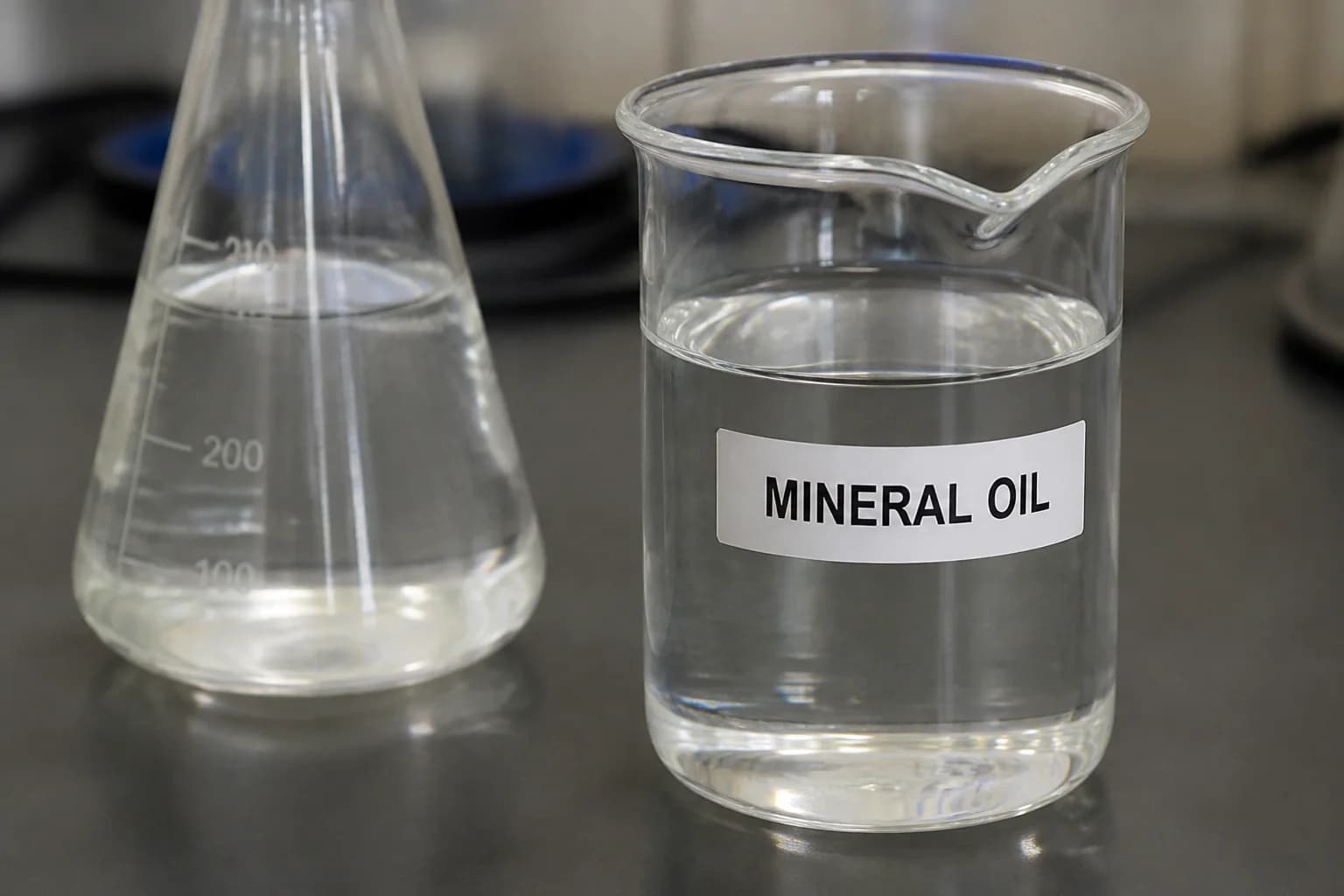
Mineral Oil
ELFATTM – WOil G3
Get Pricing For This Product
Need pricing? Request a quote for this product and we'll get back to you shortly.
Speed Up Your Sample Testing Process
Express Delivery in 24–48 Hours
A colorless, odorless, and tasteless oil derived from petroleum, widely used as a moisturizer in skin care products.
CAS Number
8042-47-5
HS Code
27.10.19
INCI Name
White Mineral Oil
Molecular Formula
C15-C40 hydrocarbons
Mineral Oil
ELFATTM – WOil G3
A colorless, odorless, and tasteless oil derived from petroleum, widely used as a moisturizer in skin care products.
CAS Number
8042-47-5
INCI Name
White Mineral Oil
HS Code
27.10.19
Molecular Formula
C15-C40 hydrocarbons
Get Pricing For This Product
Need pricing? Request a quote for this product and we'll get back to you shortly.
Speed Up Your Sample Testing Process
We deliver domestic samples within 24 - 48 hours, helping you evaluate product without delays.
Product Specification
Physical Properties
| Property | Specification |
|---|---|
| Appearance | Clear, colorless, oily liquid. |
| Odor | Odorless or has a slight petroleum-like odor. |
| Molecular Weight | Not applicable (mixture). |
| Density / Specific Gravity | ~0.85 g/cm³ (Authoritative) |
| Viscosity | Kinematic viscosity varies by specific grade, typically ≥ 38.1 mm²/s (cSt) @ 40°C. |
| Refractive Index | n20/D 1.467 |
| Assay / Purity | >99% |
Chemical Properties
| Property | Specification |
|---|---|
| Ionic Nature | Non-polar. |
| Incompatibilities | Strong oxidizing agents (e.g., nitric acid, chromic acid, hydrogen peroxide, bromine). |
| Hazardous Reactions / Decomposition Products | Upon combustion or when heated to decomposition, may form carbon monoxide and carbon dioxide. |
Thermal Properties
| Property | Specification |
|---|---|
| Melting Point | -60 to -9 °C (-76 to 16 °F) |
| Boiling Point | > 218 °C (> 424 °F) |
| Flash Point | > 112 °C (> 234 °F) |
| Autoignition Temperature | 260 - 370 °C (500 - 698 °F) |
| Decomposition Temperature | >350 °C |
| Thermal Stability | Stable under ordinary conditions of use and storage. |
Processing Methods & Reference Formulations
A. Mineral Oil Emulsion (Laxative)
An oral oil-in-water emulsion used as a lubricant laxative for chronic constipation. The emulsion is stabilized to keep the oil suspended in water. It should be shaken well before use.
| Key Ingredients | Indicative Dosage (% w/w) |
|---|---|
| Mineral Oil | 50.0% |
| Acacia | 12.5% |
| Syrup | 10.0% |
| Vanillin | 0.04% |
| Alcohol | 6.0% |
| Purified Water | q.s. to 100% |
B. Basic Skin Lotion
A simple, moisturizing skin lotion where mineral oil acts as an emollient, forming a protective barrier to prevent moisture loss.
| Key Ingredients | Indicative Dosage (% w/w) |
|---|---|
| Mineral Oil | 10.0 - 25.0% |
| Cetyl Alcohol | 2.0 - 5.0% |
| Stearic Acid | 1.0 - 3.0% |
| Glyceryl Monostearate | 1.0 - 3.0% |
| Glycerin | 3.0 - 5.0% |
| Triethanolamine | 0.5 - 1.0% |
| Preservative | q.s. |
| Purified Water | q.s. to 100% |
Dosing Guidelines
A. Dosing by Application
| Application | Recommended / Max Dosage |
|---|---|
| Cosmetics (General) | 1% - 99% depending on the product (e.g., skin creams, lotions, sunscreens, hair gels, bath oils). |
| Skin Protectant Products | 1% - 100% |
| Oral Laxative (Adult) | 15-45 mL per day, as a single dose or in divided doses. |
| Pharmaceutical Tablet Release Agent | Used as a processing aid; levels vary. |
| Food (Direct Addition, e.g., release agent) | Must not exceed the amount reasonably required to accomplish the intended technical effect. |
About Mineral Oil
- Function: Emollient, skin protectant, antistatic agent, solvent, lubricant, release agent, binder, defoamer, moisture barrier.
- Features: Highly refined and pure, colorless, odorless, tasteless, chemically inert, stable (resists oxidation), non-comedogenic (cosmetic grade), hydrophobic.
- Benefits: Prevents moisture loss from the skin, softens and smooths, protects skin from external factors, has a long shelf life, is hypoallergenic and suitable for sensitive skin.
About Mineral Oil
- Function: Emollient, skin protectant, antistatic agent, solvent, lubricant, release agent, binder, defoamer, moisture barrier.
- Features: Highly refined and pure, colorless, odorless, tasteless, chemically inert, stable (resists oxidation), non-comedogenic (cosmetic grade), hydrophobic.
- Benefits: Prevents moisture loss from the skin, softens and smooths, protects skin from external factors, has a long shelf life, is hypoallergenic and suitable for sensitive skin.
Regulatory Compliance
| Region | Max Allowed Level | Notes | Certification Body |
|---|---|---|---|
| Australia | - | Listed on the Australian Inventory of Industrial Chemicals (AIIC). | - |
| Canada | - | Not listed on Health Canada's Cosmetic Ingredient Hotlist as prohibited or restricted. | - |
| China | - | Listed in the Inventory of Existing Cosmetic Ingredients in China (IECIC). | - |
| United States | 0.6% | Approved by the FDA for direct and indirect food contact under 21 CFR 172.878 and 178.3620. The Cosmetic Ingredient Review (CIR) concluded it is safe for use in cosmetics. | Must meet USP or NF grade specifications. For food applications, must comply with FDA regulations. Listed on the TSCA inventory. |
| ASEAN | - | Regulated under the ASEAN Cosmetic Directive, which generally aligns with EU regulations. | - |
| European Union | - | Permitted in cosmetics if it meets purity specifications laid down in the European Pharmacopoeia and EU Cosmetics Regulation EC/1223/2009. The Scientific Committee on Consumer Safety (SCCS) considers highly refined mineral oils safe for cosmetic use. | Must be registered under REACH. Must comply with European Pharmacopoeia purity standards for cosmetic and pharma use. |
FAQs - Mineral Oil
Related Products



Related Products
Streamline
Your Chemical
Procurement
Get fast responses from real experts