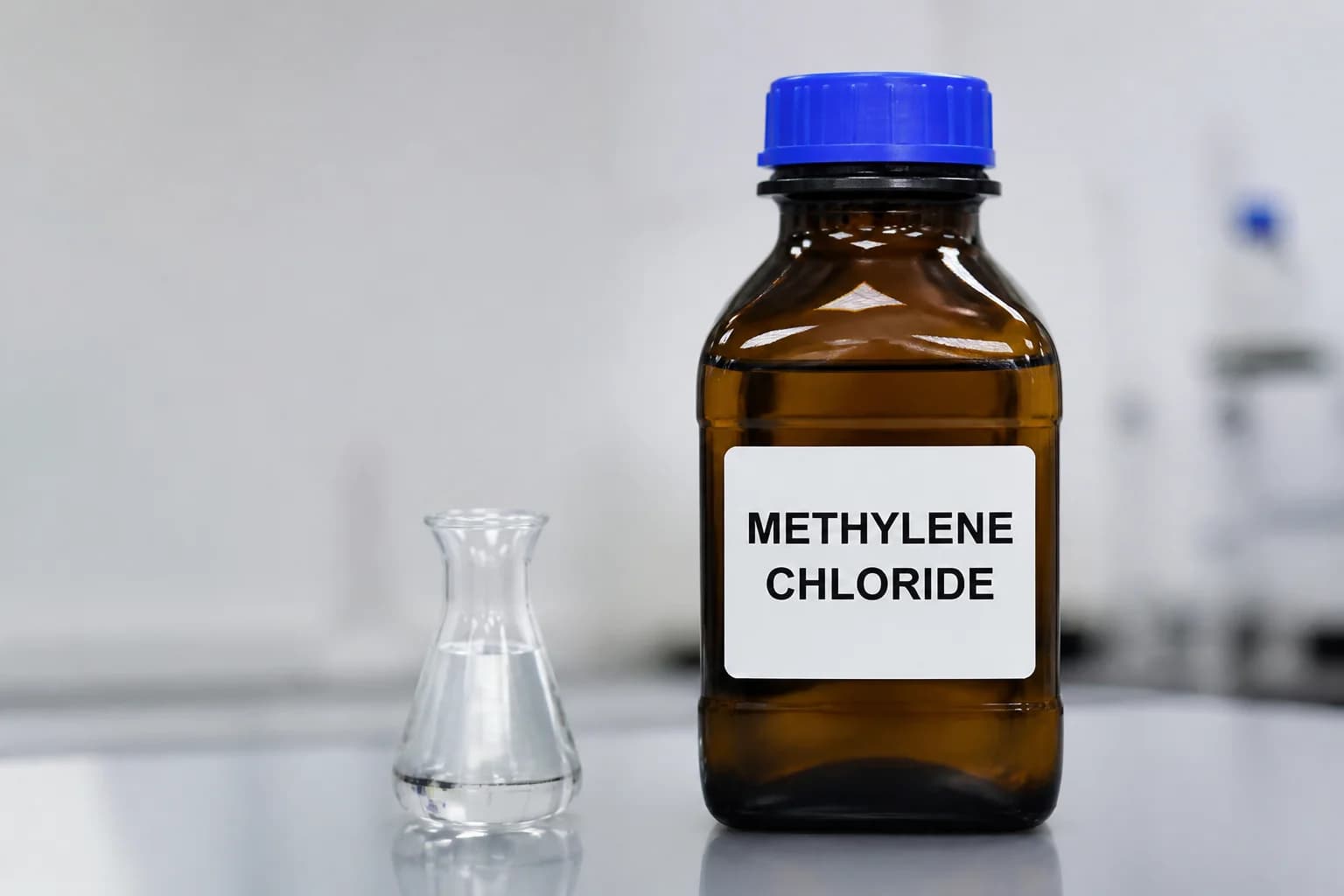
Elchemy supplies ELSOLV™-DCM Methylene Chloride (also known as dichloromethane or DCM) in bulk to qualified industrial buyers across pharmaceutical manufacturing, polycarbonate production, plastics and rubber processing, foam manufacturing, and other permitted commercial use categories. DCM is a high-purity chlorinated solvent valued for its strong dissolving power and low boiling point, which together make it one of the most efficient solvents available for specific industrial extraction and processing applications. The product is supplied in technical and pharmaceutical grades, with other purity grades and customer-specific specifications available on request. Qualified industrial buyers planning a methylene chloride buy can source the material in HDPE drums or bulk tankers. Domestic stock is also held at our US warehouses for faster fulfillment to US destinations.
Get Pricing for This Product
Need pricing? Request a quote for this product and we'll get back to you shortly.
Speed Up Your Sample Testing Process
Express Delivery in 24–48 Hours
CAS Number
75-09-2
HS Code
2903.20
Molecular Formula
CH₂Cl₂
INCI Name
Methylene Chloride
Elchemy supplies ELSOLV™-DCM Methylene Chloride (also known as dichloromethane or DCM) in bulk to qualified industrial buyers across pharmaceutical manufacturing, polycarbonate production, plastics and rubber processing, foam manufacturing, and other permitted commercial use…
CAS Number
75-09-2
INCI Name
Methylene Chloride
HS Code
2903.20
Molecular Formula
CH₂Cl₂
Get Pricing for This Product
Need pricing? Request a quote for this product and we'll get back to you shortly.
Speed Up Your Sample Testing Process
We deliver domestic samples within 24 - 48 hours, helping you evaluate products and move to procurement without delays.

| Property | Specification |
|---|---|
| Odor | Sweet, pleasant odor, like chloroform |
| Density | 1.322 at 68 °F |
| Viscosity | 0.437 mPa.s at 20 °C |
| Appearance | Colorless liquid |
| Refractive Index | 1.4244 at 20 °C/D |
| Molecular Weight (G/Mol) | 84.93 |
| Density Or Specific Gravity | 1.322 at 68 °F |
| Property | Specification |
|---|---|
| Water Solubility | 13,000 mg/L at 25 °C |
| Property | Specification |
|---|---|
| Flash Point | 103.6 °F at 760 mmHg |
| Boiling Point | 103.6 °F at 760 mmHg |
| Melting Point | -142.1 °F |
| Thermal Stability | Stable at room temperature |
| Autoignition Temperature | 1184 °F |
Methylene Chloride is often used at 50–90% in paint strippers due to its excellent solvency for most paints, varnishes, and coatings. It penetrates quickly and disrupts film adhesion. Add acid scavengers or stabilizers (e.g., amines or alcohols) to prevent degradation of methylene chloride, especially when heated or stored over time.
| Key Ingredients | Indicative Dosage (% w/w) |
|---|---|
| Methylene Chloride (DCM) | 50% |
| Benzyl Alcohol | 10% |
| Methanol | 5% |
| Phenol (hydroxybenzene) | 3% |
| Fatty Acid Sulfonate (surfactant) | 5% |
| Water | 27% |
Add 60–90% Methylene Chloride as the primary paint-softening agent due to its high solvency power for a wide range of coatings, including enamel, urethane, and epoxy-based paints. Methylene Chloride is volatile and toxic, mix it in a closed vessel with proper ventilation and temperature control (avoid heating). Use explosion-proof equipment if needed.
| Key Ingredients | Indicative Dosage (% w/w) |
|---|---|
| Methylene Chloride (DCM) | 80% |
| Acetone | 4% |
| Pyridine | 2.2% |
| Formic Acid | 2.2% |
| Ceresin Wax (hard paraffin wax) | 2.2% |
| Cellulose Acetate (thickener) | 1.6% |
| Ethanol | 1.6% |
| Phosphoric Acid | 1.6% |
| Aqueous Ammonia | 12% |
Blend with co-solvents like methanol, acetone, or toluene to adjust evaporation rate, increase solvency for various adhesive types, and improve workability. DCM is volatile and hazardous, incorporate it in a closed mixing system with proper ventilation and explosion-proof handling.
| Key Ingredients | Indicative Dosage (% w/w) |
|---|---|
| Methylene Chloride | 82% |
| Lower Alkyl Alcohol (e.g., methanol) | 11% |
| Acetone (or Methyl Ethyl Ketone) | 4% |
| Thickener (as separate base) | balance |
| Products | Authorized dosage % |
|---|---|
| Paint and varnish removers | 60-90% |
| Adhesive formulations | 10-50% |
Methylene chloride has been one of the most widely used industrial solvents in modern manufacturing for decades. Its commercial value comes from a combination few solvents match: high dissolving power for resins, polymers, fats, and active pharmaceutical compounds, combined with a sub-40 °C boiling point that lets it evaporate cleanly out of finished products. It is also non-flammable under normal conditions, which historically made it attractive where fire risk constrained other solvent choices.
The product's commercial position has changed significantly in the US market following the EPA's May 2024 TSCA Section 6(a) rule, which restricts DCM to specific permitted use categories and requires qualifying buyers to implement Workplace Chemical Protection Program (WCPP) protocols. The product remains essential in pharmaceutical manufacturing, polycarbonate production, and certain other industrial applications where no technically and economically feasible safer alternative is available. For buyers operating within these permitted categories, dependable supply, consistent purity, and clear regulatory documentation matter more than ever.
Methylene chloride (CAS 75-09-2) is listed on the US TSCA Chemical Substance Inventory and is widely used across pharmaceutical applications aligned with USP and EP pharmacopeia requirements. Procurement teams operating in permitted use categories track the methylene chloride price since solvent costs feed directly into batch economics for high-volume pharmaceutical and polycarbonate production.
Methylene chloride is produced industrially through the chlorination of methane or methyl chloride at elevated temperatures. The reaction yields a mixture of chloromethanes, including methyl chloride, methylene chloride, chloroform, and carbon tetrachloride.
The mixture is then separated through fractional distillation, with the methylene chloride fraction collected and further purified to meet technical or pharmaceutical grade specifications. Producers control the chlorine-to-methane ratio carefully to maximize DCM yield and minimize formation of unwanted by-products, while stabilizers may be added to inhibit decomposition during storage.
Every shipment Elchemy supplies is tested for purity, acidity, water content, and residue against the specified grade before dispatch, with a Certificate of Analysis travelling alongside each order.
If you're looking for current methylene chloride pricing for bulk procurement, Elchemy provides quotes to qualified industrial buyers based on your specific use category and requirements. Fill out the quote request form with the required details, such as volume, grade, intended use category, destination, and any other relevant information about your procurement, and our team will revert with a detailed offer within 24 to 48 hours.
DCM pricing reflects a stack of inputs: methane and chlorine feedstock costs, energy required for chlorination and distillation (the process is energy-intensive), purification requirements for the target grade, and logistics. Regulatory compliance and use-category verification add to the procurement process but not directly to the unit price.
For trial procurement and smaller commercial runs, buyers often reference the methylene chloride price per kg in trade publications as a benchmark when evaluating supplier quotes.
For full-tanker and large industrial procurement, the overall methylene cost built into annual budgets typically reflects volume commitment, grade mix, contract structure, and destination, all of which compress against spot quotes.
For an exact rate, none of these references replace a direct quote. The actual price depends on grade, volume, use category, contract structure, and destination, all of which the quote process captures.
Methylene chloride ships in HDPE drums for standard orders, with bulk tankers available for larger commercial volumes, based on buyer requirements and use-permission verification. Tanker shipments require buyer-side receiving infrastructure compatible with chlorinated solvent handling and applicable WCPP-compliant facilities.
For US-bound orders, domestic stock from our US warehouses supports faster fulfillment to qualified buyers. If sourcing is required from India or other origin countries, transit times typically run 24 to 28 days to the US East Coast and 18 to 22 days to the West Coast. Elchemy offers FOB, CIF US port, and DDP terms, depending on how your procurement team prefers to handle landed cost and customs.
Store methylene chloride in tightly sealed containers in a cool, well-ventilated area, away from direct sunlight, heat, strong oxidizers, and reactive metals such as aluminum and alkali metals. The product is volatile, so vapor management at the point of use and during transfer is essential. Standard dispatch follows agreed contract terms.
Elchemy supplies high-purity methylene chloride in both technical and pharmaceutical grades, with USP/EP compliance available for pharmaceutical applications. Every batch ships with a Certificate of Analysis and full regulatory documentation, including grade-specific compliance information for buyers operating under EPA TSCA Section 6(a) permitted use categories.
For US qualified industrial buyers, domestic stock from our US warehouses cuts lead time when timelines are tight. Methylene chloride is TSCA-listed and ships with a GHS-aligned SDS (OSHA HazCom 2012). Elchemy makes it straightforward for qualified industrial buyers to methylene chloride buy online through the quote and qualification process, with verified end-use documentation and regulatory support handled end to end. Flexible Incoterms (FOB, CIF, or DDP) give your procurement team room to structure the deal the way it works best.
Elchemy ships into 40+ countries with samples available for qualification before any bulk order, and pricing based on grade, volume, use category, destination, and contract terms.
Chlorination of methyl chloride (CH₃Cl) with Cl₂ under UV (Yield: ~90–92%)
Chlorination of methyl chloride (CH₃Cl) with Cl₂ under UV (Yield: ~90–92%) Raw Materials: CH₃Cl, Cl₂ Overall Formula:CH₃Cl + Cl₂ → CH₂Cl₂ + HCl
Methylene chloride has been one of the most widely used industrial solvents in modern manufacturing for decades. Its commercial value comes from a combination few solvents match: high dissolving power for resins, polymers, fats, and active pharmaceutical compounds, combined with a sub-40 °C boiling point that lets it evaporate cleanly out of finished products. It is also non-flammable under normal conditions, which historically made it attractive where fire risk constrained other solvent choices.
The product's commercial position has changed significantly in the US market following the EPA's May 2024 TSCA Section 6(a) rule, which restricts DCM to specific permitted use categories and requires qualifying buyers to implement Workplace Chemical Protection Program (WCPP) protocols. The product remains essential in pharmaceutical manufacturing, polycarbonate production, and certain other industrial applications where no technically and economically feasible safer alternative is available. For buyers operating within these permitted categories, dependable supply, consistent purity, and clear regulatory documentation matter more than ever.
Methylene chloride (CAS 75-09-2) is listed on the US TSCA Chemical Substance Inventory and is widely used across pharmaceutical applications aligned with USP and EP pharmacopeia requirements. Procurement teams operating in permitted use categories track the methylene chloride price since solvent costs feed directly into batch economics for high-volume pharmaceutical and polycarbonate production.
Methylene chloride is produced industrially through the chlorination of methane or methyl chloride at elevated temperatures. The reaction yields a mixture of chloromethanes, including methyl chloride, methylene chloride, chloroform, and carbon tetrachloride.
The mixture is then separated through fractional distillation, with the methylene chloride fraction collected and further purified to meet technical or pharmaceutical grade specifications. Producers control the chlorine-to-methane ratio carefully to maximize DCM yield and minimize formation of unwanted by-products, while stabilizers may be added to inhibit decomposition during storage.
Every shipment Elchemy supplies is tested for purity, acidity, water content, and residue against the specified grade before dispatch, with a Certificate of Analysis travelling alongside each order.
If you're looking for current methylene chloride pricing for bulk procurement, Elchemy provides quotes to qualified industrial buyers based on your specific use category and requirements. Fill out the quote request form with the required details, such as volume, grade, intended use category, destination, and any other relevant information about your procurement, and our team will revert with a detailed offer within 24 to 48 hours.
DCM pricing reflects a stack of inputs: methane and chlorine feedstock costs, energy required for chlorination and distillation (the process is energy-intensive), purification requirements for the target grade, and logistics. Regulatory compliance and use-category verification add to the procurement process but not directly to the unit price.
For trial procurement and smaller commercial runs, buyers often reference the methylene chloride price per kg in trade publications as a benchmark when evaluating supplier quotes.
For full-tanker and large industrial procurement, the overall methylene cost built into annual budgets typically reflects volume commitment, grade mix, contract structure, and destination, all of which compress against spot quotes.
For an exact rate, none of these references replace a direct quote. The actual price depends on grade, volume, use category, contract structure, and destination, all of which the quote process captures.
Methylene chloride ships in HDPE drums for standard orders, with bulk tankers available for larger commercial volumes, based on buyer requirements and use-permission verification. Tanker shipments require buyer-side receiving infrastructure compatible with chlorinated solvent handling and applicable WCPP-compliant facilities.
For US-bound orders, domestic stock from our US warehouses supports faster fulfillment to qualified buyers. If sourcing is required from India or other origin countries, transit times typically run 24 to 28 days to the US East Coast and 18 to 22 days to the West Coast. Elchemy offers FOB, CIF US port, and DDP terms, depending on how your procurement team prefers to handle landed cost and customs.
Store methylene chloride in tightly sealed containers in a cool, well-ventilated area, away from direct sunlight, heat, strong oxidizers, and reactive metals such as aluminum and alkali metals. The product is volatile, so vapor management at the point of use and during transfer is essential. Standard dispatch follows agreed contract terms.
Elchemy supplies high-purity methylene chloride in both technical and pharmaceutical grades, with USP/EP compliance available for pharmaceutical applications. Every batch ships with a Certificate of Analysis and full regulatory documentation, including grade-specific compliance information for buyers operating under EPA TSCA Section 6(a) permitted use categories.
For US qualified industrial buyers, domestic stock from our US warehouses cuts lead time when timelines are tight. Methylene chloride is TSCA-listed and ships with a GHS-aligned SDS (OSHA HazCom 2012). Elchemy makes it straightforward for qualified industrial buyers to methylene chloride buy online through the quote and qualification process, with verified end-use documentation and regulatory support handled end to end. Flexible Incoterms (FOB, CIF, or DDP) give your procurement team room to structure the deal the way it works best.
Elchemy ships into 40+ countries with samples available for qualification before any bulk order, and pricing based on grade, volume, use category, destination, and contract terms.
Chlorination of methyl chloride (CH₃Cl) with Cl₂ under UV (Yield: ~90–92%)
Chlorination of methyl chloride (CH₃Cl) with Cl₂ under UV (Yield: ~90–92%) Raw Materials: CH₃Cl, Cl₂ Overall Formula:CH₃Cl + Cl₂ → CH₂Cl₂ + HCl
| Region | Max Allowed Level | Notes | Certification Body |
|---|---|---|---|
| Australia | - | Not listed as permitted in the Australian Inventory of Chemical Substances for cosmetic use; generally not used. | - |
| China | - | Generally not allowed in cosmetics. | - |
| India | - | Not listed as permitted in positive lists for cosmetics | - |
| Japan | - | Not listed as permitted in positive lists for cosmetics. | - |
| Korea, Republic of | - | Not permitted as a cosmetic ingredient. | - |
| United States | - | Banned in cosmetics by FDA. | - |
| ASEAN | - | Not permitted in cosmetics. | - |
| European Union | 35% | Allowed up to 35% as a solvent. | SCCS (Scientific Committee on Consumer Safety) |
Get fast responses from real experts