Hydroxy Propyl Methylcellulose
ELHUMETM – HOxPMC
Get Pricing For This Product
Need pricing? Request a quote for this product and we'll get back to you shortly.
Speed Up Your Sample Testing Process
Express Delivery in 24–48 Hours
Hydroxy Propyl Methylcellulose (HPMC) is a versatile, non-ionic cellulose ether used in a wide range of industries. It acts as a thickener, emulsifier, film former, and stabilizer. HPMC is widely used…
CAS Number
9004-65-3
HS Code
39123900
INCI Name
Hydroxy Propyl Methylcellulose
Molecular Formula
C56H108O30
Hydroxy Propyl Methylcellulose
ELHUMETM – HOxPMC
Hydroxy Propyl Methylcellulose (HPMC) is a versatile, non-ionic cellulose ether used in a wide range of industries. It acts as a thickener, emulsifier, film former, and stabilizer. HPMC is widely used in pharmaceuticals, construction, food, and personal care products due to its…
CAS Number
9004-65-3
INCI Name
Hydroxy Propyl Methylcellulose
HS Code
39123900
Molecular Formula
C56H108O30
Get Pricing For This Product
Need pricing? Request a quote for this product and we'll get back to you shortly.
Speed Up Your Sample Testing Process
We deliver domestic samples within 24 - 48 hours, helping you evaluate product without delays.
Product Specification
Physical Properties
| Property | Specification |
|---|---|
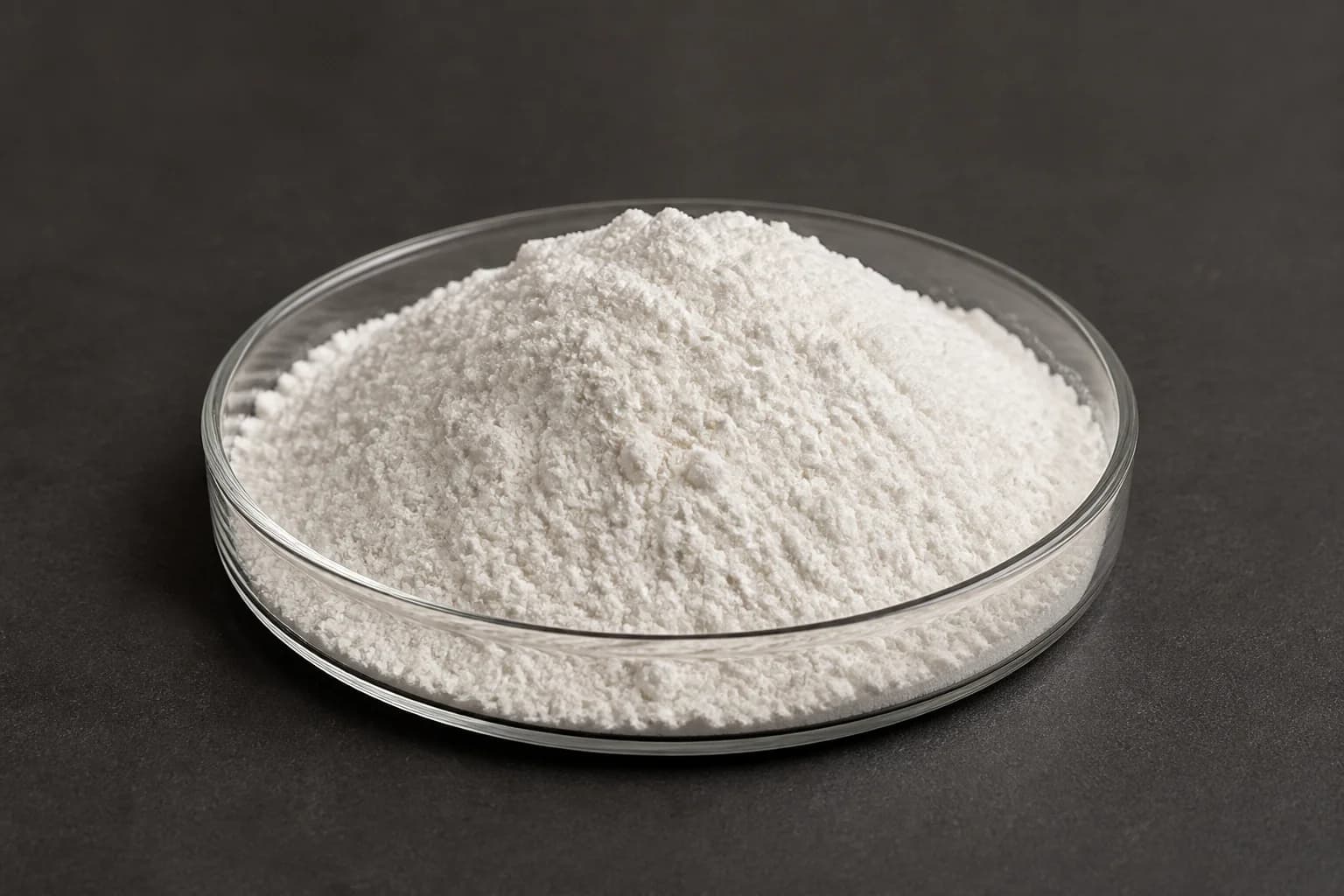
| Appearance | White to off-white powder |
| Odor | Odorless to a faint, slightly sweet or musty scent. Strong odors may indicate residual solvents from manufacturing. |
| Molecular Weight | Varies by grade; typical ranges are ~10,000 to ~86,000 Da. The specific molecular weight for the provided formula is 1261.4 g/mol. |
| Density / Specific Gravity | 1.26 g/cm³ |
| Viscosity | Technical grades are available in a wide range of viscosities, typically from 4,000 to 200,000 mPa·s (in a 2% aqueous solution at 20°C). |
| Refractive Index | 1.520 |
| Ph (Aqueous Solution) | 6.0 - 8.0 |
| Assay / Purity | Methoxy Content: 19–30% Hydroxypropyl Content: 3–12% Ash Content: < 5% |
Chemical Properties
| Property | Specification |
|---|---|
| Pka | A predicted value for the strongest acidic pKa is 11.67. As a non-ionic polymer, it is stable across a wide pH range. |
| Ionic Nature | Non-ionic |
| Incompatibilities | Strong oxidizing agents, strong acids, strong bases. |
| Hazardous Reactions / Decomposition Products | Hazardous polymerization will not occur. Thermal decomposition products can include carbon monoxide (CO) and carbon dioxide (CO2), depending on temperature and air supply. |
Thermal Properties
| Property | Specification |
|---|---|
| Melting Point | 190-200 °C (Discoloration Temperature) |
| Boiling Point | Not applicable |
| Flash Point | >250 °C (>482 °F) |
| Autoignition Temperature | 170 - 185 °C |
| Decomposition Temperature | Pyrolysis begins at approximately 200 °C. |
| Thermal Stability | Stable under recommended storage conditions. Avoid temperatures above 130°C (266°F) to prevent decomposition. |
Processing Methods & Reference Formulations
A. Standard Interior Tile Adhesive (C1 Type)
This formulation is for a standard cement-based tile adhesive for interior applications.
| Key Ingredients | Indicative Dosage (% w/w) |
|---|---|
| Portland cement CEM I 42.5 | 25.0 - 30.0% |
| Quartz sand (0.1–0.5mm) | 65.0 - 70.0% |
| Hydroxypropyl Methylcellulose (40,000–60,000 mPa·s) | 0.20 - 0.30% |
| Calcium formate (accelerator) | 0.5% |
B. Flexible Tile Adhesive with Extended Open Time (C2TE Type)
This formulation is for a high-performance, flexible tile adhesive suitable for exterior use and large-format tiles, featuring an extended open time.
| Key Ingredients | Indicative Dosage (% w/w) |
|---|---|
| Portland cement CEM I 52.5 | 30.0 - 35.0% |
| Graded quartz sand | 55.0 - 60.0% |
| Hydroxypropyl Methylcellulose (100,000–150,000 mPa·s) | 0.30 - 0.40% |
| Redispersible polymer powder | 3.0 - 5.0% |
| Citric acid (retarder) | 0.1 - 0.2% |
C. Clear Conditioning Shampoo
A basic formulation for a clear shampoo providing light conditioning.
| Key Ingredients | Indicative Dosage (% w/w) |
|---|---|
| Deionized Water | 68.72% |
| Hydroxypropylmethyl Cellulose | 0.50% |
| Sodium Laureth Sulfate (70%) | 7.86% |
| Sodium Lauryl Sulfate (30%) | 16.67% |
| Cocamidopropyl Betaine (35%) | 3.50% |
| Preservative | 1.00% |
| Sodium Chloride | 2.25% |
| Citric Acid (25%) | q.s. to pH |
Dosing Guidelines
A. Dosing by Application
| Application | Recommended / Max Dosage |
|---|---|
| Cement Mortar | 0.1 - 0.5% |
| Tile Adhesives (Standard) | 0.2 - 0.4% |
| Tile Adhesives (High Performance, C2) | 0.3 - 0.6% |
| Wall Putty / Skim Coat | 0.3 - 0.6% |
| Self-Leveling Compounds | 0.1 - 0.3% |
| Water-Based / Latex Paints | 0.1 - 3.0% (typically 0.3 - 0.6%) |
| Water-Based Inks | 0.1 - 0.5% |
| Shampoos | 0.2 - 1.0% |
| Creams & Lotions | 0.1 - 0.5% |
| Gels | 0.5 - 1.0% (or more) |
| Liquid Detergents | 0.2 - 1.5% |
About Hydroxy Propyl Methylcellulose
Hydroxy Propyl Methylcellulose (HPMC) manufacturers and suppliers provide a high-quality, versatile cellulose ether used across various industries. Known for its exceptional thickening, emulsifying, and film-forming properties, HPMC is a key ingredient in pharmaceuticals, construction, food, and personal care products. Its ability to retain water, improve adhesion, and form clear films makes it indispensable in many formulations. HPMC manufacturers focus on producing consistent, high-purity grades to meet the stringent demands of global markets, particularly in North America. Sustainability is a growing focus, with efforts to minimize environmental impact during production. HPMC's versatility and performance make it a preferred choice for formulators seeking reliable and effective solutions.
- Versatile Thickener: Enhances viscosity and texture in food and personal care products.
- Function: Thickening agent, binder, film former, stabilizer, emulsifier, suspending agent, water-retention agent.
- Effective Emulsifier: Stabilizes emulsions in pharmaceuticals and cosmetics.
- Features: Soluble in cold water, forms a gel upon heating (thermal gelation), stable over a broad pH range, non-ionic, low ash content.
- Reliable Film Former: Provides protective coatings in tablets and construction materials.
- Benefits: Improves workability and consistency, enhances adhesion and bonding strength, prolongs operating time, reduces water loss, provides controlled viscosity, and stabilizes emulsions and suspensions.
- Excellent Stabilizer: Prevents phase separation in various formulations.
- Superior Binder: Improves workability and adhesion in construction applications.
About Hydroxy Propyl Methylcellulose
Hydroxy Propyl Methylcellulose (HPMC) manufacturers and suppliers provide a high-quality, versatile cellulose ether used across various industries. Known for its exceptional thickening, emulsifying, and film-forming properties, HPMC is a key ingredient in pharmaceuticals, construction, food, and personal care products. Its ability to retain water, improve adhesion, and form clear films makes it indispensable in many formulations. HPMC manufacturers focus on producing consistent, high-purity grades to meet the stringent demands of global markets, particularly in North America. Sustainability is a growing focus, with efforts to minimize environmental impact during production. HPMC's versatility and performance make it a preferred choice for formulators seeking reliable and effective solutions.
- Versatile Thickener: Enhances viscosity and texture in food and personal care products.
- Function: Thickening agent, binder, film former, stabilizer, emulsifier, suspending agent, water-retention agent.
- Effective Emulsifier: Stabilizes emulsions in pharmaceuticals and cosmetics.
- Features: Soluble in cold water, forms a gel upon heating (thermal gelation), stable over a broad pH range, non-ionic, low ash content.
- Reliable Film Former: Provides protective coatings in tablets and construction materials.
- Benefits: Improves workability and consistency, enhances adhesion and bonding strength, prolongs operating time, reduces water loss, provides controlled viscosity, and stabilizes emulsions and suspensions.
- Excellent Stabilizer: Prevents phase separation in various formulations.
- Superior Binder: Improves workability and adhesion in construction applications.
Regulatory Compliance
| Region | Max Allowed Level | Notes | Certification Body |
|---|---|---|---|
| United States | - | Generally Recognized As Safe (GRAS) by the FDA for use as a direct food additive. The Cosmetic Ingredient Review (CIR) Expert Panel has determined it is safe for use in cosmetics. | Listed on the TSCA inventory. For food/pharma applications, compliance with USP/NF standards is required. |
| European Union | - | Approved as a food additive (E464). Considered safe for use in cosmetic products and is listed in the CosIng database. | Must comply with Regulation (EC) No 1223/2009 on cosmetic products. REACH registration is required for import/manufacture >1 tonne/year. |
| Canada | - | Not found on the Cosmetic Ingredient Hotlist of prohibited or restricted substances. | Must comply with the Food and Drugs Act and the Cosmetic Regulations. |
| India | - | Regulated under the Drugs and Cosmetics Act 1940 and Rules 1945. Ingredients must comply with standards set by the Bureau of Indian Standards (BIS), such as IS 4707. | Compliance with BIS standards is required. |
| Japan | - | No specific restrictions found in the Standards for Cosmetics. | - |
| Australia | - | Listed on the Australian Inventory of Industrial Chemicals (AIIC), meaning it can be used in industrial applications, including cosmetics. | - |
| China | - | Listed in the Inventory of Existing Cosmetic Ingredients in China (IECIC 2021), permitting its use in cosmetics sold in China. | - |
| Republic of Korea | - | No specific restrictions found in cosmetic regulations. | - |
| ASEAN | - | Not listed as a prohibited or restricted substance in the Annexes of the ASEAN Cosmetic Directive. | Must comply with the ASEAN Cosmetic Directive (ACD) as implemented by member states. |
FAQs - Hydroxy Propyl Methylcellulose
Related Products
Related Products
Streamline
Your Chemical
Procurement
Get fast responses from real experts