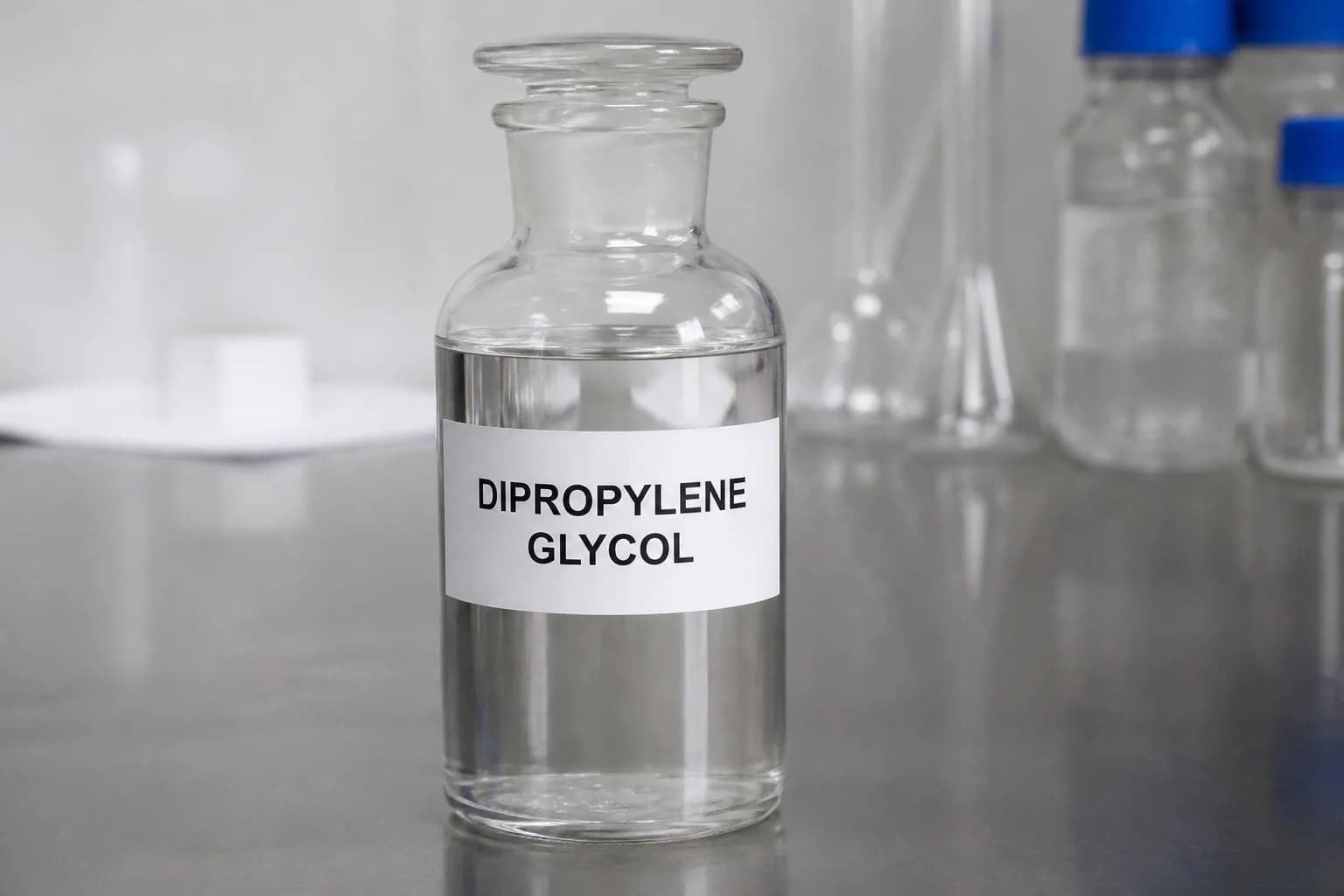
Dipropylene Glycol
ELHUMETM – DPG
Live Prices for Dipropylene Glycol
View live pricing & request bulk enquiry for this product on Elixir.
 Free Samples Available
Speed Up Your Sample Testing Process
We deliver domestic samples within 24 - 48 hours, helping you evaluate product without delays.
Dipropylene Glycol (DPG) is a low-toxicity glycol, supplied as a clear, colourless, nearly odourless viscous liquid used as a solvent, humectant and fragrance carrier. It functions as a solvent /…
CAS Number
25265-71-8
HS Code
2909.49.60
INCI Name
Dipropylene Glycol
Molecular Formula
C6H14O3
Dipropylene Glycol
ELHUMETM – DPG
Dipropylene Glycol (DPG) is a low-toxicity glycol, supplied as a clear, colourless, nearly odourless viscous liquid used as a solvent, humectant and fragrance carrier. It functions as a solvent / fragrance carrier, humectant, chemical intermediate, plasticiser across fragrance &…
CAS Number
25265-71-8
INCI Name
Dipropylene Glycol
HS Code
2909.49.60
Molecular Formula
C6H14O3
Live Prices for Dipropylene Glycol
View live pricing & request bulk enquiry for this product on Elixir.
Free Samples AvailableSpeed Up Your Sample Testing Process
We deliver domestic samples within 24 - 48 hours, helping you evaluate product without delays.
 By
By
Specialty chemicals, delivered right
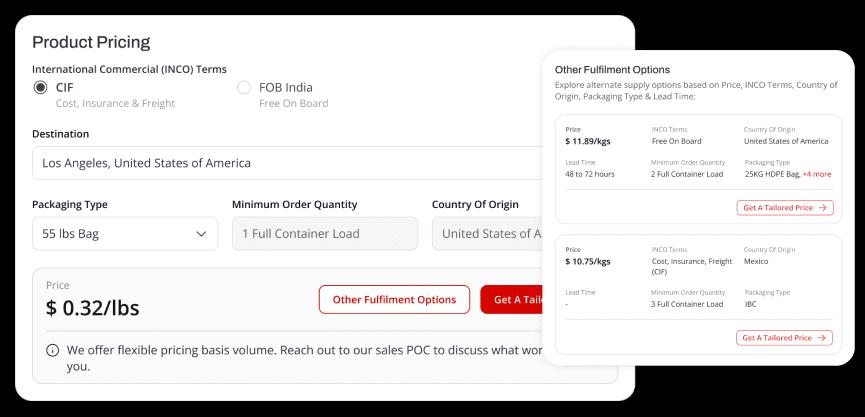
Access live, grade-specific pricing for every chemical, so your teams talks with data, not intuition on Elixir.
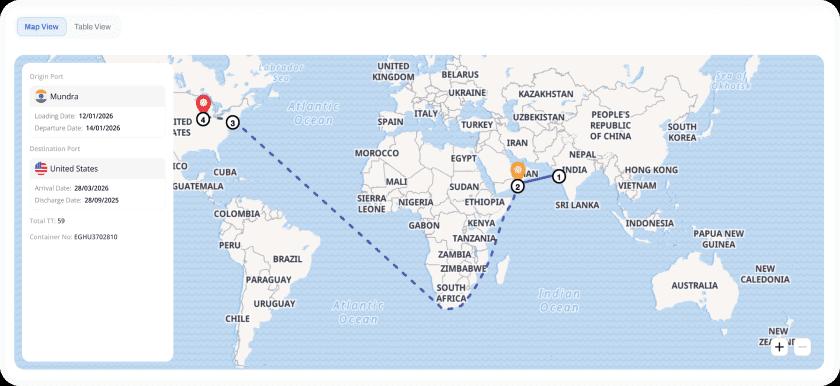
Compare fulfilment options across grades, INCO terms, origins, and lead times: all in one platform.

Live, transparent pricing
Real-time quotes across 12,000+ specialty chemicals.
Product Specification
Physical Properties
| Property | Specification |
|---|---|
| Appearance | Clear, colorless liquid |
| Odor | Practically odourless, slightly ethereal |
| Molecular Weight | 134.17 g/mol |
| Density (20°C) | 1.035-1.038 g/cm³ |
| Viscosity (20°C) | 107 cP |
| Refractive Index (20°C) | 1.439 - 1.442 |
| Ph (20°C) | 7 - 8 |
| Assay / Purity | 99.50 min W/% |
| Color (Pt-Co) | 10 max (Hazen) |
| Moisture | 0.10 max W/% |
| Acidity (As Acetic Acid) | 0.010 max W/% |
Chemical Properties
| Property | Specification |
|---|---|
| Incompatibilities | Avoid contact with strong oxidizing agents, strong acids, strong bases, isocyanates, and zinc. May attack some plastics, rubber, and coatings. |
| Hazardous Decomposition Products | Decomposition products can include carbon oxides (CO, CO2), aldehydes, alcohols, ethers, organic acids, and other toxic vapors. |
Thermal Properties
| Property | Specification |
|---|---|
| Melting Point | -40 °C |
| Boiling Point | 230 °C |
| Flash Point | 128 - 138 °C (closed cup) |
| Autoignition Temperature | 310 - 350 °C |
| Thermal Stability | Stable under recommended storage conditions. Exposure to elevated temperatures can cause product to decompose. |
Processing Methods & Reference Formulations
A. Reed Diffuser Base
A typical formulation for home fragrance reed diffusers.
| Key Ingredients | Indicative Dosage (% w/w) |
|---|---|
| Fragrance Oil | 20.00 - 40.00% |
| Dipropylene Glycol | 60.00 - 80.00% |
| Perfumer's Alcohol | 0.00 - 10.00% |
B. Alcohol-Free Perfume Oil
A simple, two-ingredient formulation for a roll-on or dab-on perfume.
| Key Ingredients | Indicative Dosage (% w/w) |
|---|---|
| Fragrance / Essential Oils | 15.00 - 25.00% |
| Dipropylene Glycol | 75.00 - 85.00% |
C. Body & Room Spray
A water-based spray formulation where Dipropylene Glycol acts as a co-solvent and humectant.
| Key Ingredients | Indicative Dosage (% w/w) |
|---|---|
| Fragrance Oil | 5.00 - 10.00% |
| Dipropylene Glycol | 10.00 - 20.00% |
| Solubilizer (e.g., Polysorbate 20) | 5.00 - 15.00% |
| Deionized Water | q.s. to 100% |
| Preservative | As required |
Dosing Guidelines
A. Dosing by Application
| Application | Recommended / Max Dosage |
|---|---|
| Perfumes & Colognes | 1.0 - 50.0% |
| Alcohol-Free Perfume Oils | 75.0 - 85.0% |
| Lotions, Creams & Mists | 1.0 - 20.0% |
| Skincare (General) | 2.0 - 10.0% |
| Deodorant Gels | 10.0 - 15.0% |
| Reed Diffusers | 20.0 - 80.0% |
About Dipropylene Glycol
Dipropylene glycol (DPG) is a low-toxicity, nearly odourless glycol valued as a solvent, humectant, coupling agent and chemical intermediate. Its most visible use is as a fragrance-grade carrier and solvent in perfumery and cosmetics, prized for its very low odour and excellent ability to dissolve fragrance oils; industrially, it is a key raw material for unsaturated polyester resins, plasticisers and lubricants. DPG's appeal is its combination of good solvency, humectancy, low volatility, low toxicity and near-absence of odour, which makes it a safer, milder glycol than many alternatives. It is supplied in a regular (industrial) grade and a high-purity, low-odour fragrance grade for perfumery and personal care. Industrial buyers sourcing Dipropylene Glycol (DPG) in bulk also track dipropylene glycol pricing closely, since it feeds directly into their downstream costs - which is why working with an established dipropylene glycol supplier and distributor like Elchemy matters.
Manufacturing Process of Dipropylene Glycol (DPG)
Dipropylene glycol is produced as a co-product of propylene glycol manufacture. When propylene oxide is hydrated to make propylene glycol, dipropylene and tripropylene glycols form as heavier co-products, which are separated by distillation. Fragrance-grade DPG is further purified to remove odour bodies and reach the very low odour and colour required for perfumery. Purity, odour and water content define the grade. As a quality-focused dipropylene glycol manufacturer and sourcing partner, Elchemy tests every shipment for assay, water content, colour and odour before dispatch, with a Certificate of Analysis travelling alongside each order.
Dipropylene Glycol (DPG) Price & Dipropylene glycol manufacturers: Bulk Pricing Guide
If you are comparing dipropylene glycol manufacturers for bulk procurement, Elchemy provides quotes based on your exact requirements. Share your volume, grade, destination and packaging on the quote form and our team reverts with a detailed offer within 24 to 48 hours. Pricing is quoted rather than published because the cost is driven by the price of propylene oxide feedstock and propylene-glycol production volumes, not a fixed list. This is why a live quote from a dipropylene glycol supplier is always more accurate than any headline figure. Beyond that, several factors shape the final dipropylene glycol price: grade, committed volume, origin country, packaging format, freight, Incoterm (FOB, CIF or DDP) and import duty (HTS 2909.49 for US-bound shipments). For an approximate read on where the market sits, procurement teams often reference propylene oxide and glycol price indices. Trade publications also report the dipropylene glycol price per kg as a unit-level benchmark, useful for spotting short-term regional shifts. At bulk procurement scale, the dipropylene glycol price per ton (or per MT) is the most relevant commercial unit, since contracts are negotiated at that level. For an exact rate, none of these replaces a direct quote. Your final price depends on contract structure, destination, volume and timing - so a quote from our team is always the most accurate number for your procurement.
Packaging & Logistics for Bulk Dipropylene Glycol (DPG)
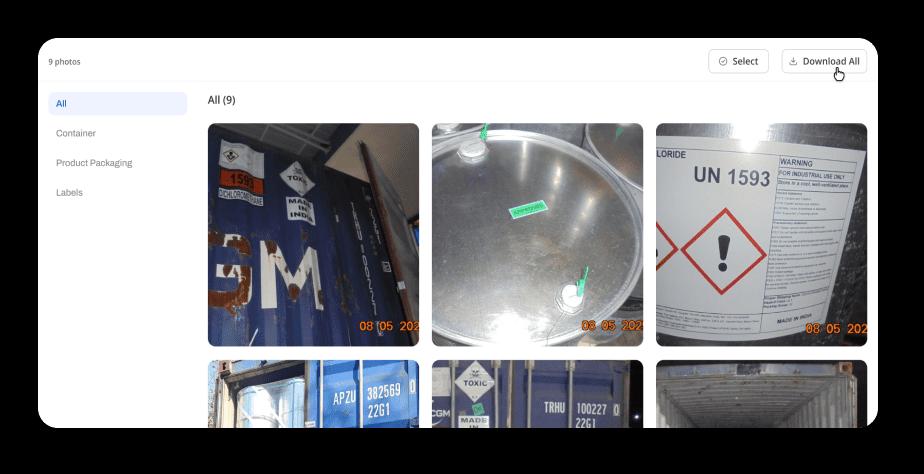
Dipropylene Glycol (DPG) ships in standard export packaging - bags, drums, IBCs or bulk as the material requires - with both metric and imperial weights, supplied to your specification. A typical 20' container holds a full commercial load depending on packaging. For US, UK and UAE buyers, Elchemy arranges compliant freight and customs documentation, offering EXW, FOB, CIF and DDP terms. Transit times and stock position are confirmed at quotation, and samples are dispatched within 24 to 48 hours. Store per the conditions on the TDS. As a global dipropylene glycol distributor, Elchemy ships to 40+ countries with the documentation each destination market requires.
Why Choose Elchemy as a Trusted Dipropylene Glycol (DPG) Supplier
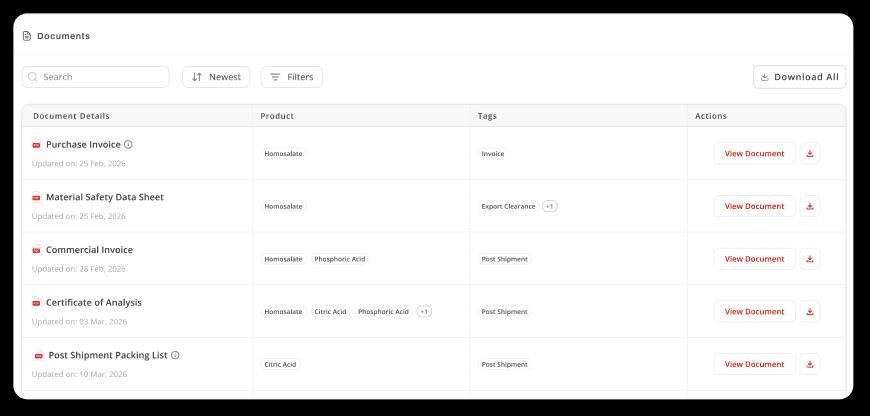
Elchemy makes sourcing Dipropylene Glycol (DPG) straightforward for industrial buyers. Every order ships with a Certificate of Analysis, TDS and GHS-aligned SDS as standard, across the grades listed above. Because we source across multiple origins, we quote the best landed cost for your destination rather than a single dipropylene glycol manufacturer's list price. Partner plants operate to recognised quality standards (ISO 9001, plus food/pharma certifications where relevant), with Halal and Kosher documentation on request. From the USA and UK to the UAE and beyond, Elchemy serves as a single dipropylene glycol supplier, manufacturer and distributor relationship - with samples before bulk and pricing tailored to your volume and contract terms.
Safety & Handling
Not classified as hazardous under GHS and not DOT-regulated. Handle as a low-hazard glycol. Dipropylene glycol has a favourable safety profile: it is low in toxicity, non-sensitising and widely used in leave-on cosmetics and fragrance, and - unlike ethylene glycol - is not significantly toxic if accidentally ingested in small amounts. It causes only mild eye or skin irritation on prolonged contact. It is combustible only at high temperature (flash point 124 °C) and is not a significant environmental hazard. Basic PPE is sufficient for handling. The full 16-section GHS-aligned SDS is available alongside every Dipropylene Glycol (DPG) order.
- High Solvency: Effective in dissolving a wide range of substances, enhancing product stability and performance.
- Function: Solvent, Carrier, Humectant, Viscosity Control Agent, Fixative, Plasticizer.
- Non-Toxic and Non-Irritating: Safe for use in cosmetics and personal care products, ensuring consumer safety.
- Features (Fragrance Grade): High purity (>99.5%), low, neutral odor profile, excellent solubility, low volatility, low skin irritation potential, and low toxicity.
- Moisture Retention: Acts as a humectant, retaining moisture in formulations for improved texture and hydration.
- Benefits: Acts as a superior carrier for fragrances, ensures zero interference with delicate scent notes, enhances scent retention and longevity, and improves the stability of cosmetic formulations.
- Versatile Carrier: Ensures even distribution of active ingredients in industrial applications, enhancing product efficacy.
- Antifreeze Properties: Provides protection against freezing in various systems, ensuring operational efficiency.
About Dipropylene Glycol
Dipropylene glycol (DPG) is a low-toxicity, nearly odourless glycol valued as a solvent, humectant, coupling agent and chemical intermediate. Its most visible use is as a fragrance-grade carrier and solvent in perfumery and cosmetics, prized for its very low odour and excellent ability to dissolve fragrance oils; industrially, it is a key raw material for unsaturated polyester resins, plasticisers and lubricants. DPG's appeal is its combination of good solvency, humectancy, low volatility, low toxicity and near-absence of odour, which makes it a safer, milder glycol than many alternatives. It is supplied in a regular (industrial) grade and a high-purity, low-odour fragrance grade for perfumery and personal care. Industrial buyers sourcing Dipropylene Glycol (DPG) in bulk also track dipropylene glycol pricing closely, since it feeds directly into their downstream costs - which is why working with an established dipropylene glycol supplier and distributor like Elchemy matters.
Manufacturing Process of Dipropylene Glycol (DPG)
Dipropylene glycol is produced as a co-product of propylene glycol manufacture. When propylene oxide is hydrated to make propylene glycol, dipropylene and tripropylene glycols form as heavier co-products, which are separated by distillation. Fragrance-grade DPG is further purified to remove odour bodies and reach the very low odour and colour required for perfumery. Purity, odour and water content define the grade. As a quality-focused dipropylene glycol manufacturer and sourcing partner, Elchemy tests every shipment for assay, water content, colour and odour before dispatch, with a Certificate of Analysis travelling alongside each order.
Dipropylene Glycol (DPG) Price & Dipropylene glycol manufacturers: Bulk Pricing Guide
If you are comparing dipropylene glycol manufacturers for bulk procurement, Elchemy provides quotes based on your exact requirements. Share your volume, grade, destination and packaging on the quote form and our team reverts with a detailed offer within 24 to 48 hours. Pricing is quoted rather than published because the cost is driven by the price of propylene oxide feedstock and propylene-glycol production volumes, not a fixed list. This is why a live quote from a dipropylene glycol supplier is always more accurate than any headline figure. Beyond that, several factors shape the final dipropylene glycol price: grade, committed volume, origin country, packaging format, freight, Incoterm (FOB, CIF or DDP) and import duty (HTS 2909.49 for US-bound shipments). For an approximate read on where the market sits, procurement teams often reference propylene oxide and glycol price indices. Trade publications also report the dipropylene glycol price per kg as a unit-level benchmark, useful for spotting short-term regional shifts. At bulk procurement scale, the dipropylene glycol price per ton (or per MT) is the most relevant commercial unit, since contracts are negotiated at that level. For an exact rate, none of these replaces a direct quote. Your final price depends on contract structure, destination, volume and timing - so a quote from our team is always the most accurate number for your procurement.
Packaging & Logistics for Bulk Dipropylene Glycol (DPG)
Dipropylene Glycol (DPG) ships in standard export packaging - bags, drums, IBCs or bulk as the material requires - with both metric and imperial weights, supplied to your specification. A typical 20' container holds a full commercial load depending on packaging. For US, UK and UAE buyers, Elchemy arranges compliant freight and customs documentation, offering EXW, FOB, CIF and DDP terms. Transit times and stock position are confirmed at quotation, and samples are dispatched within 24 to 48 hours. Store per the conditions on the TDS. As a global dipropylene glycol distributor, Elchemy ships to 40+ countries with the documentation each destination market requires.
Why Choose Elchemy as a Trusted Dipropylene Glycol (DPG) Supplier
Elchemy makes sourcing Dipropylene Glycol (DPG) straightforward for industrial buyers. Every order ships with a Certificate of Analysis, TDS and GHS-aligned SDS as standard, across the grades listed above. Because we source across multiple origins, we quote the best landed cost for your destination rather than a single dipropylene glycol manufacturer's list price. Partner plants operate to recognised quality standards (ISO 9001, plus food/pharma certifications where relevant), with Halal and Kosher documentation on request. From the USA and UK to the UAE and beyond, Elchemy serves as a single dipropylene glycol supplier, manufacturer and distributor relationship - with samples before bulk and pricing tailored to your volume and contract terms.
Safety & Handling
Not classified as hazardous under GHS and not DOT-regulated. Handle as a low-hazard glycol. Dipropylene glycol has a favourable safety profile: it is low in toxicity, non-sensitising and widely used in leave-on cosmetics and fragrance, and - unlike ethylene glycol - is not significantly toxic if accidentally ingested in small amounts. It causes only mild eye or skin irritation on prolonged contact. It is combustible only at high temperature (flash point 124 °C) and is not a significant environmental hazard. Basic PPE is sufficient for handling. The full 16-section GHS-aligned SDS is available alongside every Dipropylene Glycol (DPG) order.
- High Solvency: Effective in dissolving a wide range of substances, enhancing product stability and performance.
- Function: Solvent, Carrier, Humectant, Viscosity Control Agent, Fixative, Plasticizer.
- Non-Toxic and Non-Irritating: Safe for use in cosmetics and personal care products, ensuring consumer safety.
- Features (Fragrance Grade): High purity (>99.5%), low, neutral odor profile, excellent solubility, low volatility, low skin irritation potential, and low toxicity.
- Moisture Retention: Acts as a humectant, retaining moisture in formulations for improved texture and hydration.
- Benefits: Acts as a superior carrier for fragrances, ensures zero interference with delicate scent notes, enhances scent retention and longevity, and improves the stability of cosmetic formulations.
- Versatile Carrier: Ensures even distribution of active ingredients in industrial applications, enhancing product efficacy.
- Antifreeze Properties: Provides protection against freezing in various systems, ensuring operational efficiency.
Regulatory Compliance
| Region | Max Allowed Level | Notes | Certification Body |
|---|---|---|---|
| United States | 50% | The Cosmetic Ingredient Review (CIR) Expert Panel concluded that Dipropylene Glycol is safe for use in cosmetics. It is also permitted for use in food-contact articles like adhesives under FDA regulations. | - |
| European Union | - | Not listed as a prohibited or restricted substance in the EU Cosmetics Regulation (EC) No 1223/2009. It is included in the CosIng database without restrictions. | - |
| Canada | - | Not found on Health Canada's Cosmetic Ingredient Hotlist (a list of substances that are restricted or prohibited in cosmetics). | - |
| India | - | Not found in the lists of prohibited or restricted substances by the Bureau of Indian Standards for cosmetics. | - |
| Japan | - | Not found in the lists of restricted or prohibited ingredients under the Standards for Cosmetics by the MHLW. | - |
| Australia | - | Listed on the Australian Inventory of Industrial Chemicals (AIIC) with no specific restrictions noted for cosmetic use. | - |
| China | - | Listed in the Inventory of Existing Cosmetic Ingredients in China (IECIC 2021). | - |
| Republic of Korea | - | No specific restrictions found in the regulations set by the Ministry of Food and Drug Safety (MFDS). | - |
| ASEAN | - | Not found in the annexes of the ASEAN Cosmetic Directive which list prohibited or restricted substances. | - |
FAQs - Dipropylene Glycol
Related Products
Related Products

Streamline
Your Chemical
Procurement
Get fast responses from real experts