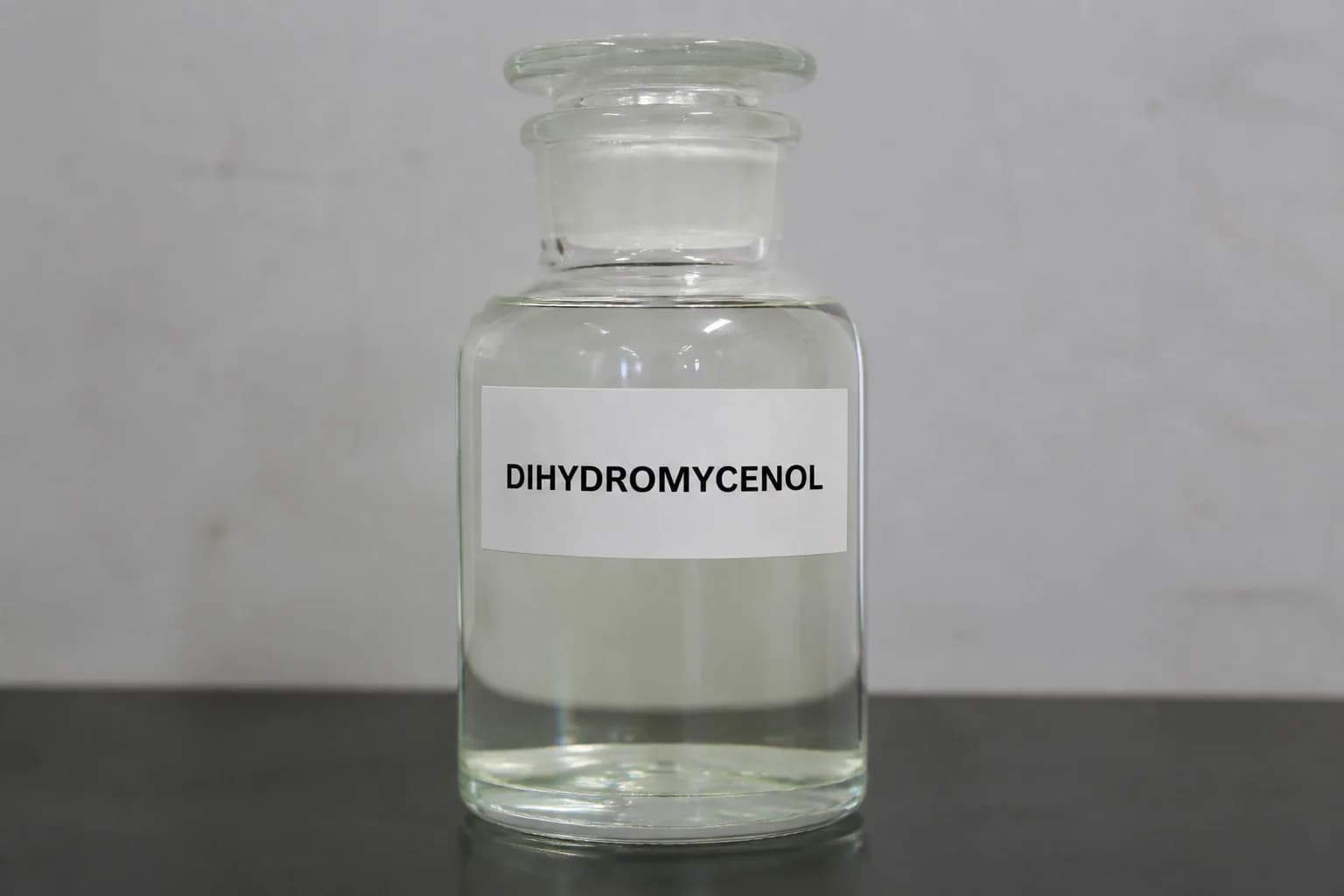
Dihydromyrcenol
ELAROMATM – DHMO
Live Prices for Dihydromyrcenol
View live pricing & request bulk enquiry for this product on Elixir.
 Free Samples Available
Speed Up Your Sample Testing Process
We deliver domestic samples within 24 - 48 hours, helping you evaluate product without delays.
Dihydromyrcenol is a colorless liquid with a fresh, citrus-like aroma, widely used in the fragrance industry. It is a key ingredient in the formulation of perfumes, soaps, and personal care products,…
CAS Number
18479-58-8
HS Code
29.05.22.50
INCI Name
Dihydromyrcenol (DHM)
Molecular Formula
C₁₀H₂₀O
Dihydromyrcenol
ELAROMATM – DHMO
Dihydromyrcenol is a colorless liquid with a fresh, citrus-like aroma, widely used in the fragrance industry. It is a key ingredient in the formulation of perfumes, soaps, and personal care products, providing a clean and refreshing scent. Its versatility and stability make it a…
CAS Number
18479-58-8
INCI Name
Dihydromyrcenol (DHM)
HS Code
29.05.22.50
Molecular Formula
C₁₀H₂₀O
Live Prices for Dihydromyrcenol
View live pricing & request bulk enquiry for this product on Elixir.
Free Samples AvailableSpeed Up Your Sample Testing Process
We deliver domestic samples within 24 - 48 hours, helping you evaluate product without delays.
 By
By
Specialty chemicals, delivered right
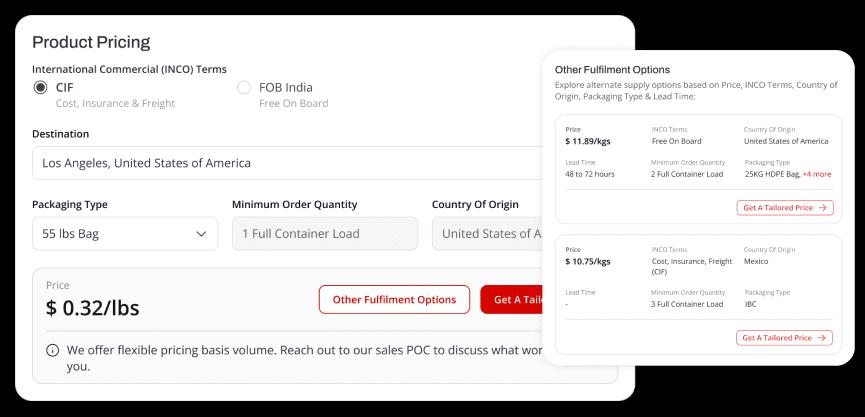
Access live, grade-specific pricing for every chemical, so your teams talks with data, not intuition on Elixir.
Compare fulfilment options across grades, INCO terms, origins, and lead times: all in one platform.

Live, transparent pricing
Real-time quotes across 12,000+ specialty chemicals.

Product Specification
Physical Properties
| Property | Specification |
|---|---|
| Appearance | Colorless liquid |
| Odor | Citrus |
| Molecular Weight (G/Mol) | 156.26 |
| Density Or Specific Gravity | 0.784 g/mL at 25 °C(lit.) |
| Viscosity | 12.2mm2/s |
| Refractive Index | n20/D 1.443(lit.) |
| Density | 12.2mm2/s |
Chemical Properties
| Property | Specification |
|---|---|
| Pka | 15.31±0.29(Predicted) |
| Water Solubility | 939mg/L at 20℃ |
| Incompatibilities | Strong oxidizing agents |
Thermal Properties
| Property | Specification |
|---|---|
| Boiling Point | 84 °C10 mm Hg(lit.) |
| Flash Point | 170 °F |
Processing Methods & Reference Formulations
A. Perfume
Add to the oil phase before alcohol dilution to ensure even mixing and maintain formulation clarity. Acts as a top to middle note, blending well with citrus, lavender, musks, and woody accords to enhance brightness and lift.
| Key Ingredients | Indicative Dosage (% w/w) |
|---|---|
| Dihydromyrcenol | 5% |
| Linalool | 15% |
| Benzyl Acetate | 10% |
| Phenylethyl Alcohol | 10% |
| Hedione | 10% |
| Iso E Super | 15% |
| Galaxolide | 10% |
| Musk Ketone | 5% |
| Dipropylene Glycol (DPG) | 20% |
B. Soap Detergent
Add during the final blending phase, after the base has cooled, to minimize loss due to volatility. Pre-mix with fragrance oils to ensure uniform distribution and better performance in high-water-content formulas.
| Key Ingredients | Indicative Dosage (% w/w) |
|---|---|
| Sodium Palmate | 65% |
| Sodium Palm Kernelate | 10% |
| Stearic Acid | 5% |
| Glycerin | 4% |
| PEG-7 Glyceryl Cocoate (thickener/surfactant) | 3% |
| Water | 10% |
| Tetrasodium EDTA | 0.3% |
| Citric Acid | 0.2% |
| Preservative (Phenoxyethanol) | 0.3% |
| Fragrance Blend | ~2% |
| Dihydromyrcenol | 0.2% |
C. Cosmetic lotion
Add during the cool-down phase, to preserve its volatile top-note character and avoid scent loss. Pre-blend with fragrance oils or a solubilizer to ensure even dispersion in the emulsion.
| Key Ingredients | Indicative Dosage (% w/w) |
|---|---|
| Water | 70% |
| Glycerin | 5% |
| Cetearyl Alcohol | 3% |
| Glyceryl Stearate | 2% |
| Caprylic/Capric Triglyceride | 5% |
| Dihydromyrcenol | 3% |
| Linalool | 15% |
| Rose Base | 12% |
| Terpineol | 5% |
| β-Ionone | 5% |
| Vertofix | 10% |
| Hedione | 18% |
| Florosa | 20% |
D. Soap
Add during the fragrance phase, when the soap base cools, to minimize evaporation and scent loss. Pre-blend with other fragrance components to ensure even distribution and a well-rounded fragrance
| Key Ingredients | Indicative Dosage (% w/w) |
|---|---|
| Sodium Palmate | 45% |
| Sodium Palm Kernelate | 25% |
| Stearic Acid | 10% |
| Glycerin | 4% |
| PEG-32 (structuring agent) | 2% |
| Tetrasodium EDTA | 0.2% |
| Citric Acid | 0.1% |
| Titanium Dioxide | 0.5% |
| Preservative (e.g., Phenoxyethanol) | 0.2% |
| Fragrance Blend | ~2% |
| Dihydromyrcenol | 0.2% |
| Water | 10% |
Dosing Guidelines
A. Products
| Authorized dosage | Perfume/Fragrance | Detergents | Cosmetic Care |
|---|---|---|---|
| Authorized dosage | 0.75% – 7.5% | 0.75% – 7.5% | 0.75% – 5% |
About Dihydromyrcenol
Dihydromyrcenol, a key ingredient in the fragrance industry, is renowned for its fresh, citrus-like aroma. This colorless liquid is widely used in the formulation of perfumes, soaps, and personal care products, offering a clean and refreshing scent that appeals to consumers worldwide. As a versatile fragrance component, Dihydromyrcenol enhances the olfactory profile of various products, making it a preferred choice for manufacturers. Its stability and pleasant aroma contribute to its popularity in the fragrance market. Dihydromyrcenol manufacturers focus on producing high-quality, pure compounds to meet the stringent demands of the fragrance industry. The production process is carefully controlled to ensure consistency and quality, essential for maintaining the integrity of fragrance formulations. Sustainability is increasingly important in the production of Dihydromyrcenol, with manufacturers adopting eco-friendly practices to minimize environmental impact. These efforts align with the growing demand for sustainable raw materials in the chemical industry. Beyond its role in fragrances, Dihydromyrcenol is also used in personal care and household cleaning products, where it provides a refreshing scent that enhances the consumer experience. Its widespread use across multiple sectors underscores the importance of Dihydromyrcenol as a fundamental compound in modern industry.
- Fresh Citrus Aroma: Provides a clean, refreshing scent ideal for perfumes and personal care products.
- High Stability: Maintains fragrance integrity over time, ensuring long-lasting scent profiles.
- Versatile Application: Used in a wide range of products, from perfumes to household cleaners.
- Eco-Friendly Production: Manufacturers focus on sustainable practices to reduce environmental impact.
- High Purity Standards: Ensures consistent quality and performance in fragrance formulations.
About Dihydromyrcenol
Dihydromyrcenol, a key ingredient in the fragrance industry, is renowned for its fresh, citrus-like aroma. This colorless liquid is widely used in the formulation of perfumes, soaps, and personal care products, offering a clean and refreshing scent that appeals to consumers worldwide. As a versatile fragrance component, Dihydromyrcenol enhances the olfactory profile of various products, making it a preferred choice for manufacturers. Its stability and pleasant aroma contribute to its popularity in the fragrance market. Dihydromyrcenol manufacturers focus on producing high-quality, pure compounds to meet the stringent demands of the fragrance industry. The production process is carefully controlled to ensure consistency and quality, essential for maintaining the integrity of fragrance formulations. Sustainability is increasingly important in the production of Dihydromyrcenol, with manufacturers adopting eco-friendly practices to minimize environmental impact. These efforts align with the growing demand for sustainable raw materials in the chemical industry. Beyond its role in fragrances, Dihydromyrcenol is also used in personal care and household cleaning products, where it provides a refreshing scent that enhances the consumer experience. Its widespread use across multiple sectors underscores the importance of Dihydromyrcenol as a fundamental compound in modern industry.
- Fresh Citrus Aroma: Provides a clean, refreshing scent ideal for perfumes and personal care products.
- High Stability: Maintains fragrance integrity over time, ensuring long-lasting scent profiles.
- Versatile Application: Used in a wide range of products, from perfumes to household cleaners.
- Eco-Friendly Production: Manufacturers focus on sustainable practices to reduce environmental impact.
- High Purity Standards: Ensures consistent quality and performance in fragrance formulations.
Regulatory Compliance
| Region | Max Allowed Level | Notes | Certification Body |
|---|---|---|---|
| China | - | No explicit national restriction; regulated under NMPA, aligns with IFRA for fragrance use. | NMPA - National Medical Products Administration |
| Japan | - | No explicit national restriction; aligns with IFRA/international safety standards. | MHLW – Ministry of Health, Labour and Welfare |
| Republic of Korea | - | No explicit national restriction. | MFDS - Ministry of Food and Drug Safety |
| United States | - | Not listed as restricted by FDA or IFRA. | FDA |
| ASEAN | - | ASEAN Cosmetic Directive references IFRA for fragrance ingredients. | - |
| European Union | - | Not listed as restricted. | SCCS -Scientific Committee on Consumer Safety |
FAQs - Dihydromyrcenol

Streamline
Your Chemical
Procurement
Get fast responses from real experts