Decabromodiphenyl Oxide
ELRASATM – DBDPOx

Get Pricing for This Product
Need pricing? Request a quote for this product and we'll get back to you shortly.
 Free Samples Available
Speed Up Your Sample Testing Process
We deliver domestic samples within 24 - 48 hours, helping you evaluate product without delays.
Decabromodiphenyl Oxide (DBDPO) is a high-performance flame retardant used in a variety of applications, including electronics, textiles, and construction materials. It is known for its effectiveness…
CAS Number
1163-19-5
HS Code
2909.30.10
INCI Name
Decabromodiphenyl Oxide (DBDPO)
Molecular Formula
C12Br10O
Decabromodiphenyl Oxide
ELRASATM – DBDPOx
Decabromodiphenyl Oxide (DBDPO) is a high-performance flame retardant used in a variety of applications, including electronics, textiles, and construction materials. It is known for its effectiveness in reducing flammability and enhancing fire safety in products. DBDPO is widely…
CAS Number
1163-19-5
INCI Name
Decabromodiphenyl Oxide (DBDPO)
HS Code
2909.30.10
Molecular Formula
C12Br10O
Get Pricing for This Product
Need pricing? Request a quote for this product and we'll get back to you shortly.
Free Samples AvailableSpeed Up Your Sample Testing Process
We deliver domestic samples within 24 - 48 hours, helping you evaluate product without delays.
 By
By
Specialty chemicals, delivered right
Access live, grade-specific pricing for every chemical, so your teams talks with data, not intuition on Elixir.
Compare fulfilment options across grades, INCO terms, origins, and lead times: all in one platform.

Live, transparent pricing
Real-time quotes across 12,000+ specialty chemicals.



Product Specification
Physical Properties
| Property | Specification |
|---|---|
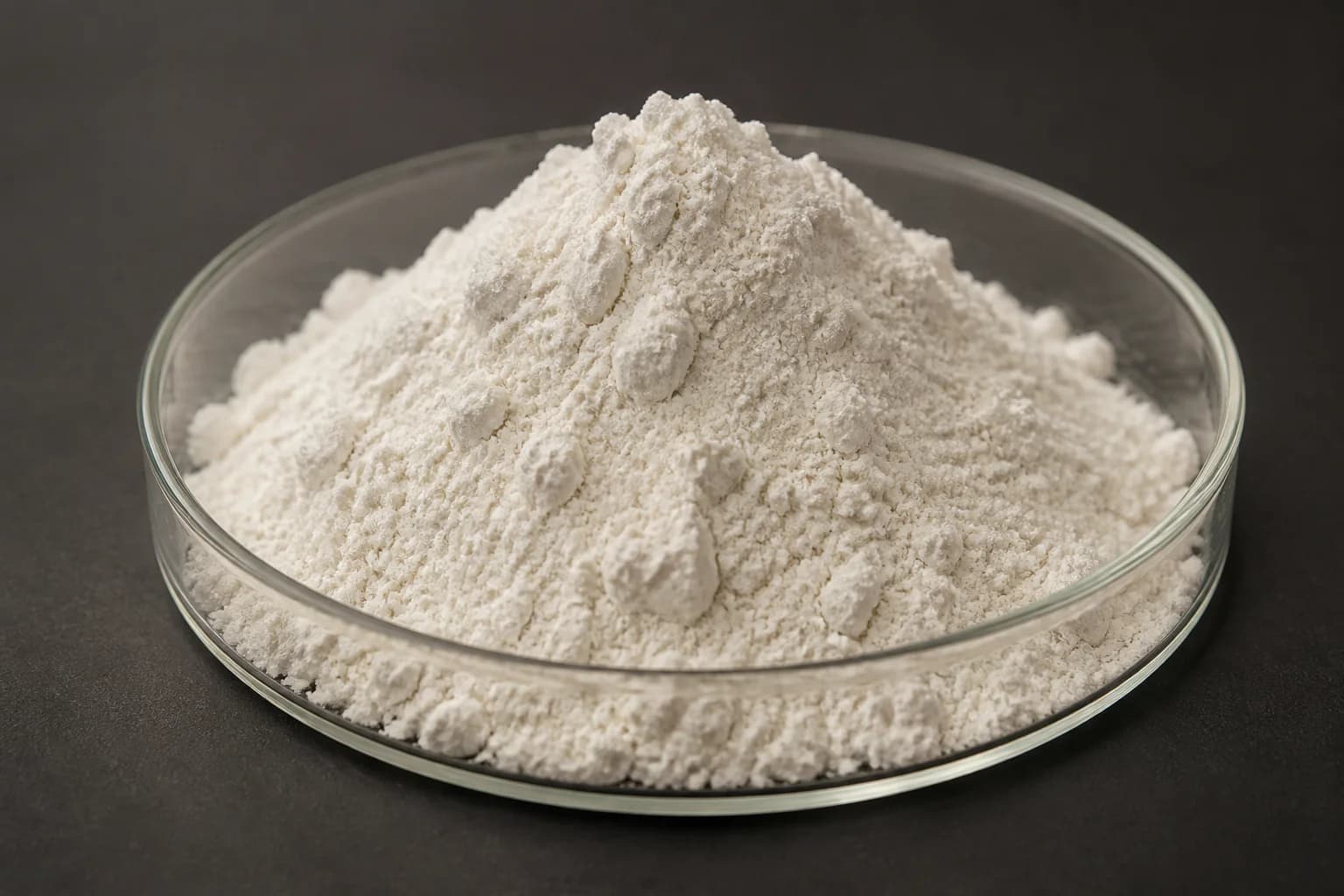
| Appearance | Free flowing micronized white to off white powder |
| Odor | Odorless |
| Molecular Weight | 959.2 g/mol |
| Specific Gravity | 3.4 - 3.5 |
| Density | 3.0 g/cm³ |
| Viscosity | Not applicable (solid material) |
| Refractive Index | 1.738 |
| Assay / Purity | 97% (HPLC, Wt.%) |
Chemical Properties
| Property | Specification |
|---|---|
| Ionic Nature | Non-ionic |
| Incompatibilities | Strong oxidizing agents. |
| Hazardous Decomposition Products | When heated to decomposition, may release carbon monoxide, carbon dioxide, hydrogen bromide, and other toxic fumes. |
Thermal Properties
| Property | Specification |
|---|---|
| Melting Point | 305 °C |
| Boiling Point | Not applicable (decomposes) |
| Flash Point | 241.4 °C |
| Decomposition Temperature | ~425 °C |
| Thermal Stability | Good thermal stability. A 5% weight loss is observed when heated to 354 °C. |
Processing Methods & Reference Formulations
A. Flame Retardant High Impact Polystyrene (HIPS)
This formulation demonstrates the use of DBDPO in combination with antimony trioxide, a common synergist, to achieve flame retardancy in HIPS plastic.
| Key Ingredients | Indicative Dosage (% w/w) |
|---|---|
| High Impact Polystyrene (HIPS) | 86% |
| Decabromodiphenyl Oxide (DBDPO) | 10% |
| Antimony Trioxide | 4% |
Dosing Guidelines
A. Dosing by Application
| Application | Recommended / Max Dosage |
|---|---|
| High Impact Polystyrene (HIPS) | 10 - 12% |
| Polypropylene (PP) | 15 - 20% |
| Acrylonitrile Butadiene Styrene (ABS) | 12 - 15% |
| Epoxy/Glass Fiber Composites | 40 - 50% (to achieve V-1 to V-0 rating) |
| Textile Coatings | Varies based on substrate and desired rating |
| Elastomers, Wire & Cable | Formulation dependent |
About Decabromodiphenyl Oxide
Decabromodiphenyl Oxide manufacturers and suppliers provide a crucial flame retardant solution for industries requiring enhanced fire safety. Known for its high bromine content and stability, DBDPO is a preferred choice in electronics, textiles, and construction materials. Manufacturers focus on producing high-purity DBDPO to meet stringent safety standards, ensuring its effectiveness in reducing flammability. The production process is optimized for consistency and quality, catering to the global demand for reliable flame retardants. As environmental concerns grow, manufacturers are also exploring sustainable practices to minimize the ecological impact of DBDPO production. This aligns with the increasing demand for eco-friendly flame retardants in the chemical industry. DBDPO's versatility and effectiveness make it a fundamental component in modern fire safety solutions.
- High Bromine Content: Provides superior flame retardancy, making it effective in reducing flammability.
- Function: Additive Flame Retardant
- Thermal Stability: Maintains performance under high temperatures, suitable for various industrial applications.
- Features: High bromine content, excellent thermal stability, low volatility, and cost-effectiveness.
- Low Volatility: Ensures long-lasting fire resistance without significant loss of material.
- Benefits: Provides superior flame retardancy at low additive levels, ensuring long-lasting fire resistance in a wide range of polymers and materials, helping them meet fire safety standards.
- Versatile Application: Used in electronics, textiles, and construction materials for enhanced fire safety.
- Eco-Friendly Initiatives: Manufacturers are adopting greener practices to reduce environmental impact.
About Decabromodiphenyl Oxide
Decabromodiphenyl Oxide manufacturers and suppliers provide a crucial flame retardant solution for industries requiring enhanced fire safety. Known for its high bromine content and stability, DBDPO is a preferred choice in electronics, textiles, and construction materials. Manufacturers focus on producing high-purity DBDPO to meet stringent safety standards, ensuring its effectiveness in reducing flammability. The production process is optimized for consistency and quality, catering to the global demand for reliable flame retardants. As environmental concerns grow, manufacturers are also exploring sustainable practices to minimize the ecological impact of DBDPO production. This aligns with the increasing demand for eco-friendly flame retardants in the chemical industry. DBDPO's versatility and effectiveness make it a fundamental component in modern fire safety solutions.
- High Bromine Content: Provides superior flame retardancy, making it effective in reducing flammability.
- Function: Additive Flame Retardant
- Thermal Stability: Maintains performance under high temperatures, suitable for various industrial applications.
- Features: High bromine content, excellent thermal stability, low volatility, and cost-effectiveness.
- Low Volatility: Ensures long-lasting fire resistance without significant loss of material.
- Benefits: Provides superior flame retardancy at low additive levels, ensuring long-lasting fire resistance in a wide range of polymers and materials, helping them meet fire safety standards.
- Versatile Application: Used in electronics, textiles, and construction materials for enhanced fire safety.
- Eco-Friendly Initiatives: Manufacturers are adopting greener practices to reduce environmental impact.
Regulatory Compliance
| Region | Max Allowed Level | Notes | Certification Body |
|---|---|---|---|
| United States | - | Regulated under the Toxic Substances Control Act (TSCA). In 2021, the EPA issued a rule prohibiting most uses. A May 2026 court ruling ordered the EPA to strengthen the rule, particularly regarding its presence in waste and recycled plastics. A final rule from November 2024 requires workplace safety protections and sets concentration limits. | TSCA Inventory Listing |
| European Union | - | Listed as a substance of very high concern (SVHC) and included in Annex A (Elimination) of the Stockholm Convention, which the EU has ratified. Its production, placing on the market, and use are prohibited. | REACH Registration (prior to ban) |
| Canada | - | Added to the Prohibition of Certain Toxic Substances Regulations. | CEPA Registry |
| India | - | India has not ratified the Stockholm Convention amendments for DecaBDE. The substance is imported under HSN code 29093090. | No specific certification found. |
| Japan | - | Classified as a Class I Specified Chemical Substance under the Chemical Substances Control Law (CSCL), which prohibits its manufacture and import. | CSCL Registration (prior to ban) |
| Australia | - | Listed under the Industrial Chemicals Environmental Management Standard (IChEMS), which prohibits its import, manufacture, and use. | AICIS Registration (prior to ban) |
| China | - | In June 2023, the MEE and other ministries banned the production, use, import, and export of DecaBDE. Exemptions for specific uses (e.g., building insulation, certain appliance parts) expired on December 31, 2023. A voluntary standard (GB/T 47070-2026) for limits in building insulation takes effect in August 2026. | IECSC Listing |
| Republic of Korea | - | Regulated as a substance subject to permission under K-REACH and the POPs Control Act. | K-REACH Registration (prior to ban) |
| ASEAN | - | As parties to the Stockholm Convention, member states are obligated to eliminate its use. Specific national implementation may vary. | Varies by country. |
FAQs - Decabromodiphenyl Oxide

Streamline
Your Chemical
Procurement
Get fast responses from real experts