
D-Malic Acid
ELRASATM – MLA G1

Get Pricing for This Product
Need pricing? Request a quote for this product and we'll get back to you shortly.
 Free Samples Available
Speed Up Your Sample Testing Process
We deliver domestic samples within 24 - 48 hours, helping you evaluate product without delays.
D-Malic Acid is a naturally occurring organic compound widely used in the food and beverage industry as a flavor enhancer and acidulant. It is known for its tart taste and is often used to balance…
CAS Number
6915-15-7
HS Code
2918.19.90
INCI Name
D Malic Acid
Molecular Formula
C4H6O5
D-Malic Acid
ELRASATM – MLA G1
D-Malic Acid is a naturally occurring organic compound widely used in the food and beverage industry as a flavor enhancer and acidulant. It is known for its tart taste and is often used to balance sweetness in products. Additionally, D-Malic Acid is utilized in pharmaceuticals…
CAS Number
6915-15-7
INCI Name
D Malic Acid
HS Code
2918.19.90
Molecular Formula
C4H6O5
Get Pricing for This Product
Need pricing? Request a quote for this product and we'll get back to you shortly.
Free Samples AvailableSpeed Up Your Sample Testing Process
We deliver domestic samples within 24 - 48 hours, helping you evaluate product without delays.
 By
By
Specialty chemicals, delivered right
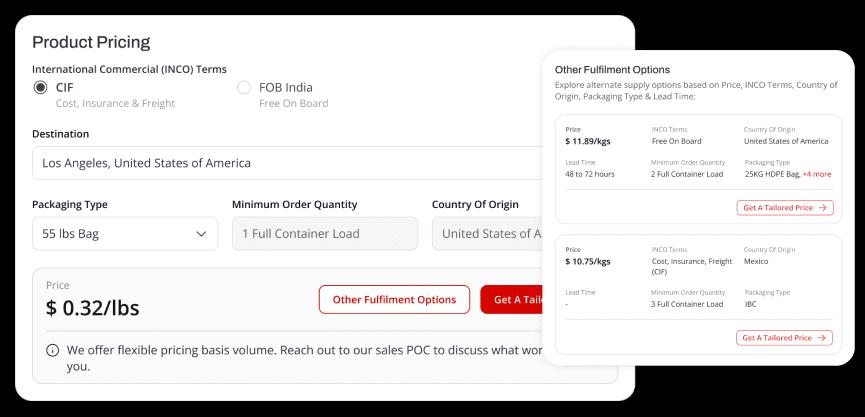
Access live, grade-specific pricing for every chemical, so your teams talks with data, not intuition on Elixir.
Compare fulfilment options across grades, INCO terms, origins, and lead times: all in one platform.

Live, transparent pricing
Real-time quotes across 12,000+ specialty chemicals.

Product Specification
Physical Properties
| Property | Specification |
|---|---|
| Appearance | White or nearly white, crystalline powder or granules. |
| Odor | Odorless. |
| Molecular Weight | 134.09 g/mol. |
| Density / Specific Gravity | 1.601 g/cm³ at 20 °C. |
| Viscosity | 6.5 mPa·s (for a 50% w/v aqueous solution at 25 °C). |
| Ph (Aqueous Solution) | ~2.3 (10 g/L solution at 20 °C). |
| Assay / Purity | 99.0 - 100.5%. |
Chemical Properties
| Property | Specification |
|---|---|
| Pka | pKa1 = 3.40; pKa2 = 5.05 (at 25 °C). |
| Ionic Nature | Organic acid. |
| Incompatibilities | Incompatible with strong oxidizing agents, strong bases, amines, alkali metals, and carbonates. Aqueous solutions can be mildly corrosive to carbon steels. |
| Hazardous Reactions / Decomposition Products | Upon heating to decomposition, it emits carbon monoxide (CO) and carbon dioxide (CO2). Complete decomposition occurs at about 180 °C to yield fumaric acid and maleic anhydride. |
Thermal Properties
| Property | Specification |
|---|---|
| Melting Point | 131-133 °C. |
| Boiling Point | Decomposes at 150 °C. |
| Flash Point | 203 °C / 397.4 °F. |
| Autoignition Temperature | 340 °C / 644 °F. |
| Decomposition Temperature | Begins to decompose at temperatures above 150 °C. |
| Thermal Stability | Stable at temperatures up to 150 °C. |
Dosing Guidelines
A. Dosing by Application
| Application | Recommended / Max Dosage |
|---|---|
| Beverages (Carbonated & Non-carbonated) | 0.1% - 0.7% |
| Hard Candy | 1.0% - 2.0% |
| Gummy Candies / Jellies | 1.0% - 2.5% |
| Chewing Gum | 0.5% - 2.0% |
| Fruit Preparations & Fillings | 0.3% - 1.0% |
| Wine | Used according to good manufacturing practices for acidification. |
| Cosmetics / Skin Care | 0.5% - 3.0% (for exfoliating properties) |
About D-Malic Acid
D-Malic acid - D-(+)-malic acid, the (R)-enantiomer of 2-hydroxybutanedioic acid (CAS 636-61-3, C₄H₆O₅, MW 134.09) - is a white crystalline powder with a clean, sharp sour taste. It is the mirror-image form of the malic acid found naturally in apples, valued both as a food acidulant and as a chiral building block for pharmaceutical and fine-chemical synthesis.
Malic acid comes in three forms: L-malic acid (the natural, apple-derived isomer), DL-malic acid (the racemic mixture used as a common food acidulant), and D-malic acid (this product - the D-(+) enantiomer, used where a single, defined chirality is required). As an acidulant it delivers a stronger, longer-lasting tartness than citric acid, letting formulators cut acid use and mask the bitter note of high-intensity sweeteners.
Elchemy is a trusted D-malic acid supplier, manufacturer partner and distributor, supplying food, pharmaceutical and laboratory grades to buyers across 40+ countries, each with a Certificate of Analysis and samples within 24–48 hours.
D-Malic Acid Suppliers, Manufacturers & Distributors
Elchemy is a trusted D-malic acid supplier, manufacturer partner and distributor, serving food, beverage, pharmaceutical and fine-chemical manufacturers in the USA, UK, UAE and 40+ countries. Every D-malic acid manufacturer in our network is pre-audited for purity and optical (enantiomeric) specification, with a Certificate of Analysis on every batch.
Buy D-Malic Acid in Bulk (White Crystalline Powder)
Elchemy supplies bulk D-malic acid as a white crystalline powder, from laboratory quantities to full commercial volumes, in food, pharmaceutical and technical grades. Tell us your grade, optical purity and volume for a fast quote.
Where to Buy D-Malic Acid
Wondering where to buy D-malic acid in bulk? Elchemy ships worldwide with US domestic stock for faster delivery. Submit the quote form with your grade, purity and volume and we'll confirm availability, price and lead time within 24–48 hours.
D-Malic Acid Price: Bulk Pricing & Price per Kg
As a single-enantiomer specialty acid, the D-malic acid price depends on grade, optical purity, order volume and origin, so Elchemy quotes live rather than publishing a fixed rate.
Buyers benchmark the price per kg for trial lots and the per-drum or per-MT rate for contracts. Request a quote for an exact figure within 24–48 hours.
D-Malic Acid Manufacturing Process
D-malic acid is produced either by enzymatic or microbial conversion of maleic acid, which yields the D-form selectively, or by resolution of racemic DL-malic acid. The crude acid is purified and crystallised to a white crystalline powder meeting the target assay and optical rotation.
Raw materials are maleic or fumaric acid feedstock, water, and a biocatalyst or resolving agent.
Why Choose Elchemy as a Trusted D-Malic Acid Supplier
- Multiple grades - food, pharmaceutical and laboratory D-malic acid from one partner
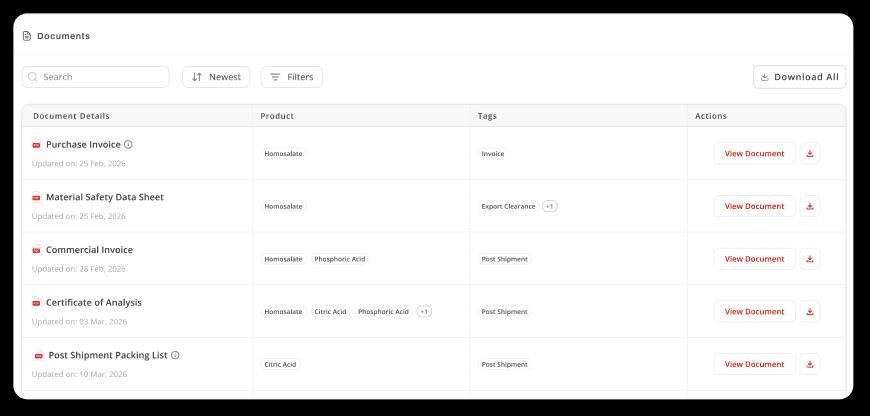
- Verified purity and chirality - COA confirming assay and optical rotation on every batch
- Samples in 24–48 hours - qualify grade and purity before any bulk order
- Tailored options - specific grades and pack sizes via custom manufacturing
Packaging & Logistics
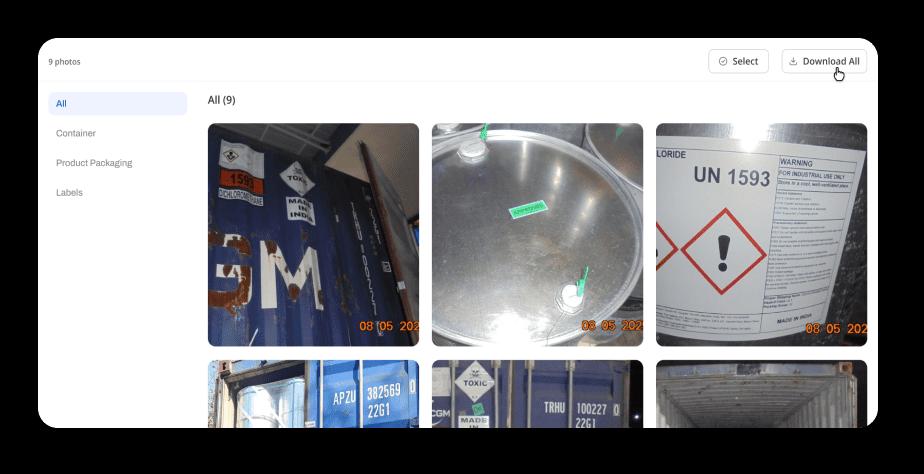
D-malic acid ships in 25 kg fibre drums or lined bags, palletised for container loads. As a hygroscopic acid, store it sealed in a cool, dry place away from moisture and strong bases.
US domestic stock supports faster delivery, on FOB, CIF or DDP terms.
Safety & Handling
D-malic acid is a mild organic acid and a skin and eye irritant (GHS: causes serious eye irritation). Handlers should wear gloves and goggles, avoid dust, and flush with water on contact. It is not flammable under normal conditions. A full GHS-aligned SDS ships with orders.
- Flavor Enhancement: Provides a tart taste that balances sweetness in food and beverages.
- Function: Flavor enhancer, pH regulator, acidulant, preservative, and chelating agent.
- High Purity Standards: Ensures quality and safety in food, pharmaceuticals, and cosmetics.
- Features: Provides a smooth, lingering sour taste, is highly soluble in water, and has a lower melting point compared to other food acids.
- Eco-Friendly Production: Focus on sustainable manufacturing practices.
- Benefits: Enhances and blends flavors, masks the aftertaste of artificial sweeteners, helps to stabilize color, and can increase product yield in some applications like cheese making. It also plays a role in energy metabolism in the body.
- Versatile Ingredient: Used in various applications, including food, pharmaceuticals, and cosmetics.
- pH Regulation: Maintains stability and efficacy in formulations.
About D-Malic Acid
D-Malic acid - D-(+)-malic acid, the (R)-enantiomer of 2-hydroxybutanedioic acid (CAS 636-61-3, C₄H₆O₅, MW 134.09) - is a white crystalline powder with a clean, sharp sour taste. It is the mirror-image form of the malic acid found naturally in apples, valued both as a food acidulant and as a chiral building block for pharmaceutical and fine-chemical synthesis.
Malic acid comes in three forms: L-malic acid (the natural, apple-derived isomer), DL-malic acid (the racemic mixture used as a common food acidulant), and D-malic acid (this product - the D-(+) enantiomer, used where a single, defined chirality is required). As an acidulant it delivers a stronger, longer-lasting tartness than citric acid, letting formulators cut acid use and mask the bitter note of high-intensity sweeteners.
Elchemy is a trusted D-malic acid supplier, manufacturer partner and distributor, supplying food, pharmaceutical and laboratory grades to buyers across 40+ countries, each with a Certificate of Analysis and samples within 24–48 hours.
D-Malic Acid Suppliers, Manufacturers & Distributors
Elchemy is a trusted D-malic acid supplier, manufacturer partner and distributor, serving food, beverage, pharmaceutical and fine-chemical manufacturers in the USA, UK, UAE and 40+ countries. Every D-malic acid manufacturer in our network is pre-audited for purity and optical (enantiomeric) specification, with a Certificate of Analysis on every batch.
Buy D-Malic Acid in Bulk (White Crystalline Powder)
Elchemy supplies bulk D-malic acid as a white crystalline powder, from laboratory quantities to full commercial volumes, in food, pharmaceutical and technical grades. Tell us your grade, optical purity and volume for a fast quote.
Where to Buy D-Malic Acid
Wondering where to buy D-malic acid in bulk? Elchemy ships worldwide with US domestic stock for faster delivery. Submit the quote form with your grade, purity and volume and we'll confirm availability, price and lead time within 24–48 hours.
D-Malic Acid Price: Bulk Pricing & Price per Kg
As a single-enantiomer specialty acid, the D-malic acid price depends on grade, optical purity, order volume and origin, so Elchemy quotes live rather than publishing a fixed rate.
Buyers benchmark the price per kg for trial lots and the per-drum or per-MT rate for contracts. Request a quote for an exact figure within 24–48 hours.
D-Malic Acid Manufacturing Process
D-malic acid is produced either by enzymatic or microbial conversion of maleic acid, which yields the D-form selectively, or by resolution of racemic DL-malic acid. The crude acid is purified and crystallised to a white crystalline powder meeting the target assay and optical rotation.
Raw materials are maleic or fumaric acid feedstock, water, and a biocatalyst or resolving agent.
Why Choose Elchemy as a Trusted D-Malic Acid Supplier
- Multiple grades - food, pharmaceutical and laboratory D-malic acid from one partner
- Verified purity and chirality - COA confirming assay and optical rotation on every batch
- Samples in 24–48 hours - qualify grade and purity before any bulk order
- Tailored options - specific grades and pack sizes via custom manufacturing
Packaging & Logistics
D-malic acid ships in 25 kg fibre drums or lined bags, palletised for container loads. As a hygroscopic acid, store it sealed in a cool, dry place away from moisture and strong bases.
US domestic stock supports faster delivery, on FOB, CIF or DDP terms.
Safety & Handling
D-malic acid is a mild organic acid and a skin and eye irritant (GHS: causes serious eye irritation). Handlers should wear gloves and goggles, avoid dust, and flush with water on contact. It is not flammable under normal conditions. A full GHS-aligned SDS ships with orders.
- Flavor Enhancement: Provides a tart taste that balances sweetness in food and beverages.
- Function: Flavor enhancer, pH regulator, acidulant, preservative, and chelating agent.
- High Purity Standards: Ensures quality and safety in food, pharmaceuticals, and cosmetics.
- Features: Provides a smooth, lingering sour taste, is highly soluble in water, and has a lower melting point compared to other food acids.
- Eco-Friendly Production: Focus on sustainable manufacturing practices.
- Benefits: Enhances and blends flavors, masks the aftertaste of artificial sweeteners, helps to stabilize color, and can increase product yield in some applications like cheese making. It also plays a role in energy metabolism in the body.
- Versatile Ingredient: Used in various applications, including food, pharmaceuticals, and cosmetics.
- pH Regulation: Maintains stability and efficacy in formulations.
Regulatory Compliance
| Region | Max Allowed Level | Notes | Certification Body |
|---|---|---|---|
| Canada | - | Permitted for use as an acidity regulator in beverages. | Health Canada approval |
| India | - | Approved for use in carbonated beverages and as an acidulant in miscellaneous foods under the Food Safety and Standards Act, 2006. | FSSAI |
| Japan | - | Listed as a food additive. | MHLW approval |
| United States | 3.4% | Affirmed as Generally Recognized as Safe (GRAS) by the FDA for use as a flavor enhancer, flavoring agent, and pH control agent in food, except for baby food. | FDA GRAS |
| European Union | - | Approved as a food additive (E 296). | E 296, REACH |
FAQs - D-Malic Acid

Streamline
Your Chemical
Procurement
Get fast responses from real experts