
Acetonitrile
ELRASATM – ACNT

Get Pricing for This Product
Need pricing? Request a quote for this product and we'll get back to you shortly.
 Free Samples Available
Speed Up Your Sample Testing Process
We deliver domestic samples within 24 - 48 hours, helping you evaluate product without delays.
Acetonitrile is a colorless, volatile liquid with a sweet, ether-like odor. It is widely used as a solvent in the pharmaceutical industry, particularly in the synthesis of vitamins and antibiotics.…
CAS Number
75-05-8
HS Code
29.10.10.00
INCI Name
Acetonitrile
Molecular Formula
C₂H₃N
Acetonitrile
ELRASATM – ACNT
Acetonitrile is a colorless, volatile liquid with a sweet, ether-like odor. It is widely used as a solvent in the pharmaceutical industry, particularly in the synthesis of vitamins and antibiotics. Acetonitrile is also employed in the production of perfumes, rubber products, and…
CAS Number
75-05-8
INCI Name
Acetonitrile
HS Code
29.10.10.00
Molecular Formula
C₂H₃N
Get Pricing for This Product
Need pricing? Request a quote for this product and we'll get back to you shortly.
Free Samples AvailableSpeed Up Your Sample Testing Process
We deliver domestic samples within 24 - 48 hours, helping you evaluate product without delays.
 By
By
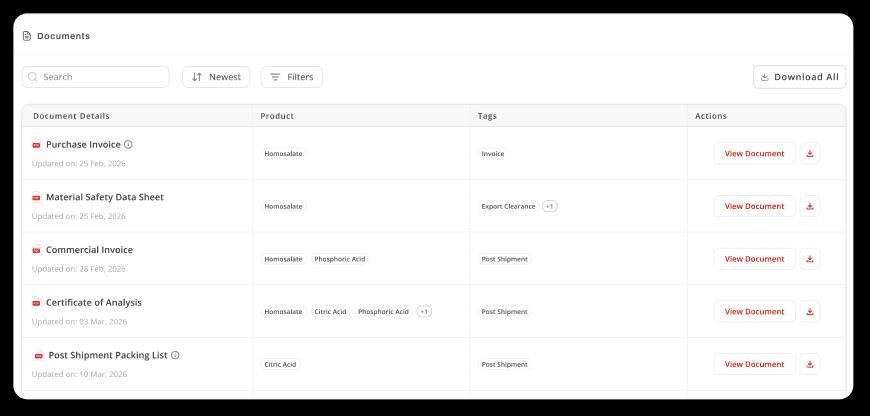
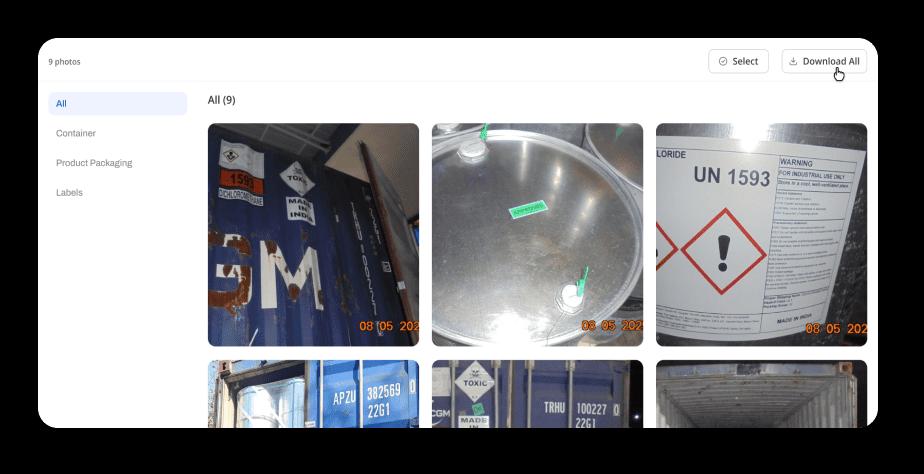
Specialty chemicals, delivered right
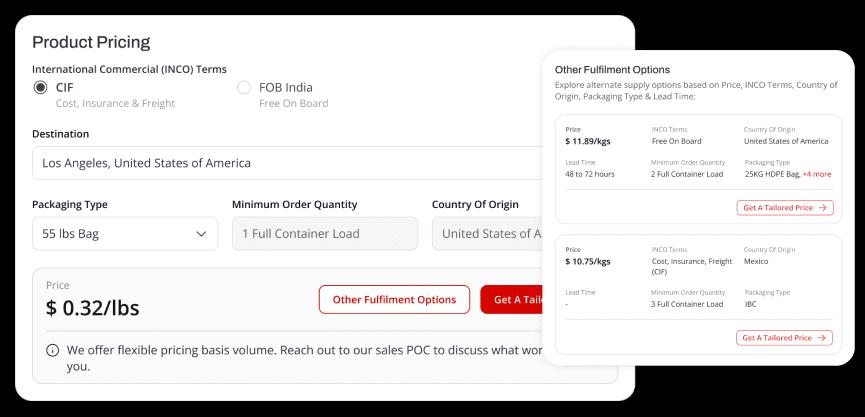
Access live, grade-specific pricing for every chemical, so your teams talks with data, not intuition on Elixir.
Compare fulfilment options across grades, INCO terms, origins, and lead times: all in one platform.

Live, transparent pricing
Real-time quotes across 12,000+ specialty chemicals.

Product Specification
Physical Properties
| Property | Specification |
|---|---|
| Appearance | Colorless liquid |
| Odor | Aromatic odor |
| Molecular Weight (G/Mol) | 41.05 |
| Density Or Specific Gravity | 0.787 at 68 °F |
| Viscosity | 0.35 cP at 20 °C |
| Refractive Index | 1.3588 at 20 °C/D |
Chemical Properties
| Property | Specification |
|---|---|
| Water Solubility | >800 g/L at 25 °C |
Thermal Properties
| Property | Specification |
|---|---|
| Melting Point | -49 °F |
| Boiling Point | 178.9 °F at 760 mmHg |
| Flash Point | 42 °F |
| Autoignition Temperature | 975 °F |
Processing Methods & Reference Formulations
A. Fragrance Spray
Incorporate Acetonitrile in the final solvent blending phase at room temperature to prevent volatility loss. Ensure all fragrance components are pre-dissolved or solubilized.
| Key Ingredients | Indicative Dosage (% w/w) |
|---|---|
| Deionized Water | 71% |
| Fragrance Blend | 1.5% |
| Acetonitrile | 12% |
| Acetone | 5% |
| Propylene Glycol n-Propyl Ether | 10% |
B. Lithium-Ion Battery Electrolyte
Acetonitrile (ACN) can be used at 10–30% as a co-solvent to enhance ionic conductivity due to its high dielectric constant and low viscosity.
| Key Ingredients | Indicative Dosage (% w/w) |
|---|---|
| Lithium bis(trifluoromethanesulfonyl)imide (LiTFSI) | 20% |
| Acetonitrile | 15% |
| 1,1,2,2-Tetrafluoro-1-(trifluoromethoxy)ethane (low-freezing co-solvent) | 60% |
| Performance-enhancing additives (e.g., methyl trifluoroethyl carbonate, vinylene carbonate) | 5% |
C. Metal-Cleaning Solvent
Acetonitrile is highly volatile and should be added during the final blending stage at room temperature (under 25°C) to minimize solvent loss and vapor accumulation. Acetonitrile is hygroscopic, formulate in a moisture-free environment or include a desiccant or drying step to prevent water pickup.
| Key Ingredients | Indicative Dosage (% w/w) |
|---|---|
| Acetonitrile | 92% |
| Acetylacetone | 4% |
| Triethylamine | 4% |
Dosing Guidelines
A. Dosing by Application
| Products | Typical dosage % |
|---|---|
| Electrolyte in Lithium Batteries | 10–30% |
| Perfume/Cosmetic Production | 10-30% |
About Acetonitrile
Acetonitrile, also known as methyl cyanide, is a versatile solvent widely used in various industries. As a key component in the pharmaceutical sector, it facilitates the synthesis of active ingredients and intermediates, making it indispensable for drug manufacturing. Acetonitrile manufacturers and suppliers focus on producing high-purity grades to meet stringent industry standards, ensuring its effectiveness in critical applications. Its role in chromatography, particularly in high-performance liquid chromatography (HPLC), highlights its importance in analytical chemistry, where it aids in the separation and analysis of complex mixtures. The chemical's miscibility with water and organic solvents enhances its utility in diverse applications, from polymer production to electronics cleaning. Acetonitrile suppliers are committed to maintaining quality and consistency, supporting its widespread use across global markets, especially in North America. The demand for acetonitrile continues to grow, driven by its essential role in modern industrial processes.
- High Solvent Power: Acetonitrile's ability to dissolve a wide range of compounds makes it a preferred choice in pharmaceuticals and chemical synthesis.
- Chromatography Excellence: Its low viscosity and high polarity enhance separation efficiency in HPLC applications.
- Versatile Applications: Used in polymer production, electronics cleaning, and as an extraction solvent, showcasing its adaptability.
- High Purity Standards: Ensures performance and reliability in critical applications, meeting industry demands.
- Global Availability: Widely available from acetonitrile manufacturers and suppliers, supporting diverse industrial needs.
About Acetonitrile
Acetonitrile, also known as methyl cyanide, is a versatile solvent widely used in various industries. As a key component in the pharmaceutical sector, it facilitates the synthesis of active ingredients and intermediates, making it indispensable for drug manufacturing. Acetonitrile manufacturers and suppliers focus on producing high-purity grades to meet stringent industry standards, ensuring its effectiveness in critical applications. Its role in chromatography, particularly in high-performance liquid chromatography (HPLC), highlights its importance in analytical chemistry, where it aids in the separation and analysis of complex mixtures. The chemical's miscibility with water and organic solvents enhances its utility in diverse applications, from polymer production to electronics cleaning. Acetonitrile suppliers are committed to maintaining quality and consistency, supporting its widespread use across global markets, especially in North America. The demand for acetonitrile continues to grow, driven by its essential role in modern industrial processes.
- High Solvent Power: Acetonitrile's ability to dissolve a wide range of compounds makes it a preferred choice in pharmaceuticals and chemical synthesis.
- Chromatography Excellence: Its low viscosity and high polarity enhance separation efficiency in HPLC applications.
- Versatile Applications: Used in polymer production, electronics cleaning, and as an extraction solvent, showcasing its adaptability.
- High Purity Standards: Ensures performance and reliability in critical applications, meeting industry demands.
- Global Availability: Widely available from acetonitrile manufacturers and suppliers, supporting diverse industrial needs.
Regulatory Compliance
| Region | Max Allowed Level | Notes | Certification Body |
|---|---|---|---|
| Australia | - | Not permitted as a cosmetic ingredient; aligns with international bans. | - |
| China | - | Not permitted as a cosmetic ingredient. | - |
| Japan | - | Not permitted as a cosmetic ingredient; aligns with international bans. | - |
| Republic of Korea | - | Not permitted as a cosmetic ingredient; aligns with EU/ASEAN bans. | - |
| United States | - | 20 ppm- 8-hour TWA (Recommended Exposure Limit, REL) | - |
| United States | - | 40 ppm- 8-hour TWA (Permissible Exposure Limit, PEL) | - |
| ASEAN | - | Not permitted as a cosmetic ingredient. | - |
| European Union | - | Not allowed as a cosmetic ingredient. Workplace air limits: 10–40 ppm | - |
FAQs - Acetonitrile
Related Products

Related Products

Streamline
Your Chemical
Procurement
Get fast responses from real experts