

At a Glance
- Specify the ethanol before sourcing it: Start with intended use, denatured status, required grade, concentration, and quality criteria.
- Do not treat ethanol categories as interchangeable: Denatured, undenatured, laboratory, food, and process ethanol may have different suitability and documentation requirements.
- Qualify the supplier beyond price: Review the current product specification, SDS, COA requirements, delivery assumptions, and lot-traceability process.
- Confirm facility readiness before award: Delivery format, storage, receiving, and EHS requirements can affect whether a supply route is practical.
- Escalate sensitive applications early: Controlled or specification-sensitive uses require application-specific documentation and internal technical review.
What you’ll learn
This guide helps industrial buyers define their ethanol requirement, evaluate supplier evidence, and prepare a purchase-ready request for quotation.
Introduction
Sourcing ethanol as a generic commodity can create avoidable risk when the application requires a particular denatured status, grade, document set, or delivery model. For industrial and commercial procurement, “where to buy ethanol” is not a consumer, beverage, fuel, or laboratory-only question. It is a supplier-qualification decision that connects the material to the intended process, quality controls, facility readiness, and continuity of supply.
This guide explains how industrial buyers can evaluate ethanol suppliers without assuming all ethanol categories are interchangeable. You will learn how to define the material requirement, assess supplier routes, verify product and quality evidence, and prepare an RFQ suppliers can answer consistently.
Start With the Industrial Ethanol Requirement
“Ethanol” and “ethyl alcohol” refer to the same chemical, but those names do not create a complete purchasing specification. A supplier needs to understand the intended industrial use, material category, quality requirements, required documents, and delivery constraints before it can determine whether its offer fits.
The first decision is not which supplier to contact. It is which ethanol requirement the business needs to satisfy. For industrial applications, the written requirement should connect the material to the process, the quality system, and the receiving site.
| Requirement area | Buyer input required | Stakeholder who should confirm |
| Intended industrial use | Describe the process or application | Technical or process owner |
| Ethanol type | State the required material category | Technical and quality teams |
| Denatured status | Specify denatured, undenatured, or another defined requirement | Technical, quality, and regulatory teams |
| Grade and concentration | Provide written specification and acceptance criteria | Quality and technical teams |
| Documentation | List SDS, COA, technical documents, and traceability requirements | Quality and EHS teams |
| Quantity and delivery | State forecast, destination, and receiving constraints | Procurement and operations |
If the process requirement is unclear, pause before requesting commercial quotes. A supplier can only quote accurately when the buyer has defined what must be supplied and how it will be approved.
Choose the Ethanol Category Before Choosing a Supplier
Ethanol category affects technical suitability, quality evidence, documentation, and commercial routing. Buyers should choose the category against the process requirement rather than relying on a generic proof, concentration, or product label.
Industrial teams should also recognise that an alcohol category that appears similar on a catalogue page may not be appropriate for the intended process. The supplier’s current product specification and the buyer’s written requirements must guide the decision.
Denatured Ethanol
Denatured ethanol contains additives that change the material’s suitability for different end uses. The exact formulation matters, so buyers should identify their process requirements and confirm whether the proposed material is compatible with them.
Do not assume that a denatured ethanol product is suitable simply because its concentration appears correct. The buyer should review the supplier’s current documentation and obtain internal approval for the proposed material.
Undenatured Ethanol
Undenatured ethanol should be specified only when the intended use and approval criteria require it. Buyers should avoid treating “undenatured” as a complete quality description without confirming grade, concentration, impurity criteria, and supporting documents.
The supplier’s role is to respond to the written requirement. The buyer’s role is to ensure the requirement reflects the process, quality system, and applicable internal approvals.
Application-Specific and Higher-Purity Requirements
Food, pharmaceutical, cosmetic, laboratory, extraction, and other sensitive applications may require more detailed acceptance criteria than a general industrial use. In these cases, the purchasing specification should state the applicable quality requirements and the documents needed to verify them.
A grade label alone does not establish fitness for use. The buyer should require the relevant evidence, involve appropriate technical and quality stakeholders, and confirm that the material matches the intended process before purchase.
What Not to Substitute
Ethanol, isopropyl alcohol, methanol, and other alcohols should not be treated as automatic substitutes. Their chemical identity, material specifications, documentation, and process implications may differ.
When an alternate alcohol is being considered, involve the process owner before purchasing. A lower price or similar concentration does not demonstrate that a replacement material will meet the original requirement.
Where Industrial Buyers Source Ethanol
Industrial ethanol can be sourced through several commercial routes. The most suitable route depends on demand pattern, specification maturity, documentation needs, destination, and the level of supplier coordination required.
The right route is not automatically the most familiar one. A fully specified recurring requirement may need a different supply model than a multi-site, documentation-intensive, or changing requirement.
Manufacturer-Direct or Contract Supply
A manufacturer-direct or contract-supply route can fit stable, recurring demand with a fully defined material specification. This model may suit buyers that can manage technical qualification, commercial negotiations, delivery coordination, and supplier performance directly.
The buyer should still verify product specification, quality documentation, delivery feasibility, and continuity assumptions. A direct relationship does not remove the need for supplier qualification.
Chemical Distributors and Sourcing Partners
Distributors and sourcing partners can be useful when buyers need coordination across suppliers, locations, quality documents, or related chemical requirements. This can be especially relevant for fragmented purchasing, multi-site delivery, or an industrial ethanol requirement that needs commercial and logistics review.
Whether a sourcing partner can support a specific ethanol type, destination, or document requirement must be confirmed against the individual enquiry. Buyers should provide a complete requirement rather than relying on a generic request for ethanol pricing.
Laboratory Catalogues and Ecommerce Listings
A catalogue or ecommerce listing can be useful for a small, defined requirement. It may not be sufficient for recurring industrial procurement where document control, delivery coordination, supplier communication, and continuity planning are critical.
Buyers should not use an online product listing as proof of industrial suitability. Evaluate the listed material against the same written specification and supplier-qualification criteria used for every other route.
Use an Industrial Ethanol Buying Brief
An industrial ethanol buying brief converts an internal need into a supplier-evaluation tool. It creates a consistent basis for reviewing offers across product fit, documentation, delivery, and commercial terms.
The buying brief should be completed before price comparison begins. Otherwise, the organisation may compare quotes that refer to different ethanol categories, documentation obligations, or delivery conditions.
| Evaluation criterion | Buyer question | Supplier evidence | Decision status |
| Ethanol type and denatured status | Does the offered material match the written requirement? | Current product specification and written response to the RFQ | Approve only after technical and quality review |
| Grade and concentration | Does the product meet defined acceptance criteria? | Current specification, concentration statement, and test basis | Confirm against the approved internal specification |
| Quality and impurity criteria | Can the supplier address required limits? | Supporting quality documents and applicable test information | Confirm required criteria are addressed |
| Documentation | Are SDS, COA, and other records available as required? | Document process, current SDS, and COA availability | Confirm document package before purchase approval |
| Delivery feasibility | Can the product be delivered to the site under workable conditions? | Delivery, packaging, and receiving assumptions | Confirm with operations, logistics, and EHS |
| Supply continuity | Can supplier communications and forecast needs be addressed? | Forecast, escalation, and supply-communication process | Review before awarding recurring business |
| Commercial assumptions | Is the quote basis clear and comparable? | Quantity, validity, inclusions, exclusions, and delivery basis | Compare only against matching quote scopes |
A practical rejection rule is simple: do not advance a quote that cannot be evaluated against the buying brief. Missing evidence is not a minor omission. It is an unresolved sourcing risk.
Verify Documents, Safety Information, and Quality Evidence
Document review should happen before final supplier selection. The buyer should request the current SDS, product specification or technical data sheet, and the agreed COA process where it is required by the internal quality system.
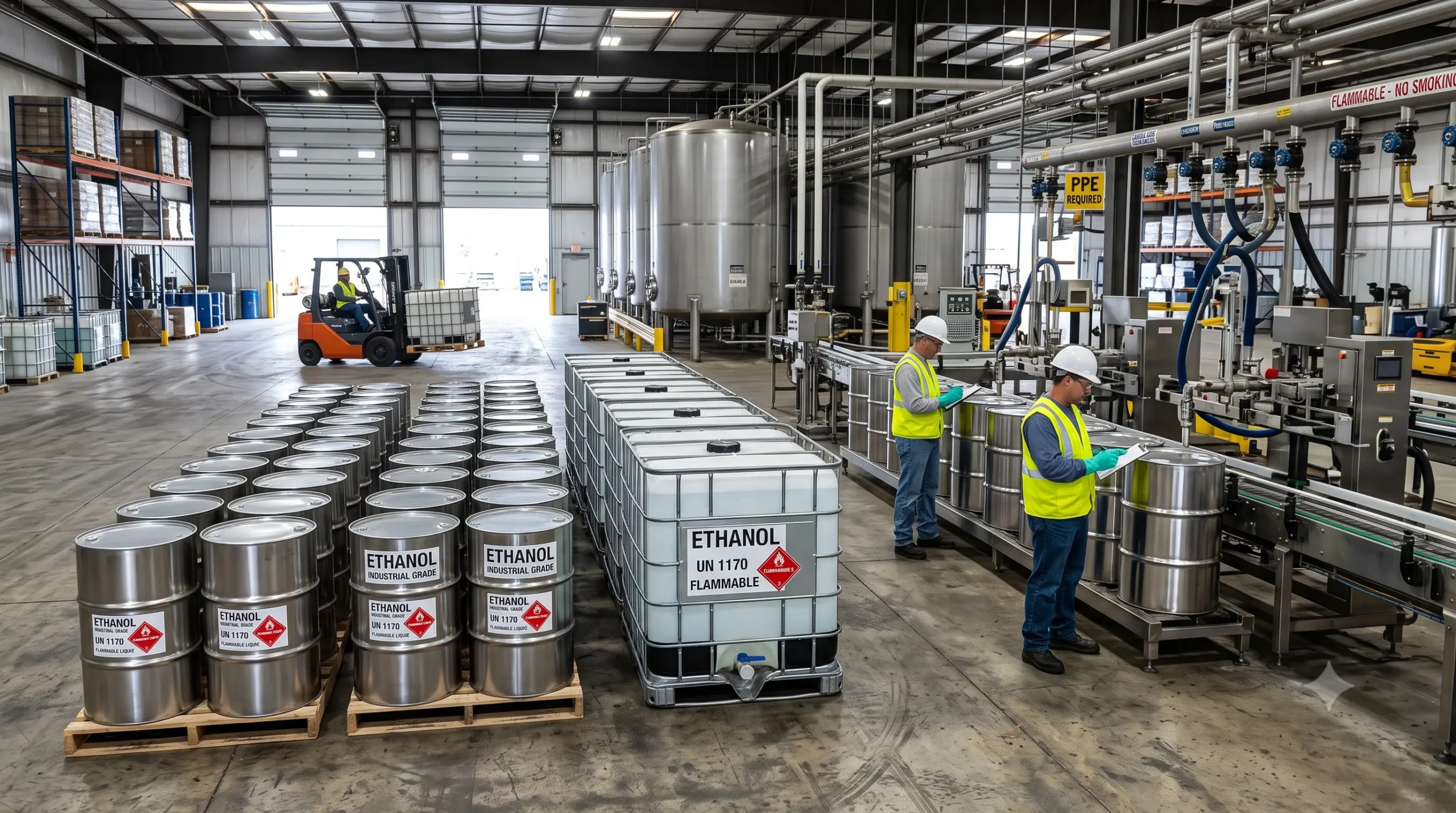
Ethanol procurement should also be aligned with the facility’s current EHS and flammable-liquid controls. OSHA’s Flammable Liquids Standard provides workplace requirements for flammable liquids, while the product-specific SDS remains the primary document for the material being purchased.
The document review should answer these questions:
- Does the product identifier match the RFQ and intended material?
- Does the current specification address grade, concentration, and applicable quality criteria?
- Is an SDS available for the proposed material?
- Is a COA required for the application, and when must it be issued?
- Can lot or batch records support the buyer’s traceability requirements?
- Are supplier change-notification expectations understood?
OSHA’s Hazard Communication Standard establishes the role of labels, safety data sheets, and workplace hazard communication. These documents inform procurement, but they do not replace application-specific technical approval.
Confirm Delivery and Receiving Fit
A supplier can offer the correct ethanol specification but still be unsuitable if the delivery arrangement does not fit the receiving site. Procurement should involve operations, warehousing, EHS, and quality teams before finalising an order.
The delivery review should be practical. It should establish whether the material can be received, documented, stored, and released for use under the facility’s own procedures.
Packaging and Site Capability
The buyer should tell suppliers about destination requirements, receiving hours, site-access restrictions, unloading constraints, and any documentation that must accompany delivery. Suppliers should state their assumptions clearly so the buyer can identify gaps before purchase.
Do not assume that one packaging or delivery format fits every site. Receiving and storage requirements can vary across facilities, even within the same organisation.
Forecast and Supply Continuity
Supply continuity begins with communication. Buyers should discuss demand forecast, material changes, supplier escalation contacts, and the process for raising potential supply issues before the material becomes production-critical.
A second source can be helpful for some requirements, but it should be evaluated against the same buying brief. A second supplier that cannot meet the same product, document, and delivery requirements may not provide useful resilience.
Quote Assumptions
A complete quotation should identify its basis. Buyers should understand the quoted quantity, delivery destination, validity period, included documentation, and any exclusions or conditions that could affect the commercial decision.
This is essential for fair comparison. Two ethanol quotes should not be treated as comparable until the material, delivery, and documentation assumptions have been normalised.
Prepare an Ethanol RFQ Suppliers Can Answer
A purchase-ready RFQ gives suppliers the information needed to assess fit. It also helps the buyer avoid fragmented follow-up questions that delay qualification and make quotes difficult to compare.
The RFQ should describe the requirement clearly without disclosing unnecessary proprietary process details. It should define what the supplier needs to know to quote a suitable material and delivery arrangement.
- State the ethanol type, intended industrial use, and denatured-status requirement.
- Define grade, concentration, applicable specification, and impurity criteria.
- List required SDS, COA, traceability, and quality documentation.
- Provide quantity, forecast, destination, and delivery schedule.
- State packaging, receiving, and site-access constraints.
- Ask suppliers to identify commercial, technical, documentation, and delivery assumptions.
| RFQ field | Information to provide |
| Ethanol type / CAS number | State ethanol or ethyl alcohol, CAS 64-17-5, and the required material category |
| Denatured status or formula requirement | State whether denatured or undenatured ethanol is required; identify the approved denaturant formula where applicable |
| Grade and concentration | Specify the approved grade, concentration, and relevant acceptance criteria |
| Intended industrial use | Describe the process or application without disclosing unnecessary proprietary information |
| Quantity and forecast | State the required volume, unit of measure, purchasing frequency, and expected forecast |
| Delivery location | Provide the facility address, receiving hours, site-access restrictions, and unloading requirements |
| Required documentation | List the SDS, product specification, COA, traceability records, and other required documents |
| Packaging and receiving constraints | State the approved packaging, storage, handling, and receiving conditions |
Choose a Sourcing Route Based on Fit
No ethanol category or supplier route is automatically the best choice. The appropriate decision depends on the written material requirement, operational constraints, documentation needs, and the buyer’s ability to manage supplier qualification.
Use this conditional framework:
- Choose a manufacturer-direct route when demand is stable, recurring, and supported by a fully defined specification.
- Choose a distributor when the requirement is defined but needs delivery coordination or broader chemical portfolio access.
- Choose a sourcing-partner discussion when the request is multi-site, fragmented, documentation-intensive, or commercially complex.
- Pause commercial sourcing when the process requirement, EHS controls, quality criteria, or site readiness are unresolved.
For a broader supplier-selection framework, use a supplier qualification framework for industrial chemicals [Where to Buy Acid: How to Choose an Industrial Chemical Supplier] once that guide is published.
Common Industrial Ethanol Sourcing Mistakes
A common mistake is selecting ethanol only by proof or concentration. Those figures may not address denatured status, grade, impurities, documentation, or application suitability.
Another mistake is treating denatured and undenatured ethanol as interchangeable. The material category should be defined by the process requirement, not selected after a supplier quote arrives.
Buyers should also avoid comparing quotes with inconsistent quantities, document sets, or delivery assumptions. A lower price may reflect a different material or a narrower commercial scope rather than a better sourcing decision.
Finally, do not exclude EHS, quality, technical, or operations stakeholders. Their input is necessary to confirm that the ethanol can be approved, received, and used within the organisation’s current controls.
Related Industrial Alcohol Sourcing Guides
Industrial buyers may need to evaluate several alcohol categories across a wider sourcing programme. Use this future link once it is published:
compare industrial alcohol sourcing requirements [Where to Buy Methanol: Industrial Procurement Guide]
Frequently Asked Questions
1. What should I include in an industrial ethanol RFQ?
Include the intended industrial use, ethanol type, denatured-status requirement, grade, concentration, quality criteria, required documents, quantity, delivery location, and receiving constraints. This gives the supplier a clear basis for assessing material and delivery fit.
2. How do denatured and undenatured ethanol differ for procurement?
They are different material categories and should not be treated as interchangeable. The buyer should define the required category against the process and confirm the proposed material using current supplier documentation and internal technical review.
3. Which documents should I request from an ethanol supplier?
Request the current SDS, product specification or technical data sheet, and an agreed COA process where required. The exact document set should reflect the intended use and the buyer’s quality system.
4. Can I use a laboratory-grade ethanol listing for industrial supply?
A laboratory listing may suit a defined requirement, but it may not meet recurring industrial needs for delivery coordination, documentation control, quantity planning, or supply continuity. Evaluate it against the same buying brief used for every supply route.
5. When should I involve EHS and quality teams?
Involve them before issuing an RFQ when the process requirement, grade, document requirements, facility controls, or receiving conditions are not fully defined. Their review helps ensure procurement is sourcing a material the organisation can approve and use.
6. Should I compare ethanol supplier quotes by price alone?
No. Compare quotations against the same ethanol category, denatured status, grade, concentration, document package, delivery assumptions, and commercial scope. A lower price may represent a different material or a narrower supply commitment.
Source Industrial Ethanol With a Complete Requirement
A sound ethanol-sourcing decision follows a clear sequence: define the material, verify supplier evidence, confirm delivery fit, compare normalised quotes, and select the sourcing route that fits. This keeps the decision focused on process and supply requirements rather than a generic product label or unit price.
If you have a defined industrial requirement, discuss your industrial ethanol sourcing requirements with Elchemy. Include the ethanol type, denatured-status requirement, grade or concentration, quantity, destination, and documentation needs so the team can assess whether there is a suitable next step.