

At a Glance
- regular spirulina is the whole dried algae, blue spirulina is just the phycocyanin pigment extracted from it
- green spirulina has the full nutritional profile including protein, B vitamins, iron, chlorophyll, and phycocyanin
- blue spirulina is essentially one ingredient (phycocyanin) in concentrated form, with none of the broader nutrients
- blue spirulina has almost no taste, regular spirulina tastes grassy, earthy, and a bit like the sea
- blue spirulina’s color is stable across pH 5 to 7 but fades under high heat, making it tricky for baking
- butterfly pea flower is the most practical blue spirulina substitute, FDA approved in 2021 as a food colorant, heat-stable, and widely available
- the global phycocyanin market was valued at around $194 million in 2025 and is growing fast driven by clean-label food trends
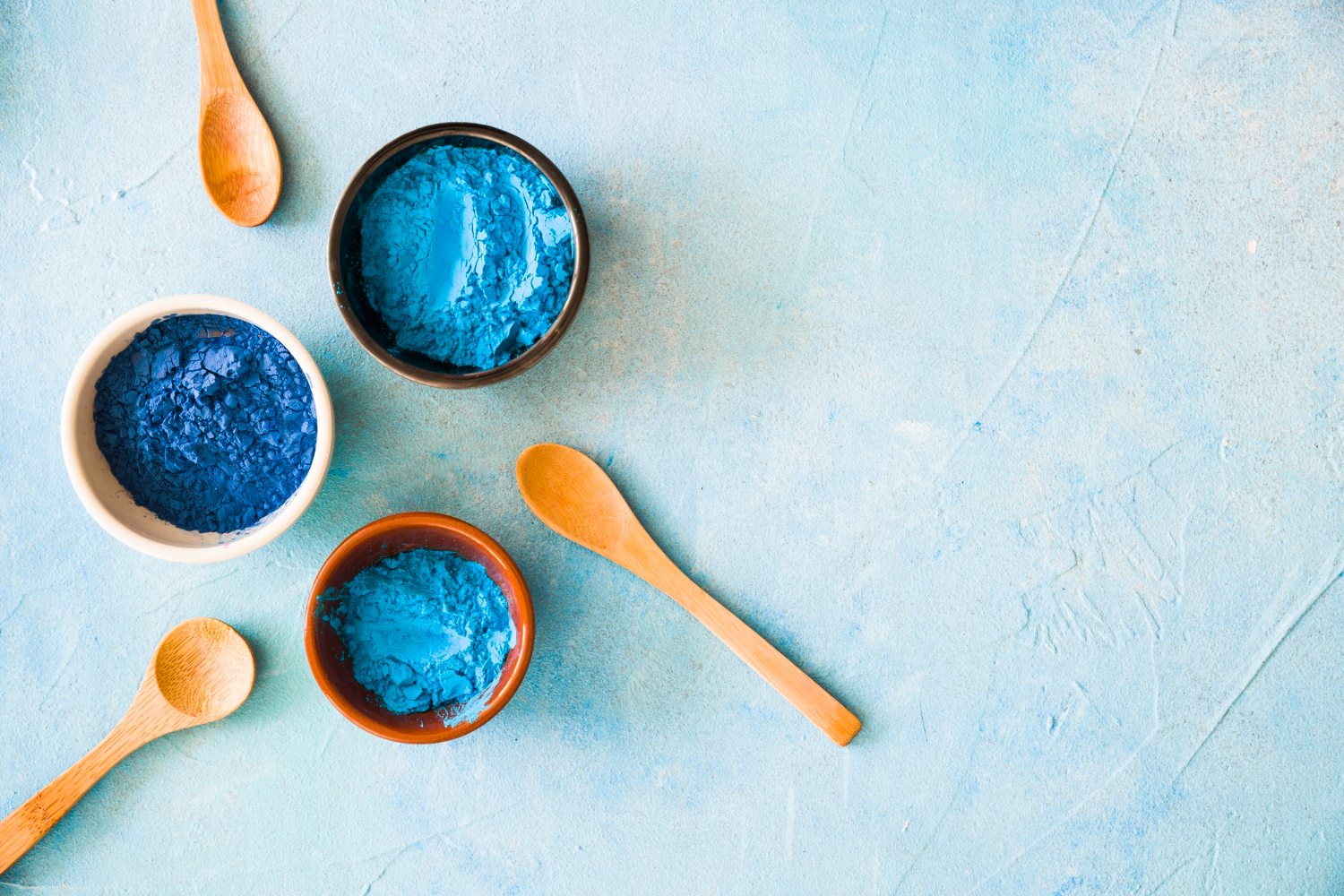
If you’ve been on health-focused social media in the last few years you’ve definitely seen the electric blue smoothie bowls and lattes. That’s blue spirulina. Or more accurately, that’s phycocyanin, a pigment extracted from regular spirulina and sold as its own product. The two sound related and they are, but they serve different purposes and have genuinely different nutritional profiles.
The confusion mostly happens because both are sold as “spirulina” and both are intensely blue-associated. But one is a whole food supplement and one is essentially a single extracted compound used more for color than nutrition. Understanding the spirulina vs blue spirulina difference helps you buy the right thing for what you’re actually trying to do.
What Regular (Green) Spirulina Is

Spirulina is a cyanobacterium, technically a bacterium not an algae though it’s commonly called blue-green algae. It grows in warm, alkaline lakes and has been consumed as food since at least the Aztec civilization. NASA evaluated it as a potential food source for long-duration space missions because of how much nutrition it packs per gram.
The dried whole algae is what most people mean when they say “spirulina.” It gets its blue-green color from two pigments: chlorophyll (green) and phycocyanin (blue). Both are present together, which is why the powder looks greenish-blue rather than purely one color.
Nutritionally, it’s genuinely impressive:
- Protein content of 60 to 70% by dry weight, with all nine essential amino acids
- B vitamins including B1, B2, B3, and B12
- Iron and calcium
- Gamma-linolenic acid (GLA), an anti-inflammatory fatty acid
- Beta-carotene and other antioxidants
- Zeaxanthin, which supports eye health
- Phycocyanin, the blue pigment with its own antioxidant and anti-inflammatory activity
The taste is the main barrier for most people. Strong, earthy, grassy, and slightly oceanic. Some people describe it as fishy. It works well blended into smoothies with strong fruits like pineapple or mango that can overpower it, but on its own or in water it’s an acquired taste.
What Blue Spirulina Actually Is
Blue spirulina is not its own organism. It’s phycocyanin, a single compound extracted from regular spirulina through a water-based extraction process that ruptures the algae cells and isolates the blue pigment-protein complex.
The extraction removes everything else: chlorophyll, the proteins, the vitamins, the fatty acids, essentially the whole nutritional base of the algae. What you’re left with is concentrated phycocyanin in powder form. This is why blue spirulina has an almost neutral taste compared to regular spirulina. Without the chlorophyll and other compounds, there’s nothing making it taste like the sea.
Phycocyanin itself is genuinely bioactive. It’s classified as a phycobiliprotein and makes up over 20% of spirulina’s total weight. As a compound it has documented antioxidant, anti-inflammatory, and potentially neuroprotective properties. A 2024 animal study found phycocyanin may reduce oxidative stress and muscle damage from strenuous exercise. Animal and in vitro studies show cardiovascular and brain-protective effects though human clinical data is more limited than the marketing around it implies.
Spirulina vs Blue Spirulina: The Direct Comparison
| Feature | Regular (Green) Spirulina | Blue Spirulina |
| What it is | Whole dried algae | Extracted phycocyanin pigment |
| Color | Blue-green | Vivid electric blue |
| Protein | High (60-70% by weight) | Minimal (most removed in extraction) |
| B vitamins | B1, B2, B3, B12 | Very low, not a meaningful source |
| Iron | Yes | Minimal |
| Chlorophyll | Yes | No, removed in extraction |
| Phycocyanin | Present but shares space with other nutrients | Concentrated, main active compound |
| Taste | Strong, grassy, earthy, oceanic | Mild, almost neutral |
| Primary use | Nutritional supplement | Natural food colorant, concentrated antioxidant |
| Heat stability | Moderate | Degrades above moderate heat |
| Cost | Lower | Significantly higher (more processing) |
| Best for | Whole food nutrition, protein, general supplementation | Vibrant natural blue color, concentrated antioxidant boost |
The Health Benefits Picture
For pure nutrition, regular spirulina wins easily. You’re getting protein, vitamins, minerals, fatty acids, antioxidants including phycocyanin, and chlorophyll all at once. It’s a whole food in powder form. The research base on spirulina as a complete nutritional supplement is much more developed than on isolated phycocyanin.
EFSA and similar regulatory bodies have reviewed spirulina’s health claims. Well-supported benefits of regular spirulina include antioxidant activity, anti-inflammatory effects through phycocyanin and other compounds, cholesterol reduction in some studies, potential reduction in allergy symptoms, and support for immune function.
For targeted phycocyanin specifically, the research is growing but still leans heavily on animal and in vitro data. What is established is that phycocyanin is a potent antioxidant with anti-inflammatory properties and potentially protective effects on neurons and cardiovascular tissue. The global phycocyanin market being projected at around $194 to $245 million by 2025-2027 reflects how much interest there is from both the food industry (as a natural colorant) and nutraceutical industry (as a specific bioactive).
If you want the full nutritional package from algae, regular spirulina is the choice. If you want a concentrated dose of phycocyanin specifically, or if you’re using it primarily for color, blue spirulina makes more sense.
Using Each One: Practical Reality
Regular spirulina works well in:
- Green smoothies where other ingredients mask the taste (banana, pineapple, berries)
- Energy balls and bliss balls
- Capsule or tablet form if you don’t want to taste it at all
- Savory dishes where the earthy note works (some people use it in guacamole or dressings)
Blue spirulina works well in:
- Smoothie bowls where the color is part of the visual
- Lattes and drinks at room temperature or cold
- Yogurt, oatmeal, chia pudding
- Ice cream and frozen desserts
- Any recipe where you want a vivid blue color without flavor impact
The key limitation of blue spirulina is heat. Phycocyanin starts to degrade at relatively moderate temperatures and will fade significantly in baking applications. That beautiful blue turns gray or dull green in the oven. For cold applications it’s fine, for anything that involves cooking, it needs to be added after the heat step or not used at all.
Blue Spirulina Substitute: What to Use When You Can’t Find It
Blue is one of the rarest colors in nature for food, which is why phycocyanin from spirulina is so commercially interesting. But if you need a blue spirulina substitute, your options are limited and each has trade-offs.
Butterfly pea flower (Clitoria ternatea)
This is by far the most practical substitute and increasingly the more common choice in food manufacturing. The FDA approved butterfly pea flower extract as a food colorant in 2021, and in May 2025 it was included in a new set of FDA-approved natural food color agents aimed at replacing synthetic dyes. It’s a plant-derived anthocyanin that gives a vivid blue to blue-violet color.
Main differences from blue spirulina:
- pH-sensitive: butterfly pea flower is blue at neutral to mildly acidic pH, shifts to purple and eventually pink/magenta as acidity increases. This makes it genuinely useful for color-changing cocktails and lemonades (add citrus and watch it turn purple), but less predictable in formulations with varying acidity
- Heat stability: actually more heat-stable than blue spirulina, making it better for baked goods
- Taste: very mild, slightly grassy, neutral enough to use in most applications without flavor impact
- Cost: generally lower than blue spirulina, easier to source
Red cabbage with baking soda
A DIY option. Red cabbage anthocyanins are normally red-purple in acidic conditions and shift to blue in alkaline conditions. Add baking soda to a red cabbage extract and you can get a reasonable blue. It’s unstable and only practical for home use, but it works in a pinch for frosting or drinks.
Galdieria blue
A newer option. In May 2025 the FDA approved galdieria blue (from the red microalga Galdieria sulphuraria) as a food color. It produces a milky cornflower blue and is approved for use in frostings, gums, cereal, ice cream, and smoothies. Still emerging commercially but worth knowing as another option.
| Substitute | Color | Heat stable | pH stable | Taste | Availability |
| Butterfly pea flower | Blue to purple (pH dependent) | Better than spirulina | No, changes with pH | Mild | Widely available |
| Red cabbage + baking soda | Blue (alkaline only) | Poor | Very poor | Strong | DIY only |
| Galdieria blue | Milky cornflower blue | Unknown, still new | Better data needed | Neutral | Limited commercial |
For most home cooks and food businesses looking for a blue spirulina substitute, butterfly pea flower powder is the answer. It’s cheaper, more heat-stable, FDA-approved, and widely available in powder and extract form online and in many health food stores.
Quality and Sourcing Considerations
Because spirulina grows in water it can accumulate heavy metals and other contaminants if the cultivation conditions aren’t controlled. This applies to both regular spirulina and blue spirulina since the latter is extracted from the same organism. Things to check when buying either:
- Third-party testing for heavy metals (lead, mercury, arsenic, cadmium)
- Testing for microcystin (a toxin from other cyanobacteria that can contaminate spirulina)
- Clear disclosure of cultivation source (China, India, Hawaii, and controlled European facilities are common sources with different quality reputations)
- For blue spirulina specifically, the phycocyanin purity grade matters for color strength
For manufacturers and ingredient buyers sourcing phycocyanin or spirulina powder at scale for food, nutraceutical, or cosmetic applications, quality documentation including purity grade, heavy metal certificates, and cultivation method disclosure are all standard requirements. Elchemy connects buyers with verified suppliers of both spirulina powder and phycocyanin extract across different purity grades, with full specification and compliance documentation for each intended application.
Bottom Line
The spirulina vs blue spirulina question comes down to what you’re trying to accomplish. If it’s nutrition, regular spirulina gives you a whole food profile with protein, vitamins, minerals, and phycocyanin all together. If it’s color or a concentrated phycocyanin dose without the taste of the whole algae, blue spirulina is the practical choice, just don’t put it in anything that goes above moderate heat.
And if you need a blue spirulina substitute, butterfly pea flower powder does the job in most applications, is more heat-stable, pH-reactive in fun ways, and comes at a lower cost. It’s now FDA-approved, increasingly mainstream, and for most use cases just as effective at getting that vivid blue color into food.