

Ask most people what salt is used for, and you’ll get a one-word answer: food. Fair assumption, when the salt shaker is the most visible form of sodium chloride in any household.
But the commercial reality is almost the exact opposite.
Less than 5% of the world’s sodium chloride goes to food. The remaining 95% powers some of the largest industrial processes on the planet, from chemical manufacturing to highway maintenance to oil drilling.
If you’ve been thinking of salt as a kitchen ingredient, this guide is the bigger picture.
Global Sodium Chloride Use by Industry
Here’s the rough breakdown of where the world’s industrial sodium chloride actually goes:
| Industry | Approximate Share | Primary Use |
| Chlor-alkali production | ~50% | Caustic soda and chlorine manufacturing |
| De-icing (road salt) | ~15-20% | Winter road and pavement maintenance |
| Chemical synthesis | ~10-15% | Sodium-based and chloride-based chemicals |
| Food processing | ~5% | Table salt, food preservation, seasoning |
| Water treatment | ~3-5% | Water softening, hypochlorite production |
| Other industrial uses | ~10-15% | Oil & gas, textiles, leather, animal feed, pharma |
Figures are approximate global averages; regional splits vary significantly.
What Sodium Chloride Actually Is, Industrially
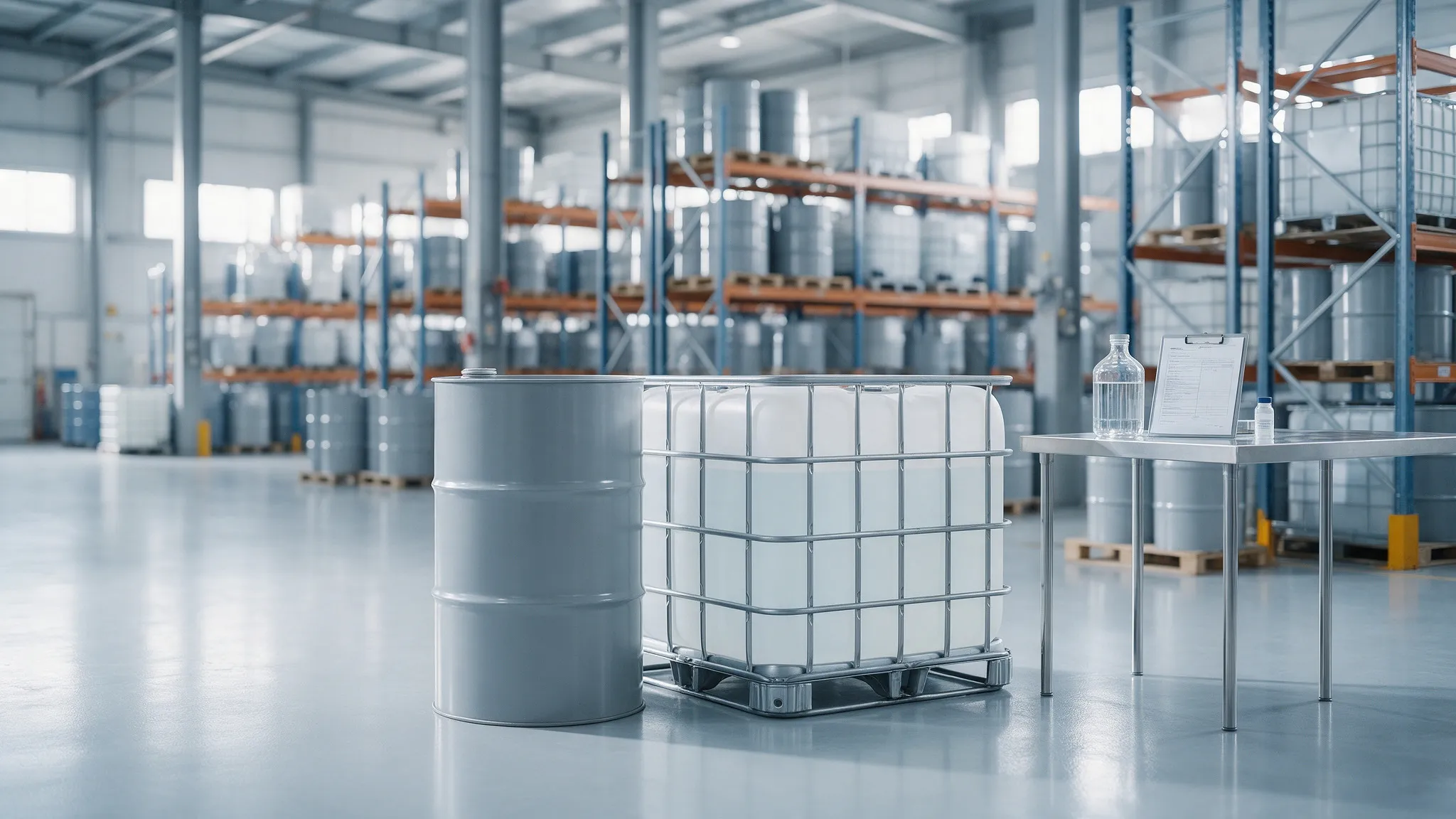
Whether mined, evaporated or purified, sodium chloride is the chemical compound NaCl. However, in the business world, the word “salt” does not necessarily refer to a single product. It is available in several different industrial forms:
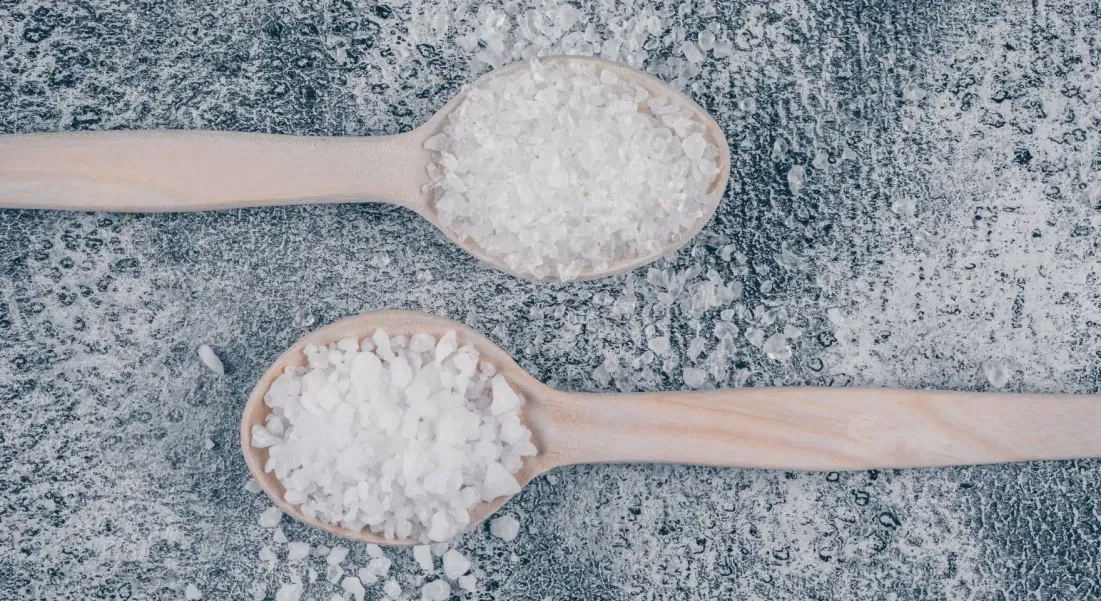
- Rock salt: Coarse, less pure, mined from underground deposits of halite; used for de-icing
- Solar salt: Salt obtained by evaporation from sea water in solar ponds with medium purity level; widely used in chemical applications
- Vacuum salt: Vacuum evaporation of purified brine, high purity, for pharma and food
- Brine: The form of sodium chloride used directly in chlor-alkali and oilfield operations
Different forms are used in different industries, and grade specifications are very wide ranging. Two companies, a chlor-alkali plant and a pharmaceutical manufacturer, may purchase “sodium chloride,” but they are purchasing two very different products.
1. Chlor-Alkali: The Single Largest Industrial Application
The chlor-alkali process is the world’s largest industrial salt consumer, using about 50% of the salt.
How it works:
- Specialized cells are used to electrolyse saturated sodium chloride brine
- Dissolved NaCl is broken down into its elements by the electric current
- Products: chlorine gas at one electrode, sodium hydroxide solution at the other
- Hydrogen gas is a beneficial by-product
Downstream products are:
- PVC plastics
- Paper bleaching chemicals
- Water treatment chemicals
- Pharmaceuticals
- Soaps, detergents and dozens of other industrial intermediates
That is why chemical companies construct giant plants just next to salt deposits and brine wells.
2. De-Icing: Winter’s Largest Salt Consumer
If you live in a place where snow and ice occur, you have certainly seen this application of sodium chloride salt, although you may not have noticed it.
It is a simple matter of chemistry: sodium chloride reduces the freezing point of water. When applied to icy pavement it forms a brine solution that remains fluid at temperatures at which water would freeze. Result: easier ice clearance and prevention of new ice bonding.
Scale of use:
- Tens of thousands of tons can be consumed by a typical North American city in one severe winter
- The buyers are the highway departments, municipalities and private contractors
- Rock salt is shipped straight from the salt mines to the city storage depots
The downside is that road salt is a corrosion promoter for vehicles, infrastructure and bridges, and it also has an impact on soil and freshwater systems. Some blends with magnesium chloride and calcium chloride help to solve some of the concerns, but rock salt remains king when it comes to cost performance.
3. Treatment and Softening of Water
NaCl plays a key role in both household and municipal water treatment processes.
Water softeners in homes employ the use of sodium chloride salt to regenerate ion exchange resins that remove calcium and magnesium from hard water, thereby helping to preserve plumbing and appliances.
Sodium chloride is used by municipal water systems in:
- Making sodium hypochlorite (liquid bleach) for water disinfection
- The chlorine used to treat drinking water (chlor-alkali chlorine)
- Brine systems for large industrial water softeners
One use of sodium chloride that consumers don’t often consider is the volume used by millions of households and thousands of municipal systems.
4. Oil and Gas Operations
Sodium chloride is widely used in the oil and gas industry for drilling and well operations:
- Drilling muds: Sodium chloride brines control density, manage formation pressure, and prevent shale formations collapsing into the wellbore
- Well-completion fluids: Help stabilize the well after drilling, before production
- Enhanced oil recovery: Brine compositions injected into existing oil wells to remove residual oil
The grade requirements apply here to the chloride content and the limits of impurities that may affect downstream chemistry.
5. Animal Feed and Agriculture
Sodium chloride is required in livestock feeds and is a consistent commercial purchaser:
- Grass blocks for cattle to lick on
- Feeds and prepared mixes with minerals
- Salts with trace minerals (sodium chloride with other minerals that are essential to the body)
In agriculture in general, sodium chloride is found in:
- Specific soil amendment (controlled use of salts for sugarbeet crops)
- Greenhouse hydroponics with mineral balance as an issue
- Salt for livestock: poultry, swine and ruminant operations
6. Textiles, Leather, and Dyeing
The consumers do not see the connection, but there is a high demand for sodium chloride in textile dyeing.
In textile dyeing: Salt is used as an electrolyte, which helps in fixing the dyes to the fibers of the cloth and also helps in uniform colour. Large quantities are used especially in cotton dyeing, as cellulose fibers are not readily dyed without the ionic support provided by the salt bath.
Leather tanning: Sodium chloride is added in the curing process to salt hides and to prevent them from being decomposed by bacteria before they arrive at the tannery. A classical method of preservation which was scaled up to industrial operations and is still used today.
7. Pharmaceutical and Medical Use
Pharmaceutical-grade sodium chloride is used to make:
- Saline intravenous (IV) solutions, contact lens solutions
- Dialysis solutions
- An excipient for drug formulation
Grade specifications are quite strict, and USP and trace metal limits are much higher than those required for food or industrial applications. This is a smaller volume market segment which is of higher value.
8. Chemical Synthesis Other Than Chlor-Alkali
The sodium chloride enters into a long chemistry chain downstream:
- Sodium carbonate (soda ash) by Solvay process
- Sodium sulfate (for detergents and pulp processing)
- Hydrochloric acid (HCl), often a chlor-alkali by-product
- A wide range of industrial intermediates in pulp and paper, detergents, glass and rubber
Even the soap making process employs salt to precipitate the completed soap from the saponification reaction (which is known as “salting out”).
What This Means for Procurement
The bottom line if you are buying sodium chloride for industrial purposes: you are purchasing into a global marketplace where food-grade salt is a small part.
The real drivers of commercial procurement:
- Rock vs solar vs vacuum vs brine (grade specification)
- Particle size: fine, granular or coarse
- Food, industrial, pharmaceutical purity level
- Packaging format (bagged, FIBC, bulk)
- Total landed cost including freight
Most of the world’s sodium chloride is used in chlor-alkali plants, de-icing programs, water treatment systems and chemical synthesis lines for which food-grade specifications are not required. They are purchasing on a regular industrial specification, reliable supply and competitive landed price.
Wrapping Up
Most of modern industrial life occurs because of the sodium chloride which operates quietly. The salt on your dinner table is real, but it is the least obvious manifestation of a chemistry that drives chemical manufacturing, infrastructure maintenance, water treatment, energy production and a host of other chemical-dependent industries.
The next time you drive across a salted highway in winter, swim in a pool treated with chlorine, or unwrap a leather product, there is a good chance industrial sodium chloride was in that chain of supply.
Aside from the kitchen, there are many other uses of sodium chloride, and the first step in understanding why this is the case is understanding the scale.