

At a Glance
• Advanced chemical logistics integrates AI, IoT, and automation to transform traditional supply chain operations
• Sustainability initiatives drive carbon-neutral transportation and circular economy principles in chemical distribution
• Predictive safety technologies reduce hazmat incidents while improving regulatory compliance and operational efficiency
• Multi-modal network optimization and last-mile innovations enable cost reduction and service enhancement
• Convergence of technology, sustainability, and safety creates unprecedented opportunities for competitive advantage
The Innovation Imperative: Why Chemical Logistics Is at a Crossroads
The chemical logistics industry stands at an inflection point where traditional approaches no longer suffice to meet evolving customer expectations, regulatory requirements, and competitive pressures. Advanced chemical logistics represents not merely an incremental improvement over conventional methods, but a fundamental reimagining of how chemical products move through supply chains—from manufacturer to end user—with unprecedented precision, safety, and efficiency.
This transformation stems from converging forces: digital technology maturation, sustainability imperatives, safety enhancement demands, and economic pressures that collectively require new approaches to chemical distribution. Companies that recognize this crossroads as an opportunity rather than a threat position themselves to lead in an industry undergoing its most significant evolution since the containerization revolution.
The future belongs to organizations that embrace innovation across multiple dimensions simultaneously—technology adoption, sustainability integration, safety advancement, and operational optimization—while building capabilities that support continuous adaptation as market conditions and stakeholder expectations evolve.

Dimension 1 – Technology: Digital Transformation of Advanced Chemical Logistics
Digital transformation fundamentally alters how chemical logistics operations are planned, executed, and optimized, creating capabilities that were impossible with traditional approaches.
Innovation Stream: Automation and AI Integration
Artificial intelligence and automation technologies enable advanced chemical logistics to achieve new levels of precision and efficiency while reducing human error and operational costs across complex supply networks.
AI applications transforming chemical logistics include:
| Technology Application | Operational Impact | Value Creation |
| Predictive Analytics | Demand forecasting and capacity optimization | 20-30% reduction in inventory carrying costs |
| Route Optimization | Dynamic routing based on real-time conditions | 15-25% reduction in transportation costs |
| Automated Warehousing | Robotic handling and storage systems | 40-50% improvement in operational efficiency |
| Intelligent Scheduling | Optimized loading, unloading, and delivery timing | 30% reduction in dwell time and delays |
Automation extends beyond warehouse robotics to encompass autonomous transportation systems, automated documentation processing, and self-optimizing supply chain networks that continuously learn and improve performance based on historical patterns and real-time feedback.
The integration of AI with traditional logistics management systems creates intelligent platforms that anticipate disruptions, recommend optimal responses, and execute corrective actions autonomously—reducing the need for constant human intervention while improving decision quality and response speed.
Innovation Stream: IoT and Real-Time Visibility
Internet of Things technologies enable unprecedented visibility into chemical logistics operations, providing real-time data on location, condition, and status of shipments throughout complex supply chains.
IoT capabilities include sensor networks monitoring temperature, pressure, and containment integrity for hazardous chemicals, GPS tracking providing precise location data and estimated arrival times, telemetry systems capturing vehicle performance and driver behavior data, and environmental monitoring tracking ambient conditions affecting product integrity.
Real-time visibility transforms chemical logistics from reactive problem-solving to proactive management where issues are identified and resolved before they impact customer service or product quality. This shift creates measurable improvements in on-time delivery performance, product quality maintenance, and customer satisfaction.
The data generated by IoT systems also enables continuous improvement through detailed performance analysis that identifies optimization opportunities and validates the effectiveness of operational changes across diverse supply chain contexts.
Dimension 2 – Sustainability: Green Chemical Logistics Solutions
Environmental sustainability has evolved from optional corporate responsibility to business imperative, with chemical logistics solutions increasingly focused on reducing carbon footprints and environmental impacts while maintaining operational effectiveness.
Transformation Path: Carbon-Neutral Transportation
The transition to carbon-neutral chemical transportation involves multiple strategies that collectively reduce greenhouse gas emissions while supporting regulatory compliance and stakeholder expectations for environmental stewardship.
Decarbonization approaches encompass:
• Alternative fuel vehicles: Transition to electric, hydrogen, and renewable natural gas powered trucks
• Route optimization: AI-driven routing that minimizes fuel consumption and emissions
• Intermodal strategies: Increased use of rail and marine transportation for long-distance hauls
• Carbon offset programs: Investment in verified carbon reduction projects to neutralize remaining emissions
• Renewable energy: Solar and wind power for warehouse and terminal operations
Companies leading in sustainable chemical logistics solutions achieve competitive advantages through enhanced brand reputation, regulatory compliance, and cost savings from improved fuel efficiency while positioning themselves for future carbon pricing regimes.
Transformation Path: Circular Economy Integration
Circular economy principles transform chemical logistics from linear take-make-dispose models to closed-loop systems that maximize resource utilization while minimizing waste throughout supply chains.
Circular logistics approaches include reverse logistics systems for packaging return and reuse, chemical recovery programs that reclaim and redistribute returned or excess materials, reusable container systems that eliminate single-use packaging waste, and collaborative networks that enable chemical sharing and redistribution among multiple users.
The integration of circular economy principles with advanced chemical logistics creates new business models and revenue streams while reducing environmental impacts and operational costs through improved resource efficiency.
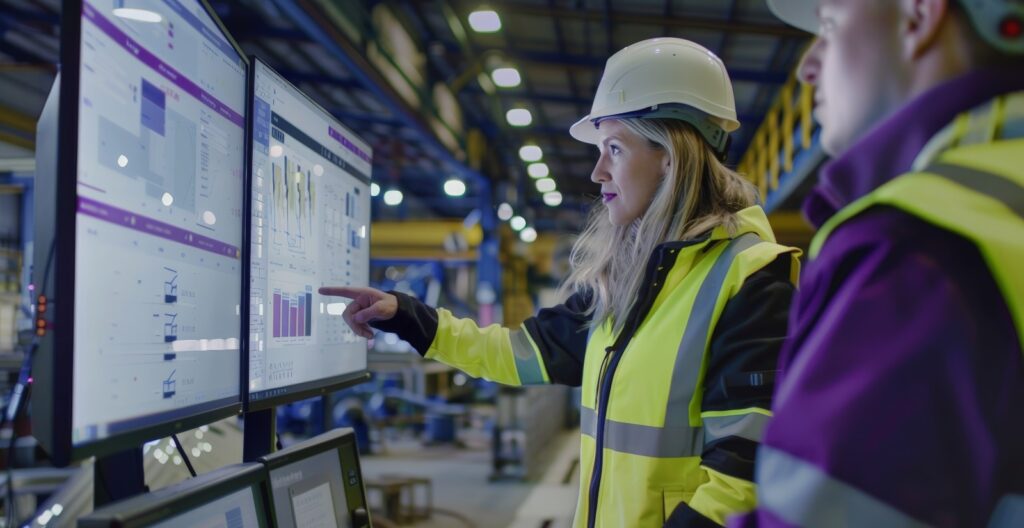
Dimension 3 – Safety: Next-Generation Chemical Logistics Solutions for Hazmat
Safety innovations in chemical logistics leverage technology to protect people, communities, and environments while ensuring regulatory compliance and operational continuity.
Safety Frontier: Predictive Risk Management
Predictive risk management systems utilize data analytics, machine learning, and real-time monitoring to identify potential safety issues before they result in incidents or regulatory violations.
Predictive capabilities include:
| Risk Category | Predictive Indicators | Mitigation Strategies |
| Equipment Failure | Sensor data showing wear patterns | Proactive maintenance scheduling |
| Route Hazards | Weather, traffic, and infrastructure data | Dynamic route adjustments |
| Containment Risks | Pressure, temperature, and structural monitoring | Automated alerts and response protocols |
| Driver Performance | Behavior analysis and fatigue detection | Intervention and rest period enforcement |
Chemical logistics solutions incorporating predictive risk management achieve significant reductions in incident rates while improving regulatory compliance performance and reducing insurance costs through demonstrated safety leadership.
Advanced safety systems integrate with emergency response networks to enable rapid, coordinated responses when incidents do occur, minimizing impacts on people and environments while facilitating faster recovery and return to normal operations.
Dimension 4 – Efficiency: Optimizing Chemical Logistics Solutions Through Network Design
Network optimization represents a critical frontier where advanced chemical logistics creates value through strategic facility location, transportation mode selection, and supply chain structure decisions.
Efficiency Driver: Multi-Modal Integration
Multi-modal transportation strategies leverage the comparative advantages of different transportation modes—truck, rail, marine, and pipeline—to optimize total supply chain costs while meeting service requirements.
Multi-modal benefits include cost optimization through mode selection based on distance, volume, and urgency requirements, capacity flexibility during peak demand periods or carrier constraints, risk diversification reducing dependence on single transportation modes, and environmental benefits from utilizing lower-emission transportation options for appropriate shipments.
Successful multi-modal integration requires sophisticated planning systems, strong carrier relationships across multiple modes, and operational capabilities to manage increased complexity while maintaining service reliability and customer satisfaction.
Efficiency Driver: Last-Mile Innovation
Last-mile chemical distribution represents the final and often most expensive segment of supply chains, where innovation creates significant value through cost reduction and service enhancement.
Last-mile innovations encompass micro-fulfillment centers positioning inventory closer to customers in urban areas, consolidated delivery networks that combine multiple customer shipments, real-time delivery windows providing customers with precise arrival timing, and contactless delivery systems reducing handling and documentation requirements.
Advanced chemical logistics solutions addressing last-mile challenges achieve competitive advantages through superior customer service, reduced delivery costs, and improved operational efficiency while maintaining safety and regulatory compliance in complex urban environments.

The Convergence: Where All Innovation Streams Meet
The most powerful opportunities in advanced chemical logistics emerge at the intersections where multiple innovation dimensions converge to create synergistic benefits exceeding the sum of individual improvements.
Technology convergence examples include AI-powered sustainability optimization that identifies the lowest-emission routes while maintaining cost effectiveness, IoT-enabled safety systems that predict and prevent incidents while documenting compliance automatically, and automated multi-modal planning that optimizes across cost, service, and environmental objectives simultaneously.
This convergence creates integrated chemical logistics solutions that address multiple strategic objectives concurrently—reducing costs while improving service, enhancing safety while reducing environmental impact, and increasing efficiency while building resilience against disruptions.
Companies that master convergent innovation develop capabilities that competitors struggle to replicate, creating sustainable competitive advantages in markets where operational excellence increasingly determines success. These capabilities compound over time as experience generates insights that inform continuous improvement across all innovation dimensions.
The future of advanced chemical logistics belongs to organizations that think systemically about innovation—recognizing that technology, sustainability, safety, and efficiency advances create greater value when integrated than when pursued independently.
Conclusion
Advanced chemical logistics represents the future of how chemical products move through U.S. supply chains, with innovation across technology, sustainability, safety, and efficiency dimensions transforming traditional distribution models into sophisticated, intelligent networks. Companies that embrace this transformation position themselves for sustained success in markets where customer expectations, regulatory requirements, and competitive pressures demand continuous advancement.
The investment in advanced capabilities pays dividends through reduced costs, improved service, enhanced safety, and superior environmental performance that collectively create competitive advantages while supporting long-term business sustainability. The future is being built today by organizations that recognize logistics excellence as strategic capability rather than operational necessity.
For chemical companies seeking to develop world-class logistics capabilities and capitalize on innovation opportunities, Elchemy provides expert guidance and proven strategies that accelerate transformation while maximizing business value and competitive positioning in evolving markets.