

At a Glance
- Europe allows specific stevia extracts called steviol glycosides (E960), not the whole leaf
- Raw stevia leaf and crude stevia extracts remain banned for food use
- Only highly purified steviol glycosides with 95% minimum purity qualify for approval
- The EU approved stevia sweeteners in 2011 after extensive safety testing
- Maximum usage levels vary by food category, from 30 mg/L in beverages to 2000 mg/kg in certain confections
- Companies must source EU-approved steviol glycoside preparations meeting strict specifications
- Labeling must list stevia as “steviol glycosides” or “E960” on ingredient lists
- The US and EU have different standards, so products legal in America might not pass European rules
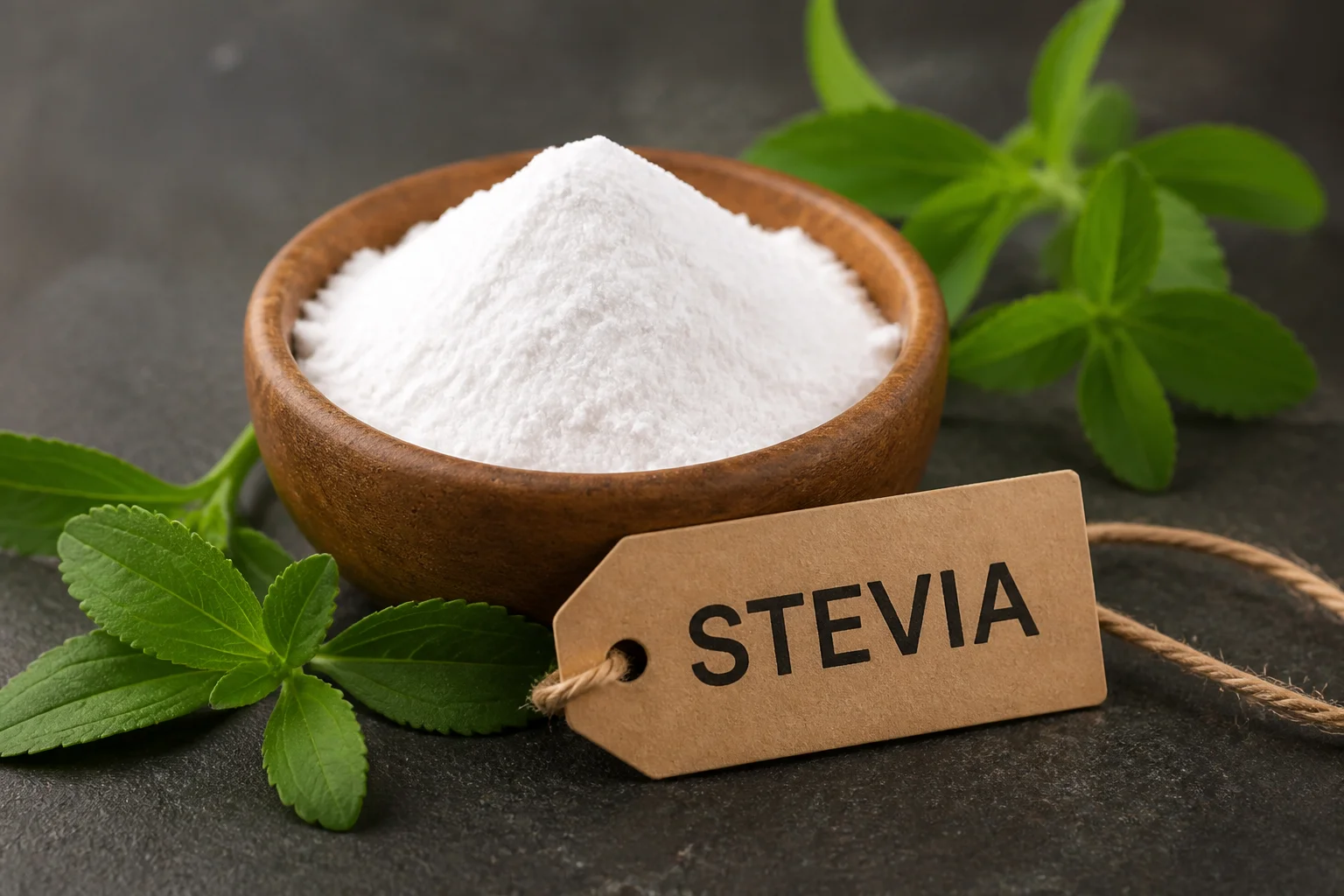
Walk into any European supermarket and you’ll spot stevia-based sweeteners on the shelves. But here’s where it gets confusing. Try importing certain stevia products from the US or Asia, and customs might flag them. Search online about stevia in Europe, and you’ll find conflicting information. Some sources claim stevia’s banned, others say it’s perfectly legal.
So what’s actually going on? Turns out, the answer isn’t black and white. Europe has one of the strictest food safety systems in the world, and stevia sits in a complicated middle ground. Some forms are completely legal and widely used. Others? They’re not allowed at all.
After 25 years working with food-grade chemicals and manufacturers navigating international regulations, I’ve seen countless companies stumble over this exact issue. Let’s break down what’s actually restricted, what’s allowed, and why European regulators draw such specific lines around this natural sweetener.
Why Stevia Banned in Europe Became a Persistent Myth
Here’s the thing. Stevia isn’t banned in Europe anymore, but it was for a long time. That history created confusion that still lingers today.
Before 2011, you couldn’t legally add any form of stevia to food products in the EU. The European Food Safety Authority (EFSA) hadn’t completed safety assessments, so stevia remained off-limits. Meanwhile, countries like Japan had been using stevia for decades, and the US approved it in 2008 for specific uses.
When Europe finally gave stevia the green light in 2011, they didn’t approve everything. They authorized very specific compounds extracted and purified from stevia leaves. The restrictions were so particular that many people still believe stevia’s completely banned.
The confusion makes sense when you look at what’s actually restricted:
Still Banned:
- Whole stevia leaves (dried or fresh)
- Stevia leaf powder
- Crude stevia extracts
- Water-based stevia infusions
- Any stevia preparation under 95% purity
Legal and Approved:
- Steviol glycosides at 95%+ purity
- Commercially processed stevia sweeteners meeting E960 specifications
- Stevia extracts from approved manufacturers following EU protocols
- Products labeled with maximum usage limits per food category
The regulatory split created a market where stevia exists in European products, but only in highly controlled forms. Raw stevia remained completely off-limits.
Understanding What Makes Stevia Illegal in Europe
Let’s get specific about what crosses the line legally. European food law operates on a simple principle: if it’s not explicitly approved, it’s not allowed. No gray areas.
The EU approved eleven specific steviol glycosides under the E960 designation. These compounds include rebaudioside A, rebaudioside C, stevioside, and eight others. But here’s where it gets technical. The approval doesn’t just cover these molecules. It requires them to be present in specific ratios and purities.
| Requirement | EU Standard | Why It Matters |
| Total steviol glycosides | Minimum 95% | Ensures purity and consistent sweetness |
| Heavy metals | Strict limits on lead, arsenic, mercury | Prevents toxic contamination |
| Residual solvents | Maximum levels defined | Reduces chemical residue exposure |
| Microbiological standards | Low bacterial counts | Ensures food safety |
| Manufacturing process | Documented extraction methods | Maintains quality control |
Raw stevia contains dozens of compounds beyond steviol glycosides. You’ve got chlorophyll, proteins, fiber, minerals, and various plant chemicals. European regulators haven’t assessed the safety of consuming these other compounds in food products. Without that safety data, they can’t authorize whole-leaf products.
Think about it from a regulatory perspective. When you use purified steviol glycosides, you know exactly what’s going into food. The composition stays consistent batch after batch. With raw leaves? The chemical makeup varies based on growing conditions, harvest timing, processing methods, and plant genetics. That variability makes safety assessment nearly impossible.
The Science Behind the Restrictions
European food safety decisions rest on toxicology studies, not tradition or natural status. EFSA reviewed more than 100 studies on steviol glycosides before approval. They looked at metabolism, potential toxicity, effects on reproduction, possible carcinogenicity, and allergenicity.
The studies showed steviol glycosides at specific purity levels were safe up to defined intake levels. But those same studies didn’t test whole stevia leaves or crude extracts. Without data, no approval.
European regulators also examined how the body processes steviol glycosides. When you consume them, gut bacteria convert them to steviol, which the body then eliminates. The metabolism pathway is well-understood for purified glycosides. For whole leaves with all their additional compounds? The interactions become much more complex.
EFSA set an Acceptable Daily Intake (ADI) of 4 mg per kilogram of body weight, expressed as steviol equivalents. That’s about 240 mg for a 60 kg adult. The calculation assumes you’re consuming pure steviol glycosides, not a mixture of plant material.
What Actually Gets Approved: The E960 Standard
When European manufacturers want to use stevia, they don’t order “stevia extract.” They order steviol glycosides meeting E960 specifications. The difference matters.
E960 is the official EU food additive code for approved steviol glycosides. Any product labeled E960 must meet strict purity and composition requirements outlined in Commission Regulation (EU) No 231/2012. That regulation runs several pages of technical specifications.
Key E960 Requirements:
- Minimum 95% total steviol glycoside content on a dry weight basis
- At least 75% of five major glycosides: stevioside, rebaudioside A, rebaudioside C, rebaudioside D, or rebaudioside F
- Lead content below 1 mg/kg
- Arsenic below 1 mg/kg
- Mercury below 1 mg/kg
- Residual methanol below 200 mg/kg if used in extraction
- Loss on drying not more than 6%
- Defined pH range for aqueous solutions
Manufacturers achieve these specifications through multi-step extraction and purification. You can’t just grind stevia leaves and call it E960. The process typically involves water extraction, filtration, resin purification, crystallization, and drying. Each step removes unwanted compounds while concentrating steviol glycosides.
Quality control labs test every batch. They use high-performance liquid chromatography (HPLC) to verify glycoside profiles. They test for heavy metals using atomic absorption spectroscopy. They check microbiology through culture methods. Documentation tracks everything from raw material sourcing through final testing.
This level of control costs money. That’s why E960-grade steviol glycosides run significantly more expensive than raw stevia powder. But it’s also why food companies can confidently use them in European products.
Usage Limits Across Food Categories
Getting approval is just the start. Europe doesn’t allow unlimited stevia use. Each food category has maximum permitted levels, measured in milligrams per kilogram or liter.
These limits aim to balance two goals: allowing enough stevia for effective sweetening while keeping total intake well below the ADI. EFSA calculated the limits based on estimated consumption patterns across Europe.
| Food Category | Maximum Level (mg/L or mg/kg) | Examples |
| Beverages (water-based, flavored) | 30-100 | Soft drinks, juice blends, flavored waters |
| Dairy products | 100-200 | Yogurt, fermented milk, desserts |
| Confectionery | 200-2000 | Chewing gum, candies, chocolate |
| Breakfast cereals | 330 | Cereal products, granola |
| Desserts | 200 | Ice cream, puddings, mousse |
| Edible ices | 200 | Ice cream, sorbets, frozen yogurt |
| Sauces and condiments | 180-350 | Mustard, ketchup, mayonnaise alternatives |
Beverages get the strictest limits because people consume them in larger volumes. A person might drink a liter of soft drink but only eat 50 grams of candy. The math has to account for real-world consumption.
Manufacturers reformulating products with stevia need to calculate carefully. Too little and the sweetness falls short. Too much and you exceed legal limits or get that characteristic stevia aftertaste. Most companies use stevia blends with other sweeteners to optimize taste while staying within bounds.
Reading Labels for Stevia Content
European food labels must declare steviol glycosides either as “steviol glycosides” or “E960” in the ingredient list. You won’t see “stevia” listed alone, though some manufacturers add it in parentheses for consumer recognition.
Products marketed as “naturally sweetened” or “plant-based sweetener” often contain stevia alongside other sweeteners like erythritol, monk fruit extract, or sugar alcohols. The combination improves taste while keeping sugar content low.
If you’re sourcing ingredients for food manufacturing, always verify your supplier provides E960-compliant material. Request certificates of analysis showing:
- HPLC analysis of steviol glycoside composition
- Heavy metal test results
- Microbiological testing data
- Confirmation of 95%+ purity
- Batch-specific documentation
Don’t assume “food-grade stevia” automatically meets EU standards. That term means different things in different markets. US food-grade specifications differ from European E960 requirements.
Regional Differences: Why US Stevia Products May Not Work in Europe
Companies expanding from North America to Europe hit regulatory walls with stevia formulations. What’s legal in the US doesn’t automatically qualify for European markets.
The FDA granted stevia GRAS (Generally Recognized as Safe) status in 2008, but with its own specifications. US rules allow rebaudioside A at 95% minimum purity, sold as Reb A. That’s more specific than the broader EU approval covering eleven glycosides.
Here’s where it gets tricky. Some US stevia products contain glycoside blends that don’t match EU composition requirements. Others use extraction methods or solvents that wouldn’t pass European scrutiny. The purity standards differ slightly too.
Key Regulatory Differences:
| Aspect | United States | European Union |
| Approval body | FDA (GRAS notification) | EFSA (authorized additive) |
| Primary compound | Rebaudioside A focus | Eleven steviol glycosides |
| Purity requirement | 95% Reb A | 95% total glycosides, 75% of five major types |
| Usage limits | Generally up to manufacturer | Specific limits per food category |
| Labeling | “Stevia” or “Reb A” common | Must use “steviol glycosides” or “E960” |
Raw stevia remains in a gray area in the US. You can buy dried stevia leaves as dietary supplements, but the FDA hasn’t approved them as food additives. That’s different from Europe’s explicit ban on whole-leaf products in food.
Companies reformulating for European markets often need to:
- Switch to EU-approved steviol glycoside suppliers
- Reformulate to meet category-specific usage limits
- Adjust sweetness levels since glycoside profiles differ
- Update ingredient declarations for EU label requirements
- Conduct stability testing under EU conditions
The cost and timeline for reformulation surprise many businesses. Count on 6-12 months for full compliance, especially if you’re optimizing taste and stability with new stevia sources.
Why Stevia Illegal in Europe Still Applies to Certain Products
Walk through any European health food store and you might spot stevia products that seem to violate the rules I’ve outlined. Dried stevia leaves sold as tea. Stevia powder marketed for home gardeners. Stevia tinctures positioned as dietary supplements.
Here’s the loophole. Products sold as dietary supplements or herbal preparations fall under different regulations than food additives. They’re covered by Directive 2002/46/EC on food supplements and various national laws on herbal products.
But there’s a catch. These products can’t make food-related claims or suggest culinary use. A stevia supplement can exist on shelves, but the manufacturer can’t tell you to use it for sweetening your coffee. The distinction matters legally, even if consumers use them that way.
Enforcement varies by country too. Germany traditionally takes a stricter interpretation than some other EU member states. Products that pass in one country might get pulled in another.
The supplement category doesn’t provide a backdoor for food manufacturers. If you’re producing beverages, baked goods, confections, or any commercial food product, you must use E960-compliant steviol glycosides. No exceptions, no workarounds.
Import Complications
Companies importing products containing stevia into Europe face additional scrutiny. Customs officials and food safety inspectors check ingredient declarations against approved additives.
Products containing non-approved stevia forms get rejected at the border. That means:
- Beverages sweetened with whole-leaf stevia extract
- Snacks listing “stevia powder” without E960 specification
- Products with stevia blends that don’t meet purity standards
- Items exceeding maximum usage levels for their food category
The rejection creates expensive problems. You’re stuck with inventory that can’t enter the market. Options include re-export, destruction, or (rarely) reformulation and re-inspection. All of them cost time and money.
Smart companies verify compliance before shipping. Get your stevia-containing products tested by EU-recognized labs. Confirm your steviol glycosides come from approved suppliers. Check that usage levels fall within category limits. The upfront work prevents costly surprises.
Manufacturing Considerations for EU-Compliant Stevia Products
Reformulating products with stevia for European markets involves more than swapping sweeteners. You’re dealing with taste profiles, stability, regulatory compliance, and cost structures simultaneously.
Steviol glycosides taste different from sugar. You get the sweetness, but also a characteristic bitter or licorice-like aftertaste, especially at higher concentrations. Different glycosides have different taste profiles. Rebaudioside A generally tastes cleaner than stevioside, but costs more.
Manufacturers blend multiple sweeteners to optimize taste:
Common Stevia Combinations:
- Stevia + erythritol (masks aftertaste, adds bulk)
- Stevia + monk fruit extract (complementary taste profiles)
- Stevia + small amounts of sugar (improves mouthfeel)
- Stevia + other high-intensity sweeteners like sucralose (extends sweetness)
Each combination changes the regulatory picture. Erythritol is approved in the EU as E968 with its own usage limits. Monk fruit (Siraitia grosvenorii) extracts need their own approval. You’re juggling multiple regulations.
Stability testing becomes critical. Steviol glycosides hold up well to heat, which makes them suitable for baked goods and beverages. But they can interact with other ingredients. Acidic conditions, certain minerals, and some proteins affect stability. You need data showing your reformulated product maintains quality through shelf life.
| Processing Factor | Impact on Stevia | Mitigation Strategy |
| High temperature | Generally stable, some browning possible | Monitor color development, adjust pH |
| Acidic pH | Very stable, preferred conditions | Ideal for soft drinks and fruit products |
| Calcium/minerals | Can cause precipitation | Use chelating agents or adjust mineral content |
| Protein content | May interact, affect solubility | Test stability in high-protein matrices |
| UV light | Relatively stable | Standard light-protective packaging sufficient |
Cost analysis matters too. E960-grade steviol glycosides typically run $40-80 per kilogram depending on purity and glycoside profile. That’s substantially more than sugar at around $0.50-1.50 per kilogram. But you need much less stevia by weight since it’s 200-300 times sweeter than sugar.
The calculation gets complex when you factor in blends, processing adjustments, and reformulation costs. Most manufacturers find the overall cost per finished product increases 10-30% when switching from sugar to stevia-based sweetening systems.
Sourcing EU-Compliant Steviol Glycosides
Finding suppliers who consistently deliver E960-compliant material makes or breaks your stevia strategy. The global market includes hundreds of stevia suppliers, but only a fraction meet European standards reliably.
China dominates steviol glycoside production, accounting for roughly 80% of global supply. India and South America are growing as alternative sources. Quality varies significantly between suppliers.
What to Verify with Suppliers:
- EU food additive registration and compliance documentation
- ISO 9001 or equivalent quality management certification
- FSSC 22000 or BRC food safety certification preferred
- Batch-specific certificates of analysis with HPLC data
- Heavy metal and pesticide residue testing protocols
- Traceability from stevia leaf source through extraction
- Previous experience supplying EU food manufacturers
- Stability data for your specific application
Request samples and conduct your own testing before committing to large orders. Don’t rely solely on supplier-provided data. Independent verification through EU-accredited labs confirms compliance.
Pricing fluctuates based on purity level and specific glycoside composition. High-purity rebaudioside A preparations (98%+ Reb A) cost more than standard 95% steviol glycoside blends. Prices also vary with raw material availability and extraction capacity.
Building relationships with 2-3 qualified suppliers provides backup if quality issues emerge or supply tightens. The stevia market experienced shortages in 2020-2021 as demand surged. Multiple sources reduce vulnerability to supply disruptions.
Companies like Elchemy specialize in connecting food manufacturers with qualified chemical suppliers, including E960-grade steviol glycosides. Working with experienced sourcing partners who understand both European regulations and supplier capabilities streamlines the qualification process and reduces compliance risk.
Future Outlook: Will Restrictions Loosen?
European stevia regulations haven’t changed significantly since 2011, though usage has grown as manufacturers gain experience with the sweetener. Will the rules evolve?
EFSA periodically reviews approved additives as new safety data emerges. Steviol glycosides could see expanded approvals if additional studies support broader use. Areas to watch include:
- Potential approval of additional steviol glycosides beyond the current eleven
- Possible revision of usage limits based on real-world consumption data
- Consideration of less-purified stevia extracts if adequate safety data develops
- Harmonization efforts between EU and other regulatory systems
Consumer demand for natural sweeteners keeps growing. The global stevia market was valued around $600-700 million in 2023 and continues expanding. That market pressure might encourage regulatory evolution, though European food safety authorities move slowly and deliberately.
Raw stevia leaves seem unlikely to gain food approval anytime soon. The fundamental issue remains: inconsistent composition makes safety assessment difficult. Unless someone develops standardized whole-leaf preparations with consistent chemical profiles, the ban on crude stevia will probably persist.
New extraction technologies might change the economics. More efficient purification methods could reduce steviol glycoside costs, making them competitive with more food manufacturers. Fermentation-derived steviol glycosides are also under development, potentially offering another production route.
Making Stevia Work in Your European Products
If you’re formulating products for European markets, stevia offers a viable natural sweetening option within its regulatory constraints. Success requires attention to several factors:
Start with clear goals. What do you want stevia to accomplish? Sugar reduction? Calorie reduction? Clean label appeal? Natural positioning? Your objectives shape formulation choices.
Select the right steviol glycoside preparation for your application. Beverages tolerate higher-purity Reb A preparations well. Baked goods might work better with glycoside blends. Dairy products need testing to ensure stability with milk proteins.
Formulation Checklist:
- Confirm E960 compliance of your steviol glycoside source
- Calculate usage levels against EU maximum limits for your product category
- Design taste panels to optimize sweetener blend ratios
- Conduct accelerated shelf-life testing under EU storage conditions
- Verify label declarations meet EU ingredient naming requirements
- Document all compliance evidence for regulatory inspections
- Test with target consumers in European markets
Don’t expect stevia to perfectly mimic sugar. It won’t. The taste profile differs, the mouthfeel differs, and the functional properties differ. Design your product around stevia’s strengths rather than fighting its limitations.
Consider the full system of sweeteners and ingredients. Stevia works best as part of a thoughtful formulation, not as a direct sugar swap. Bulking agents, flavor enhancers, and complementary sweeteners fill the gaps stevia can’t cover alone.
Wrapping Up
So is stevia banned in Europe? Not really, but the answer depends entirely on what form you’re talking about. Highly purified steviol glycosides meeting E960 specifications are legal and widely used. Raw stevia leaves and crude extracts remain off-limits for food applications.
The restrictions reflect Europe’s cautious approach to food safety. They want consistent, well-characterized ingredients with solid safety data. That philosophy creates higher barriers to entry but also builds consumer confidence in approved ingredients.
For food manufacturers, the path forward is clear: source E960-compliant steviol glycosides from qualified suppliers, formulate within category usage limits, and document everything. The regulatory requirements are exacting but navigable with proper attention.
Looking for EU-compliant steviol glycosides for your food manufacturing needs? Elchemy connects food companies with vetted suppliers of high-purity stevia extracts and other specialty ingredients. Our network includes manufacturers meeting European food additive standards, with full documentation and quality assurance to keep your products compliant.