

At a Glance
- Sodium carbonate (Na₂CO₃) has pH 11 while sodium tetraborate (Na₂B₄O₇) sits at pH 9.5, making washing soda more caustic
- Sodium carbonate excels at grease removal and works in all water temperatures, borax performs best in hot water
- Industrial glass manufacturing consumes over 50% of sodium carbonate production versus 43% of borax for specialty glasses
- Sodium tetraborate vs sodium carbonate safety differs, with borax carrying reproductive toxicity warnings in the EU
- Washing soda costs $0.15-0.25 per pound while borax runs $0.30-0.50 per pound in bulk quantities
- Both soften water but through different mechanisms, with carbonate creating more alkalinity increase
- Household cleaning favors sodium carbonate for general use, borax for whitening and odor control
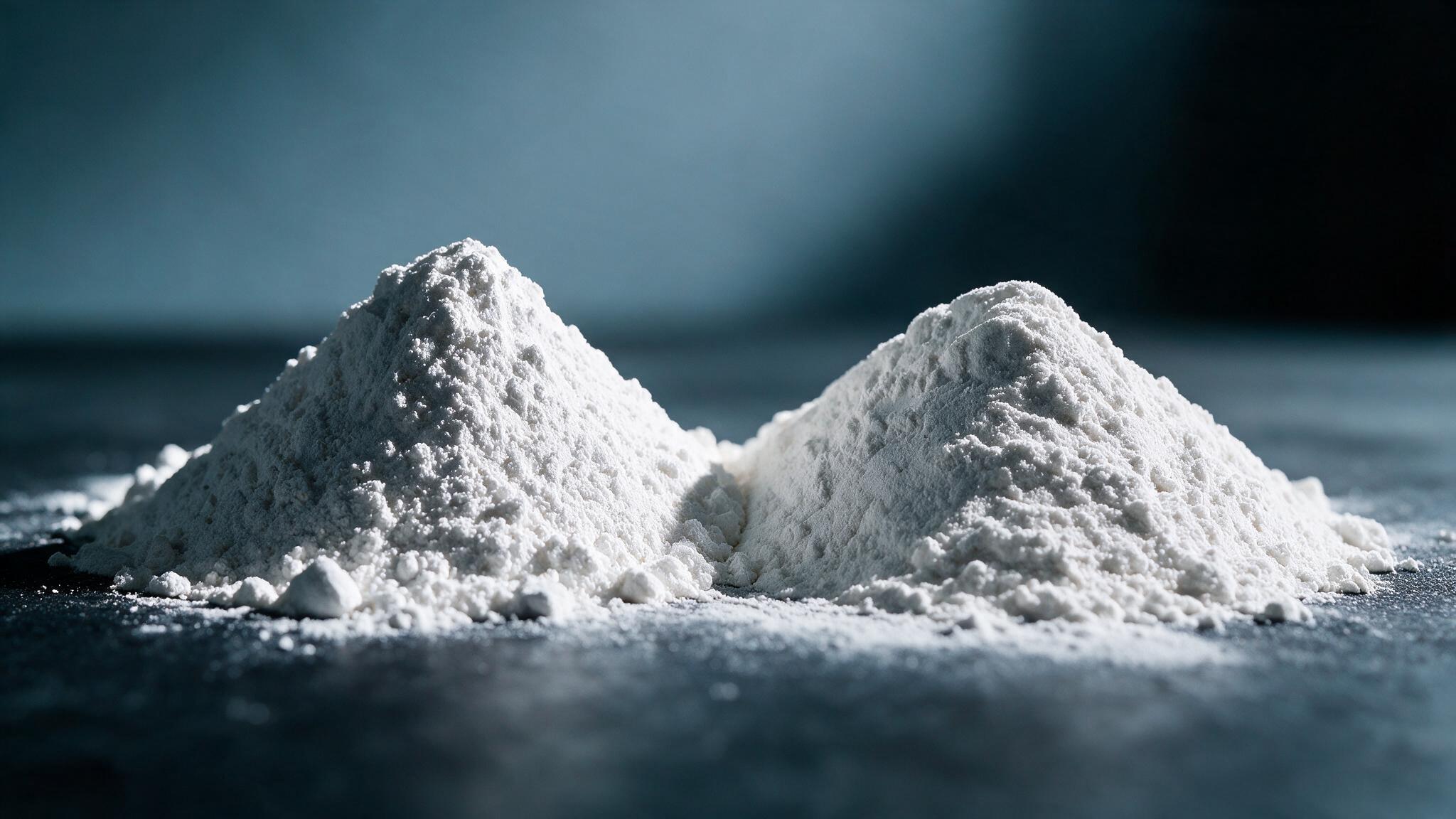
You reach under the sink for your cleaning supplies and grab two white powders that look almost identical. One is washing soda. The other is borax. They both clean, they both boost detergents, and they’re both alkaline. So what’s actually different?
Turns out, quite a bit. Sodium carbonate and sodium tetraborate share some surface similarities, but their chemistry, safety profiles, and best uses diverge in ways that matter for both household cleaning and industrial applications.
Understanding the difference between these two common chemicals helps you choose the right one for specific tasks and avoid mistakes that waste money or create safety issues.
Understanding Sodium Carbonate vs Sodium Tetraborate Chemistry
The chemical formulas tell the first part of the story. Sodium carbonate is Na₂CO₃, also called washing soda or soda ash. Sodium tetraborate is Na₂B₄O₇·10H₂O in its common hydrated form, better known as borax.
Both are alkaline salts that create basic solutions in water. But their different structures lead to different properties and uses.
Sodium Carbonate Structure
Washing soda consists of two sodium ions bonded to a carbonate ion (CO₃²⁻). When dissolved in water, it dissociates completely into Na⁺ and CO₃²⁻ ions. The carbonate ions react with water to create hydroxide ions, raising pH to around 11. That’s highly alkaline, similar to household ammonia.
This high alkalinity makes sodium carbonate caustic. It can irritate skin and should be handled with gloves. But that same alkalinity gives it powerful cleaning ability against grease, oils, and acidic soils.
Sodium Tetraborate Structure
Borax contains boron, which changes everything. The formula Na₂B₄O₇·10H₂O shows four boron atoms bonded with oxygen in a complex tetraborate structure, plus ten water molecules in the crystal lattice. In solution, it creates a pH around 9.5, less alkaline than washing soda by about 30 times on the logarithmic pH scale.
The boron content gives borax properties sodium carbonate doesn’t have. It acts as a pH buffer, provides mild antiseptic effects, and creates different chemical reactions in cleaning applications.
Chemical Properties Comparison
| Property | Sodium Carbonate (Washing Soda) | Sodium Tetraborate (Borax) |
| Chemical Formula | Na₂CO₃ | Na₂B₄O₇·10H₂O |
| Molecular Weight | 105.99 g/mol | 381.38 g/mol (decahydrate) |
| pH (1% solution) | ~11 | ~9.5 |
| Appearance | White crystalline powder | White crystalline powder |
| Water Solubility | 21.5 g/100ml (20°C) | 4.7 g/100ml (20°C) |
| Typical Bulk Cost | $0.15-0.25/lb | $0.30-0.50/lb |
How They Work Differently in Cleaning
Both chemicals clean, but through different mechanisms.
Sodium Carbonate’s Cleaning Action
The high pH breaks down fats and greases through saponification, the same process that makes soap. The carbonate ions react with fatty acids to create water-soluble salts that rinse away easily. This makes washing soda excellent for cutting through kitchen grease, removing oily stains, and cleaning heavily soiled laundry.
Sodium carbonate also softens water by precipitating calcium and magnesium ions. These minerals cause water hardness, which reduces detergent effectiveness. When you add washing soda, it reacts with these minerals to form insoluble calcium carbonate and magnesium carbonate. These precipitate out, leaving softer water that lets detergents work better.
The cleaning power works in cold, warm, or hot water. Temperature affects reaction speed but not fundamental effectiveness.
Sodium Tetraborate’s Different Approach
Borax cleans more gently. Its lower pH means less aggressive chemical attack on soils. Instead, it works through multiple mechanisms. The boron compounds help emulsify oils, making them easier to lift and suspend. The buffering action maintains optimal pH for enzyme activity in detergents.
Borax excels at whitening and odor control. It neutralizes acidic odors rather than just masking them. The boron provides mild fungicidal and antibacterial properties that washing soda lacks.
But borax really shines in hot water. The tetraborate structure dissolves better and works more effectively at higher temperatures. Cold-water washing reduces its performance noticeably.
Household Cleaning Applications
When to Use Sodium Carbonate
Washing soda handles tough cleaning jobs where high alkalinity helps:
- Degreasing stovetops, ovens, and range hoods
- Removing oil stains from garage floors and driveways
- Boosting laundry detergent for heavily soiled work clothes
- Cleaning coffee makers and tea kettles (removes tannin buildup)
- Unclogging drains (combined with hot water)
- Stripping buildup from washing machines
Use it at 1/4 to 1/2 cup per load for laundry boosting. For cleaning solutions, dissolve 1/2 cup in a gallon of hot water. Always wear gloves since the pH 11 solution irritates skin.
When to Use Sodium Tetraborate
Borax suits different applications where gentler action and special properties matter:
- Whitening dingy sheets and towels
- Freshening musty-smelling laundry
- Cleaning toilets and bathroom fixtures
- Making homemade cleaning solutions with lower skin irritation
- Removing carpet odors (sprinkle, wait, vacuum)
- Pest control (roach and ant bait when mixed with sugar)
Standard borax dosing runs 1/2 cup per laundry load. For cleaning solutions, use 1/2 cup in a gallon of warm to hot water. It’s gentler on skin than washing soda but still requires reasonable precautions.
Industrial Applications: Where Each Chemical Dominates
Sodium Carbonate in Industry
Glass manufacturing consumes over 50% of global sodium carbonate production. When mixed with sand (silicon dioxide) and limestone (calcium carbonate), then heated to 1,500°C, it creates soda-lime glass. This is the glass in your windows, bottles, and jars.
The carbonate acts as a flux, lowering the melting point of silica from 1,713°C to achievable temperatures without exotic materials. Without sodium carbonate, commercial glass production wouldn’t be economically viable.
Other major industrial uses include:
- Chemical manufacturing (producing sodium compounds like sodium phosphate, sodium silicate)
- Pulp and paper processing (breaking down wood fibers, adjusting pH)
- Water treatment (pH adjustment, softening)
- Metal processing (cleaning, flux for welding)
- Textile processing (dyeing, finishing)
- Food processing (pH regulation, leavening agent)
The Solvay process produces most industrial sodium carbonate. Natural deposits from mined trona ore supply significant quantities in the United States, particularly from Wyoming.
Sodium Tetraborate in Industry
Specialty glass dominates borax consumption, accounting for 43% of industrial use. Borosilicate glass (Pyrex brand) contains 12-15% boron oxide from borax. This creates glass that resists thermal shock and chemical attack. Laboratory glassware, cookware, and industrial piping all use borosilicate glass.
Fiberglass insulation represents another major market. The boron strengthens glass fibers and reduces flammability.
Additional industrial applications include:
- Detergents and cleaning products (household and industrial)
- Fire retardants (for wood, textiles, plastics)
- Welding and soldering flux (prevents oxidation)
- Enamel and ceramic glazes
- Agricultural fertilizers (boron micronutrient)
- Metallurgy (flux in metal refining)
- Pharmaceuticals and cosmetics (pH buffer)
Most commercial borax comes from mining operations in California, Turkey, and Bolivia. The mineral is refined through dissolution, filtration, and recrystallization.
Industrial Use Comparison
| Industry Sector | Sodium Carbonate Applications | Sodium Tetraborate Applications |
| Glass Manufacturing | Soda-lime glass (50%+ of production) | Borosilicate glass, fiberglass (43% of production) |
| Cleaning Products | Laundry detergents, general cleaners | Laundry boosters, specialty cleaners |
| Metallurgy | Flux for steel, pH adjustment | Welding flux, metal refining |
| Agriculture | Fertilizer component, pesticide carrier | Boron micronutrient fertilizer |
| Chemicals | Producing sodium compounds | Producing boron compounds |
| Paper/Pulp | Pulping agent, pH control | Hydrogen peroxide stabilizer |
Safety Considerations: Sodium Tetraborate vs Sodium Carbonate
Both chemicals require safe handling, but their safety profiles differ.
Sodium Carbonate Safety
The high alkalinity creates the main concern. Concentrated solutions or powder contact can cause:
- Skin irritation and burns (especially prolonged contact)
- Eye irritation and potential corneal damage
- Respiratory irritation if dust is inhaled
- Gastrointestinal irritation if ingested
Proper handling requires:
- Wearing rubber gloves when using concentrated solutions
- Eye protection for mixing or heavy use
- Good ventilation to avoid dust inhalation
- Keeping away from children and pets
- Never mixing with acids (creates violent reaction)
Despite these precautions, sodium carbonate is generally recognized as safe for its intended uses. Millions use it daily without issues when handled responsibly.
Sodium Tetraborate Safety
Borax carries different concerns. While less caustic than washing soda, it has specific toxicity issues:
- The EU classified it for reproductive toxicity based on animal studies
- Cosmetic use is banned in Europe due to these concerns
- Household cleaning remains approved with appropriate warnings
- Acute toxicity is low, but chronic exposure raises concerns
Safety studies show reproductive and developmental effects in laboratory animals at high doses. Similar effects haven’t been demonstrated in humans at normal exposure levels, but regulatory caution prevails.
Safe handling guidelines:
- Avoid ingestion (particularly important for children)
- Don’t use on broken skin or wounds
- Minimize dust inhalation
- Wash hands after use
- Store securely away from food and children
The fatal dose for young children is approximately 5 grams, making secure storage essential in homes with kids.
Environmental Impact and Disposal
Sodium Carbonate Environmental Profile
Washing soda breaks down readily in the environment. The carbonate ions are natural components of water chemistry. When washed down drains, wastewater treatment handles it without issues.
The pH impact is temporary. Dilution and natural buffering systems neutralize the alkalinity quickly. It doesn’t bioaccumulate or persist in ecosystems.
Industrial production from trona mining has minimal environmental impact beyond typical mining considerations. The Solvay process uses recyclable inputs and generates calcium chloride as the main byproduct.
Sodium Tetraborate Environmental Aspects
Borax also biodegrades, though boron itself persists as an element. In water systems, boron exists naturally at low concentrations. Elevated boron levels can affect sensitive plant species, but typical household use creates negligible environmental impact.
Mining operations face environmental scrutiny like any mineral extraction. Water use and habitat disruption are managed concerns. The refined product itself poses minimal ecological risk when used as directed.
Both chemicals are generally safe for septic systems at household use levels. They won’t kill beneficial bacteria in properly functioning septic tanks.
Cost and Availability
Sodium carbonate costs less than borax across all market segments. Bulk industrial pricing runs $150-300 per ton for soda ash versus $300-500 per ton for borax. Household retail prices reflect similar ratios.
A 3-pound box of ARM & HAMMER Super Washing Soda costs $4-6 at retail. A 4-pound box of 20 Mule Team Borax runs $6-9. That’s roughly $0.10-0.15 per ounce for washing soda versus $0.12-0.18 per ounce for borax.
Both are widely available at grocery stores, hardware stores, and online. Washing soda sometimes requires checking the laundry aisle carefully since not all stores stock it. Borax usually has better shelf presence.
Industrial quantities require chemical suppliers. Both are commodity chemicals available through multiple distributors.
Making the Right Choice
Choose Sodium Carbonate When:
- Dealing with greasy, oily soils
- Working in cold or warm water
- Needing maximum water softening
- Budget is a primary concern
- Industrial glass manufacturing
- Chemical production requiring carbonate chemistry
Choose Sodium Tetraborate When:
- Whitening is the priority
- Working with hot water
- Needing odor neutralization
- Wanting milder skin impact
- Specialty glass production
- Applications requiring boron chemistry
Avoid Mixing Them
While both can be used together in some applications, they work through different mechanisms. Combining them doesn’t necessarily improve performance and increases cost. Pick the one that matches your specific need.
Common Misconceptions
“They’re basically the same thing”
Not true. Different chemical structures create different properties and uses. The pH difference alone changes how they interact with soils and materials.
“Borax is natural so it’s safer”
Both occur naturally. Borax is mined; sodium carbonate can be mined or synthesized. “Natural” doesn’t automatically mean safer. Arsenic is natural too. Safety depends on the specific compound and how it’s used.
“You can substitute one for the other freely”
Sometimes, but not always. In recipes specifically formulated for one or the other, substitution changes the outcome. Laundry boosting might work either way. Specific cleaning formulas or industrial processes may not.
Storage and Handling Best Practices
Both chemicals absorb moisture from air. Store in airtight containers to prevent clumping and degradation. Original packaging usually provides adequate protection if sealed properly after each use.
Keep in cool, dry locations away from acids and incompatible materials. Label containers clearly, especially if transferred from original packaging.
Shelf life is essentially indefinite for both when stored properly. Moisture absorption doesn’t ruin them but creates handling difficulties as powder becomes lumps.
The Bottom Line on These Alkaline Cleaners
Sodium carbonate vs sodium tetraborate isn’t about one being better than the other overall. It’s about matching chemistry to application.
Washing soda brings high alkalinity and powerful cleaning at lower cost. It dominates industrial chemical production and handles tough household cleaning. The trade-off is higher skin irritation potential and more aggressive chemical action.
Borax offers gentler cleaning with unique properties from its boron content. It excels at whitening, odor control, and specialty industrial uses. The compromise is higher cost and specific safety considerations around reproductive toxicity.
Understanding sodium tetraborate vs sodium carbonate differences helps you choose correctly. Your laundry might benefit from washing soda’s grease-cutting power. Your toilet cleaning could work better with borax’s whitening effect. Industrial processes select based on precise chemical requirements.
Both chemicals have earned their places in household and industrial chemistry through decades of proven performance. Neither is going away anytime soon. Learning when to reach for which one makes you a smarter consumer and formulator.
For businesses sourcing quality industrial chemicals including sodium carbonate and sodium tetraborate, Elchemy connects you with reliable suppliers offering complete documentation, competitive pricing, and technical support for your specific application requirements across manufacturing, cleaning products, and specialty chemical formulations.