

At a Glance
- U.S. PTA prices closed December 2025 at $1,273/MT, a significant premium over the same period in China ($614/MT) and Germany ($799/MT), reflecting structural domestic tightness
- The permanent closure of DAK Americas’ Cape Fear facility in October 2025 removed 550,000 tonnes/year of U.S. PTA capacity, reshaping the domestic supply picture
- Paraxylene, the primary feedstock, remains the single biggest driver of PTA price movement, with crude oil swings flowing through to production costs within weeks
- The U.S. PTA market is projected to grow from $8.45 billion in 2024 to $14.3 billion by 2035, at a CAGR of roughly 4.9%
- PET resin for packaging and polyester fiber for textiles together account for the dominant share of U.S. PTA demand, meaning beverage sector seasonality and apparel supply chains directly move prices
PTA does not have the name recognition of crude oil or natural gas, but for anyone operating in U.S. polyester, packaging, or textile manufacturing, its price is as consequential as either. Every PET bottle, every yard of polyester fabric, every fiber-fill product starts with purified terephthalic acid. When PTA prices spike, downstream producers feel it immediately. When they soften, margins recover across an entire value chain.
The U.S. market entered 2026 in a structurally different position than just a year prior. A major domestic production closure, a wide and persistent price gap between U.S. and Asian markets, and an uncertain crude oil environment have made purified terephthalic acid price tracking a priority for procurement teams across multiple industries. This analysis unpacks where prices have been, what moved them in 2025, and what the 2026 picture looks like.
What PTA Is and Why Its Price Is Structurally Complex?
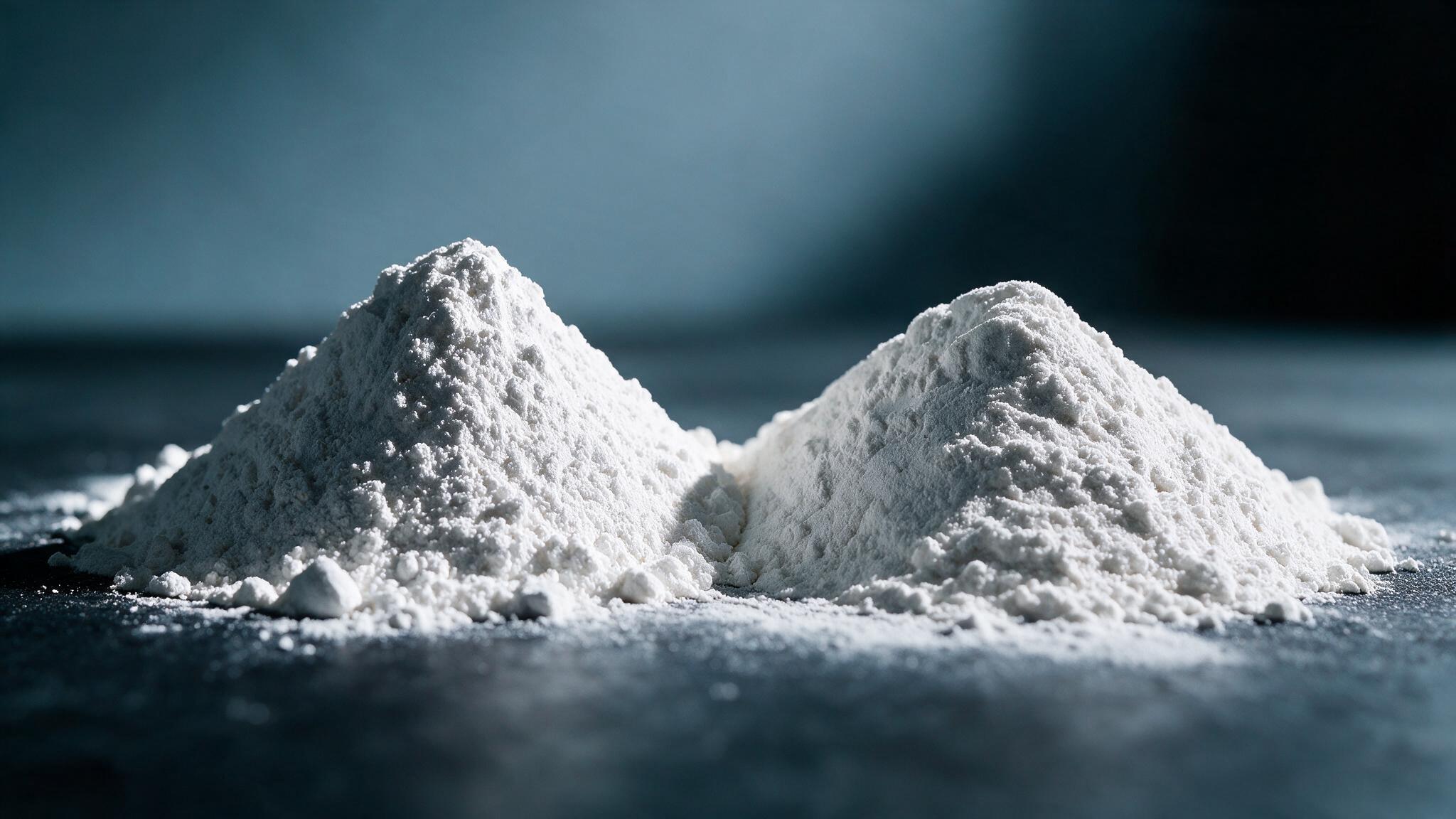
Purified terephthalic acid is produced by the catalytic liquid-phase oxidation of paraxylene in acetic acid, in the presence of cobalt and manganese catalysts and air. It is a white crystalline powder that serves as the primary feedstock for polyethylene terephthalate (PET) resin, polyester fiber, polybutylene terephthalate (PBT), and film-grade polyester.
The price of PTA does not move on its own. It moves as a function of four interacting variables: paraxylene costs, crude oil and naphtha prices, downstream demand from polyester and PET sectors, and domestic versus import supply balance. Understanding each variable is necessary to read price signals accurately.
Paraxylene is the dominant cost driver. PX is derived from crude oil reformate or naphtha, and it represents roughly 70 to 75% of PTA production cost. A $50/MT shift in paraxylene prices translates to a roughly $35 to $40/MT move in PTA production costs. U.S. producers benefit from shale-derived feedstock advantages in paraxylene production, but remain exposed to crude oil volatility.
Downstream demand from the polyester and PET sectors acts as the demand signal that either absorbs or rejects producer price moves. When polyester operating rates are high and PET resin producers are running at full capacity, producers have pricing power. When downstream is running at 70 to 75% capacity and inventories are elevated, buyer resistance keeps prices rangebound regardless of input costs.
2025 Price Review: Quarter by Quarter
Q1 2025: Weather, Force Majeure, and Tentative Stabilization
U.S. PTA prices opened 2025 with modest upward pressure before extreme winter weather disrupted operations. Several U.S. PTA plants declared force majeure due to flooding and severe weather in early February, tightening supply even as downstream demand remained sluggish. Cold weather slowed weaving operations, polyester converter inventories were high, and purchasing was limited to immediate production needs.
By March, prices reached $955/MT FOB Charleston as weather-related supply disruptions pushed values higher despite soft demand. The gap between supply squeeze and weak end-use demand created price volatility rather than a sustained trend. Tariff uncertainties around packaging imports also kept spot activity muted.
Q2 2025: Stability Under Balanced Conditions
The second quarter brought relative calm. U.S. PTA prices settled at $943/MT FOB Charleston by June, down slightly from Q1’s weather-affected peak. Paraxylene costs held steady, providing cost predictability for producers. Seasonal demand from the packaging and textile industries kept consumption levels healthy without creating pressure in either direction.
Export interest was moderate. The wide price gap between U.S. levels and Chinese prices, which sat at $641/MT in June, made transatlantic arbitrage difficult for U.S. producers and limited any meaningful export flow that might have tightened domestic supply.
Q3 2025: Firming as Downstream Rebuilds Inventory
The third quarter saw a modest upward move. U.S. prices reached $960/MT by September, supported by firmer polyester chain activity and steady offtake from packaging and fiber producers. Import timing from alternative supply origins, combined with moderate inventory rebuilding by converters, contributed to the upward movement.
Meanwhile, the U.S.-China price spread remained wide. Chinese PTA settled at $614/MT in September, driven down by oversupply from large integrated PTA plants and weak domestic polyester demand in China. That spread, approaching $350/MT, is not sustainable as an arbitrage opportunity because of freight costs and tariff structures, but it signals the structural overcapacity China is managing domestically.
Q4 2025 and December Close: The Cape Fear Effect
October brought the headline event of 2025 for the U.S. PTA market. DAK Americas permanently closed its Cape Fear facility near Wilmington, North Carolina, removing 550,000 tonnes per year of PTA capacity from U.S. production. This represented a material share of domestic supply.
In normal conditions, a closure of that size would trigger a significant price spike. In October 2025, it did not. Prices held steady at FOB Charleston because the supply loss was offset by two simultaneous developments: Brent crude fell to approximately $63/bbl on U.S. inventory builds and Saudi production hikes, softening paraxylene and cutting PTA production costs by an estimated $35 to $40/MT. Downstream demand simultaneously remained weak, with polyester operating at 70 to 75%, weaving below 56%, and finished goods inventories running 18 to 20 days forward.
The price picture changed sharply by December. U.S. PTA prices closed at $1,273/MT, reflecting the delayed supply tightening effect of the Cape Fear closure combined with year-end restocking activity. That December price represented the highest U.S. level in 2025 and a significant departure from the mid-year $940 to $960 range.
The U.S.-China Price Gap: What It Means for Buyers
The persistent premium of U.S. PTA prices over Chinese spot is not an anomaly. It is structural and has several causes.
China’s PTA industry operates at massive scale, with integrated PX-PTA complexes running on cost-advantaged feedstocks and high utilization rates. Sinopec, Hengli Petrochemical, and Tongkun Group operate plants ranging from 2.5 to 3 million tonnes/year per production line. The resulting economies of scale depress marginal cost significantly below U.S. levels.
The U.S. market, by contrast, has fewer domestic producers following the Cape Fear closure. Indorama Ventures is the dominant remaining integrated producer, alongside DAK Americas’ remaining facilities in South Carolina and other states. The domestic supply base is thinner, and import flexibility is constrained by the same wide price gap that makes U.S. exports uncompetitive.
| Region | Q2 2025 Price ($/MT) | Q3 2025 Price ($/MT) | Dec 2025 Price ($/MT) |
| USA (FOB Charleston) | $943 | $960 | $1,273 |
| China (FOB Shanghai) | $641 | $614 | ~$614* |
| Germany | $713 | $757 | $799 |
| Japan | $586 | $574 | $767 |
| Turkey | $736 | $726 | N/A |
*Approximate based on trend data
The U.S. premium over China averaged $300 to $350/MT through most of 2025, widening to nearly $660/MT by December. That gap reflects domestic supply tightness following Cape Fear and the seasonal year-end demand recovery, not a fundamental improvement in U.S. cost competitiveness.
Key Price Drivers Heading Into 2026
1. Paraxylene and Crude Oil Trajectory
PTA prices in the U.S. in 2026 will, above all else, track paraxylene. Brent crude softened significantly in late 2025, reaching $63/bbl before stabilizing. If crude oil remains rangebound in the $60 to $75/bbl zone through mid-2026, paraxylene costs will support a PTA production cost range of roughly $800 to $950/MT for U.S. producers. That implies domestic PTA prices staying above $950/MT even in soft demand scenarios, given the tighter supply base post-Cape Fear.
Any crude oil spike driven by Middle East escalation, OPEC+ production cuts, or refinery disruptions would translate into paraxylene cost increases within four to six weeks and into PTA price adjustments shortly after.
2. Cape Fear Closure: Delayed Supply Tightening
The Cape Fear shutdown removed approximately 15% of U.S. domestic PTA production capacity. DAK Americas stated it would supply the majority of Cape Fear customers from its remaining North American facilities, primarily in Columbia, South Carolina. But absorbing 550,000 tonnes/year of demand into facilities that were not operating at excess capacity will create periodic tightness, particularly during periods of strong downstream demand.
The full supply tightening effect of the closure was masked in Q4 2025 by weak downstream demand. As polyester and PET operating rates recover from the 70 to 75% range, the impact will become more visible in pricing. Buyers who relied on Cape Fear for spot or short-term contract supply need verified alternative sources in 2026.
3. Downstream Recovery: PET and Polyester Operating Rates
The most important demand variable for 2026 is whether U.S. polyester and PET resin producers recover toward the 85 to 90% operating rate range from the depressed 70 to 75% seen in late 2025. That recovery depends on two things: consumer spending on packaged goods driving PET bottle demand, and apparel and home textile demand supporting polyester fiber offtake.
The U.S. flexible packaging market is expected to reach $38 billion in 2025, supported by convenience food and beverage growth. If PET bottle demand for carbonated beverages, water, and juices follows a normal seasonal uptick in spring and summer 2026, restocking by PET converters will tighten PTA availability and push prices toward the $1,100 to $1,200/MT range domestically.
4. Chinese Oversupply and Import Arbitrage
China’s structural oversupply of PTA continues to grow. New integrated plants are still coming online, and domestic operating rates in China are under pressure. Chinese producers are seeking export markets, including the U.S., but the economics of U.S. import are constrained by freight costs, port logistics, and the impact of trade policy. Buyers sourcing through platforms like Elchemy, which connects U.S. buyers with verified suppliers across Asia, can monitor import parity economics as the U.S.-China spread fluctuates throughout 2026.
If the U.S.-China price spread narrows significantly, U.S. import volumes could rise, providing a ceiling on domestic prices. If the spread remains wide, domestic producers retain pricing power.
5. Trade Policy and Tariff Uncertainty
U.S. trade policy under the current administration has created pricing uncertainty across the petrochemical supply chain. PTA imports are subject to tariff and anti-dumping frameworks that affect the landed cost of Asian material. Any changes to Section 301 tariffs on Chinese chemicals, or broader tariff packages targeting petrochemical imports, would immediately alter the import parity calculation and potentially tighten the domestic market further.
2026 Price Forecast for the U.S. Market
Based on the identified drivers and the structural changes from the Cape Fear closure, the U.S. purified terephthalic acid price trajectory for 2026 looks as follows:
H1 2026 Base Case: Prices likely to trade in the $1,050 to $1,200/MT FOB Charleston range, supported by tighter domestic supply and gradual downstream recovery. Paraxylene stability around $900 to $950/MT would anchor production costs. Seasonal spring restocking by PET converters provides upward price pressure in March through May.
H2 2026 Base Case: If polyester and PET operating rates recover to the 80 to 85% range by summer, H2 could see prices push toward $1,200 to $1,350/MT during peak demand months. Port logistics and any weather-related supply disruptions add upside risk.
Downside Scenario: Crude oil drops below $55/bbl due to global demand slowdown, softening paraxylene costs. Combined with persistent downstream weakness, U.S. prices could fall back toward $950 to $1,000/MT. Chinese export pressure would increase, providing additional downward force.
Upside Scenario: Another major supply disruption, further plant closures, or a sharp crude oil rally pushes prices above $1,400/MT. The thin domestic supply base post-Cape Fear makes this scenario more plausible than it would have been in 2023 or 2024.
| Scenario | H1 2026 Range ($/MT) | H2 2026 Range ($/MT) |
| Base case | $1,050 to $1,200 | $1,200 to $1,350 |
| Downside | $950 to $1,050 | $950 to $1,100 |
| Upside | $1,200 to $1,400 | $1,350 to $1,500+ |
What This Means for U.S. PTA Buyers
For procurement teams managing PTA supply in 2026, three practical considerations follow from this analysis.
Contract vs. spot exposure. Given elevated price volatility in 2025 and the structural tightening from Cape Fear, leaning into contract pricing with established suppliers reduces exposure to spot spikes. The December 2025 jump to $1,273/MT illustrated how quickly spot markets can move when supply tightens and inventory is low.
Source diversification. The domestic supply base is thinner than it was two years ago. Buyers with single-source domestic PTA supply should verify their suppliers’ capacity to absorb Cape Fear volume and establish at least one qualified import alternative. The U.S.-China spread makes Chinese material less economical than it appears on paper once freight and tariffs are accounted for, but other Asian supply sources, including Indian and South Korean producers, deserve evaluation.
Downstream timing. PTA buyers in the PET and polyester sectors should monitor upstream paraxylene price indices weekly. A paraxylene move of $50/MT or more should trigger a procurement review. When crude oil is in a downtrend, forward buying is less valuable. When crude is rising and paraxylene is tightening, early coverage protects margins.
Final Thoughts
The U.S. purified terephthalic acid price trend in 2025 was shaped by forces that will continue into 2026: paraxylene volatility, a structurally thinner domestic supply base following the Cape Fear closure, and a persistent and wide gap between U.S. and Asian market prices. December 2025’s $1,273/MT close was not an anomaly. It was the market’s first full signal that domestic supply is tighter than it has been in years.
For 2026, the base case is a range-bound but elevated price environment, with meaningful upside risk if downstream demand recovers faster than supply adjusts. Buyers who understand what moves the purified terephthalic acid price trend, and manage their sourcing accordingly, will navigate 2026 with significantly less cost exposure than those treating PTA as a commodity that simply tracks itself.