At a Glance
- An NP-9 price is comparable only when suppliers quote the same specification, quantity, packaging, origin, and shipment term.
- FOB Hazira and CIF destination-port offers allocate transport costs and risk differently.
- A CIF value may exclude destination charges, customs duties, taxes, and inland transport.
- Quote validity needs a stated date, currency, quantity, shipment window, and list of exclusions.
- Buyers should approve technical documents and a representative sample before commercial release.
What You’ll Learn
Use this guide to request, compare, and approve an NP-9 quote with a defined specification, shipment term, and destination port.
Introduction
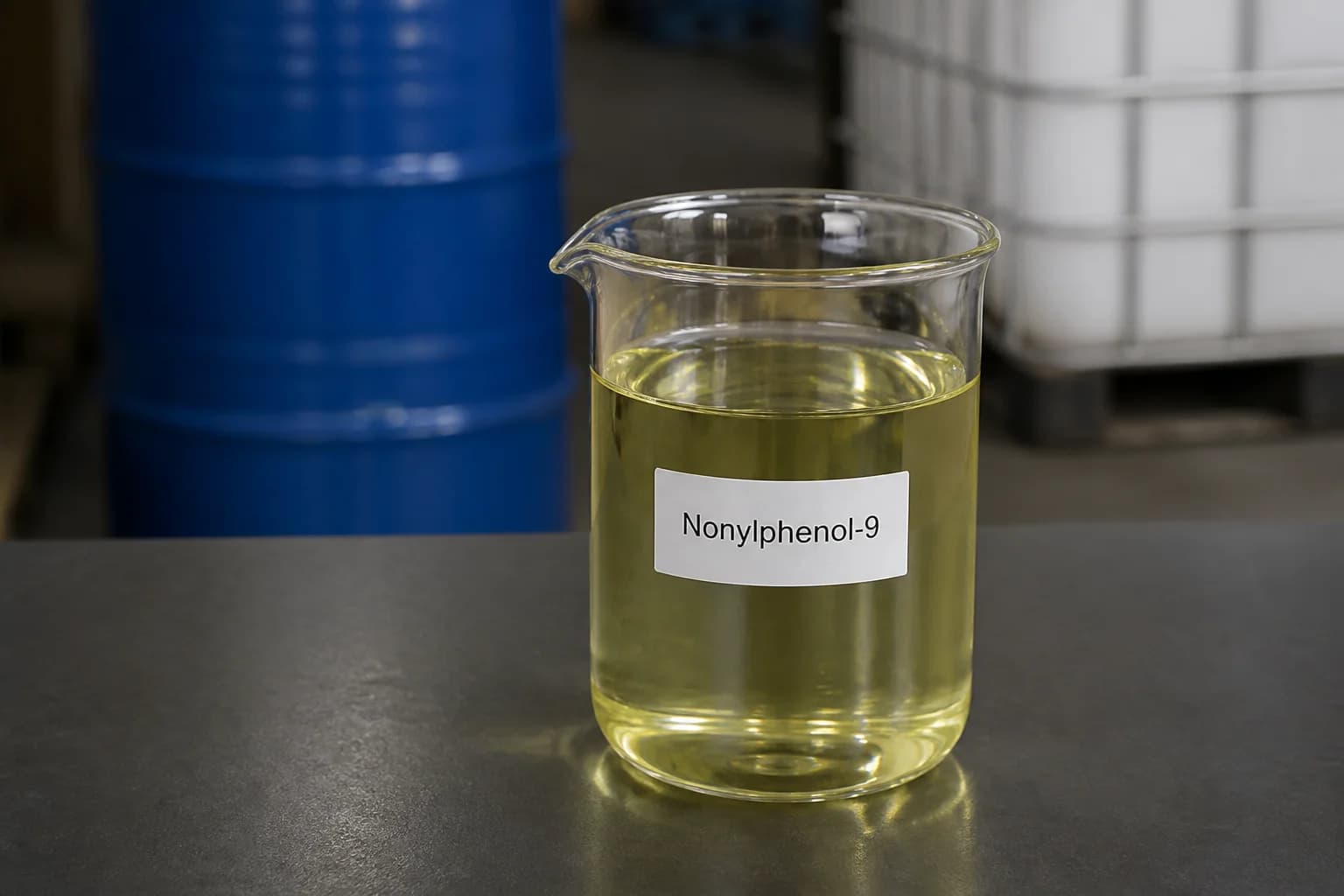
An NP-9 chemical price is only comparable when the specification and delivery basis are the same. A price per tonne can vary with ethoxylation range, active content, packaging, order quantity, origin, and agreed Incoterm. Begin with the current NP-9 product specification, then ask each bidder to quote against the same written request.
This page helps procurement teams evaluate FOB Hazira and CIF port offers without treating a published table as a live market price. It explains the required quote information, costs needing clarification, and document checks before release. It does not provide legal, customs, transport, or regulatory advice. Confirm transaction facts with qualified trade, safety, and regulatory professionals before any purchase order is issued.
How to Request an NP-9 Chemical Price
A published number cannot serve as a current commercial quote. Ask suppliers to confirm the product, shipment basis, quote date, quantity, and validity period in writing.
State the following information in every request:
Quote field | What the buyer should specify |
Product identity | NP-9 / nonylphenol ethoxylate 9, technical specification, and intended application |
Quantity | Trial quantity, commercial order quantity, release schedule, and required packaging |
Delivery basis | FOB Hazira, CIF named port, or another agreed Incoterms® 2020 rule |
Destination | Exact port for CIF, plus final delivery location if inland transport is required |
Commercial terms | Currency, quote validity, shipment window, payment terms, and document requirements |
Scope | Freight, insurance, packing, export clearance, destination charges, duties, taxes, and inland transport inclusions |
Do not compare nonyl phenol prices until every supplier has answered the same request. Record exclusions separately. This prevents a lower headline figure from masking a different product or cost scope.
FOB Hazira vs CIF Destination Port
FOB and CIF do not mean the same thing. They allocate costs, carriage responsibilities, and risk differently under the sales contract.
The International Chamber of Commerce identifies FOB and CIF as maritime trade terms. Under both terms, delivery and risk transfer when goods are loaded on board at the port of shipment. Under CIF, the seller arranges carriage and minimum insurance to the named destination port. Review the applicable Incoterms® 2020 guidance before agreeing the contract.
Term | Seller typically arranges | Buyer should confirm |
FOB Hazira | Export clearance and loading on the nominated vessel | Main carriage, cargo insurance, destination costs, import clearance, duties, and inland delivery |
CIF named port | Export clearance, sea carriage, and minimum cargo insurance | Exact destination port, insurance scope, local charges, customs responsibilities, and inland delivery |
The named CIF port is not automatically the buyer’s delivery location. A buyer expecting delivery beyond the port should agree the final destination, handover point, and responsible party in the sales contract.
Compare CIF Charges on a Like-for-Like Basis
CIF charges should be reviewed within a landed-cost model. A CIF offer can help compare sea freight and minimum insurance to one named port. It is not automatically the total delivered cost.
Compare each offer using the same specification, quantity, origin, shipment window, and destination. Then separate firm charges from estimates.
Cost area | Check before award |
Product | Grade, active content, packaging, net weight, and price unit |
Origin-side costs | Export packing, inland movement, export documents, and port handling |
Main carriage | Vessel schedule, transshipment exposure, freight validity, and surcharge treatment |
Insurance | Policy scope, insured value, exclusions, claims process, and named beneficiary |
Destination costs | Terminal handling, documentation, demurrage exposure, brokerage, duties, taxes, and inland transport |
Commercial risk | Payment trigger, inspection rights, rejection remedy, and delay provisions |
Use a bulk chemical buying checklist to align logistics, storage, supplier evidence, and approval responsibilities before purchase.
Confirm the NP-9 Specification Before Comparing Offers
NP-9 is commonly used as shorthand for nonylphenol ethoxylate 9. That shorthand alone is not a complete purchase specification. Buyers should confirm product identity, applicable test methods, limits, and approved use before comparing a price.
Request the current technical data sheet, safety data sheet, representative certificate of analysis, packaging details, country of origin, and lot-traceability process. Review the available technical data sheet against the finished formulation requirements.
Regulatory treatment can differ by country, application, concentration, and downstream use. The U.S. EPA identifies NP/NPEs as nonionic surfactants and describes environmental concerns. ECHA also identifies nonylphenol ethoxylates in its restriction record. Review the relevant EPA fact sheet and ECHA restriction record with qualified regulatory professionals before approving an intended use.
For pre-commercial application testing, Request a Sample.
Select a Supply Route Based on the Transaction
There is no universally best FOB or CIF route. Choose the commercial structure that matches logistics capability, shipment volume, urgency, and destination-process ownership.
Choose this route | When it may fit | Control required |
FOB Hazira | The buyer controls freight procurement and destination handling | Confirm vessel nomination, loading window, insurance, port cut-off, and document release |
CIF named port | The seller arranges sea carriage and minimum insurance | Confirm destination scope, insurance terms, local charges, and customs responsibilities |
Delivered inland term | The buyer needs a defined handover beyond the port | Define named place, unloading responsibility, customs party, and final-mile scope |
Ask a nonylphenol ethoxylate supplier to identify the legal seller, manufacturer, quality contact, logistics contact, and claims process. A quote should also state the specification revision, shipping documents, inspection basis, and remedy for nonconforming material.
Use this chemical distribution guide to review storage, handling, and delivery planning before confirming the order.
Frequently Asked Questions
1. What Makes a Quote Comparable?
A comparable quote covers the same material, technical specification, quantity, packaging, currency, origin, and shipment term. It should also state a quote-validity date and shipment window. Compare exclusions separately, especially freight, insurance, destination costs, customs charges, taxes, and inland delivery.
2. Why Can Nonyl Phenol Prices Differ Between Suppliers?
Nonyl phenol prices can differ because suppliers may quote different ethoxylation ranges, active-content targets, packaging, quantities, origins, or commercial terms. A lower offer may also exclude freight, insurance, destination-port costs, or documentation. Ask each supplier to quote the same written specification and Incoterm.
3. Are CIF Charges Included in a CIF Quote?
A CIF quote normally includes cost, insurance, and freight to the named destination port. It does not automatically include import duties, taxes, brokerage, terminal charges, demurrage, storage, or inland delivery. Confirm every inclusion and exclusion in the sales contract before issuing a purchase order.
4. Can a Buyer Use CIF Jakarta as a Delivered Price?
No. CIF Jakarta identifies the named destination port for the maritime shipment. It does not define import clearance, terminal handling, local charges, delivery beyond the port, or the final handover point. Confirm those items separately with the seller, broker, and logistics provider.
5. Can a Buyer Use CIF Manzanillo as a Delivered Price?
No. CIF Manzanillo is a shipment term tied to a named port, not a complete delivered-cost promise. Buyers should identify the applicable Manzanillo port, confirm destination charges, and document customs, terminal, insurance, and inland-delivery responsibilities before comparing another route.
6. What Documents Should Accompany an NP-9 Shipment?
The document set depends on the transaction and jurisdiction. Buyers commonly request a commercial invoice, packing list, transport document, certificate of analysis, safety data sheet, and origin information. Confirm required documents, document language, release timing, and consignee details before shipment.
Conclusion
Published values cannot substitute for a current, transaction-specific NP-9 quote. Buyers should align material identity, active content, packaging, quantity, origin, named port, Incoterms® version, and shipping window. They should also record inclusions, exclusions, documents, and the remedy for nonconforming material.
FOB and CIF allocate costs and risk differently. Neither term settles product quality, payment, title, regulation, or destination charges. Confirm those items in the sales contract and with qualified advisors before award. For a specification-led purchase discussion, Request a Quote.