

At a Glance
- Natural vitamin E is scientifically known as D-alpha-tocopherol or RRR-alpha-tocopherol and consists of a single isomer. Synthetic vitamin E, labeled as DL-alpha-tocopherol, is a blend of 8 different isomers, only 1 of which is identical to the natural form
- The FDA has established that natural vitamin E is about twice as bioavailable as synthetic vitamin E for food labeling purposes
- The bioavailability of natural vitamin E is about twice as high as synthetic forms, meaning twice the amount of synthetic vitamin E is required to match the same biological effect
- Natural vitamin E is derived from vegetable oils, primarily soybean oil. Synthetic vitamin E is produced from petrochemicals
- On a label, natural vitamin E is listed with a “d-” prefix; synthetic with a “dl-” prefix. That single letter is the key difference
- Synthetic isomers are more quickly broken down and excreted, meaning their retention in tissues is lower than natural vitamin E
- Both forms are FDA permitted and widely used in food, supplements, personal care, and animal nutrition
Vitamin E is one of those nutrients most people know they need but few actually understand well. It is an antioxidant, it protects cells from oxidative damage, it supports skin and immune health. All that is well established. What is less well known is that not all vitamin E supplements are the same. The natural vs synthetic vitamin E debate is not marketing noise. It is a real structural and biological difference that affects how much of what you take actually gets used by your body.
Natural vitamin E is a single stereoisomer. Synthetic vitamin E is a mixture of eight stereoisomers, only one of which is the same as natural vitamin E (alpha-tocopherol). The other seven are mirror-image variations that the human body processes less efficiently and excretes faster. For US consumers buying supplements, for food manufacturers making fortification decisions, and for personal care formulators choosing antioxidant grades, that structural difference has real practical implications.
Natural vs Synthetic Vitamin E: The Chemistry Behind the Difference
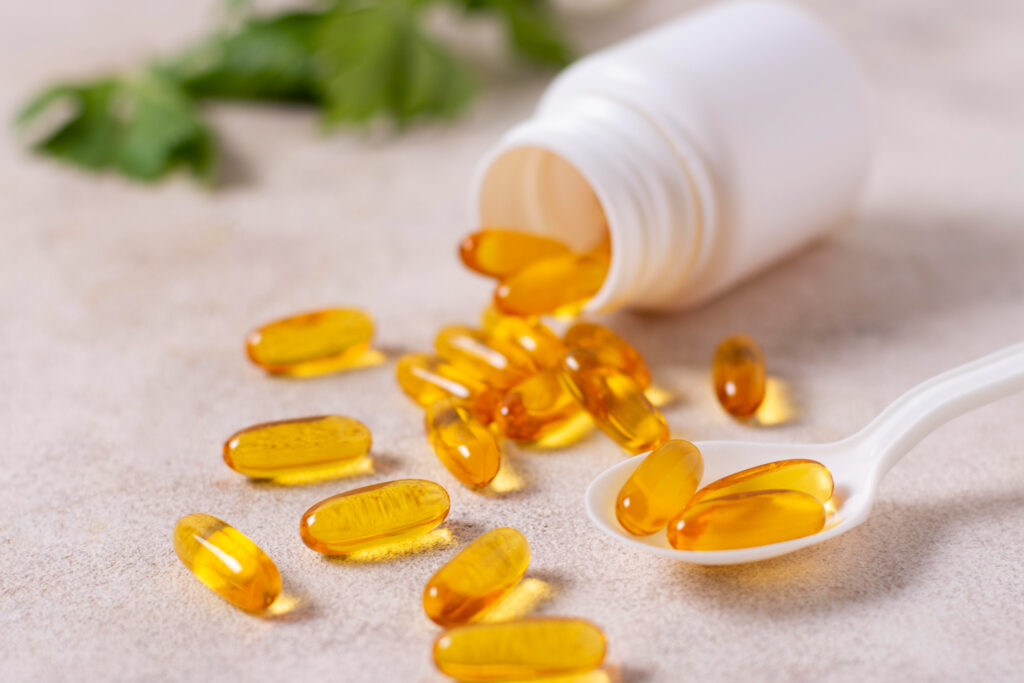
Vitamin E is not a single compound. Natural forms of vitamin E include four tocopherols and four tocotrienols (alpha, beta, gamma, and delta), which are essential as lipophilic antioxidants. Among these eight isoforms, alpha-tocopherol, the predominant form found in tissues, has traditionally received the most attention in disease prevention research due to its robust antioxidant activity.
The structural difference between natural and synthetic alpha-tocopherol comes down to stereochemistry. The vitamin E molecule has three points in its chain where the structure can go in two spatial directions. Natural vitamin E gets all three right. Synthetic vitamin E gets one right and the other seven are various combinations of the rest.
| Property | Natural Vitamin E (d-alpha) | Synthetic Vitamin E (dl-alpha) |
| Scientific name | RRR-alpha-tocopherol | All-rac-alpha-tocopherol |
| Label prefix | d- (e.g., d-alpha-tocopherol) | dl- (e.g., dl-alpha-tocopherol) |
| Number of stereoisomers | 1 (the correct one) | 8 (only 1 is identical to natural) |
| Source | Vegetable oils (soybean, sunflower, palm) | Petrochemical synthesis |
| Relative bioavailability | Baseline (100%) | Around 50% compared to natural |
| Tissue retention | Longer | Shorter, excreted faster |
| Cost | Higher | Lower |
Reading the label is genuinely simple once you know the rule. On a supplement label, natural vitamin E is listed as d-alpha tocopherol, d-alpha tocopheryl acetate, or d-alpha tocopheryl succinate. In contrast, synthetic forms of vitamin E are labeled with a dl- prefix. That is the only thing you need to check.
Natural Vitamin E vs Synthetic Vitamin E: The Bioavailability Gap
This is the part that matters most for anyone making a purchasing or formulation decision.
Research indicates that the difference between natural and synthetic vitamin E is crucial in how our bodies absorb and utilize these two variants. Natural vitamin E is known to be more bioavailable compared to its synthetic equivalent. Moreover, it stays longer in human tissues, whereas the synthetic version is expelled more swiftly. Higher levels of D-alpha-tocopherol than DL-alpha-tocopherol in various tissues including plasma, red blood cells, and muscles corroborate this.
Why does this happen? The body has a specific protein called alpha-tocopherol transfer protein (alpha-TTP) in the liver. This protein selectively binds and retains the RRR form of alpha-tocopherol and exports it into the bloodstream. The other seven synthetic stereoisomers are not recognized well by this protein and are preferentially metabolized and excreted. Your liver is essentially sorting the two forms and keeping the natural one.
It is generally accepted that 1 mg of D-alpha-tocopherol is equivalent to 1.49 IU of vitamin E activity, compared to 1 IU for synthetic DL-alpha-tocopheryl acetate, reflecting the higher biological potency of the natural form.
In practical supplement terms: if a label says 100 IU of natural vitamin E, you are getting roughly twice the biological effect of 100 IU from a synthetic source. That means if you are comparing two supplements on price per IU, the synthetic one is not necessarily cheaper on a per-effective-dose basis.
Forms of Vitamin E: Free Alcohol vs Esterified
Beyond natural versus synthetic, vitamin E supplements also come in esterified and non-esterified forms. This matters for stability and how the supplement behaves in different products.
In order to improve the stability of alpha-tocopherol for use as a supplement, it is often chemically modified through a process known as esterification. The two most common esters used for stabilizing alpha-tocopherol are the acetate ester and the succinate ester. The addition of this acetate ester group greatly improves the stability of alpha-tocopherol. When ingested the acetate group is rapidly removed by an enzyme in the gut to give free alpha-tocopherol.
| Form | Example Label Name | Best For | Key Feature |
| Free alcohol, natural | d-alpha-tocopherol | Liquid supplements, oils, cosmetics | Immediate antioxidant activity |
| Acetate ester, natural | d-alpha-tocopheryl acetate | Capsules, fortified foods, feeds | Better shelf stability |
| Succinate ester, natural | d-alpha-tocopheryl succinate | Water-dispersible supplements | Good for water-based formulas |
| Free alcohol, synthetic | dl-alpha-tocopherol | Lower-cost fortification | Lower bioavailability |
| Acetate ester, synthetic | dl-alpha-tocopheryl acetate | Commodity supplements, animal feed | Cheapest, most common form globally |
For most oral supplements, the esterified forms have no meaningful difference in final bioavailability compared to free alcohol forms, because the gut enzymes cleave the ester quickly. Research has demonstrated there is no difference between the bioavailability of the acetate and free forms of alpha-tocopherol after ingestion.
Health Benefits: Are They Different Between the Two Forms
For most people taking vitamin E for general antioxidant support, the core benefits are the same regardless of form. Vitamin E is a powerful biological antioxidant that protects cells from oxidative stress caused by free radicals, reducing the risk of chronic diseases including heart disease, cancer, and neurodegenerative disorders. It supports the immune system and promotes skin health by protecting against UV radiation and improving skin barrier function.
Where the difference shows up is in clinical situations where higher tissue concentrations matter:
- Cardiovascular protection – Studies on vitamin E’s role in reducing LDL oxidation tend to show better outcomes with natural d-alpha-tocopherol where tissue loading is the mechanism
- Immune function – Some research suggests the natural form is more effective at supporting lymphocyte function and immune response
- Skin antioxidant protection – In topical applications, natural vitamin E’s longer retention in tissue is a direct advantage
- Deficiency correction – When correcting documented deficiency, natural forms raise blood tocopherol levels faster and more efficiently per milligram
For everyday supplementation at standard doses with no specific clinical concern, either form works. The natural form is simply more efficient per milligram taken.
Natural Vitamin E vs Synthetic Vitamin E in Food and Supplement Formulation
US food manufacturers and supplement brands make deliberate choices between these forms based on application requirements.
In dietary supplements: Most quality brands targeting health-conscious US consumers now use d-alpha-tocopherol or d-alpha-tocopheryl acetate. Consumers who read labels have become aware of the d- versus dl- distinction, and it is a visible quality signal.
In fortified foods: Synthetic dl-alpha-tocopheryl acetate is still dominant because of cost and the regulatory IU conversion system, which historically underrepresented the bioavailability gap. From an industrial perspective, compliance with regulatory benchmarks is essential. Manufacturers must consider both the bioavailability and stability of the vitamin E forms they use, particularly when selecting between free tocopherol and esterified derivatives such as tocopheryl acetate or succinate.
In personal care: Natural vitamin E as d-alpha-tocopherol or mixed tocopherols is standard in premium skincare. It serves both as an active antioxidant for skin benefits and as a natural preservative that extends product shelf life by protecting oils from oxidation. Synthetic tocopherol is used in lower-cost formulations where the cost difference matters more than the natural origin claim.
In animal nutrition: Previous studies have shown that D-alpha-tocopherol exhibited superior bioavailability than synthetic DL-alpha-tocopherol acetate in retaining in tissues, alleviating lipopolysaccharide-induced inflammatory response, and improving meat quality and muscular antioxidant capacity. Premium animal feed formulations are moving toward natural vitamin E for these reasons.
Dosage and Safety: What US Consumers Should Know
The FDA’s recommended dietary allowance for vitamin E is 15 mg of alpha-tocopherol daily for adults. The tolerable upper limit from supplements is 1,000 mg daily for adults. According to the 2024 EFSA Scientific Opinion, the tolerable upper intake level for alpha-tocopherol is set at 300 mg per day, maintained from earlier evaluations as no new evidence was found to alter the dose-response relationship for adverse effects.
At standard supplementation doses of 100 to 400 IU, both natural and synthetic forms are safe. A few things worth knowing:
- High-dose vitamin E supplementation above 400 IU daily has been associated with increased all-cause mortality in some meta-analyses, particularly for synthetic forms at high doses
- Vitamin E can inhibit platelet aggregation and should be used with caution by people on blood thinners like warfarin
- Taking vitamin E with fat improves absorption since it is a fat-soluble nutrient. Take it with a meal that contains some fat
- For people buying based on label IU: at equal IU doses, natural and synthetic have similar blood levels because IU values were already adjusted for the bioavailability difference. The natural form still wins on tissue retention and long-term tissue loading
How to Read a Vitamin E Label: Quick Reference
This is genuinely simple and worth knowing:
| What Label Says | What It Means |
| d-alpha-tocopherol | Natural, free form, highest bioavailability |
| d-alpha-tocopheryl acetate | Natural, esterified, good stability |
| d-alpha-tocopheryl succinate | Natural, water-dispersible, good for some applications |
| dl-alpha-tocopherol | Synthetic, free form |
| dl-alpha-tocopheryl acetate | Synthetic, esterified, most common cheap form |
| Mixed tocopherols | Natural blend of alpha, beta, gamma, delta forms |
| Tocopherols (without d- or dl-) | Usually natural, check context |
If the label just says “vitamin E” with no further specification, you cannot tell what you are getting. That itself is a quality signal worth noting.
Conclusion
The natural vs synthetic vitamin E comparison has a clear answer rooted in well-established biochemistry, not marketing. Natural vitamin E is twice as bioavailable, retained longer in tissues, and derived from plant-based vegetable oils. Synthetic vitamin E is cheaper, more common in commodity applications, and still functional but requires roughly double the dose to match natural vitamin E’s tissue effects.
For US consumers, the practical take is simple: look for the d- prefix on supplement labels, especially if you are supplementing for a specific health goal rather than just baseline nutritional coverage. For food manufacturers, supplement brands, and personal care formulators evaluating natural vitamin E vs synthetic vitamin E for their products, the choice comes down to your application, your target consumer, and whether the natural origin claim matters for your positioning.
For manufacturers sourcing d-alpha-tocopherol, mixed tocopherols, tocopheryl acetate in natural or synthetic grades, or related antioxidant raw materials at commercial scale, Elchemy connects US buyers with verified global suppliers offering complete technical documentation, certificates of analysis, and supply chains built for the compliance demands of the American food, supplement, and personal care market.