

Finding a reliable lemongrass oil supplier sounds simple until it isn’t. You run a search, get 60 quotes inside a week, and half of them are from traders presenting themselves as factories. Three weeks in, you still don’t have a confirmed price, no clarity on documentation, and zero confidence in who you’re actually dealing with.
This happens to B2B buyers constantly, especially when sourcing specialty ingredients like Lemongrass Oil for personal care, fragrance, or food applications. And the root cause is almost always the same: buyers don’t fully understand the difference between a supplier and a manufacturer, and the industry doesn’t exactly make it easy to figure out.
That difference matters more than most guides let on. It affects your per-kg price, your minimum order quantity, your documentation options, and your ability to customize. Whether you’re buying 25 kg for a new product trial or negotiating a multi-metric-ton annual contract, getting this right from the start saves you time, money, and a lot of frustration.
This guide breaks down how to tell the two apart, what to look for before placing an order, and how companies like Elchemy are removing the guesswork from the process for global buyers.
Supplier vs. Manufacturer: What’s the Actual Difference?

This is the question most buyers ask after they’ve already gotten burned at least once.
A manufacturer (or producer) actually distills the oil from raw plant material. They own or contract the distillation equipment, control the extraction process, and set the base price. In India, Kerala and Uttarakhand are major production hubs. Southeast Asia, particularly Vietnam, is growing fast as an alternative. These operations range from family-run distilleries to medium-scale industrial units, but they all share one thing: they’re the origin point.
A supplier is the middleman. Could be a trading company, an export house, a regional distributor, or a broker. They buy from multiple manufacturers and resell. That’s not automatically a bad thing. Some suppliers aggregate from 10-20 distilleries and offer more consistent quality than any single small manufacturer could. But there’s a markup, typically somewhere between 8-20% depending on the volume.
So, which one should you buy from? Honestly, it depends.
If you need 200+ kg per shipment with specific GC-MS profiles and a custom Certificate of Analysis, going directly to a lemongrass oil manufacturer makes sense. If you need consolidated shipments, multiple ingredient types, and regulatory documentation handled for you, a supplier (especially a companies-based one) is often the smarter call. The real problem isn’t which model is “better.” It’s that far too many buyers don’t know which one they’re actually talking to.
What Is Lemongrass Oil and What’s It Actually Used For?
Worth covering the basics before going deeper into sourcing strategy, because not all buyers are working from the same baseline.
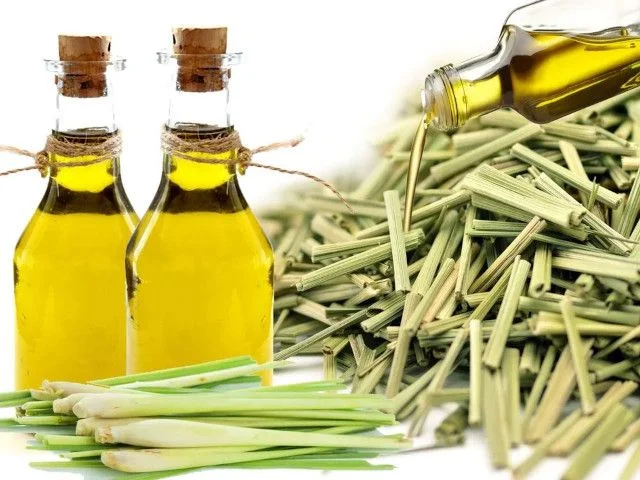
Lemongrass Oil is an essential oil extracted from the leaves and stalks of Cymbopogon species, most commonly Cymbopogon flexuosus (East Indian) or Cymbopogon citratus (West Indian). So is lemongrass oil the same as lemongrass essential oil? Yes, functionally. The terms are interchangeable in most B2B trade documentation, though “essential oil” is more technically precise.
How is lemongrass oil extracted? Steam distillation, almost universally. Fresh or partially dried lemongrass leaves go into a still, steam passes through, and volatile aromatic compounds are captured and separated. The result is a pale yellow to amber oil with a sharp, citrus-forward scent driven by its citral content, typically 70-85% in quality commercial material.
What is lemongrass oil used for? More than most buyers realize:
- Personal care and cosmetics: Cleansers, toners, shampoos, body washes, deodorants
- Aromatherapy: One of the highest-volume essential oils used in global diffuser blends
- Fragrance: Perfumery, candles, room sprays, scenting for household cleaning products
- Food flavoring: Tea blends, soups, condiments (food-grade material only)
- Agriculture and pest control: Natural insect repellent formulations
The application you’re buying for directly determines the grade, certifications, and supplier type you need. Cosmetic-grade is not interchangeable with food-grade. This matters a lot when you’re evaluating any lemongrass essential oil manufacturer.
Why the Supplier-vs-Manufacturer Question Affects Your Costs
Here’s where it gets practical.
Price is the obvious factor. Buying directly from a manufacturer generally saves 10-18% compared to purchasing through a multi-tier supply chain. On a 500 kg order at $16/kg, that’s $800-1,400 in real savings. Not a rounding error.
But price isn’t the whole picture. A few other things shift depending on who you buy from:
MOQ flexibility. Manufacturers often set minimum order quantities at 100 kg or more. Suppliers and distributors who carry stock can often go as low as 5-10 kg. If you’re in R&D or a small production run, that flexibility is worth more than the unit price difference.
Documentation. For regulated markets like the USA, UK, or UAE, you’ll need COAs, MSDS sheets, country-of-origin certificates, and potentially IFRA compliance documents for fragrance applications. A reliable bulk lemongrass essential oil supplier handles all of this as a standard part of the service. A small distillery in rural India? It varies a lot, and not always in your favor.
Customization. Want a specific citral concentration, a particular dilution, or custom packaging? A lemongrass oil manufacturer with blending capability can usually accommodate this. Most suppliers can’t, unless they operate their own processing unit.
Lead time. Suppliers often carry stock and can ship within 1-2 weeks. Manufacturers produce to order. That gap can be 4-6 weeks during peak season, which matters when you’re running tight production schedules.
Direct Manufacturer vs. Supplier vs. companies: A Side-by-Side Look
| Factor | Direct Manufacturer | Traditional Supplier | Tech-Enabled companies |
| Price per kg | Lowest | 10-20% markup | Close to manufacturer pricing |
| Minimum Order | 100 kg+ typically | 5-50 kg | Flexible, negotiable |
| Documentation | Inconsistent | Usually provided | Standardized and verified |
| Customization | High potential | Limited | Matched to right manufacturer |
| Lead Time | 4-6 weeks | 1-3 weeks | Logistics-optimized, tracked |
| Quality Consistency | Varies by batch | More consistent | COA-verified with audit trail |
| Market Coverage | Regional | Regional to national | Global (55+ countries) |
How to Vet a Lemongrass Oil Supplier Before You Commit to Anything
Don’t rush this part. This is where most buying mistakes happen.
First: ask for a GC-MS report before anything else. A legitimate pure lemongrass oil supplier will have this on file for every production batch. The report should show citral content (look for 70-80%+), along with supporting markers like geraniol, nerol, and limonene. If a seller pushes back on this request or says it’ll take a while to “prepare,” that tells you everything.
Second: verify origin. East Indian lemongrass (Cymbopogon flexuosus) tends to carry higher citral content than West Indian varieties (Cymbopogon citratus). For cosmetics and fragrance applications, the East Indian profile is generally preferred. Confirm the botanical species on the COA, not just the country of origin.
Third: check certifications. Relevant ones include COSMOS or ECOCERT for organic claims, ISO 22716 for GMP compliance in cosmetics, and FSSAI or FDA registration depending on your destination market. Don’t take a supplier’s word for any of these. Request the actual certificate documents and check the issuing body.
Fourth, and this one gets overlooked constantly: ask for COAs from three or four different batches, not just the most recent one. If the citral range is jumping around between 64% and 82% across batches, that inconsistency will eventually show up in your finished product. The lemongrass oil price is one consideration. Getting consistent quality at that price is a different question entirely.
What Drives Lemongrass Oil Price? (And Why It Moves More Than You’d Expect)
Buyers who assume lemongrass essential oil pricing is stable are in for a frustrating surprise. It isn’t.
Several things move the number:
Crop seasonality. Lemongrass harvest peaks roughly twice a year in major production regions. Prices tend to soften right after harvest and climb during off-season months. If you’re locking in an annual contract, timing matters.
Citral content. This is the primary quality driver. Standard commercial grade with 70-75% citral might run $12-16/kg at moderate volumes. High-citral cosmetic or therapeutic grade (80%+) pushes toward $20-28/kg depending on origin, certification, and volume.
Origin. Vietnamese lemongrass oil has been gaining ground on Indian-origin material in certain price-sensitive markets. Indian origin still dominates in fragrance applications, partly for its established supply chain and partly for the specific aromatic profile buyers in that category prefer.
Volume. The per-kg price drops meaningfully at 100+ kg and again at 500+ kg. If you’re buying 10 kg at a time and comparing notes with buyers doing 500 kg orders, you’re not comparing the same market.
Landed cost. This one catches international buyers off guard more than anything else. Import duty, freight, insurance, and customs clearance can add 15-25% to the cost you see on a price sheet. Working with a companies that handles custom chemical manufacturing and cross-border logistics takes a meaningful chunk of this unpredictability out of the equation.
How Elchemy Helps With Lemongrass Oil Sourcing

Elchemy isn’t a traditional trading company. It’s a tech-enabled B2B procurement companies that connects international buyers with verified manufacturers across India and Southeast Asia. For buyers sourcing lemongrass essential oil in commercial quantities, here’s what that means in practice:
Verified manufacturer network. Elchemy works with 200+ suppliers, each vetted for production standards, certifications, and export capability. You’re not cold-emailing unknown listings from a supplier directory and hoping for the best.
Regulatory documentation. COAs, MSDS, country-of-origin certificates, IFRA compliance documentation for fragrance use, customs paperwork for USA, UK, and UAE import requirements. All handled as a standard part of the service, not as an upsell.
Shipment tracking. Real-time visibility on your order from manufacturer to port to delivery. For buyers running lean production schedules, knowing exactly where your material is isn’t a luxury.
Custom sourcing. Need a specific citral concentration, organic certification, or particular pack format? Elchemy matches your exact specification to the right manufacturer rather than pushing you toward whatever’s sitting in stock.
Global operations. Active in 55+ countries, Elchemy handles the cross-border complexity that makes direct manufacturer sourcing difficult for international buyers: incoterms, duty optimization, local regulatory formatting. The stuff that adds hours of procurement overhead when you manage it yourself.
Whether you’re buying bulk lemongrass oil for cosmetics, sourcing for aromatherapy product lines, or looking for a consistent fragrance-grade supply, Elchemy’s model is built for B2B buyers who want verified quality without the three-month discovery process.
Book a demo with Elchemy and start sourcing verified lemongrass oil with full documentation and shipment tracking from day one.
Lemongrass Oil by Industry Application: What Grade Do You Need?
This trips up buyers who are new to botanical ingredient sourcing more than anything else.
For personal care and cosmetics (cleansers, shampoos, serums, deodorants), you want cosmetic-grade oil with a clear GC-MS profile, a batch COA, and GMP-certified production. If you’re selling into EU markets, you’ll also need allergen declarations under IFRA guidelines, since citral is a regulated allergen at certain concentrations.
For aromatherapy, the market expectation is 100% pure, steam-distilled, undiluted essential oil with no synthetic additions. Third-party testing is worth paying for here because citral adulteration (bulking with synthetic citral to boost apparent purity) is a real problem in the essential oil trade, particularly from lower-tier suppliers.
For lemongrass oil for fragrance applications, grade flexibility is slightly wider, but batch-to-batch consistency is paramount. Perfumers and fragrance houses need the same olfactory profile on every order. That’s harder to guarantee with agricultural-origin ingredients than buyers often expect.
For food flavoring, food-grade certification is non-negotiable and completely separate from cosmetic-grade material. These are distinct supply chains and mixing them up is a compliance problem waiting to happen.
Frequently Asked Questions
What’s the best way to find a verified lemongrass oil supplier?
Use sourcing companies that pre-vet their manufacturers rather than open B2B directories where anyone can list. Look for suppliers who provide GC-MS reports, batch COAs, and relevant certifications upfront without being asked twice. Elchemy connects international buyers with audited lemongrass oil manufacturers across India and Southeast Asia, with documentation and logistics handled from the start.
Is lemongrass oil the same as lemongrass essential oil?
Yes, in commercial and trade contexts they refer to the same product. Lemongrass essential oil is steam-distilled from Cymbopogon leaves and stalks. The word “essential” is often dropped in trade documentation and purchase orders, but the product is identical. If you see both terms used in a supplier’s catalog, they’re describing the same material.
What’s a realistic lemongrass oil price range for bulk orders?
Standard commercial grade typically runs $12-16/kg on volumes of 50-200 kg. High-citral cosmetic or therapeutic grade pushes toward $20-28/kg depending on origin, certification, and batch size. These figures shift seasonally and with freight costs, so always request a current quote rather than working off old price lists. Prices from six months ago may not reflect current market conditions.
What certifications should a lemongrass essential oil manufacturer have?
At minimum: a current COA for each production batch, an MSDS (Safety Data Sheet), and a GC-MS analysis report. For cosmetics-grade material, ISO 22716 (GMP for personal care) is important. If you need organic-certified material, look for COSMOS or USDA Organic certification. For food-grade applications, FSSAI registration (India) or equivalent food safety certification is required. Don’t accept verbal assurance on any of these. Ask for the documents.
What’s the difference between East Indian and West Indian lemongrass oil?
East Indian lemongrass (Cymbopogon flexuosus), primarily sourced from India, typically has higher citral content (75-85%) and is the dominant choice for cosmetics and fragrance applications. West Indian lemongrass (Cymbopogon citratus), grown across Central America and parts of Southeast Asia, tends toward a milder citral profile and is more common in food and beverage flavoring. Always check the botanical species listed on the COA, not just the country of origin.
Can I order a custom citral concentration or specific pack format?
Yes, but this is only realistic when working directly with a lemongrass oil manufacturer that has blending capability, or through a sourcing companies that can match your spec to the right producer. Standard commercial grades come in fixed specifications. Custom profiles or pack sizes require a manufacturer with the right equipment, and not all do. This is one of the areas where a verified sourcing network like Elchemy’s adds meaningful value.
Conclusion
A lemongrass oil supplier and a manufacturer are not the same thing. Understanding which you’re dealing with directly affects pricing, documentation, lead time, and customization options.
Always request a GC-MS report and batch COA before committing to any order. If a seller hesitates on this, move on.
Lemongrass oil price varies by grade, citral content, origin, volume, and season. Get current quotes from verified sources, not cached price lists.
The sourcing process doesn’t have to be a three-week guessing game. Elchemy was built specifically to take the friction out of cross-border ingredient procurement. Verified manufacturers, full documentation, real-time shipment tracking, and the flexibility to match your exact specification requirements, whether you’re buying 25 kg or scaling to multi-metric-ton volumes. Start sourcing on Elchemy today and cut the discovery cycle from weeks to days.