

At a Glance
• US industrial facilities use 18.2 billion gallons of water daily requiring treatment before discharge
• Zero liquid discharge (ZLD) systems recover 95-98% of water eliminating wastewater streams entirely
• Membrane bioreactors (MBR) reduce treatment footprint by 50% versus conventional activated sludge
• Advanced oxidation processes destroy pharmaceuticals and PFAS that conventional treatment misses
• Industrial water treatment costs average $0.50-$4.00 per 1,000 gallons depending on complexity
• EPA effluent limits for BOD, TSS, metals, and nutrients drive technology selection
• Smart monitoring with real-time sensors reduces chemical usage 15-30% through optimization • Biological treatment handles 10,000-50,000 mg/L organic loads cost-effectively
Manufacturing facilities across America wrestle with contradictory demands. Production processes require massive water volumes steel mills need 60,000 gallons per ton of steel, chemical plants consume millions of gallons weekly, food processors use water for everything from washing to cooling. But every gallon used must eventually discharge somewhere. Municipal treatment plants won’t accept high-strength industrial waste. Direct river discharge violates Clean Water Act standards. The traditional approach of dilution, basic treatment, and hoping for leniency doesn’t work anymore when EPA inspectors arrive with sampling equipment and violation notices carry $25,000 per day fines.
Modern industrial water treatment solves this through systems treating contamination at the source, recovering water for reuse, and discharging only clean effluent meeting or exceeding regulatory standards. Understanding which technologies suit specific waste streams, whether biological treatment for food processing organics, membrane filtration for pharmaceutical residues, or chemical precipitation for metal plating rinses determines both regulatory compliance and operational economics. The industrial water treatment system a facility needs depends on influent characteristics, discharge requirements, space constraints, and whether water recovery justifies capital investment in advanced treatment.
Regulatory Drivers and Compliance Requirements
Federal Effluent Limitations
The Clean Water Act establishes National Pollutant Discharge Elimination System (NPDES) permits for facilities discharging to surface waters. These permits specify concentration limits for conventional pollutants plus industry-specific parameters.
Standard NPDES parameters: Biochemical oxygen demand (BOD): Typically 20-30 mg/L monthly average Total suspended solids (TSS): Usually 30-40 mg/L monthly average pH: 6.0-9.0 standard units Oil and grease: 10-15 mg/L for most industries Ammonia nitrogen: 2-10 mg/L depending on receiving water
Industry-specific limits add complexity. Metal finishing facilities face strict limits on chromium, copper, nickel, and zinc often in the range of 0.1-2.0 mg/L. Pharmaceutical manufacturers deal with limits on active ingredients measured in micrograms per liter. Food processors must control nitrogen and phosphorus preventing downstream eutrophication.
Violations trigger escalating consequences. First violations might result in warning letters and compliance schedules. Repeat violations bring penalties of $25,000-$50,000 per day. Significant noncompliance can lead to facility shutdown orders and criminal prosecution of responsible individuals.
Pretreatment Standards for Indirect Discharge
Facilities discharging to municipal sewers must meet local pretreatment standards. These protect wastewater treatment plants from disruption and prevent pass-through of pollutants municipalities can’t remove.
Common pretreatment limits: Heavy metals: Often 1-5 mg/L for copper, chromium, nickel, zinc pH: Usually 5.0-11.0 (wider than surface water discharge) Temperature: 40-60°C maximum to protect biological treatment Fats, oils, grease: 100-300 mg/L depending on municipality Toxic organics: Specific limits for priority pollutants
Municipalities charge based on strength and volume. A food processor with high BOD might pay $3-$8 per 1,000 gallons versus $1.50-$2.50 for typical domestic sewage. Surcharges for strength over baseline create financial incentive for pretreatment even when not required for compliance.
Some pollutants are categorically prohibited. Flammable liquids, corrosives causing treatment plant damage, toxic substances killing biological treatment, and materials creating hazards in sewers cannot discharge regardless of dilution. These require on-site treatment or off-site hazardous waste disposal.
Typical Discharge Limits by Pathway
| Parameter | Surface Water (NPDES) | Municipal Sewer (Pretreatment) | Practical Implication |
| BOD₅ | 20-30 mg/L | 250-400 mg/L | Surface water much stricter |
| TSS | 30-40 mg/L | 250-350 mg/L | Surface water much stricter |
| pH | 6.0-9.0 | 5.0-11.0 | Sewer more tolerant |
| Copper | 0.1-1.0 mg/L | 1-5 mg/L | Metals still restricted |
| Oil & grease | 10-15 mg/L | 100-300 mg/L | Significant difference |
| Ammonia-N | 2-10 mg/L | Often no limit | Depends on treatment plant |
Biological Treatment Systems
Activated Sludge Processes
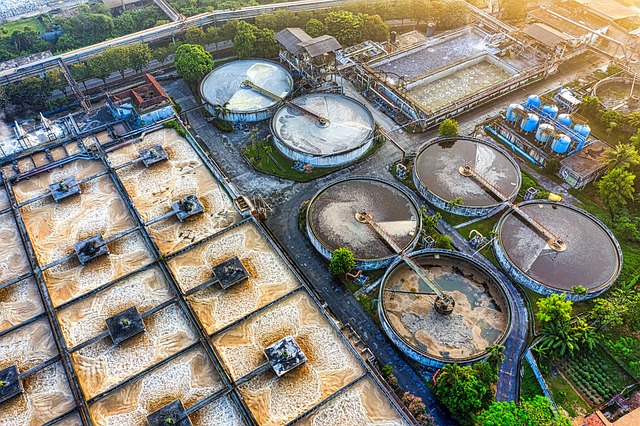
Activated sludge remains the workhorse for high-volume, biodegradable industrial waste. Microorganisms consume organic compounds as food converting them to carbon dioxide, water, and biomass. The process handles organic loads from 200 mg/L BOD to over 5,000 mg/L in properly designed systems.
The basic process involves aeration tanks where wastewater mixes with microorganism-rich sludge. Air bubbles provide oxygen for aerobic bacteria to metabolize organics. After several hours, the mixture flows to clarifiers where sludge settles. Clear water discharges while settled sludge returns to aeration tanks maintaining bacterial population.
Process variations: Extended aeration: Long retention time (18-24 hours) for difficult waste Sequencing batch reactors (SBR): Fill-react-settle-decant in single tank Oxidation ditches: Circular flow pattern, simple operation Contact stabilization: Separate aeration for influent contact and sludge stabilization
Food and beverage industries commonly use activated sludge. Brewery wastewater contains sugars, starches, and proteins microorganisms readily consume. Dairy processing waste has high BOD from milk solids that biological treatment handles efficiently. Operating costs run $0.80-$2.00 per 1,000 gallons including power, chemicals, and sludge disposal.
Challenges include sludge handling, nutrient balance, and sensitivity to toxics. Systems produce 0.3-0.6 kg dry sludge per kg BOD removed requiring dewatering and disposal. Bacteria need balanced nutrients — roughly 100:5:1 ratio of BOD:nitrogen:phosphorus. Toxic substances like heavy metals or biocides kill bacteria disrupting treatment.
Membrane Bioreactors (MBR)
MBRs combine biological treatment with membrane filtration replacing conventional clarifiers. Hollow fiber or flat sheet membranes submerged in aeration tanks filter mixed liquor through 0.04-0.4 micron pores retaining all suspended solids and bacteria.
The advantages are compelling. Footprint reduces 50-70% versus conventional activated sludge since clarifiers are eliminated and biomass concentration runs 3-4 times higher. Effluent quality is superior with TSS near zero and most bacteria removed. The high solids retention time allows slow-growing bacteria to establish degrading compounds conventional systems can’t handle.
MBR benefits: Smaller footprint: 50-70% space reduction Better effluent quality: <5 mg/L BOD, <1 mg/L TSS achievable Pathogen removal: Log 4-6 reduction in bacteria Flexible operation: Tolerates load fluctuations Disinfection reduction: Membranes remove most bacteria
Pharmaceutical and chemical manufacturing increasingly deploy MBRs. Complex organic compounds benefit from long sludge ages that conventional systems can’t maintain without enormous clarifiers. Tight spaces in existing facilities favor compact MBR design.
The trade-offs involve higher capital cost and membrane maintenance. MBR systems cost 30-60% more than conventional activated sludge. Membranes require cleaning with chemicals to remove fouling. Lifespan averages 7-10 years before replacement. But for high-strength waste in space-constrained sites needing excellent effluent quality, MBRs often justify premium cost.
Anaerobic Treatment
Anaerobic digestion handles very high strength waste (BOD >2,000 mg/L) more economically than aerobic treatment. In the absence of oxygen, anaerobic bacteria convert organics to methane and carbon dioxide. The methane can fuel boilers or generators offsetting treatment costs.
The process occurs in enclosed reactors operating at 35°C (mesophilic) or 55°C (thermophilic). Hydraulic retention time ranges from hours to days depending on system design. Popular configurations include upflow anaerobic sludge blanket (UASB), anaerobic sequencing batch reactors, and covered lagoons.
Anaerobic treatment advantages: Low energy use: No aeration energy required Biogas production: Methane generated can fuel boilers/generators High loading capacity: Handles BOD 5,000-50,000 mg/L Less sludge: 0.05-0.15 kg sludge per kg BOD versus 0.3-0.6 aerobic Nutrient preservation: Nitrogen stays in solution for recovery
Breweries, distilleries, and food processors with high-strength waste favor anaerobic pretreatment. A brewery might treat 50,000 mg/L BOD waste anaerobically reducing load 80-90% then polish with aerobic treatment. The methane generated provides 60-70% of boiler fuel needs.
Limitations include slower startup, temperature sensitivity, and incomplete treatment. Anaerobic systems take 3-6 months to develop stable bacterial populations versus 2-4 weeks for aerobic. Process upsets from temperature or pH changes cause weeks of recovery time. Effluent from anaerobic treatment typically still contains 200-500 mg/L BOD requiring aerobic polishing before discharge.
Physical-Chemical Treatment Processes
Chemical Precipitation
Chemical precipitation removes dissolved metals and some other inorganics by converting them to insoluble solids that settle and filter out. This is essential for metal finishing, mining, and manufacturing operations with metal-bearing waste.
The most common approach uses hydroxide precipitation. Adding lime or caustic soda raises pH causing metals to form metal hydroxides that precipitate. Different metals precipitate at different pH values requiring careful control. Chromium precipitates at pH 8-9, copper at 9-10, zinc at 9.5-10.5.
Metal precipitation process: pH adjustment: Add lime or caustic to optimal pH for target metal Flocculation: Add polymer to agglomerate precipitate Settling: Allow metal hydroxide sludge to settle in clarifier Filtration: Remove remaining solids through filters Sludge handling: Dewater and dispose of metal-bearing sludge
Electroplating facilities routinely use this technology. Rinse water containing chromium, nickel, copper, and zinc treats in batch or continuous reactors. Chemical costs run $0.50-$2.00 per 1,000 gallons depending on metal concentrations and desired removal efficiency.
Challenges include sludge disposal costs and inability to recover valuable metals. Metal hydroxide sludge is hazardous waste requiring disposal at $100-$400 per ton. For operations with high-value metals like silver or gold, precipitation wastes resources better recovered through electrolytic or ion exchange methods.
Membrane Filtration
Membrane processes physically separate contaminants through size exclusion. Different membrane types handle different contaminant sizes from microfiltration (0.1-10 microns) through ultrafiltration, nanofiltration, to reverse osmosis (<0.001 micron).
Reverse osmosis (RO) produces high-purity water by applying pressure forcing water through semi-permeable membranes that reject dissolved salts, organics, and nearly all contaminants. Industrial RO operates at 150-600 psi producing permeate with <50 mg/L total dissolved solids from feed with 1,000-5,000 mg/L TDS.
Membrane applications: Boiler feedwater: RO produces <10 mg/L TDS for high-pressure boilers Process water recovery: Treat and reuse rinse water reducing fresh water needs Concentrate reduction: Remove water from waste reducing volume for disposal Heavy metal removal: Nanofiltration rejects divalent metals like copper and nickel
Pharmaceutical and electronics manufacturing use membranes extensively. These industries need ultra-pure water for products while generating waste that’s expensive to discharge. Membrane systems recover 60-85% of water for reuse dramatically cutting both fresh water intake and wastewater volume.
The drawbacks are concentrate disposal and fouling. Membranes concentrate contaminants into 15-40% of original volume. This concentrate often has such high contaminant levels it requires hazardous waste disposal. Membrane fouling from particulates, organics, and scaling reduces flux requiring chemical cleaning every 1-6 months.
Treatment Technology Selection Guide
| Waste Characteristic | Primary Treatment | Polishing Treatment | Typical Cost ($/1,000 gal) |
| High BOD, biodegradable (food, beverage) | Biological (activated sludge, anaerobic) | Filtration, disinfection | $0.80-$2.50 |
| Heavy metals (plating, mining) | Chemical precipitation | Filtration, ion exchange | $1.50-$4.00 |
| High TDS, low organics | Membrane (RO, NF) | Degasification | $2.00-$5.00 |
| Pharmaceuticals, micropollutants | AOP, activated carbon | Membrane | $4.00-$10.00 |
| Oil and grease | DAF, coalescence | Filtration | $0.60-$1.80 |
| Suspended solids, minimal organics | Coagulation, settling | Filtration | $0.40-$1.20 |
Conclusion
Industrial water treatment transforms from compliance burden to strategic asset through technologies enabling both regulatory compliance and water conservation with biological treatment handling 200-50,000 mg/L BOD at $0.80-$2.50 per 1,000 gallons for biodegradable waste from food, beverage, and pharmaceutical manufacturing, chemical precipitation removing metals to meet 0.1-5 mg/L discharge limits at $1.50-$4.00 per 1,000 gallons, and membrane systems recovering 60-85% of water while concentrating contaminants for disposal.
For plant managers, environmental engineers, and sustainability directors implementing water treatment solutions, Elchemy connects you with suppliers offering treatment chemicals, membranes, filtration media, biological seed cultures, and specialized equipment while providing technical consultation on system design, technology selection, compliance strategies, and operational optimization helping your facility meet EPA effluent limits, reduce water consumption, minimize disposal costs, and operate sustainably in increasingly water-constrained environment.