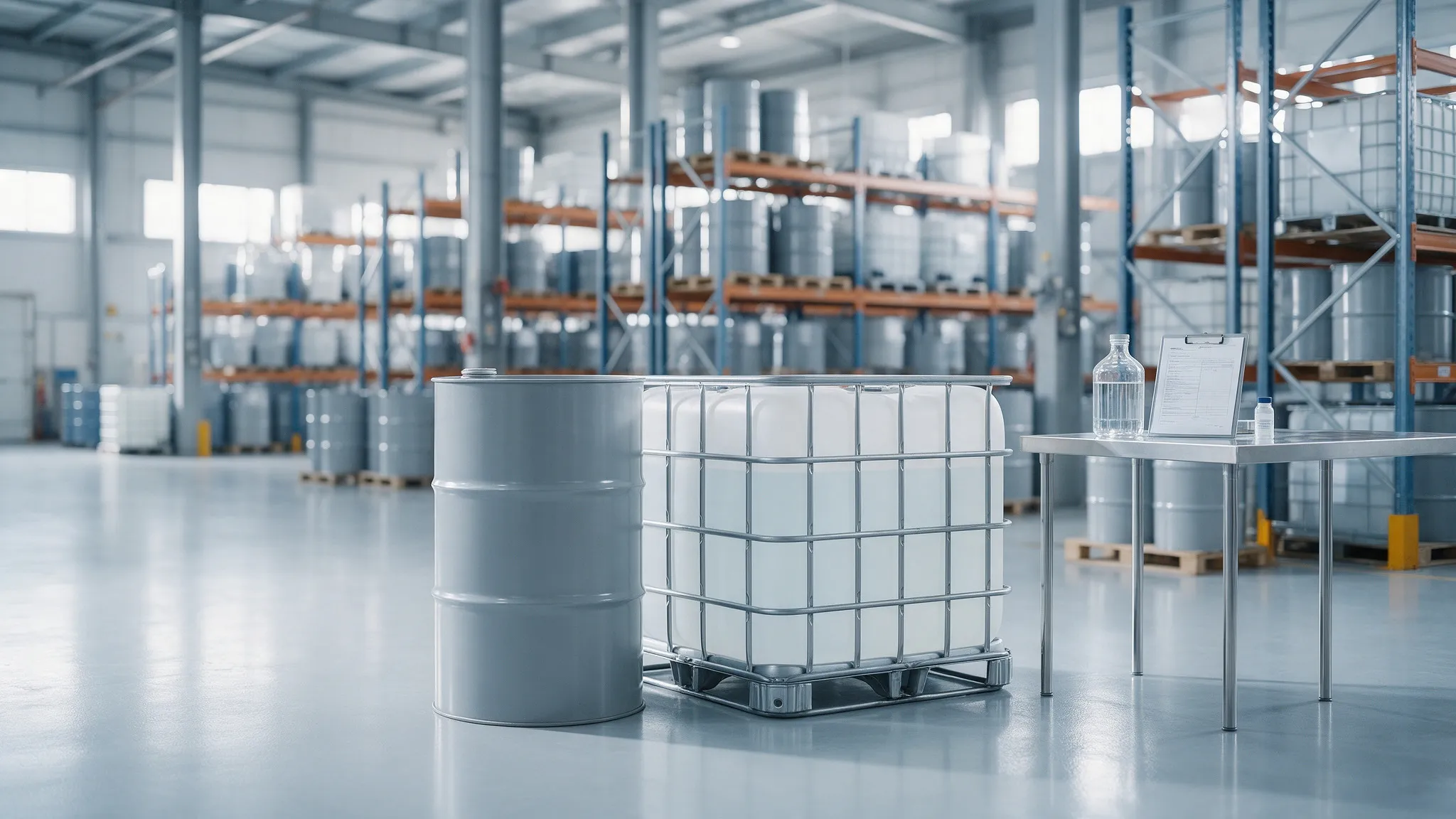


Step onto the floor of any working manufacturing facility — automotive assembly plant, metalworking shop, aerospace component fabricator, food processing line, oil and gas service yard — and you’ll find a common reality. Oil, grease, carbon deposits, cutting fluid residue, soot, and contamination accumulate everywhere production happens. The equipment that creates value also creates the buildup that eventually compromises it.
The chemistry that keeps all of this running is industrial degreaser cleaner. Not the consumer spray-can products at the hardware store, but the formulated industrial-grade systems that maintenance teams deploy across production lines, machine shops, and equipment fleets every shift.
The market is significant and growing. The US industrial degreaser segment sits within a global market that reached roughly $22 billion in 2025 and is projected to grow to $27 billion by 2030, with North America accounting for the largest regional share. Automotive manufacturing remains the dominant single application, but aerospace, food processing, metalworking, and oil and gas pulled strongly through 2025 and into 2026.
This piece walks through what industrial degreaser cleaners actually do, the solvent-based versus water-based versus bio-based decision that defines product selection, the regulatory pressures reshaping the category, and how procurement and maintenance teams are thinking about formulation choices in 2026.
What industrial degreasers actually need to do
An industrial degreaser cleaner removes contamination that ordinary cleaning won’t touch. Mineral oil, motor oil, hydraulic fluid, cutting fluid, grease, wax, carbon buildup, tar, ink, baked-on coolant residue, soot, dried lubricant, and machinery scale all fall into the working definition. The cleaning happens through several mechanisms simultaneously.
Solubilization dissolves oil and grease into the cleaning solvent itself. Emulsification breaks oil into small droplets dispersed in water for water-based formulations. Saponification converts fats and oils into water-soluble soaps through alkaline reactions. Wetting reduces surface tension so the cleaner penetrates into porous surfaces and tight tolerances.
The performance benchmark in industrial settings is straightforward. Can the degreaser remove what’s on the surface in the application time available, without damaging the substrate, without leaving residue that compromises downstream operations, and within the worker safety and environmental compliance framework the facility operates under? That four-part performance question drives every formulation decision.
The answer increasingly depends on whether the application uses solvent-based, water-based, or bio-based chemistry, and that decision has become more deliberate than it used to be.
Solvent-based vs water-based vs bio-based: the central choice
The category splits into three main formulation families, with very different performance profiles and regulatory positions:
| Type | What It Does Well | Where It Struggles | Regulatory Position |
| Solvent-Based | Removes heavy oils, carbon, baked-on residue; works on cold surfaces; rapid evaporation | VOC emissions; flammability; worker exposure concerns | Tightening restrictions in NA and EU; HAP/VOC compliance critical |
| Water-Based (Alkaline) | Strong on greases and oils through saponification; lower toxicity; better worker safety | Requires heat and longer contact time; corrosion potential; rinsing requirements | Strong regulatory tailwind; preferred for large-area and routine use |
| Bio-Based | Sustainability positioning; biodegradable; lower toxicity profile | Cost premium; sometimes weaker on heavy soils; longer dwell time | Growing rapidly; backed by corporate sustainability mandates |
Solvent-based degreasers still account for the largest share of industrial degreaser volume globally and dominate the heavy-duty applications where downtime cost outweighs environmental trade-offs. Hydrocarbon solvents (mineral spirits, naphtha), chlorinated solvents (perchloroethylene, trichloroethylene, methylene chloride), and alcohol-based formulations each serve specific application niches.
Water-based degreasers are growing faster than the overall category, projected to expand from roughly $1.5 billion in 2024 to $2.5 billion globally by 2035. Alkaline formulations dominate this segment, with surfactant-based and biodegradable variants serving specific use cases. The water-based shift is driven primarily by regulatory pressure on VOC emissions and worker exposure rather than performance preference.
Bio-based degreasers are the smallest but fastest-growing category, with formulations built around plant-derived solvents (d-limonene from citrus, soy methyl esters, ethyl lactate). Cost premium is real, but corporate sustainability commitments and site-specific environmental restrictions support adoption at premium positioning.
The decision between the three families isn’t usually about which is “better” in the abstract. It’s about which combination of cleaning performance, worker safety, environmental compliance, processing time, and total operating cost fits the specific facility’s operating reality.
That decision conversation has become more complicated as regulatory pressures have intensified across multiple fronts.
What’s reshaping the category in 2026
A few forces are actively pushing industrial degreaser cleaner selection in specific directions:
EPA TSCA Section 6(a) restrictions on chlorinated solvents. The EPA’s May 2024 rule restricting methylene chloride uses came into effect through 2024-2025, with significant implications for any facility using methylene chloride-based degreasers. Trichloroethylene faces similar EPA scrutiny, with restrictions on multiple commercial uses progressing through the regulatory process. Facilities that historically relied on chlorinated solvent degreasers have been reformulating or substituting through 2024-2026.
VOC emission limits at the state level. California’s South Coast Air Quality Management District (SCAQMD) Rule 1171 has set strict VOC limits on industrial degreasers in the region, with similar rules in other air-quality-sensitive states. Federal Hazardous Air Pollutant (HAP) regulations under Clean Air Act Section 112 add compliance complexity for major source facilities.
OSHA worker exposure limits. OSHA’s permissible exposure limits for industrial solvents have tightened, with specific attention to chlorinated solvents and benzene-containing degreasers. Workplace Chemical Protection Programs (WCPPs) under the methylene chloride rule have created new operational requirements for facilities using restricted solvents.
Corporate sustainability mandates. Independent of regulatory requirements, major manufacturers including automotive OEMs, aerospace primes, and food processors have implemented internal sustainability targets that influence degreaser selection. Lifecycle environmental impact, biodegradability, and VOC content show up on supplier scorecards in ways they didn’t five years ago.
Aerospace and defense supplier specifications. Major aerospace primes and defense contractors maintain detailed qualified product lists (QPLs) for degreasers used on their components. Boeing BAC 5408, Lockheed Martin specifications, and DoD requirements drive formulation choices in supply chains serving these markets.
The combined effect is that industrial degreaser procurement teams are managing a category where regulatory complexity, worker safety priorities, sustainability commitments, and traditional cleaning performance all factor into supplier selection. This complexity is reshaping how facilities actually buy degreasers.
How industries are using degreasers differently
Application context matters significantly for product selection. A few major use cases show how the variables play out in practice:
Automotive manufacturing uses degreasers at multiple points: engine block cleaning, brake component preparation, paint surface preparation, oil and contamination removal during assembly. Heavy-duty applications still rely on solvent-based formulations, while routine maintenance has shifted toward water-based alkaline cleaners. Electric vehicle manufacturing has driven additional demand for specialty degreasers compatible with sensitive electronic components.
Aerospace and aviation maintenance demands precision cleaning of high-value components. Aircraft engine maintenance, hydraulic component cleaning, and landing gear servicing operate under qualified product lists that restrict which degreasers can be used. The aerospace category typically uses solvent-based formulations meeting specific military and OEM specifications, with controlled substitution toward newer formulations underway.
Metalworking and machine shops rely heavily on water-based alkaline degreasers in parts washers, ultrasonic cleaning systems, and spray cabinets for removing cutting fluid, machining oils, and chip contamination. Concentrated formulations with controlled foam profiles and corrosion inhibitors are standard.
Food and beverage processing operates under USDA, FDA, and 3-A Sanitary Standards specifications for cleaning chemicals used in food contact environments. Specialized food-grade degreasers with low residue, USDA categorical specifications, and non-toxic profiles dominate this segment.
Oil and gas operations use degreasers at well sites, refining facilities, and equipment maintenance yards. Hydrocarbon solvent compatibility matters since petroleum residues are the dominant contaminant. Heavy-duty formulations capable of working in field conditions remain the standard.
General industrial maintenance across power generation, chemical processing, and heavy manufacturing uses a mix of formulations depending on the specific soil type, equipment, and downstream operations being cleaned.
Each segment has its own performance benchmarks, regulatory constraints, and supplier qualification requirements. Procurement teams managing degreaser sourcing across multiple sites or business units typically work with a portfolio of approved products rather than a single formulation across all applications.
That portfolio approach has implications for how procurement conversations with suppliers actually unfold.
How procurement is changing
For industrial buyers sourcing degreasers at scale, the conversation has evolved beyond unit price into a broader value assessment. Several factors shape supplier evaluation in 2026:
Total cost of cleaning rather than just unit cost. Water-based formulations may cost more per gallon than solvent-based but reduce hazardous waste disposal, worker PPE requirements, and ventilation infrastructure investment. Bio-based formulations carry higher unit cost but reduce regulatory compliance burden.
Regulatory compliance documentation including VOC content, HAP status, OSHA exposure data, SDS quality, and any specific federal or state regulatory positions. Major manufacturers increasingly demand suppliers provide documentation packages that support facility-level compliance reporting.
Technical support capability for specific application optimization, parts washer compatibility, and process integration. The supplier conversation includes formulation chemists supporting customer applications rather than just sales representatives quoting unit prices.
Supply chain depth and resilience has become a more deliberate concern after pandemic-era supply disruptions. Procurement teams evaluate single-source dependence, alternate qualifications, and supplier financial stability with more rigor than they did pre-2020.
Sustainability and ESG reporting capability matters for buyers serving public companies with sustainability commitments. Carbon footprint, biodegradability documentation, and lifecycle assessment data show up in vendor scorecards.
Custom formulation capability for specialty applications where off-the-shelf products don’t perfectly fit. The supplier base ranges from massive multinationals (Ecolab, Solenis after the NCH acquisition, Diversey, BASF) to specialty formulators serving specific industries.
The maturing of the category has narrowed the supplier base in some segments through M&A activity. Solenis acquired NCH Corporation in February 2025, expanding its industrial degreaser portfolio. Solvay acquired Stage Chemical’s industrial degreasing solvent business in 2025. The consolidation reflects how compliance complexity, scale economics, and customer expectations are pushing the market toward larger, more integrated suppliers.
What this means for facility maintenance and procurement teams
Industrial degreaser cleaner selection is more deliberate than it has been at any point in the category’s commercial history. The days when a facility could simply specify “industrial heavy duty degreaser” and accept whatever the supplier delivered are gone. Modern industrial cleaning demands matching formulation chemistry to application requirements, regulatory frameworks, sustainability commitments, and total operating cost in a way that requires real technical understanding.
The continuing growth of the category reflects something basic about industrial operations. Cleaning isn’t optional. Equipment maintenance, regulatory compliance, worker safety, and product quality all depend on effective contamination removal across every facility producing physical goods. That essential function isn’t going anywhere even as the specific chemistries and supplier relationships evolve.
Water-based alkaline formulations will continue gaining share at the expense of solvent-based products in routine maintenance and large-area applications. Solvent-based products will retain their position in heavy-duty applications where downtime cost dominates. Bio-based formulations will keep growing from a smaller base, supported by sustainability mandates and specific market positioning. The chlorinated solvent category will continue contracting under EPA regulatory pressure.
For maintenance and procurement teams, the practical reality is that the right industrial heavy duty degreaser is rarely a single product. It’s a portfolio of formulations matched to specific applications, validated against regulatory and operational requirements, and supplied by partners capable of supporting the full technical, regulatory, and sustainability conversation. The supplier relationships that work in 2026 are different from those that worked five years ago, and the procurement processes reflect that evolution.
The facilities and operations that have made this transition deliberately are positioned more strongly than those still treating degreasers as a commodity purchase. The next several years will likely accelerate the gap between these two approaches as regulatory pressure continues and sustainability requirements intensify across the category.