

At a Glance
• OSHA PEL for formaldehyde is 0.75 ppm as 8-hour TWA and 2 ppm as 15-minute STEL
• Action level of 0.5 ppm triggers mandatory exposure monitoring and medical surveillance programs
• Initial monitoring required within 30 days when employees may be exposed at or above action level
• Respiratory protection mandatory when engineering controls cannot reduce exposure below PEL
• Medical surveillance includes baseline exam, periodic monitoring, and emergency examinations after overexposure
• Formaldehyde classified as human carcinogen by IARC and NTP requiring strict workplace controls
• Industries affected include wood products, plastics, textiles, funeral services, and healthcare facilities
• Violations can result in OSHA citations with penalties up to $15,625 per serious violation
A cabinet manufacturing facility in North Carolina received an OSHA inspection after employee complaints about eye irritation and respiratory symptoms. Air sampling revealed formaldehyde levels averaging 1.2 ppm near the wood finishing area — well above the 0.75 ppm permissible exposure limit. The facility faced $47,000 in penalties and had to implement engineering controls, provide respirators, and establish medical monitoring. After installing local exhaust ventilation and reformulating with low-formaldehyde resins, exposure levels dropped to 0.3 ppm. The investment cost $180,000 but avoided ongoing violations and protected worker health.
Wrong controls. Preventable exposure. Expensive lesson.
Understanding formaldehyde exposure limit requirements protects both worker health and business operations. US manufacturers working with formaldehyde-containing materials face comprehensive regulatory obligations under OSHA’s Formaldehyde Standard (29 CFR 1910.1048). Compliance requires exposure monitoring, engineering controls, protective equipment, employee training, medical surveillance, and detailed recordkeeping. Facilities that ignore these requirements risk citations, penalties, lawsuits, and most importantly, serious health impacts on employees.
OSHA Formaldehyde Exposure Limits
Permissible Exposure Limit (PEL)
The OSHA formaldehyde exposure limit consists of two components addressing different exposure scenarios. The 8-hour time-weighted average (TWA) PEL is 0.75 ppm (parts per million). This represents the maximum average concentration an employee can be exposed to during an 8-hour workday.
The short-term exposure limit (STEL) is 2 ppm averaged over any 15-minute period. This addresses brief, elevated exposures that might occur during specific tasks like opening formaldehyde containers, applying coatings, or maintenance activities.
OSHA exposure limits: 8-hour TWA PEL: 0.75 ppm 15-minute STEL: 2 ppm Action Level: 0.5 ppm (triggers monitoring and controls)
These limits apply to all industries and operations where employees may encounter formaldehyde. Manufacturing, healthcare, funeral services, laboratories, and construction all fall under these requirements when formaldehyde is present.
Action Level Significance
The action level (AL) of 0.5 ppm triggers specific compliance obligations even though it’s below the PEL. When employee exposure reaches or exceeds 0.5 ppm as 8-hour TWA, employers must implement exposure monitoring, provide medical surveillance, and train employees on formaldehyde hazards.
The action level provides early warning. Facilities operating between 0.5-0.75 ppm aren’t violating the PEL but must take preventive actions to ensure exposure doesn’t increase. This proactive approach prevents exposures from creeping upward over time.
Obligations triggered at action level: Initial and periodic exposure monitoring Medical surveillance program Employee training on formaldehyde hazards Hazard communication (labels, SDS availability) Recordkeeping (monitoring results, medical records)
Facilities with exposures consistently below 0.5 ppm have reduced obligations. Initial monitoring establishes this, then periodic monitoring confirms exposures remain low. But any process changes, new materials, or employee complaints require re-evaluation.
Table 1: OSHA Formaldehyde Exposure Standards
| Parameter | Concentration | Averaging Time | Regulatory Trigger |
| Action Level (AL) | 0.5 ppm | 8-hour TWA | Monitoring, medical surveillance, training required |
| Permissible Exposure Limit (PEL) | 0.75 ppm | 8-hour TWA | Maximum allowable average exposure |
| Short-Term Exposure Limit (STEL) | 2 ppm | 15-minute TWA | Maximum short-duration exposure |
| Immediately Dangerous to Life or Health (IDLH) | 20 ppm | Instantaneous | Emergency egress, SCBA required |
Formaldehyde Exposure Monitoring Requirements
Initial Monitoring Obligations
Employers must conduct initial monitoring within 30 days whenever employees may be exposed at or above the action level or STEL. “May be exposed” is broad — if formaldehyde is present and employees work in the area, monitoring is likely required unless objective data proves exposure is below action level.
Initial monitoring must: Identify all employees potentially exposed at or above AL or STEL Use representative sampling covering worst-case conditions Measure both 8-hour TWA and 15-minute peak exposures Conduct sampling by qualified personnel using validated methods Document results in writing and provide to affected employees
Representative sampling means testing employees with highest expected exposure in each job classification. If several workers perform identical tasks under same conditions, sampling one or two employees can represent the group. But distinct jobs or different exposure scenarios require separate sampling.
Periodic Monitoring Schedule
Formaldehyde exposure monitoring continues after initial assessment based on results. If initial monitoring shows exposure at or above the action level but below PEL, repeat monitoring every 6 months. If exposure exceeds PEL, repeat monitoring every 3 months.
Monitoring can be terminated if two consecutive measurements taken at least 7 days apart show exposure below action level. But process changes, new materials, employee complaints, or any reason to suspect increased exposure requires re-monitoring.
Periodic monitoring schedule: Above PEL (>0.75 ppm TWA): Every 3 months Between AL and PEL (0.5-0.75 ppm): Every 6 months Below AL (<0.5 ppm) on two consecutive tests: Monitoring may cease Process changes: Requires new initial monitoring
Seasonal variations matter in some industries. Wood product facilities may have higher exposures in summer when heat accelerates formaldehyde off-gassing from resins. Monitoring should capture these variations not just sample during optimal conditions.
Sampling Methods and Accuracy
OSHA requires validated sampling and analytical methods. The most common approach uses passive dosimetry badges or active sampling with pumps drawing air through sorbent tubes. Samples go to accredited laboratories for analysis.
Approved sampling methods: OSHA Method 52: Active sampling with XAD-2 sorbent tube NIOSH Method 2016: Passive badge or active sampling, HPLC analysis NIOSH Method 2541: Active sampling with treated silica gel EPA Method TO-11A: Carbonyl sampling with DNPH derivatization
The sampling strategy must measure actual employee exposure in breathing zone. Area sampling (stationary monitors in work area) provides useful information but doesn’t replace personal exposure monitoring. Workers wear sampling pumps or badges during their shifts collecting data on what they actually breathe.
Quality assurance matters. Laboratories should participate in proficiency testing programs. Field blanks, duplicates, and spike samples verify accuracy. Results with questionable quality cannot be used for compliance decisions.
Table 2: Monitoring Requirements by Exposure Level
| Initial Monitoring Result | Periodic Monitoring Frequency | Medical Surveillance | Engineering Controls | Respirators |
| Below 0.5 ppm (AL) | None required (until process change) | Not required | Not required | Not required |
| 0.5-0.75 ppm (AL to PEL) | Every 6 months | Required | Implement feasible controls | Required if exposure >PEL |
| 0.75-2.0 ppm (Above PEL) | Every 3 months | Required | Required (must reduce to PEL) | Required until controls effective |
| Above 2.0 ppm (Above STEL) | Every 3 months | Required | Immediate action required | Required immediately |
Engineering Controls and Work Practices
Hierarchy of Controls
OSHA requires employers to reduce formaldehyde exposure to or below the PEL using engineering and work practice controls before relying on respiratory protection. This “hierarchy of controls” prioritizes eliminating hazards at the source over personal protective equipment.
Control hierarchy (most to least effective): Elimination: Substitute low-formaldehyde or formaldehyde-free materials Engineering controls: Ventilation, enclosure, isolation Administrative controls: Work practices, exposure time limits Personal protective equipment: Respirators (last resort when other controls insufficient)
Substitution is ideal but not always feasible. Some processes require formaldehyde’s specific properties. Wood composite manufacturing, certain textile treatments, and formaldehyde-based resins have limited alternatives. But technology advances create new options — facilities should periodically re-evaluate substitution possibilities.
Ventilation Systems
Local exhaust ventilation (LEV) captures formaldehyde emissions at the source before entering breathing zone. This is usually the most effective engineering control for formaldehyde in manufacturing.
Effective LEV systems: Positioned at emission sources (application stations, curing areas) Designed for specific process (capture velocity, airflow volume) Regular maintenance (filter changes, fan checks, duct cleaning) Performance monitoring (airflow measurements, static pressure) Worker training (keeping processes within capture zone)
General dilution ventilation supplements LEV by diluting remaining airborne concentrations. Calculate required air changes based on formaldehyde generation rate and target concentration. Most formaldehyde operations need 10-20 air changes per hour to maintain acceptable levels.
Booth-type enclosures work well for spray applications, coating operations, and sample preparation. The enclosure contains emissions while exhaust removes contaminated air. Workers can operate equipment from outside the enclosure or make brief entries to load/unload materials.
Work Practice Controls
Modified procedures reduce exposure without capital equipment. These administrative controls complement engineering solutions.
Effective work practices: Keep formaldehyde-containing materials covered when not in use Minimize time containers remain open Avoid practices that increase airborne concentrations (spraying, heating) Clean spills immediately using wet methods (not dry sweeping) Designate specific areas for formaldehyde use (limit exposure area) Schedule high-emission tasks when fewer workers present
Temperature control matters. Formaldehyde off-gassing increases with heat. Some facilities reduce storage and work area temperatures when feasible. Conversely, some wood products require heated curing — these areas need extra ventilation.
Maintenance procedures create peak exposures. Opening equipment for cleaning, changing resin tanks, or repairing ventilation systems can release accumulated formaldehyde. Develop written procedures for these tasks including pre-work ventilation, respiratory protection, and exposure monitoring.
Respiratory Protection Requirements
When Respirators Are Required
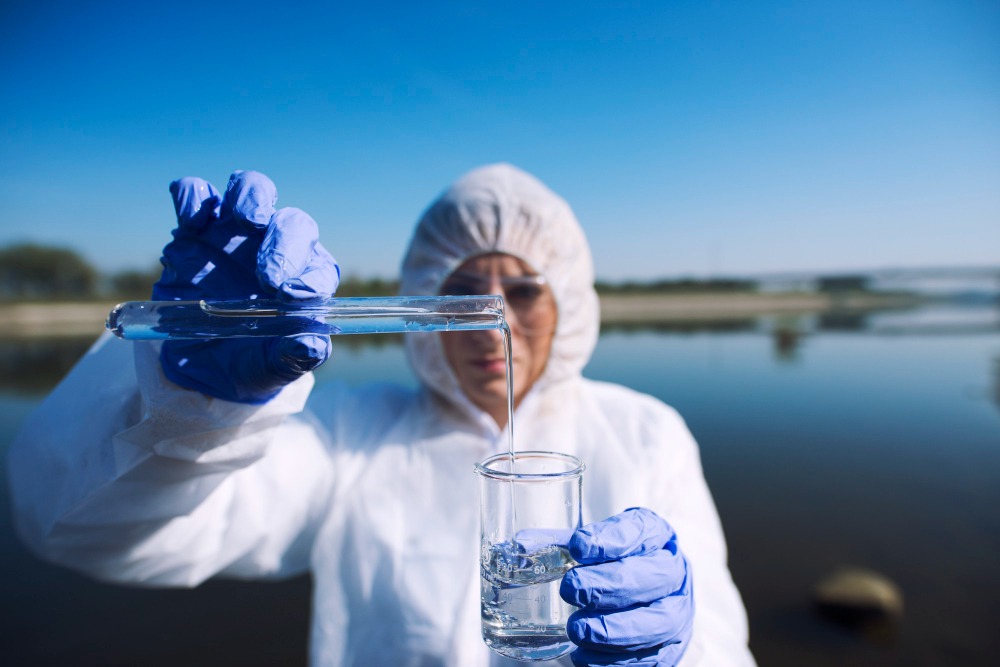
Respiratory protection becomes mandatory when engineering and work practice controls cannot reduce exposure below PEL, during periods when controls are being installed, in emergencies, and when employees request respirators even if exposure is below PEL.
Mandatory respirator use: Exposure exceeds PEL despite engineering controls During installation or repair of engineering controls Emergency situations (spills, equipment failures) Voluntary use when employee requests protection
OSHA’s Respiratory Protection Standard (29 CFR 1910.134) governs respirator selection, use, and maintenance. Employers must establish a written respiratory protection program covering medical evaluations, fit testing, training, cleaning, storage, and program evaluation.
Respirator Selection
Respirator type depends on formaldehyde concentration and oxygen availability. For most manufacturing situations with adequate oxygen (>19.5%), air-purifying respirators with formaldehyde-specific cartridges work.
Respirator selection guide: Below 7.5 ppm (10× PEL): Half-facepiece with organic vapor/formaldehyde cartridge 7.5-75 ppm (10-100× PEL): Full-facepiece with formaldehyde cartridge Above 75 ppm or unknown concentration: Supplied-air respirator or SCBA IDLH conditions (>20 ppm): Positive-pressure SCBA
Formaldehyde cartridges contain specially treated sorbents capturing formaldehyde molecules. Regular organic vapor cartridges don’t work well — formaldehyde is small molecule that breaks through quickly. Use only cartridges approved for formaldehyde (NIOSH certification TC-23C).
Change schedules for cartridges depend on concentration, humidity, breathing rate, and cartridge specifications. Many cartridges have end-of-service-life indicators changing color when saturated. Follow manufacturer guidance, but generally replace before odor breakthrough occurs.
Fit Testing and Medical Evaluation
All employees required to wear tight-fitting respirators need quantitative fit testing annually and whenever respirator model changes. Fit testing verifies the specific make/model/size provides adequate seal on that individual’s face.
Medical evaluation determines if employees can safely wear respirators. A physician or licensed healthcare professional reviews a medical questionnaire and may conduct physical exam if indicated. Conditions like severe asthma, heart disease, or claustrophobia may limit respirator use.
Table 3: Respiratory Protection Requirements
| Formaldehyde Level | Minimum Respirator | Assigned Protection Factor | Medical Eval Required | Fit Test Required |
| Below 0.75 ppm (at or below PEL) | Not required (unless voluntary) | N/A | Yes, if voluntary use | No, if filtering facepiece; Yes if tight-fitting |
| 0.75-7.5 ppm (up to 10× PEL) | Half-facepiece APR with formaldehyde cartridge | APF 10 | Yes | Yes (annual) |
| 7.5-75 ppm (10-100× PEL) | Full-facepiece APR with formaldehyde cartridge | APF 50 | Yes | Yes (annual) |
| Above 75 ppm or unknown | Supplied-air or SCBA | APF 1,000-10,000 | Yes | Yes (annual) |
| IDLH (>20 ppm) | Pressure-demand SCBA | APF 10,000 | Yes | Yes (annual) |
Medical Surveillance Program
Baseline and Periodic Examinations
Medical surveillance is required for all employees exposed at or above the action level or who experience signs/symptoms of formaldehyde exposure. The program includes baseline medical exams before initial assignment, periodic exams, and examinations following emergency exposures.
Medical exam components: Medical and work history questionnaire Physical examination focusing on respiratory system Any additional tests physician deems necessary Determination of employee’s ability to wear respirators
Baseline exams establish each employee’s health status before formaldehyde exposure. This creates reference point for detecting exposure-related changes. The exam must occur before assignment or within 6 months after exposure begins.
Periodic medical surveillance continues annually for employees exposed at or above action level. More frequent exams may be needed if physician determines symptoms or exposure levels warrant closer monitoring.
Physician’s Written Opinion
After each exam, the physician provides written opinion to employer stating: whether employee has medical conditions increasing risk from formaldehyde, whether employee can safely wear respirators, and whether any limitations on exposure are recommended.
The written opinion goes to the employer. Specific medical findings and diagnoses remain confidential between physician and employee. This protects employee privacy while giving employer necessary information for work assignment decisions.
If physician recommends limitations (reduced exposure, no respirator use), employer must implement these or remove employee from formaldehyde exposure. Medical removal protection provisions require maintaining employee earnings and benefits during removal period up to 6 months.
Emergency Examinations
Employees exposed above STEL (2 ppm) or who experience symptoms of acute overexposure must receive medical examination as soon as possible. Symptoms include eye, nose, or throat irritation; respiratory difficulties; or skin reactions.
Emergency exams determine if acute health effects occurred and assess need for follow-up care. The exam is employer’s responsibility at no cost to employee. Results may trigger increased monitoring, improved controls, or process modifications preventing future overexposure.
Employee Information and Training
Required Training Content
Employers must train employees before initial assignment to jobs with potential formaldehyde exposure and annually thereafter. Training must cover health hazards, exposure sources, protective measures, and emergency procedures.
Mandatory training topics: Health effects of formaldehyde (acute and chronic, including cancer) Formaldehyde exposure limits (PEL, STEL, action level) Exposure monitoring results for their work area Engineering controls and work practices reducing exposure Proper use and limitations of respirators Purpose and procedures of medical surveillance Emergency procedures for spills and overexposure Employee rights under formaldehyde standard
Training must be understandable to employees. Use language and literacy level appropriate for workforce. Visual aids, hands-on demonstrations, and question-answer sessions improve comprehension.
Documentation is required. Training records must include training dates, content outline, names of trainers, and names of employees attending. These records demonstrate compliance during OSHA inspections.
Hazard Communication
OSHA’s Hazard Communication Standard (29 CFR 1910.1200) requires labels on formaldehyde containers and safety data sheets (SDS) accessible to employees. The formaldehyde standard adds specific requirements beyond general HazCom.
Labels must include: Identity of formaldehyde or formaldehyde-releasing product Appropriate hazard warnings Name and address of manufacturer GHS pictograms (health hazard, corrosion) Signal word (Danger) Hazard statements (cancer, skin/eye/respiratory irritation)
Post warning signs at regulated areas where formaldehyde exposure may exceed PEL. Signs must read: “DANGER – FORMALDEHYDE – IRRITANT AND POTENTIAL CANCER HAZARD – AUTHORIZED PERSONNEL ONLY.”
Recordkeeping and Compliance Documentation
Exposure Monitoring Records
Maintain records of all exposure monitoring for at least 30 years. This long retention reflects formaldehyde’s classification as carcinogen — health effects may not appear until decades after exposure.
Monitoring records must include: Date, duration, and location of each sample Employee name or identification of sampled employee group Sampling and analytical methods used Number, duration, and results of samples taken Description of operation being monitored Environmental conditions affecting exposure
Make monitoring records available to employees and their designated representatives upon request. OSHA compliance officers can access these records during inspections.
Medical Records
Medical surveillance records must be maintained for duration of employment plus 30 years. This protects employees long-term since cancer and chronic diseases may develop years after exposure ends.
Medical records must include: Employee name, social security number, and job classification Medical questionnaires, exam results, and physician opinions Medical complaints related to formaldehyde exposure Training records demonstrating medical surveillance program implementation
These records are confidential. Provide to employee upon request, to physician or designated representative with employee authorization, to OSHA with employee consent, and to NIOSH researchers under specific protocols.
Training Records
Maintain training records for current employees until training is repeated. If training content hasn’t changed and annual refreshers occur, keeping most recent training record is sufficient. But if content changes, retain records showing historical training received.
Table 4: Recordkeeping Requirements
| Record Type | Retention Period | Employee Access | OSHA Access | Contents Required |
| Exposure monitoring | 30 years | Yes | Yes | Dates, methods, results, employee identification |
| Medical surveillance | Employment + 30 years | Yes (own records) | With consent | Exams, questionnaires, physician opinions |
| Medical removal | Employment + 30 years | Yes | With consent | Dates, physician recommendations, earnings info |
| Training | Until superseded | Yes | Yes | Dates, content, trainer, attendees |
| Respirator fit testing | Until next test | Yes | Yes | Employee name, test type, results, mask info |
Industry-Specific Compliance Challenges
Wood Products Manufacturing
Formaldehyde resins bond wood particles and fibers in plywood, particleboard, MDF, and other engineered wood products. Exposure occurs during resin mixing, board pressing, sanding, and cutting.
High-temperature processes release more formaldehyde. Heated platens curing resin can create 5-20 ppm concentrations near presses. Without adequate ventilation, entire facility levels rise above PEL.
Control strategies include enclosing resin mixing equipment, installing LEV at presses and sanders, using low-formaldehyde resins (phenol-formaldehyde or urea-formaldehyde with formaldehyde scavengers), and maintaining cooler storage temperatures when feasible.
Textiles and Apparel
Formaldehyde-based resins provide wrinkle resistance, dimensional stability, and soil release in fabrics. Application happens through padding, spraying, or immersion followed by heat curing.
Peak exposures occur during application and curing stages. Fabric pressing and steaming later in production can release residual formaldehyde from finished textiles.
Modern low-formaldehyde or formaldehyde-free finishing chemistries reduce exposure substantially. Many manufacturers switched to these alternatives both for worker safety and to meet consumer demand for formaldehyde-free clothing.
Funeral Services and Embalming
Embalmers face unique formaldehyde hazards from embalming fluids containing 5-35% formaldehyde. Procedures involve direct handling of these solutions in confined spaces (preparation rooms).
Exposure occurs during mixing, injection, and cleanup. OSHA estimates funeral industry workers’ average exposure at 0.45-1.4 ppm depending on facility ventilation and work practices.
Effective controls include downdraft preparation tables pulling formaldehyde-laden air away from breathing zone, proper storage of fluids in closed containers, and use of low-formaldehyde embalming alternatives when suitable for preservation requirements.
Healthcare and Laboratories
Hospitals use formaldehyde as disinfectant and in pathology laboratories for tissue fixation. Exposure occurs during specimen handling, grossing, and equipment cleaning.
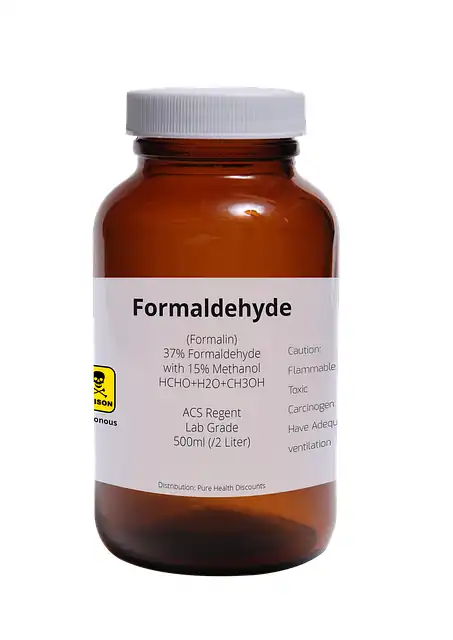
Formalin (37% formaldehyde solution) is standard tissue fixative. Pathologists and histology technicians work with this regularly. Proper laboratory ventilation (fume hoods, grossing stations with downdraft) controls exposure effectively.
Alternatives include alcohols, glutaraldehyde, and newer tissue fixatives. But formaldehyde remains standard for diagnostic pathology due to tissue preservation quality and compatibility with staining techniques.
Penalties for Non-Compliance
OSHA Citation Types and Costs
OSHA issues citations with monetary penalties for formaldehyde standard violations. Penalty amounts depend on violation severity and employer size.
Citation categories: Other-than-serious: $0-$15,625 per violation (minor violations unlikely to cause serious harm) Serious: $1-$15,625 per violation (substantial probability of serious harm or death) Willful: $10,000-$156,259 per violation (intentional disregard or plain indifference) Repeat: $1-$156,259 per violation (same violation cited previously) Failure to abate: $15,625 per day beyond abatement date
Serious violations are most common for formaldehyde non-compliance. Failure to conduct monitoring, provide medical surveillance, or implement engineering controls typically receive serious citations with $5,000-$15,000 penalties each.
Multiple violations accumulate. A facility cited for inadequate monitoring ($8,000), lack of medical surveillance ($7,500), insufficient ventilation ($12,000), and missing training ($5,000) faces $32,500 total penalties plus abatement costs.
Abatement Requirements
OSHA citations specify abatement dates by which violations must be corrected. Engineering control installations might get 90-180 days. Administrative items like training or monitoring often require 30-60 days.
Failure to meet abatement deadlines results in daily penalties ($15,625/day maximum) until compliance is achieved. This makes protracted delays extremely expensive.
Abatement verification documentation proves corrections were made. Submit photos, monitoring results, vendor invoices, training records, or other evidence demonstrating violation correction. OSHA may conduct follow-up inspections verifying abatement.
Conclusion
Formaldehyde exposure limit requirements under OSHA standard 29 CFR 1910.1048 establish comprehensive framework protecting workers from this known carcinogen through 8-hour TWA PEL of 0.75 ppm and 15-minute STEL of 2 ppm with action level of 0.5 ppm triggering mandatory formaldehyde exposure monitoring, medical surveillance, and engineering controls. Compliance demands initial exposure assessment within 30 days, periodic monitoring every 3-6 months depending on levels, hierarchy of controls prioritizing engineering solutions like local exhaust ventilation over respiratory protection, medical surveillance including baseline and annual exams for exposed workers, comprehensive training covering health hazards and protective measures, and 30-year retention of exposure and medical records. Industries spanning wood products manufacturing, textiles, funeral services, and healthcare face distinct challenges requiring sector-specific control strategies from downdraft embalming tables to low-formaldehyde resin substitution, with violations resulting in OSHA citations carrying penalties from $1,000 to $156,259 per violation depending on severity and willfulness. For manufacturers, safety managers, and industrial hygienists ensuring formaldehyde compliance, Elchemy connects you with suppliers offering low-formaldehyde alternative materials, exposure monitoring equipment and services, engineering control solutions, respiratory protection equipment, and compliance consulting supporting your specific manufacturing, laboratory, or healthcare applications while protecting worker health and avoiding costly citations through comprehensive adherence to federal exposure limits and safety requirements.