

At a Glance
- Ethylene glycol delivers superior thermal efficiency but carries significant toxicity and environmental risks
- Propylene glycol offers safer, renewable alternative with 61% lower greenhouse gas emissions when bio-based
- Bio-based propylene glycol market expanding to $6.75 billion by 2032, driven by sustainability mandates
- System design dictates selection: closed-loop systems favor ethylene, open-loop applications require propylene
- Cost premium of 20-30% for propylene glycol narrows as bio-based production scales
Industrial cooling systems operate under pressure from multiple directions. Energy efficiency targets demand maximum heat transfer performance. Environmental regulations restrict toxic chemical use. Sustainability goals require reducing carbon footprints. Cost structures determine competitive positioning across manufacturing sectors.
Coolant selection sits at the intersection of these competing priorities. For decades, ethylene glycol dominated industrial applications due to thermal superiority and lower costs. Recent shifts toward environmental responsibility and workplace safety have elevated propylene glycol as a viable alternative. The comparison between ethylene glycol vs propylene extends beyond simple performance metrics to encompass lifecycle environmental impact, regulatory compliance, and emerging bio-based production methods. Understanding these dimensions enables manufacturers to align cooling system specifications with both operational requirements and corporate sustainability commitments.
Chemical Structure and Core Properties
Both glycols belong to the diol family—organic compounds containing two hydroxyl groups. Their molecular structures create fundamental differences affecting industrial applications and environmental profiles.
Ethylene Glycol Characteristics
Ethylene glycol (C₂H₆O₂), also called 1,2-ethanediol, represents the simplest diol structure and is the most common industrial coolant — see our deep dive on ethylene glycol as a coolant for maintenance and inhibitor guidance. The molecule contains two carbon atoms bonded to hydroxyl groups. This compact configuration creates low molecular weight (62.07 g/mol) and minimal steric hindrance. The streamlined structure produces lower viscosity than larger glycol molecules.
Physical properties include complete water miscibility and colorless, odorless liquid state at room temperature. Freezing point measures -12.9°C (8.8°F) in pure form. Boiling point reaches 197.3°C (387.1°F) under standard conditions. Density measures 1.11 g/cm³ at 20°C. The petroleum-derived production pathway uses ethylene oxide as intermediate feedstock.
Propylene Glycol Characteristics
Propylene glycol (C₃H₈O₂), designated as 1,2-propanediol, adds one additional carbon atom to the molecular chain. This creates slightly larger molecular weight (76.09 g/mol) and increased molecular complexity. The extra methyl group introduces steric effects that increase viscosity compared to ethylene glycol.
The compound remains colorless and nearly odorless with faintly sweet taste. Freezing point measures -59°C (-74.2°F) for pure compound. Boiling point reaches 188.2°C (370.8°F). Density measures 1.04 g/cm³ at 20°C. Traditional production uses propylene oxide hydration, but bio-based routes now convert glycerin, corn glucose, or other renewable feedstocks through hydrogenolysis processes.
Ethylene Glycol vs Propylene Glycol: Performance Comparison Overview — and standardise every instance to the full “ethylene glycol vs propylene glycol
System designers evaluate multiple parameters when specifying coolants. The following comparison establishes baseline differences across critical operational dimensions.
| Performance Parameter | Ethylene Glycol | Propylene Glycol | Impact on Selection |
| Thermal Conductivity | Higher (0.252 W/m·K at 20°C) | Lower (0.200 W/m·K at 20°C) | EG transfers heat 20-25% more efficiently |
| Viscosity at -10°F | 27 centipoise | 96 centipoise | EG requires less pumping energy |
| Freeze Point (50% solution) | -36°F (-38°C) | -31°F (-35°C) | EG provides better freeze protection |
| Boiling Point | 387°F (197°C) | 371°F (188°C) | EG allows higher operating temperatures |
| Toxicity (Oral LD50) | 4,700 mg/kg (highly toxic) | 20,000 mg/kg (low toxicity) | PG safer for human exposure |
| Biodegradation Time | 10-30 days | 1-7 days | PG breaks down faster in environment |
| Aquatic Toxicity (LC50) | >10,000 mg/L but causes oxygen depletion | >10,000 mg/L, minimal impact | PG safer for water systems |
| Cost per Metric Ton | $900-1,200 | $1,430-1,560 | EG offers 20-30% cost advantage |
| Renewable Production | No (petroleum only) | Yes (bio-based options available) | PG supports sustainability goals |
This framework guides application-specific material selection based on operational priorities and environmental constraints.
Thermal Performance and Efficiency
Heat transfer efficiency directly impacts energy consumption and system operating costs. Temperature-dependent properties determine coolant effectiveness across operational ranges.
Propylene Glycol Thermal Conductivity vs Ethylene Glycol
Propylene glycol has a thermal conductivity of about 0.200 W/m·K at 20°C, compared with 0.252 W/m·K for ethylene glycol — roughly 20–25% lower. In practice this means ethylene glycol transfers heat more efficiently, so systems prioritising maximum cooling performance (data centres, industrial chillers, precision manufacturing) tend to specify it, while propylene glycol is chosen where its lower toxicity outweighs the efficiency penalty.
Heat Transfer Capabilities
Ethylene glycol provides superior thermal conductivity due to smaller molecular size and lower viscosity. At 20°C, thermal conductivity measures 0.252 W/m·K compared to 0.200 W/m·K for propylene glycol. This 20-25% advantage translates to more efficient heat removal from cooling system components. The compact molecular structure facilitates energy transfer between molecules.
Specific heat capacity for ethylene glycol reaches 2.35 kJ/kg·K versus 2.48 kJ/kg·K for propylene glycol at 20°C. Propylene glycol absorbs slightly more heat per unit mass. However, the lower thermal conductivity of propylene limits overall heat transfer rates in practical systems. Ethylene glycol’s combination of properties makes it preferred where maximum thermal performance drives specifications.
Applications requiring highest efficiency—data centers, precision manufacturing, industrial chillers—typically specify ethylene glycol despite environmental concerns. The thermal performance gap widens at lower temperatures where viscosity differences become pronounced. Systems operating near freezing benefit most from ethylene glycol’s superior flow characteristics.
Viscosity and Flow Characteristics
Viscosity determines pumping energy requirements and system pressure drops. Ethylene glycol’s smaller molecular structure creates lower viscosity across all temperatures. At -10°F (-23°C), ethylene glycol measures 27 centipoise compared to 96 centipoise for propylene glycol. This 3.5x difference significantly affects pump sizing and operational costs.
Lower viscosity means less friction loss through pipes, valves, and heat exchangers. Energy consumed by circulation pumps drops proportionally with viscosity reduction. In large industrial systems circulating thousands of gallons, this efficiency difference accumulates to substantial electricity savings. Turbulent flow develops more readily in lower viscosity fluids, improving heat transfer coefficients.
Propylene glycol’s higher viscosity requires oversized pumps, larger diameter piping, or acceptance of reduced flow rates. At ambient temperatures, the viscosity gap narrows but remains significant. System designers must account for worst-case cold temperature conditions when sizing equipment. The viscosity disadvantage positions propylene glycol primarily for applications where safety considerations outweigh efficiency priorities.
Temperature-Specific Performance Comparison:
| Temperature | EG Viscosity (cP) | PG Viscosity (cP) | EG Freeze Point (50%) | PG Freeze Point (50%) |
| 32°F (0°C) | 3.9 | 5.8 | -36°F | -31°F |
| 0°F (-18°C) | 8.9 | 18.5 | -36°F | -31°F |
| -10°F (-23°C) | 27 | 96 | -36°F | -31°F |
| 68°F (20°C) | 1.6 | 4.0 | -36°F | -31°F |
Environmental Impact and Biodegradation

Sustainability assessments require evaluating both acute environmental effects and long-term ecological impact. Toxicity profiles and degradation pathways differ substantially between glycols.
Aquatic Toxicity and Oxygen Depletion
Ethylene glycol poses moderate acute toxicity to aquatic organisms. LC50 values (lethal concentration killing 50% of test organisms) exceed 10,000 mg/L for most fish and invertebrate species. This classifies as “practically non-toxic” under EPA criteria for direct poisoning effects. The primary environmental concern involves oxygen depletion rather than direct toxicity.
When ethylene glycol enters waterways, aerobic bacteria metabolize it during biodegradation. This process consumes dissolved oxygen at high rates. Large spills can deplete oxygen levels sufficiently to cause fish kills and aquatic ecosystem damage. The biochemical oxygen demand (BOD) measures the oxygen consumption rate. Ethylene glycol exhibits high BOD, creating anaerobic conditions in affected water bodies.
Propylene glycol demonstrates similar low acute toxicity to aquatic life (LC50 >10,000 mg/L). However, biodegradation occurs faster with lower oxygen demand. Studies show propylene glycol breaks down 2-4 times faster than ethylene glycol under identical conditions. The reduced oxygen depletion risk makes propylene preferable for systems with potential water contamination pathways. Groundwater protection zones often mandate propylene glycol use.
Biodegradation Rates and Pathways
Both glycols undergo complete aerobic biodegradation—bacteria convert them to carbon dioxide and water. Ethylene glycol biodegrades within 10-30 days under favorable conditions (adequate microbial populations, oxygen availability, appropriate temperature). Degradation half-life measures 2-12 days depending on environmental factors. Sandy soils with low organic content show slower degradation than rich agricultural soils.
Propylene glycol biodegrades more rapidly, typically within 1-7 days. The compound meets OECD criteria for “readily biodegradable.” Microbial populations adapt quickly to metabolize propylene glycol. This faster breakdown reduces environmental persistence and accumulation potential. Neither glycol bioaccumulates in organisms—both clear rapidly from tissues.
In anaerobic environments (oxygen-depleted soil, deep groundwater), degradation slows significantly for both compounds. Anaerobic half-lives extend to months rather than days. Atmospheric degradation occurs through reaction with hydroxyl radicals. Both glycols exhibit short atmospheric lifetimes (1.7-2.0 days) preventing long-range transport.
Environmental Impact Summary:
| Environmental Factor | Ethylene Glycol | Propylene Glycol |
| Aquatic Acute Toxicity | Low (>10,000 mg/L LC50) | Low (>10,000 mg/L LC50) |
| Oxygen Depletion Risk | High (significant BOD) | Moderate (lower BOD) |
| Aerobic Biodegradation | 10-30 days | 1-7 days |
| Readily Biodegradable | No | Yes (OECD criteria) |
| Atmospheric Lifetime | ~2 days | ~1.7 days |
| Bioaccumulation | None | None |
| Spill Reporting | Required (SARA/CERCLA) | Not required |
Ethylene Glycol vs Propylene Glycol Coolant Applications
System design and operational context determine optimal glycol selection. Different applications prioritize thermal performance versus safety considerations.
Closed-Loop Industrial Systems
Closed-loop systems—where coolant never contacts external environment or personnel—favor ethylene glycol. These applications include automotive engines, industrial chillers, HVAC systems in commercial buildings, ice skating rinks, and precision manufacturing equipment. The sealed nature minimizes exposure risks while maximizing thermal efficiency benefits.
Automotive antifreeze remains the largest ethylene glycol application. Engine cooling systems require maximum heat removal in confined spaces. The superior thermal conductivity and low viscosity enable compact radiator designs. Cost advantages support mass market automotive use. Modern vehicles incorporate safeguards preventing coolant leaks and accidental ingestion.
Industrial refrigeration systems serving food processing or cold storage facilities increasingly specify propylene glycol despite efficiency penalties. This addresses regulatory requirements and liability concerns if coolant contacts food products. Manufacturing facilities producing pharmaceuticals, cosmetics, or food ingredients mandate propylene glycol even for closed-loop systems. The safety margin justifies efficiency trade-offs and higher costs.
Open-Loop and Food-Grade Applications
Open-loop systems—involving potential environmental discharge or human contact—require propylene glycol. These include geothermal heating systems, snow melt applications, solar thermal installations, food processing equipment, and HVAC systems in schools, hospitals, or residential buildings. Propylene glycol carries FDA Generally Recognized as Safe (GRAS) status for food contact applications.
Food and beverage processing represents major propylene glycol market segment. Cooling systems for breweries, dairy facilities, meat processing plants, and commercial kitchens must use food-grade coolants. Propylene glycol USP (United States Pharmacopeia) grade meets stringent purity requirements. Incidental food contact during equipment maintenance or system leaks poses no health risks. Regulatory compliance requires documented food-grade coolant use.
Pharmaceutical manufacturing facilities exclusively use propylene glycol USP grade. Temperature-controlled storage, reactor cooling, and clean room HVAC systems all specify non-toxic coolants. Aircraft deicing fluids predominantly use propylene glycol despite higher costs. Runway deicing and wing anti-icing applications involve massive environmental release. Propylene glycol’s lower toxicity and faster biodegradation reduce ecological impact.
Bio-Based Propylene Glycol: The Sustainable Alternative
Renewable production methods transform propylene glycol’s sustainability profile from equivalent to ethylene glycol into significantly better environmental performance. Elchemy supplies both conventional and bio-based propylene glycol (1,2-propanediol) — view specifications and request a sample.
Production from Renewable Feedstocks
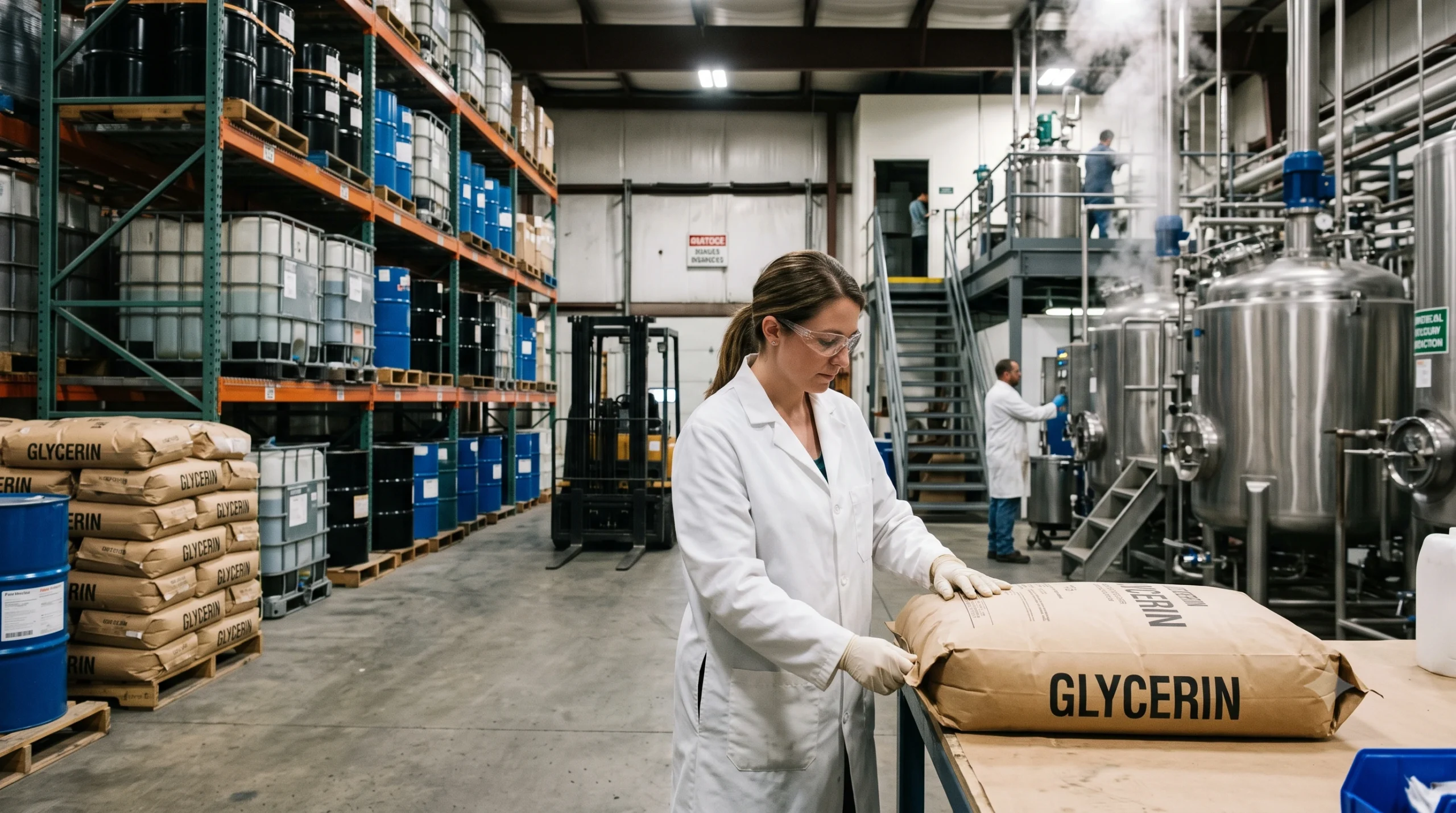
Traditional propylene glycol derives from petroleum through propylene oxide hydration. Bio-based propylene glycol uses renewable feedstocks including glycerin (biodiesel byproduct), corn glucose, sugarcane, sorbitol, and other plant-derived materials. The hydrogenolysis process converts these feedstocks into propylene glycol with identical chemical properties to petroleum-based product.
Glycerin-based production dominates bio-based manufacturing. Biodiesel production generates glycerin as major byproduct (approximately 10% of production volume). Converting this waste stream into valuable propylene glycol improves biodiesel economics. Catalytic hydrogenation at 180-220°C and 200-300 bar pressure yields 85-90% conversion efficiency. Commercial facilities achieve near-theoretical yields through optimized catalyst systems.
Corn glucose provides alternative renewable feedstock particularly in North America. Fermentation converts glucose to intermediate compounds subsequently converted to propylene glycol. This pathway enables non-GMO and organic certified production using appropriate corn sources. Market demand for clean-label ingredients drives interest in plant-derived propylene glycol. Asia-Pacific producers increasingly use sugarcane as regional feedstock.
Carbon Footprint Reduction
Lifecycle analysis comparing petroleum-based versus bio-based propylene glycol reveals substantial environmental benefits. U.S. Department of Energy studies document 61% greenhouse gas emission reduction when substituting bio-based for petroleum-derived propylene glycol. This advantage stems from renewable feedstock carbon absorption during plant growth offsetting combustion emissions.
Energy consumption during production drops 35-40% for bio-based routes compared to petroleum cracking and chemical synthesis. The biodiesel-glycerin pathway leverages existing waste streams requiring minimal additional energy input. Corn-based routes benefit from efficient agricultural production systems. Carbon footprint reductions range from 40-65% depending on feedstock source and production technology.
Bio-based propylene glycol market reached $4.58 billion in 2024 and projects to $6.75 billion by 2032 (4.4% CAGR). North America leads adoption with 34.1% market share driven by automotive, pharmaceutical, and personal care applications. Major producers including Dow, BASF, ADM, and Cargill expanded bio-based capacity. ISCC PLUS certification provides third-party verification of renewable content and sustainability claims.
Cost Analysis and Economic Considerations

Material costs represent significant operational expense for industrial cooling systems. Purchase price differences must be evaluated against lifecycle costs, regulatory compliance expenses, and risk mitigation benefits.
Pricing structures vary by grade and volume:
- Ethylene glycol (industrial grade): $900-1,200 per metric ton bulk pricing
- Propylene glycol (technical grade): $1,430-1,560 per metric ton bulk pricing
- Propylene glycol (USP food grade): $1,600-1,900 per metric ton
- Bio-based propylene glycol: $1,700-2,100 per metric ton (narrowing gap with scale)
The 20-30% cost premium for propylene glycol justifies when accounting for total cost of ownership. Risk factors include potential liability from ethylene glycol exposure incidents, environmental remediation costs following spills, regulatory compliance expenses, and insurance premiums. Industries with strict environmental or food safety requirements absorb propylene glycol premiums as operational necessity.
System efficiency losses from propylene glycol’s higher viscosity increase energy costs. Larger pumps and motors require higher capital investment. Annual electricity consumption rises 10-20% compared to ethylene glycol systems. For large installations, these operational costs accumulate significantly over 15-20 year equipment lifetimes. Detailed engineering analysis must compare initial material savings against long-term energy penalties.
Bio-based propylene glycol pricing approaches conventional propylene glycol as production scales. Tax incentives and carbon credits available in some jurisdictions improve bio-based economics. Corporate sustainability mandates increasingly justify premium pricing for renewable alternatives. Customer willingness to pay premiums for verified sustainable inputs creates market opportunities.
Regulatory Requirements and Safety Protocols
Compliance frameworks differ substantially between glycols affecting handling procedures, reporting obligations, and operational protocols.
Ethylene glycol regulatory requirements:
- SARA Title III / CERCLA: Reportable quantity 5,000 pounds, requires spill notification to authorities
- OSHA Classification: Hazardous substance requiring Safety Data Sheet (SDS) availability
- Storage: Secure, labeled containers preventing unauthorized access and accidental ingestion
- PPE Requirements: Nitrile/butyl rubber gloves, safety glasses, protective clothing during handling
- Disposal: Hazardous waste classification in most jurisdictions, requires licensed disposal
- Transportation: DOT regulations for hazardous materials shipping
Propylene glycol regulatory requirements:
- FDA Status: Generally Recognized as Safe (GRAS) for food applications
- Handling: Standard industrial chemical precautions, no special exposure limits
- Storage: Standard chemical storage, no special security requirements
- Disposal: Non-hazardous waste in most jurisdictions, standard disposal pathways
- Food Contact: USP grade required for systems contacting consumables
System designers must never mix ethylene and propylene glycol. Combining creates unpredictable freeze point depression and compromises inhibitor packages protecting against corrosion. System changeovers require complete flushing and cleaning before switching glycol types. Mixing also invalidates freeze protection calculations potentially causing equipment damage.
Frequenctly Asked Questions
What is the thermal conductivity of propylene glycol?
Propylene glycol has a thermal conductivity of approximately 0.200 W/m·K at 20°C. Ethylene glycol is higher at about 0.252 W/m·K, giving it a 20–25% heat-transfer advantage. This is why ethylene glycol is preferred where cooling efficiency is critical, despite its higher toxicity.
Which is better for cooling, ethylene glycol or propylene glycol?
Ethylene glycol cools more efficiently — higher thermal conductivity, lower viscosity, better freeze protection — and costs 20–30% less. Propylene glycol is far less toxic and biodegrades faster, so it’s required for food-grade, open-loop, and any application with human or environmental contact. Closed-loop industrial systems usually favour ethylene glycol; open-loop and food/pharma systems require propylene glycol.
Is propylene glycol safer than ethylene glycol?
Yes. Propylene glycol has an oral LD50 around 20,000 mg/kg and carries FDA GRAS status for food contact, while ethylene glycol’s oral LD50 is about 4,700 mg/kg and it is classified as hazardous, requiring spill reporting under SARA/CERCLA. Propylene glycol also biodegrades in 1–7 days versus 10–30 for ethylene glycol.
Can you mix ethylene glycol and propylene glycol?
No. Mixing the two produces unpredictable freeze-point depression and compromises the corrosion-inhibitor package, invalidating freeze-protection calculations. Switching glycol types requires completely flushing and cleaning the system first.
Is bio-based propylene glycol worth the premium?
For sustainability-driven operations, often yes. Bio-based propylene glycol (from glycerin or corn glucose) delivers up to 61% lower greenhouse-gas emissions with identical performance to petroleum-based product. The price premium narrows as production scales, and carbon credits or corporate sustainability mandates can justify it.
Conclusion
The comparison of ethylene glycol vs propylene glycol for industrial cooling reveals clear trade-offs between thermal efficiency and sustainability. Ethylene glycol delivers 20-25% better heat transfer performance and 20-30% lower material costs while carrying significant toxicity and environmental risks. Propylene glycol offers safer operations, faster biodegradation, and renewable production options through bio-based feedstocks achieving 61% greenhouse gas reductions. System type determines optimal selection—closed-loop industrial applications favor ethylene glycol’s efficiency advantages while open-loop systems and food-grade applications mandate propylene glycol. The expanding bio-based propylene glycol market, growing toward $6.75 billion by 2032, provides increasingly viable sustainable alternative as production scales reduce cost premiums.
Specifying a coolant? Elchemy supplies ethylene glycol, propylene glycol (technical and USP food grade), and bio-based propylene glycol from verified producers — with COA, TDS and SDS on every order. Tell us your system type, volume and destination and we’ll quote the right grade in 24 hours. Get a Glycol Quote in 24 Hours View propylene glycol specifications.