

At a Glance
-
- Activated charcoal works through adsorption, trapping toxins on its massive surface area
-
- One teaspoon has more surface area than a football field
-
- Emergency room doses are 50-100 grams for adults, far more than over-the-counter supplements
-
- Most effective when given within 1-2 hours after poisoning
-
- Doesn’t work for metals, alcohols, acids, or bases
-
- Over-the-counter use for gas and bloating shows mixed research results
-
- Can interfere with prescription medications if taken together
-
- Common side effects include black stools, vomiting, and constipation
Walk into any pharmacy and you’ll find activated charcoal products marketed for everything from teeth whitening to detoxification. But step into an emergency room, and you’ll discover where activated charcoal in medicine truly earned its reputation. Activated charcoal is a special form of carbon that can bind other substances on its surface in a process known as adsorption. This ability to trap toxins and drugs makes it one of the most valuable tools emergency physicians have for treating poisonings and overdoses.
The first reported use of charcoal as an antidote occurred in 1811, when the French chemist Michel Bertrand reportedly ingested charcoal with 5 g of arsenic trioxide. Since then, activated charcoal has progressed from dramatic demonstrations before skeptical colleagues to a standard treatment protocol backed by decades of research and millions of successful applications.
How Activated Charcoal in Medicine Actually Works
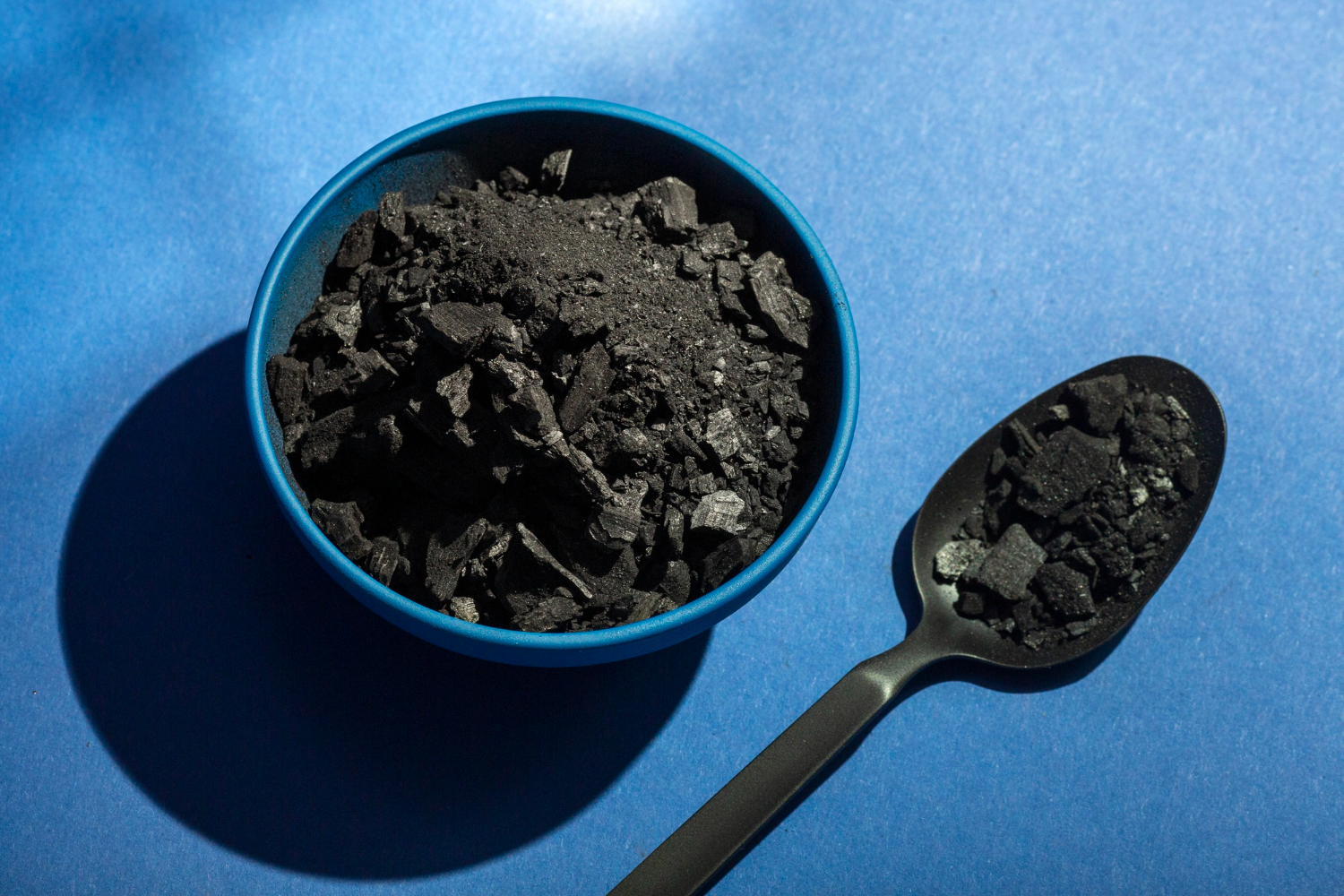
Charcoal for medicinal use is created by the controlled pyrolytic decomposition of carbon-based compounds, such as coconut shells or peat. The process doesn’t stop there. Thereafter, ‘activation’ with gases at high temperature removes previously adsorbed substances and further reduces particle size, resulting in an exceptionally porous final product.
The result? Some ‘superactivated’ charcoal preparations have a surface area of up to 3500 m² g⁻¹, or about 175,000 m² per 50 g bottle. For perspective, a large football pitch covers about 10,000 square meters. That means a standard emergency room dose contains surface area equivalent to more than 17 football fields.
The Science of Adsorption
Adsorption is the accumulation of a gas or liquid on the surface of a liquid or solid substrate, as opposed to absorption, in which the encroaching substance enters the substrate’s bulk or volume. Think of it this way: absorption is like a sponge soaking up water throughout its structure, while adsorption is like sticky notes attached to a surface.
Active charcoal acts by binding to the pharmaceutical drugs or poisons such as organophosphates and decreasing the systemic absorption of toxic agents. When someone swallows poison or overdoses on medication, activated charcoal catches those molecules before they can pass through the intestinal wall into the bloodstream.
How it binds toxins:
-
- Weak intermolecular forces hold molecules to the charcoal surface
-
- Non-ionized, organic compounds bind more strongly
-
- The massive surface area allows binding of huge quantities
-
- Once bound, toxins pass through the digestive system without being absorbed
Emergency Room Use: When Every Minute Counts
When people have to go to an emergency room because of an overdose, they are often worried about getting their stomachs “pumped.” In reality, gastric lavage (stomach pumping) does not happen very often. Stomach pumping has largely been replaced by activated charcoal as the standard treatment.
When gastrointestinal decontamination is performed, it is typically accomplished with a product known as “activated charcoal,” mixed and taken by mouth or feeding tube in the emergency room. Patients drink a black, gritty mixture that looks unappetizing but can save lives.
Dosing in Emergency Settings
The dose for gastrointestinal decontamination is 50-100 g for adults and 1 gm/kg or 10-25 g in children. Compare that to over-the-counter supplements.
| Setting | Typical Dose | Form |
| Emergency room (adults) | 50-100 grams | Liquid suspension |
| Emergency room (children) | 1 gram per kg body weight | Liquid suspension |
| Over-the-counter supplements | 250-520 mg per capsule | Pills/capsules |
| Multiple capsules needed for ER-equivalent dose | 200+ capsules | Not practical |
Over-the-counter activated charcoal typically comes in 250 mg tablets. To provide the same dose given in the emergency room could require hundreds of tablets. This explains why home treatment of poisoning with store-bought charcoal doesn’t work.
Timing Is Critical
One hour post-ingestion is often used as a cutoff for charcoal administration. However, many overdoses may benefit from charcoal administration well beyond 1 hour. The window extends for:
-
- Extended-release medications
-
- Drugs that slow stomach emptying
-
- Very large overdoses
-
- Substances that form clumps (bezoars) in the stomach
If indicated, activated charcoal should be administered as soon as possible, usually within 1 to 2 hours of the exposure.
What Activated Charcoal Can and Cannot Treat
Successfully Treated Poisonings
Activated charcoal is a form of carbon that binds to many drugs and toxins, reducing further absorption from the gastrointestinal tract.
Effectively binds to:
-
- Most prescription medications (antidepressants, pain medications, heart drugs)
-
- Aspirin and acetaminophen
-
- Carbamazepine and phenobarbital
-
- Many pesticides and herbicides
-
- Plant toxins and certain natural poisons
What It Can’t Help
It does not work for poisonings by cyanide, corrosive agents, iron, lithium, alcohols, or malathion.
Cannot effectively bind:
-
- Strong acids or bases
-
- Metals (iron, lithium, lead, mercury)
-
- Alcohols (methanol, ethanol, ethylene glycol)
-
- Petroleum products
-
- Simple salts
-
- Very small molecules that don’t stick to charcoal
Substances that are adsorbed insufficiently or not at all by activated charcoal, owing to their physical properties require different treatment approaches. For these poisonings, doctors use specific antidotes, dialysis, or supportive care instead.
Multiple-Dose Treatment
Activated charcoal may need to be considered for other drugs and increases elimination of some drugs (‘gastrointestinal dialysis’) if multiple doses are given.
Some drugs undergo enterohepatic circulation, meaning they get secreted into the intestines even after being absorbed. Many absorbed drugs that undergo significant hepatic metabolism and conjugation are eliminated via bile into the small intestines. When they reach the small intestines, drug conjugates can undergo hydrolysis and return to the enterohepatic circulation. Activated charcoal interferes with this process.
Multiple doses work for:
-
- Theophylline overdoses
-
- Carbamazepine toxicity
-
- Phenobarbital poisoning
-
- Certain long-acting medications
Activated Charcoal in Pharmacy: The GI Detox Claims
Beyond emergency medicine, you’ll find activated charcoal in pharmacy aisles marketed for digestive issues. Outside of emergency situations, activated charcoal products are marketed as over-the-counter supplements and remedies for a host of gastrointestinal needs.
Gas and Bloating: Does It Work?
The research here gets murky. Available data on the efficacy of activated charcoal in reducing lower intestinal gas and accompanying symptoms are conflicting.
Some studies show benefits:
-
- In comparison to a placebo, activated charcoal significantly (p less than 0.05) reduced breath hydrogen levels in both the population groups
-
- Symptoms of bloating and abdominal cramps attributable to gaseousness were also significantly reduced in both groups by activated charcoal
-
- Some studies have shown that charcoal, when combined with simethicone, is even more effective at reducing gas and bloating
But other research disagrees:
-
- But other studies disagree. A mix of charcoal and the gas-relieving drug simethicone seems to help ease pain, gas, and bloating. But activated charcoal can also cause vomiting, so for some people, it could make an upset stomach worse
What Doctors Actually Recommend
Evidence supporting the use of activated charcoal outside of hospital uses is limited. Activated charcoal’s effectiveness in the emergency department is proven. But there are conflicting results related to its ability to relieve gas, bloating, nausea and diarrhea.
And in children in particular, misuse could lead to gastrointestinal blockages. The risks may outweigh any potential benefits for everyday digestive complaints.
Medical experts suggest instead:
-
- Simethicone (Gas-X) for gas relief
-
- Dietary changes to identify trigger foods
-
- Peppermint oil for bloating
-
- Probiotics for gut health
Serious Risks and Side Effects
A more serious side effect, pneumonitis, may result if aspirated into the lungs. If charcoal gets into the lungs instead of the stomach, it can cause severe pneumonia. Aspiration of activated charcoal can cause significant morbidity and mortality.
Common side effects:
-
- Black stools (expected and harmless)
-
- Nausea and vomiting
-
- Constipation or diarrhea
-
- Gritty feeling in the mouth
Serious complications:
-
- Aspiration into lungs
-
- Intestinal blockage
-
- Severe dehydration (when combined with sorbitol)
-
- Electrolyte imbalances
Gastrointestinal obstruction and ileus are less common but serious adverse effects.
Drug Interactions: A Hidden Danger
While its ability to adsorb certain unwanted toxins and intestinal gas is dubious, activated charcoal really can soak up prescription and over-the-counter medications.
Medications that can be affected:
-
- Birth control pills
-
- Antidepressants
-
- Diabetes medications
-
- Heart medications (beta-blockers, antiarrhythmics)
-
- Seizure medications
-
- Pain relievers
-
- Arthritis drugs
Known interactions include painkillers, antidepressants, arthritis drugs, diabetes medications, oral contraceptives, antiarrhythmics, beta-blockers, antiepileptics, and bronchodilators.
The solution? Prolonged use of activated charcoal can reduce intestinal absorption of medications taken at the same time. Therefore, if you need to take a medication, it should be taken at least 3 hours before taking the activated charcoal.
The Bottom Line on Over-the-Counter Use
It is not recommended to use activated charcoal at home to treat an overdose. If a poisoning is serious enough to warrant the use of activated charcoal, the person should be monitored in an emergency room.
There are some internet sites that encourage making activated charcoal at home or using other carbon sources such as burned toast or charcoal briquettes. These products are not effective and should never be used.
For everyday digestive issues, the evidence doesn’t support routine use. But for a stomach bug, gas or bloating? Not worth the risk.
Sourcing Medical-Grade Activated Charcoal
For healthcare facilities, emergency services, and pharmaceutical applications requiring medical-grade activated charcoal, sourcing from qualified suppliers who provide appropriate grades with complete documentation is essential. Elchemy connects medical facilities and pharmaceutical companies with verified suppliers of USP-grade activated charcoal meeting stringent quality specifications for medical use. Whether supplying emergency departments, developing pharmaceutical formulations, or manufacturing medical devices, we help source materials with full certificates of analysis, sterility documentation where required, and regulatory compliance support for healthcare applications.
Conclusion
Activated charcoal in medicine represents one of the most dramatic examples of a simple substance with powerful effects. In emergency rooms, it saves lives by preventing poison absorption when administered properly and promptly. The evidence here is solid, the track record extensive, and the benefits clear.
But that emergency room success doesn’t automatically translate to treating everyday digestive complaints. The doses differ dramatically, the evidence remains mixed, and the potential for medication interactions creates real risks. Over-the-counter activated charcoal supplements might help some people with gas and bloating, but they’re not the miracle cure marketing claims suggest.
The takeaway? Trust activated charcoal for what science proves it does well: emergency treatment of specific poisonings and overdoses under medical supervision. For everyday digestive issues, talk to your doctor about proven treatments with better evidence and fewer risks. And never attempt home treatment of serious poisoning with store-bought supplements. Some medical interventions belong exclusively in professional hands, and activated charcoal for poisoning is definitely one of them.