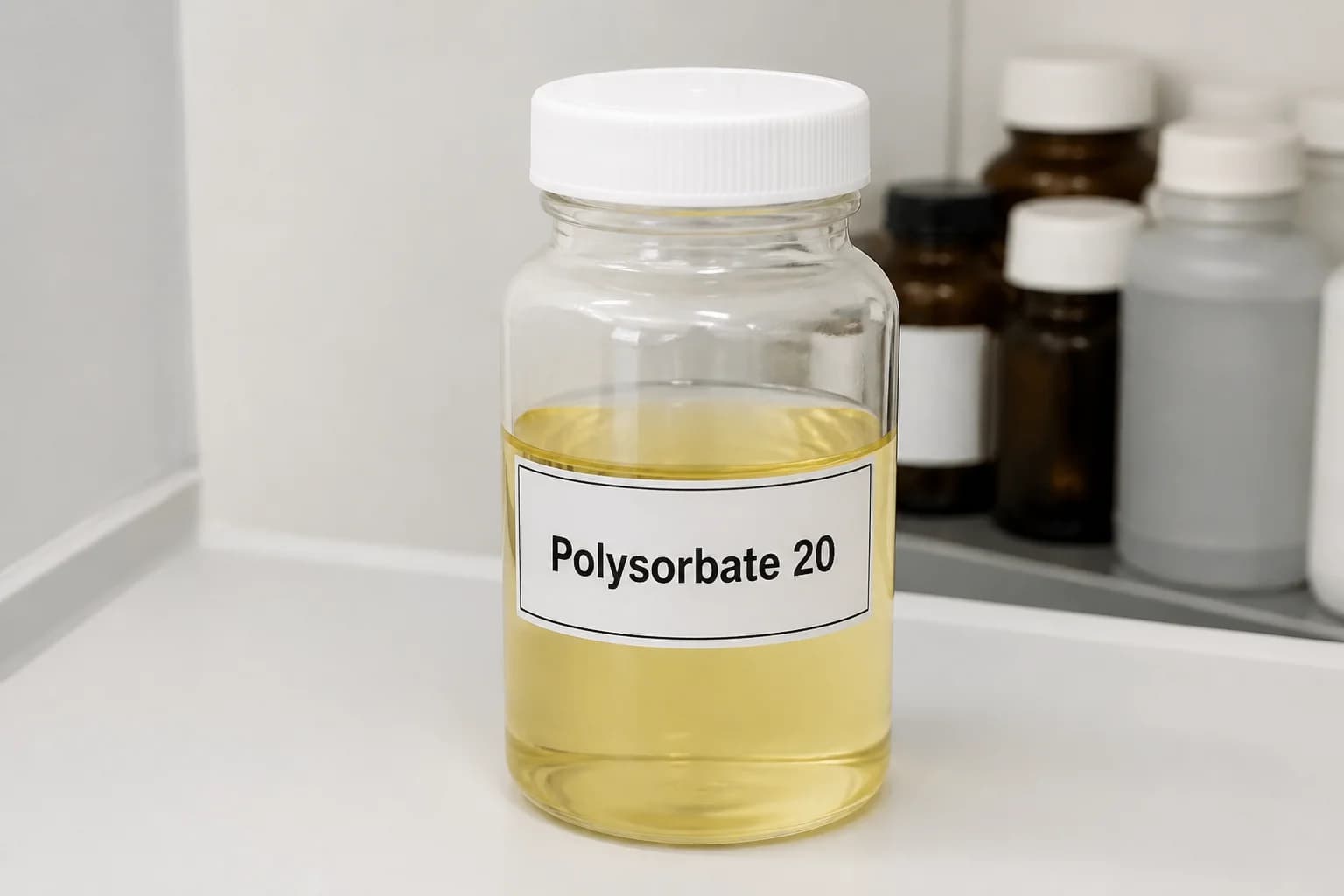
Polysorbate 20
ELSURFACTM – PSB20 G1
Get Pricing For This Product
Need pricing? Request a quote for this product and we'll get back to you shortly.
Speed Up Your Sample Testing Process
Express Delivery in 24–48 Hours
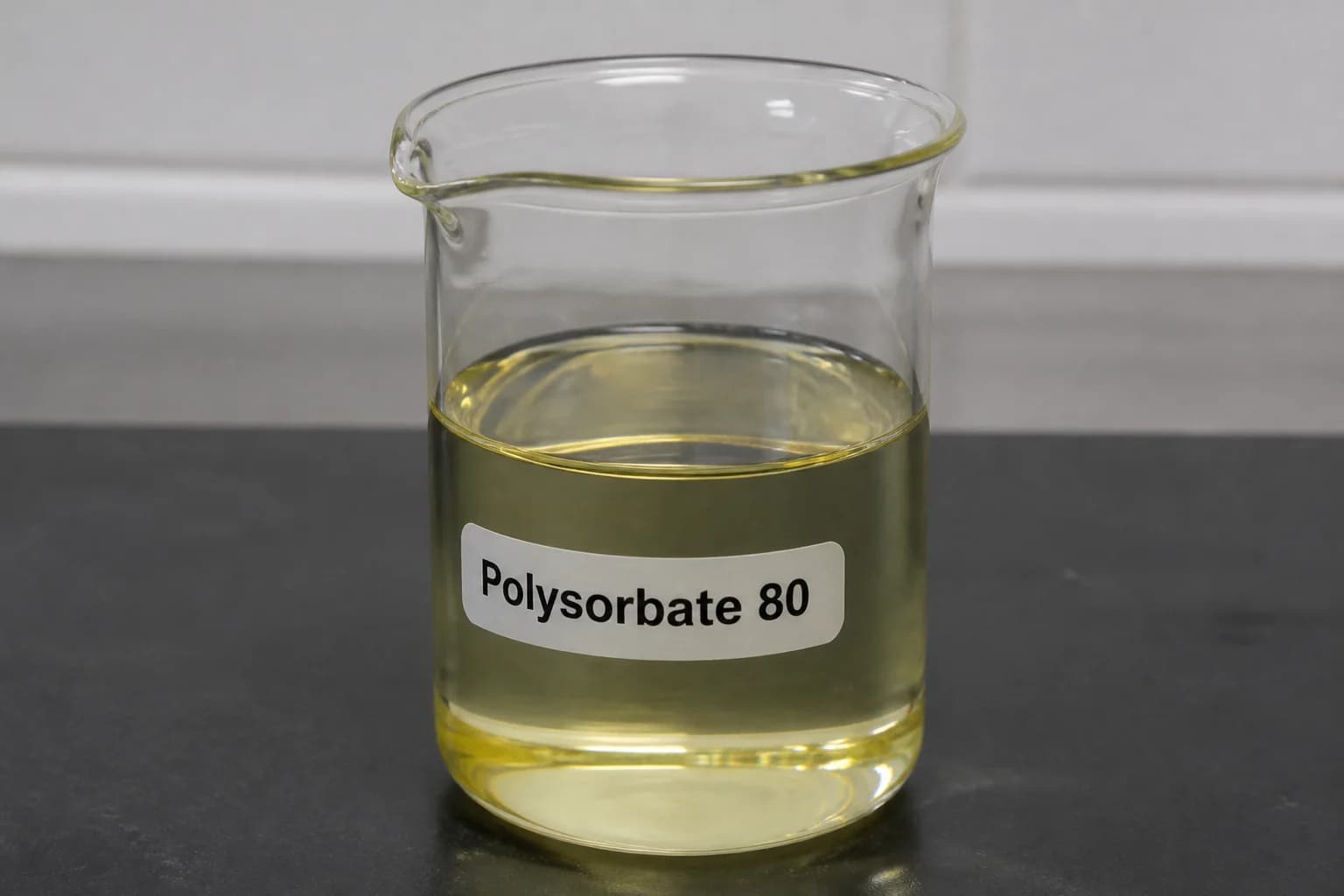
Polysorbate 20 a non-ionic surfactant, is formed through a process of ethoxylation, involving the repetition of 20 units of polyethylene glycol. Polysorbate 20 is used to improve the texture, feel,…
CAS Number
9005-64-5
HS Code
34.02.13.00 / 34.02.13.00
INCI Name
Polysorbate 20
Molecular Formula
C₆₄H₁₂₄O₂₆ (Polysorbate 80)
Polysorbate 20
ELSURFACTM – PSB20 G1
Polysorbate 20 a non-ionic surfactant, is formed through a process of ethoxylation, involving the repetition of 20 units of polyethylene glycol. Polysorbate 20 is used to improve the texture, feel, and the scent of skincare and cosmetic products. It is also used to stabilize…
CAS Number
9005-64-5
INCI Name
Polysorbate 20
HS Code
34.02.13.00 / 34.02.13.00
Molecular Formula
C₆₄H₁₂₄O₂₆ (Polysorbate 80)
Get Pricing For This Product
Need pricing? Request a quote for this product and we'll get back to you shortly.
Speed Up Your Sample Testing Process
We deliver domestic samples within 24 - 48 hours, helping you evaluate product without delays.
Product Specification
Physical Properties
| Property | Specification |
|---|---|
| Hlb Value | Polysorbate 20- 16.7, Polysorbate 40-15.6, Polysorbate 60-14.9, Polysorbate 80-15.0 |
| Appearance | Amber, viscous liquid; paste (depending on grade) |
| Odor | Mild alcoholic |
| Molecular Weight (G/Mol) | 428.6 |
| Density Or Specific Gravity | 1.08 g/mL at 20 °C |
| Viscosity | 300-500 cSt at 25 °C |
| Refractive Index | n20/D 1.473 |
| Ph (If Aqueous Solution) | 6-8 (5% aqueous solution) |
Chemical Properties
| Property | Specification |
|---|---|
| Solubility | Water-soluble, oil-dispersible |
Thermal Properties
| Property | Specification |
|---|---|
| Boiling Point | 100 °C |
| Melting Point | -25 °C |
| Flash Point | > 300 °F |
Processing Methods & Reference Formulations
A. Cosmetic cream
In cosmetic cream production, add Polysorbate 80 to the aqueous phase or pre-mix it with oils to aid emulsification and solubilization of oil-soluble ingredients. Heat both phases for uniform blending and stable emulsion formation.
| Key Ingredients | Indicative Dosage (% w/w) |
|---|---|
| Oils/Emollients | 5–20% |
| Polysorbate 80 | 1-10% |
| Emulsifiers | 2-6% |
| Humectants (e.g., glycerin) | 2-8% |
| Preservatives, Thickners, pH adjusters, Fragnances etc. |
B. Hair shampoo
In hair shampoo production, add Polysorbate 80 to the aqueous phase to help solubilize essential oils or fragrances. Mix thoroughly at room temperature or mild heat to ensure clear, stable formulations.
| Key Ingredients | Indicative Dosage (% w/w) |
|---|---|
| Sulphur | 0.75% |
| Salicylic acid | 0.5–1.75% |
| Benzoic acid | 1.0–2.0 % |
| Sodium lauryl sulphate | 20% |
| Urea | 0.75% |
| Citric acid | 0.5% |
| Sodium EDTA | 0.5% |
| Guar gum | 1.5% |
| Polysorbate 80 | 0.5% |
| Distilled water | 60-70% |
C. Soap
In soap production, add Polysorbates during the cooling phase to enhance solubilization of fragrances or oils. Stir gently to ensure uniform distribution and avoid destabilizing the emulsion or creating excess foam.
| Key Ingredients | Indicative Dosage (% w/w) |
|---|---|
| Soap base | 80-95% |
| Polysorbate 80 | 1-10% |
| Fragrance/Essential oil | 1-5 % |
| Colorant | 0.1-1% |
| Additives (e.g., glycerin, extracts) | 1-5% |
| Water |
D. Makeup foundation lotion
In makeup foundation lotion production, add Polysorbates to the oil phase to help emulsify oils and disperse pigments evenly. Ensure thorough mixing before combining with the water phase to achieve a stable and smooth emulsion.
| Key Ingredients | Indicative Dosage (% w/w) |
|---|---|
| Stearic acid | 2% |
| Cetyl alcohol | 4% |
| Paraffin liquid | 20% |
| Dimethicone | 5% |
| Polysorbate 80 | 3.65% |
| Propylparaben | 0.02% |
| Propylene glycol | 5% |
| Xanthan gum | 0.3% |
| Methylparaben | 0.18% |
| Distilled water | 50-60% |
| Other additives |
Dosing Guidelines
A. Dosing by Application
| Products | Authorized dosage |
|---|---|
| Cosmetic creams/ lotions | 1-10% |
| Hair shampoo | 1-10% |
| Body washes, cleansers | 1-10% |
About Polysorbate 20
Polysorbate 20 is a versatile emulsifier, widely used for its ability to blend oil and water-based components in various products. It plays a critical role in ensuring that formulations maintain a smooth, stable texture. This characteristic is particularly important for personal care items like creams, lotions, and serums, where consistency matters.
Beyond just blending, Polysorbate 20 acts as a solubilizer. It allows oils and essential oils to disperse in water-based formulations, preventing separation. This quality makes it an indispensable ingredient in industries that prioritize product stability and appearance.
Polysorbate 20 manufacturers place a strong emphasis on quality and purity. The compound they produce must meet rigorous safety and performance standards across the chemical industry. These manufacturers ensure that Polysorbate 20 remains effective under various temperature and pH conditions, making it reliable for a wide range of applications.
One of the standout benefits of Polysorbate 20 is its mildness. It’s gentle enough for sensitive skin, which is why it's often found in products designed for everyday use. This quality helps companies create skincare products that feel good on the skin while maintaining performance.
Manufacturers are also increasingly focused on eco-friendly production processes. Many have adopted greener methods to create biodegradable Polysorbate 20, meeting the growing demand for sustainable ingredients. This shift is essential as industries across the board strive to reduce their environmental footprint.
The ability to customize this emulsifier through custom chemical manufacturing ensures that it can be tailored to specific needs. Whether for personal care, pharmaceuticals, or even food, Polysorbate 20 remains a key player in product formulations.
For manufacturers, Polysorbate 20’s adaptability is one of its greatest strengths. Polysorbate 20 manufacturers are focused on producing a compound that meets the varying demands of diverse industries. Whether it’s being used in cosmetics or pharmaceuticals, the production process ensures that Polysorbate 20 delivers high purity and consistent quality. These manufacturers work within the stringent standards of the chemical industry, ensuring that every batch meets safety and performance expectations, making it ideal for sensitive applications.
A significant advantage of Polysorbate 20 is its mildness. Unlike some emulsifiers, it is gentle on the skin, which makes it particularly useful in products designed for daily use, such as facial cleansers and baby products. Even when used frequently, it does not irritate the skin, making it a reliable choice for sensitive skin formulations. Custom chemical manufacturing also allows this emulsifier to be adjusted based on specific formulations, enabling it to seamlessly blend into diverse product ranges, ensuring compatibility with other ingredients.
Polysorbate 20 also serves as a solubilizer, making it essential in dispersing oils and essential oils into water-based formulations. Its ability to reduce surface tension allows these ingredients to integrate smoothly, which is critical in creating stable, uniform products. Polysorbate 20 manufacturers ensure that the compound can handle a wide range of pH levels and temperatures, which is particularly important for products that require a long shelf life.
The move toward more eco-friendly and sustainable production processes has influenced the way Polysorbate 20 manufacturers operate. As consumers become more conscious of the environmental impact of their products, the demand for biodegradable, ethically produced ingredients has risen. Leading manufacturers are taking steps to ensure that their processes not only meet but exceed environmental standards. By offering biodegradable versions of Polysorbate 20, manufacturers contribute to the creation of products that are not only effective but also environmentally responsible.
- Efficient Emulsifier: Ensures the stable blending of oil and water in formulations, preventing separation and maintaining the consistency of products.
- Non-Irritating: Gentle on the skin, making it a preferred choice for sensitive skin formulations.
- Water Solubility: Highly soluble in water, which enhances its ease of use in a wide range of aqueous-based cosmetic and personal care products.
- Stability in Formulations: Provides long-lasting stability in products, ensuring that emulsions retain their texture and performance over time.
- Eco-Conscious Manufacturing: Produced with sustainability in mind, minimizing environmental impact while delivering high-quality performance.
About Polysorbate 20
Polysorbate 20 is a versatile emulsifier, widely used for its ability to blend oil and water-based components in various products. It plays a critical role in ensuring that formulations maintain a smooth, stable texture. This characteristic is particularly important for personal care items like creams, lotions, and serums, where consistency matters.
Beyond just blending, Polysorbate 20 acts as a solubilizer. It allows oils and essential oils to disperse in water-based formulations, preventing separation. This quality makes it an indispensable ingredient in industries that prioritize product stability and appearance.
Polysorbate 20 manufacturers place a strong emphasis on quality and purity. The compound they produce must meet rigorous safety and performance standards across the chemical industry. These manufacturers ensure that Polysorbate 20 remains effective under various temperature and pH conditions, making it reliable for a wide range of applications.
One of the standout benefits of Polysorbate 20 is its mildness. It’s gentle enough for sensitive skin, which is why it's often found in products designed for everyday use. This quality helps companies create skincare products that feel good on the skin while maintaining performance.
Manufacturers are also increasingly focused on eco-friendly production processes. Many have adopted greener methods to create biodegradable Polysorbate 20, meeting the growing demand for sustainable ingredients. This shift is essential as industries across the board strive to reduce their environmental footprint.
The ability to customize this emulsifier through custom chemical manufacturing ensures that it can be tailored to specific needs. Whether for personal care, pharmaceuticals, or even food, Polysorbate 20 remains a key player in product formulations.
For manufacturers, Polysorbate 20’s adaptability is one of its greatest strengths. Polysorbate 20 manufacturers are focused on producing a compound that meets the varying demands of diverse industries. Whether it’s being used in cosmetics or pharmaceuticals, the production process ensures that Polysorbate 20 delivers high purity and consistent quality. These manufacturers work within the stringent standards of the chemical industry, ensuring that every batch meets safety and performance expectations, making it ideal for sensitive applications.
A significant advantage of Polysorbate 20 is its mildness. Unlike some emulsifiers, it is gentle on the skin, which makes it particularly useful in products designed for daily use, such as facial cleansers and baby products. Even when used frequently, it does not irritate the skin, making it a reliable choice for sensitive skin formulations. Custom chemical manufacturing also allows this emulsifier to be adjusted based on specific formulations, enabling it to seamlessly blend into diverse product ranges, ensuring compatibility with other ingredients.
Polysorbate 20 also serves as a solubilizer, making it essential in dispersing oils and essential oils into water-based formulations. Its ability to reduce surface tension allows these ingredients to integrate smoothly, which is critical in creating stable, uniform products. Polysorbate 20 manufacturers ensure that the compound can handle a wide range of pH levels and temperatures, which is particularly important for products that require a long shelf life.
The move toward more eco-friendly and sustainable production processes has influenced the way Polysorbate 20 manufacturers operate. As consumers become more conscious of the environmental impact of their products, the demand for biodegradable, ethically produced ingredients has risen. Leading manufacturers are taking steps to ensure that their processes not only meet but exceed environmental standards. By offering biodegradable versions of Polysorbate 20, manufacturers contribute to the creation of products that are not only effective but also environmentally responsible.
- Efficient Emulsifier: Ensures the stable blending of oil and water in formulations, preventing separation and maintaining the consistency of products.
- Non-Irritating: Gentle on the skin, making it a preferred choice for sensitive skin formulations.
- Water Solubility: Highly soluble in water, which enhances its ease of use in a wide range of aqueous-based cosmetic and personal care products.
- Stability in Formulations: Provides long-lasting stability in products, ensuring that emulsions retain their texture and performance over time.
- Eco-Conscious Manufacturing: Produced with sustainability in mind, minimizing environmental impact while delivering high-quality performance.
Regulatory Compliance
| Region | Max Allowed Level | Notes | Certification Body |
|---|---|---|---|
| United States | - | No explicit legal maximum for polysorbates in cosmetics. | FDA |
| European Union | - | No explicit legal maximum. Not restricted by concentration. | SCCS (Scientific Committee on Consumer Safety) |
| India | - | No BIS-specific limit | - |
| Japan | - | No specific limit. Permitted as cosmetic ingredients as long as products meet safety and labeling requirements. | MHLW – Ministry of Health, Labour and Welfare |
| Canada | - | No explicit statutory maximum in cosmetics. | - |
| Australia | - | No statutory maximum | - |
| China | - | Permitted in cosmetics, must comply with national safety and labeling standards. | NMPA - National Medical Products Administration |
| Republic of Korea | - | Permitted in cosmetics, regulated for safety and labeling. | MFDS - Ministry of Food and Drug Safety |
| ASEAN | - | No statutory maximum | - |
FAQs - Polysorbate 20
Related Products
Related Products
Streamline
Your Chemical
Procurement
Get fast responses from real experts