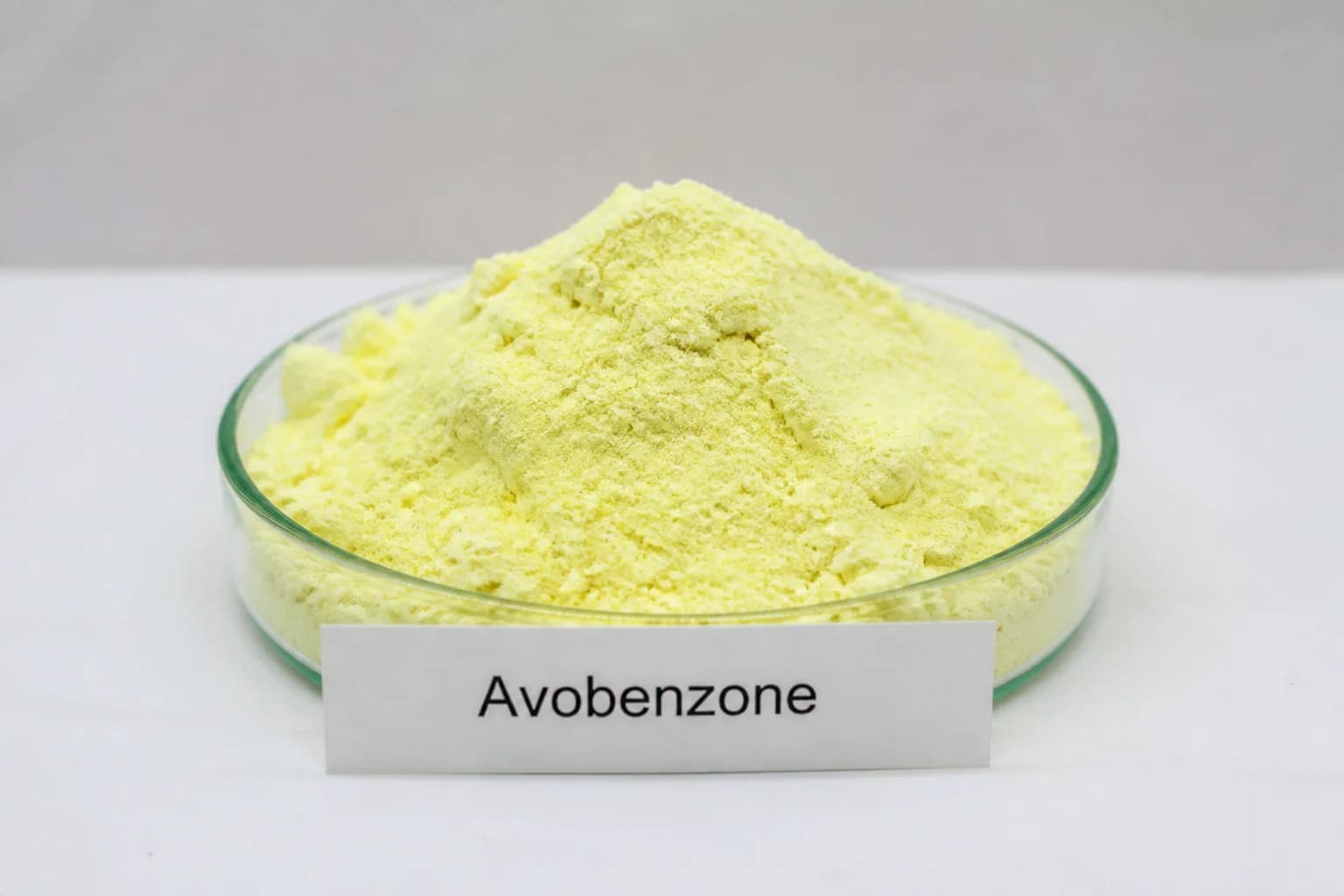
Avobenzone
ELUVSAFETM – AVB
Get Pricing For This Product
Skip the quote. Sign up now and see pricing instantly
Speed Up Your Sample Testing Process
Express Delivery in 24–48 Hours
Avobenzone is a benzophenone derivative used in sunscreens. As a UVA absorber, it prevents UVA radiation penetration by absorbing and dissipating it. Despite its efficacy, Avobenzone can be less…
CAS Number
70356-09-1
HS Code
3307.90.00
INCI Name
Avobenzone
Molecular Formula
C₂₀H₂₂O₃
Avobenzone
ELUVSAFETM – AVB
Avobenzone is a benzophenone derivative used in sunscreens. As a UVA absorber, it prevents UVA radiation penetration by absorbing and dissipating it. Despite its efficacy, Avobenzone can be less photostable, often requiring stabilizers in formulations. It crucially contributes to…
CAS Number
70356-09-1
INCI Name
Avobenzone
HS Code
3307.90.00
Molecular Formula
C₂₀H₂₂O₃
Get Pricing For This Product
Skip the quote. Sign up now and see pricing instantly
Speed Up Your Sample Testing Process
We deliver domestic samples within 24 - 48 hours, helping you evaluate product without delays.
Product Specification
Physical Properties
| Property | Specification |
|---|---|
| Appearance | White or pale-yellow crystalline powder |
| Identification | A. Infrared Absorption <197K>, B. Ultraviolet Absorption <197U> Absorptivity at 360nm do not differ by more than 3.0% |
| Assay (Gc) | 95.0%~105.0% |
| Loss On Drying | 0.5% max |
Chemical Properties
| Property | Specification |
|---|---|
| Pka | 9.74 ± 0.13 (Predicted) |
| Water Solubility | 27μg/L (at 20℃) |
Thermal Properties
| Property | Specification |
|---|---|
| Melting Point | 81°C ~ 86°C |
| Specific Extinction | 1100.0 ~ 1180.0 |
| Specific Extinction (E 1%, 1cm At 357nm) | 1100.0 ~ 1180.0 |
Processing Methods & Reference Formulations
A. Sunscreen cream
Use photostabilizers like octocrylene to prevent avobenzone degradation. Maintain the formulation's pH between 5.5–7.0 for optimal avobenzone stability.
| Key Ingredients | Indicative Dosage (% w/w) |
|---|---|
| Avobenzone | 3% |
| Octocrylene | 5% |
| Isopropyl Myristate | 4% |
| Shea Butter | 3% |
| Cetyl Alcohol | 2% |
| Water | ~61% |
| Glycerine | 4% |
| Xanthan Gum | 0.5% |
B. Sunscreen lotion
Utilize oil-soluble emollients, such as C12–15 alkyl benzoate, to dissolve avobenzone effectively. Avoid combining avobenzone with incompatible UV filters like octinoxate, as they can destabilize each other.
| Key Ingredients | Indicative Dosage (% w/w) |
|---|---|
| Avobenzone | 3% |
| Octocrylene | 7% |
| C12-15 Alkyl Benzoate | 5% |
| Glyceryl Stearate / PEG-100 Stearate | 4.5% |
| Water | ~60% |
| Glycerine | 4% |
| Carbomer | 0.2% |
C. Sunscreen moisturizer with SPF
Add antioxidants like tocopherol or ascorbyl palmitate to reduce avobenzone degradation. Carefully combine avobenzone with hydrating agents to ensure they don't interfere with its efficacy.
| Key Ingredients | Indicative Dosage (% w/w) |
|---|---|
| Avobenzone | 3% |
| Octocrylene | 5% |
| C12-15 Alkyl Benzoate | 4% |
| PEG-10 Dimethicone | 2% |
| Water | ~66% |
| Glycerine | 3% |
| Niacinamide | 2% |
| Carbomer | 0.3% |
| Panthenol | 1% |
| Vitamin E | 0.2% |
D. Sunscreen spray (alcohol-based)
Ensure avobenzone is dissolved in a non-volatile, film-forming solvent system to prevent crystallization. Incorporate volatile silicones, such as cyclopentasiloxane, to enhance sprayability and maintain avobenzone in solution.
| Key Ingredients | Indicative Dosage (% w/w) |
|---|---|
| Avobenzone | 3% |
| Octocrylene | 10% |
| Ethanol | 65% |
| Isododecane | 15% |
| C12-15 Alkyl Benzoate | 5% |
| Vitamin E | 0.5% |
| Fragrance & Preservative | 1.5% |
Dosing Guidelines
A. Dosing by Application
| Products | Authorized dosage |
|---|---|
| Sunscreen Lotions/ Creams/ Sprays/ Moisturizers, Self-Tanning Sunscreen Products | Up to 3% |
| Skincare Creams, Lotions, Gels | Up to 3% |
| Lipsticks (with UV Protection), Foundation with SPF, Concealer, Skin highlighters | 1-3% |
B. Dosing by SPF Targets
| Target SPF | Avobenzone % | Suggestions |
|---|---|---|
| 30 | 2.0-3.0% | Pair with ~7–10% UVB filters (e.g., Octocrylene, Homosalate) |
| 40 | 3.0% | Maximize Avobenzone; boost Octocrylene/Homosalate or add Tinosorb S |
| 50 | 3.0% | Add higher load of UVB filters; stabilize with antioxidants |
| 60 | 3.0% | Requires strong photostabilizers + layering multiple UVB agents |
| 70 | 3.0% | Use synergy: Avobenzone + Octocrylene + Ensulizole + Tinosorb M or S |
About Avobenzone
Avobenzone is a well-known chemical compound in the skincare and cosmetic industry, prized for its effectiveness as a UVA filter. It appears as a light yellow to white crystalline powder and is recognized for its high solubility in organic solvents, such as ethanol and octocrylene, which makes it an adaptable component for various skincare formulations.
Its ability to absorb UVA rays across a broad spectrum helps protect the skin from long-term exposure and photoaging effects, such as wrinkles and dark spots. This compound is widely used due to its stable nature during production. With a melting point between 81°C and 86°C, Avobenzone remains consistent and easy to handle in manufacturing environments.
Its stability is further enhanced when combined with certain agents, ensuring reliable performance when exposed to sunlight. This makes it an ideal ingredient for sun care products that need to maintain their effectiveness over extended periods.
Avobenzone is favored by Avobenzone manufacturers for its versatility, as it fits seamlessly into a variety of product types, whether it’s used in creams, lotions, or sprays. Its chemical properties allow it to blend well with other ingredients without compromising the overall formulation.
This flexibility is one of the reasons why Avobenzone manufacturers in India and around the world consider it a top choice for sun protection solutions.
A significant feature of Avobenzone is its gentle nature, making it suitable for sensitive skin. As more consumers seek sun care products that provide high protection while being kind to the skin, Avobenzone is an attractive option for manufacturers looking to cater to this demand. Its hypoallergenic qualities provide peace of mind to those with delicate or reactive skin types.
Another strength of Avobenzone lies in its durability. While many UV filters degrade under exposure to sunlight, Avobenzone, when paired with the right stabilizers, retains its ability to protect against UVA rays throughout the day. This resilience ensures that consumers using products containing Avobenzone are getting the most out of their sun protection without the need for frequent reapplication.
As consumer awareness of skin protection increases, Avobenzone continues to play a key role in formulations that offer reliable and long-lasting defense against harmful UV rays. Its proven track record in the industry speaks to its value in providing thorough protection against the damaging effects of the sun.
Avobenzone remains a trusted ingredient for manufacturers worldwide, providing the consistency and quality required for premium sun care formulations.
- Broad-Spectrum UV Protection: Absorbs UVA rays, providing comprehensive sun defense in formulations.
- Photostability: Remains effective when stabilized with other UV filters, ensuring lasting protection.
- Oil-Soluble: Easily integrates into oil-based formulations for smooth, consistent application.
- High SPF Compatibility: Enhances the SPF value when combined with other sun-blocking agents.
- Skin-Friendly: Suitable for sensitive skin, offering reliable sun protection in daily products.
About Avobenzone
Avobenzone is a well-known chemical compound in the skincare and cosmetic industry, prized for its effectiveness as a UVA filter. It appears as a light yellow to white crystalline powder and is recognized for its high solubility in organic solvents, such as ethanol and octocrylene, which makes it an adaptable component for various skincare formulations.
Its ability to absorb UVA rays across a broad spectrum helps protect the skin from long-term exposure and photoaging effects, such as wrinkles and dark spots. This compound is widely used due to its stable nature during production. With a melting point between 81°C and 86°C, Avobenzone remains consistent and easy to handle in manufacturing environments.
Its stability is further enhanced when combined with certain agents, ensuring reliable performance when exposed to sunlight. This makes it an ideal ingredient for sun care products that need to maintain their effectiveness over extended periods.
Avobenzone is favored by Avobenzone manufacturers for its versatility, as it fits seamlessly into a variety of product types, whether it’s used in creams, lotions, or sprays. Its chemical properties allow it to blend well with other ingredients without compromising the overall formulation.
This flexibility is one of the reasons why Avobenzone manufacturers in India and around the world consider it a top choice for sun protection solutions.
A significant feature of Avobenzone is its gentle nature, making it suitable for sensitive skin. As more consumers seek sun care products that provide high protection while being kind to the skin, Avobenzone is an attractive option for manufacturers looking to cater to this demand. Its hypoallergenic qualities provide peace of mind to those with delicate or reactive skin types.
Another strength of Avobenzone lies in its durability. While many UV filters degrade under exposure to sunlight, Avobenzone, when paired with the right stabilizers, retains its ability to protect against UVA rays throughout the day. This resilience ensures that consumers using products containing Avobenzone are getting the most out of their sun protection without the need for frequent reapplication.
As consumer awareness of skin protection increases, Avobenzone continues to play a key role in formulations that offer reliable and long-lasting defense against harmful UV rays. Its proven track record in the industry speaks to its value in providing thorough protection against the damaging effects of the sun.
Avobenzone remains a trusted ingredient for manufacturers worldwide, providing the consistency and quality required for premium sun care formulations.
- Broad-Spectrum UV Protection: Absorbs UVA rays, providing comprehensive sun defense in formulations.
- Photostability: Remains effective when stabilized with other UV filters, ensuring lasting protection.
- Oil-Soluble: Easily integrates into oil-based formulations for smooth, consistent application.
- High SPF Compatibility: Enhances the SPF value when combined with other sun-blocking agents.
- Skin-Friendly: Suitable for sensitive skin, offering reliable sun protection in daily products.
Regulatory Compliance
| Region | Max Allowed Level | Notes | Certification Body |
|---|---|---|---|
| Australia | 5% | Australia Regulation | - |
| Canada | 3% | Canada Regulation | - |
| China | 5% | NMPA - National Medical Products Administration | - |
| Japan | 10% | For leave on applications, the authorized range of avobenzone is up to 10%. | - |
| Republic of Korea | 5% | MFDS - Ministry of Food and Drug Safety | - |
| United States | 3% | In US, avobenzone is approved as an active ingredient in over the counter (OTC) sunscreen drug products. | - |
| ASEAN | 5% | ASEAN Regulation | - |
| European Union | 5% | The recommended dosage of avobenzone given by the European Union’s Cosmetic Directive is up to 5%. | SCCS (Scientific Committee on Consumer Safety) |
FAQs - Avobenzone
Related Products
Related Products
Streamline
Your Chemical
Procurement
Get fast responses from real experts